
Essential Fire Safety Tips Everyone Should Know to Stay Safe
Fire safety is essential for protecting lives, property, and businesses from the devastating effects of fire. Although many fire incidents are preventable, they often result from common hazards such as faulty electrical equipment, unattended cooking, blocked escape routes, or poor housekeeping.
Understanding and following essential fire safety tips can significantly reduce the risk of fires at home, in the workplace, schools, and other public buildings. Simple preventive measures, combined with proper emergency planning, can help keep people safe and minimise damage if a fire occurs.
This guide shares the essential fire safety tips everyone should know to stay safe, covering common fire hazards, practical prevention strategies, workplace and home fire safety best practices, and actionable advice to help create a safer environment for everyone.
What Is Fire Safety?
Fire safety is the practice of preventing fires, reducing fire risks, and protecting people, property, and the environment from fire-related hazards. It combines preventive measures, emergency planning, fire protection systems, and safe behaviours to minimise the likelihood and impact of fire incidents.
Fire safety involves much more than installing smoke alarms or keeping a fire extinguisher nearby. It includes identifying hazards, maintaining fire protection equipment, conducting fire risk assessments, training occupants, and preparing effective evacuation procedures.
A successful fire safety strategy focuses on three key objectives:
- Prevent fires from starting.
- Detect fires as early as possible.
- Ensure everyone can evacuate safely.
Whether in a family home, office, warehouse, school, healthcare facility, or construction site, fire safety should form part of everyday risk management.
Why Fire Safety Matters
Fire incidents can have life-changing consequences. Beyond injuries and fatalities, fires often result in business interruption, environmental damage, financial losses, and long-term emotional effects on those affected.
Implementing effective fire safety measures provides several important benefits.
Benefits of Good Fire Safety Practices
| Benefit | Why It Matters |
|---|---|
| Protects Lives | Reduces the risk of injuries and fatalities. |
| Protects Property | Minimises damage to buildings, equipment, and assets. |
| Supports Legal Compliance | Helps organisations meet UK fire safety requirements. |
| Reduces Business Disruption | Prevents operational downtime caused by fire incidents. |
| Improves Emergency Preparedness | Enables faster and safer evacuation during emergencies. |
| Builds Safety Awareness | Encourages responsible behaviour at home and work. |
Fire safety is not solely the responsibility of employers or emergency services. Every individual has a role in recognising hazards and following safe practices.
UK Fire Safety Responsibilities
In the UK, fire safety is supported by legislation that places responsibilities on employers, building owners, landlords, and other responsible persons.
For workplaces and non-domestic premises, organisations should ensure they:
- Carry out suitable fire risk assessments.
- Identify fire hazards.
- Maintain fire safety equipment.
- Keep escape routes clear.
- Provide emergency lighting where required.
- Install and maintain fire alarm systems.
- Train employees in fire safety procedures.
- Conduct regular fire drills.
Although legal responsibilities vary depending on the type of premises, the underlying objective remains the same: protecting people from fire.
Common Causes of Fire
Understanding how fires start is one of the most effective ways to prevent them.
Many fire incidents occur because everyday hazards are underestimated or ignored.
Common Fire Hazards
- Faulty electrical wiring
- Overloaded electrical sockets
- Unattended cooking
- Portable heaters placed too close to combustible materials
- Smoking materials
- Candles left unattended
- Flammable liquids
- Gas leaks
- Poor housekeeping
- Improper storage of combustible materials
- Hot work activities
- Defective electrical appliances
Identifying these hazards early allows corrective action before they develop into serious incidents.
Understanding the Fire Triangle
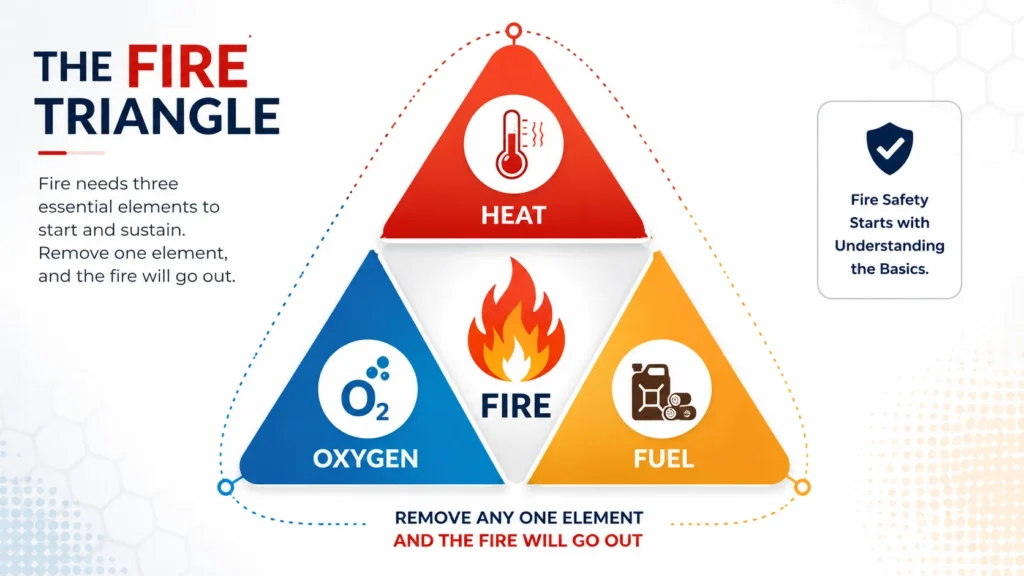
Every fire requires three essential elements to start and continue burning.
These elements are known as the Fire Triangle.
| Fire Triangle Element | Description |
|---|---|
| Heat | An ignition source such as electrical faults, open flames, or hot surfaces. |
| Fuel | Materials that can burn, including paper, wood, plastics, fabrics, or flammable liquids. |
| Oxygen | Usually supplied by the surrounding air and supports combustion. |
Removing any one of these three elements will stop a fire.
Understanding the Fire Triangle helps explain why fire prevention focuses on controlling ignition sources, reducing combustible materials, and using appropriate extinguishing methods.
Fire Prevention Process
Identify Fire Hazards
│
▼
Assess Fire Risks
│
▼
Remove or Reduce Hazards
│
▼
Install Fire Protection Equipment
│
▼
Train Occupants
│
▼
Develop Evacuation Procedures
│
▼
Conduct Fire Drills
│
▼
Review and Improve Regularly
Following this process helps create a safer environment and supports continuous fire safety improvement.
Essential Fire Safety Tip #1: Install and Test Smoke Alarms Regularly
Smoke alarms provide one of the earliest warnings of a fire, giving occupants valuable time to evacuate safely.
Every home and workplace should have appropriately located smoke alarms, particularly near sleeping areas, escape routes, and high-risk locations.
Best Practices
- Test alarms every month.
- Replace batteries when required.
- Clean alarms to prevent dust build-up.
- Replace units according to the manufacturer’s recommendations.
- Never disable a smoke alarm because of nuisance activations.
A functioning smoke alarm can significantly increase survival during a fire emergency.
Essential Fire Safety Tip #2: Keep Fire Escape Routes Clear
Blocked escape routes are a major contributor to fire-related injuries.
Emergency exits, stairways, corridors, and designated escape routes should remain unobstructed at all times.
Common obstructions include:
- Storage boxes
- Waste bins
- Furniture
- Delivery items
- Equipment
- Construction materials
Regular inspections help ensure occupants can evacuate quickly if a fire occurs.
Essential Fire Safety Tip #3: Avoid Overloading Electrical Sockets
Electrical faults remain one of the leading causes of accidental fires.
Using multiple high-powered appliances on a single extension lead increases the risk of overheating.
Safe Electrical Practices
- Avoid daisy-chaining extension leads.
- Replace damaged cables immediately.
- Unplug unused appliances where practical.
- Use certified electrical equipment.
- Arrange regular electrical inspections.
Never ignore signs such as burning smells, flickering lights, or hot electrical outlets.
Essential Fire Safety Tip #4: Practise Safe Cooking Habits
Kitchen fires are among the most common domestic fire incidents.
Many occur because cooking is left unattended.
Cooking Safety Tips
- Never leave cooking unattended.
- Keep flammable items away from cookers.
- Clean grease from ovens and extractor hoods.
- Turn saucepan handles inward.
- Keep children away from cooking areas.
- Never use water on burning cooking oil.
Simple precautions greatly reduce the likelihood of kitchen fires.
Essential Fire Safety Tip #5: Store Flammable Materials Safely
Improper storage of combustible materials increases the intensity and spread of fires.
Examples include:
- Petrol
- Solvents
- Paints
- Cleaning chemicals
- Aerosol containers
- Gas cylinders
Store these materials in suitable containers, away from ignition sources and in well-ventilated areas where appropriate.
Essential Fire Safety Tip #6: Maintain Fire Extinguishers
Having a fire extinguisher is only beneficial if it is correctly maintained and suitable for the type of fire.
Regular inspections should confirm:
- Correct location
- Easy accessibility
- Pressure indicator within acceptable range
- No visible damage
- Current maintenance label
Employees should also understand when it is safe to use an extinguisher and when evacuation is the safest option.
Essential Fire Safety Tip #7: Never Ignore Fire Alarm Activations
False alarms can create complacency.
Every alarm should be treated as a genuine emergency until confirmed otherwise.
When an alarm sounds:
- Stop work immediately.
- Leave the building using the nearest safe exit.
- Do not collect personal belongings.
- Do not use lifts unless specifically designed for evacuation.
- Proceed directly to the assembly point.
- Wait for further instructions.
Prompt evacuation saves lives.
Essential Fire Safety Tip #8: Keep Workplaces and Homes Clean
Good housekeeping is one of the simplest yet most effective fire prevention measures.
Accumulated waste, cardboard, packaging materials, and combustible rubbish can accelerate fire spread.
Regular housekeeping should include:
- Removing waste promptly.
- Keeping escape routes clear.
- Storing combustible materials safely.
- Cleaning equipment regularly.
- Managing electrical cables neatly.
- Maintaining organised storage areas.
A clean environment not only reduces fire risks but also improves overall workplace safety and efficiency.
Essential Fire Safety Tip #9: Learn the Different Classes of Fire
Not all fires are the same, and using the wrong extinguishing method can make a fire worse. Understanding the different fire classes helps you choose the correct response and appropriate fire extinguisher.
Fire Classes Explained
| Fire Class | Fuel Source | Example |
|---|---|---|
| Class A | Solid combustible materials | Wood, paper, cardboard, textiles |
| Class B | Flammable liquids | Petrol, paint, diesel, solvents |
| Class C | Flammable gases | Propane, butane, LPG |
| Class D | Combustible metals | Magnesium, aluminium, titanium |
| Electrical Fires | Live electrical equipment | Electrical panels, computers, appliances |
| Class F | Cooking oils and fats | Deep fat fryers, commercial kitchens |
Recognising the type of fire before taking action helps protect people and prevents further escalation.
Essential Fire Safety Tip #10: Know Which Fire Extinguisher to Use
Fire extinguishers are designed for specific types of fires. Using the wrong extinguisher can increase the danger.
Common Fire Extinguishers
| Extinguisher | Suitable For | Not Suitable For |
|---|---|---|
| Water | Class A fires | Electrical, Class B, Class F |
| Foam | Class A and B | Electrical fires |
| CO₂ | Electrical equipment and Class B | Deep fat fryer fires |
| Dry Powder | Multiple fire types | Enclosed spaces where visibility may be reduced |
| Wet Chemical | Class F and cooking oil fires | Electrical fires |
Only attempt to use a fire extinguisher if the fire is small, you have been trained to use it, and there is a clear escape route behind you.
Essential Fire Safety Tip #11: Remember the PASS Method
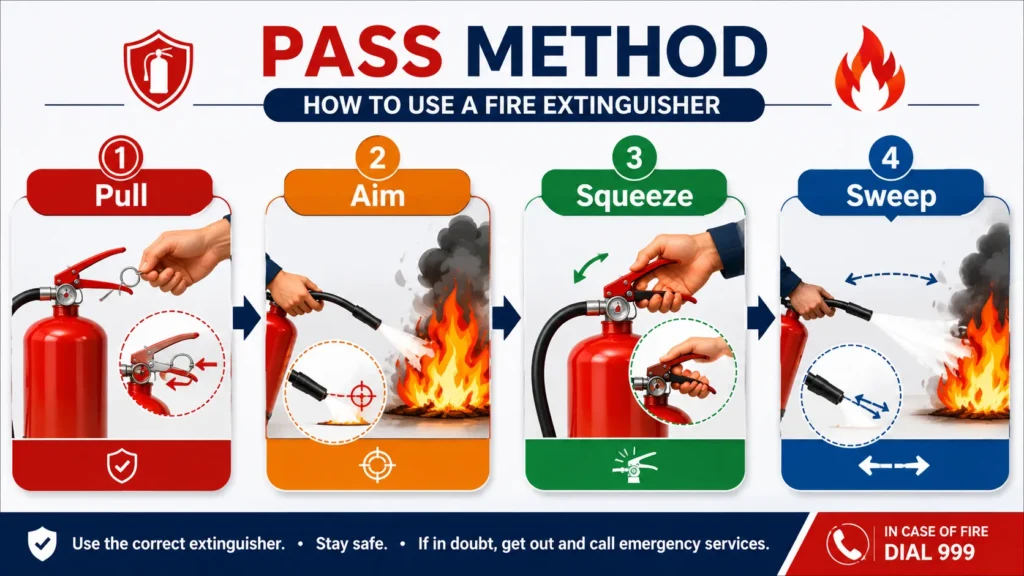
If it is safe to tackle a small fire, follow the PASS technique.
PASS Fire Extinguisher Method
Pull the safety pin
│
▼
Aim at the base of the fire
│
▼
Squeeze the handle
│
▼
Sweep from side to side
Always maintain a safe distance and stop immediately if the fire continues to grow.
Essential Fire Safety Tip #12: Develop and Practise a Fire Escape Plan
Every home and workplace should have a clear evacuation plan. During a fire, confusion and panic can delay evacuation, increasing the risk of injury.
A fire escape plan should include:
- Primary and alternative escape routes
- Emergency exits
- Assembly points
- Emergency contact numbers
- Assistance for vulnerable individuals
- Responsibilities for fire wardens or designated personnel
Practise fire drills regularly so everyone knows what to do during an emergency.
Essential Fire Safety Tip #13: Protect Fire Doors and Emergency Exits
Fire doors play a vital role in slowing the spread of fire and smoke, providing valuable time for evacuation.
To ensure they remain effective:
- Never wedge fire doors open.
- Keep doors free from damage.
- Check that self-closing mechanisms work properly.
- Keep emergency exits unlocked during occupancy.
- Remove any obstructions from exit routes.
Even a small obstruction can delay evacuation and increase the risk to building occupants.
Essential Fire Safety Tip #14: Store Electrical Equipment Safely
Electrical equipment should be used, maintained, and stored correctly to reduce the risk of electrical fires.
Good Electrical Safety Practices
- Inspect cables for damage.
- Replace faulty equipment immediately.
- Avoid running cables under carpets.
- Keep appliances away from water.
- Switch off equipment when not in use where appropriate.
- Arrange routine maintenance and testing.
Preventive maintenance significantly reduces the likelihood of electrical faults developing into fires.
Essential Fire Safety Tip #15: Carry Out Regular Fire Risk Assessments
A fire risk assessment helps identify hazards before they become emergencies.
It enables organisations to:
- Identify ignition sources.
- Assess combustible materials.
- Evaluate people at risk.
- Review existing fire protection measures.
- Improve emergency procedures.
- Reduce the likelihood of fire incidents.
Regular reviews ensure the assessment remains effective as workplaces change.
Essential Fire Safety Tip #16: Train Everyone in Fire Safety Procedures
Fire safety equipment alone cannot prevent emergencies. People must know how to respond quickly and correctly.
Training should cover:
- Fire prevention
- Hazard reporting
- Fire alarm procedures
- Evacuation routes
- Assembly points
- Fire extinguisher awareness
- Emergency responsibilities
Regular refresher training reinforces safe behaviours and improves emergency preparedness.
Essential Fire Safety Tip #17: Inspect Fire Safety Equipment Frequently
Fire protection equipment should always be ready for use.
Regular inspections should include:
- Fire extinguishers
- Fire alarms
- Smoke detectors
- Emergency lighting
- Fire doors
- Fire blankets
- Sprinkler systems
Any defects should be reported and repaired without delay.
Essential Fire Safety Tip #18: Reduce Fire Risks Through Good Housekeeping
Poor housekeeping contributes to many workplace and domestic fires.
Maintain a safe environment by:
- Removing combustible waste regularly.
- Keeping storage areas organised.
- Storing flammable materials safely.
- Cleaning machinery and equipment.
- Keeping electrical cupboards clear.
- Preventing the build-up of dust and debris.
Good housekeeping also improves general workplace safety and operational efficiency.
Essential Fire Safety Tip #19: Report Fire Hazards Immediately
Everyone should take responsibility for reporting fire hazards as soon as they are identified.
Examples include:
- Damaged electrical cables
- Faulty smoke alarms
- Blocked fire exits
- Missing fire extinguishers
- Damaged fire doors
- Gas leaks
- Unsafe storage of flammable materials
Prompt reporting allows corrective action before a minor issue becomes a serious emergency.
Essential Fire Safety Tip #20: Promote a Fire Safety Culture
The most effective fire prevention strategy is creating a culture where everyone understands and values fire safety.
Encourage:
- Regular inspections
- Open hazard reporting
- Employee involvement
- Fire drills
- Continuous learning
- Leadership commitment
- Compliance with safety procedures
When fire safety becomes part of everyday behaviour, organisations significantly reduce the likelihood of fire incidents.
Home vs Workplace Fire Safety
Although the principles of fire prevention are similar, the hazards and responsibilities often differ depending on the environment.
| Home Fire Safety | Workplace Fire Safety |
|---|---|
| Test smoke alarms regularly | Maintain fire alarm systems |
| Never leave cooking unattended | Conduct fire risk assessments |
| Keep escape routes clear | Keep emergency exits unobstructed |
| Store matches away from children | Train employees in fire procedures |
| Use electrical appliances safely | Inspect fire safety equipment regularly |
| Plan family escape routes | Conduct fire drills and evacuation exercises |
Understanding these differences helps individuals stay safe wherever they are.
Fire Safety Across Different Industries
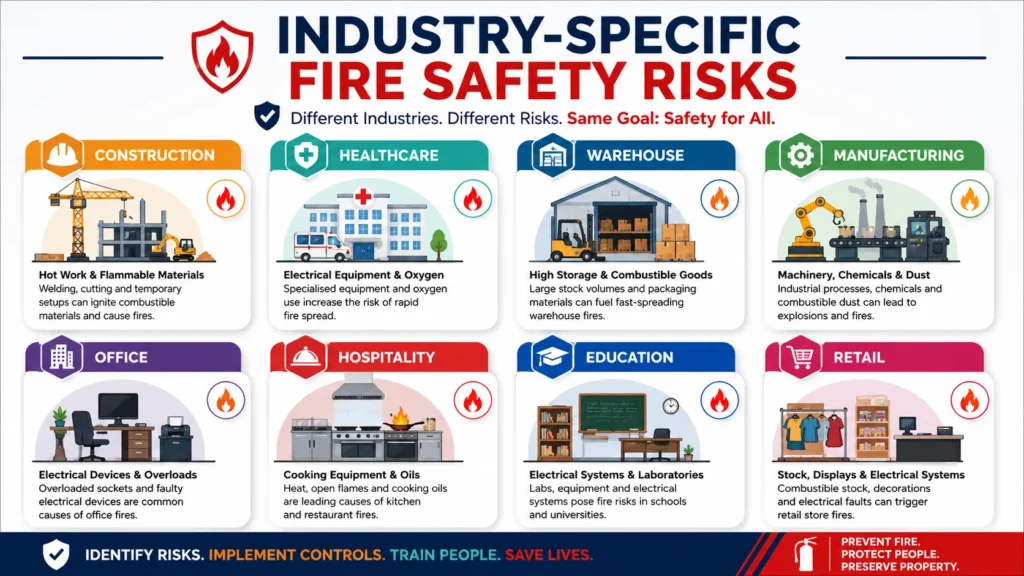
Every industry presents unique fire risks, making industry-specific fire safety planning essential.
| Industry | Common Fire Hazards | Recommended Controls |
|---|---|---|
| Construction | Hot work, temporary electrics, combustible materials | Hot work permits, inspections, fire watches |
| Offices | Electrical equipment, overloaded sockets | PAT testing, housekeeping, evacuation plans |
| Warehouses | High storage, forklifts, packaging | Fire detection, clear aisles, sprinkler systems |
| Healthcare | Oxygen, electrical equipment, vulnerable occupants | Staff training, compartmentation, evacuation planning |
| Manufacturing | Machinery, chemicals, dust | Preventive maintenance, ventilation, fire suppression |
| Hospitality | Kitchens, cooking oils, gas appliances | Wet chemical extinguishers, hood cleaning, staff training |
| Education | Laboratories, electrical equipment | Fire drills, supervision, emergency procedures |
| Retail | Stockrooms, decorative displays, electrical systems | Good housekeeping, routine inspections, fire alarms |
Tailoring fire safety measures to the specific risks of each industry helps reduce incidents and improve emergency preparedness.
Fire Safety Best Practices Checklist
Before concluding any fire safety inspection or review, ensure the following measures are in place.
| Checklist Item | Complete |
|---|---|
| Smoke alarms tested | □ |
| Fire alarm system operational | □ |
| Fire extinguishers inspected | □ |
| Fire doors functioning correctly | □ |
| Escape routes unobstructed | □ |
| Emergency lighting tested | □ |
| Assembly point identified | □ |
| Fire risk assessment reviewed | □ |
| Employees trained | □ |
| Fire drills completed | □ |
| Electrical equipment inspected | □ |
| Flammable materials stored safely | □ |
Completing this checklist regularly helps identify potential weaknesses before they lead to an emergency and supports a proactive approach to fire prevention.
Fire Emergency Action Plan
Knowing how to respond during a fire is just as important as preventing one. A well-prepared emergency action plan helps people evacuate quickly, reduces panic, and supports emergency responders.
Every home and workplace should have a clearly communicated fire emergency procedure.
Fire Emergency Response Flowchart
Fire Discovered
│
▼
Raise the Fire Alarm
│
▼
Call the Emergency Services
│
▼
Evacuate Using the Nearest Safe Exit
│
▼
Do Not Use Lifts
│
▼
Proceed to the Assembly Point
│
▼
Account for Everyone
│
▼
Do Not Re-enter the Building Until Authorised
During an evacuation:
- Stay calm and leave immediately.
- Follow designated escape routes.
- Assist vulnerable individuals if it is safe to do so.
- Close doors behind you to help slow the spread of fire and smoke.
- Never stop to collect personal belongings.
- Wait at the assembly point until emergency services declare the building safe.
A regularly practised evacuation procedure can save lives during a real emergency.
Common Fire Safety Mistakes to Avoid
Many fires occur because simple safety precautions are ignored. Avoiding these common mistakes can significantly reduce the likelihood of a fire.
| Common Mistake | Better Practice |
|---|---|
| Overloading electrical sockets | Distribute electrical loads safely |
| Leaving cooking unattended | Stay in the kitchen while cooking |
| Blocking emergency exits | Keep escape routes clear at all times |
| Ignoring damaged electrical equipment | Repair or replace faulty equipment immediately |
| Wedging fire doors open | Keep fire doors closed and fully operational |
| Failing to test smoke alarms | Test alarms monthly and replace batteries when required |
| Poor storage of flammable materials | Store combustible materials safely away from heat sources |
| Skipping fire drills | Conduct regular evacuation exercises |
| Ignoring fire alarm activations | Treat every alarm as a real emergency |
| Neglecting fire risk assessments | Review fire risks regularly and update control measures |
Fire safety should become part of everyday routines rather than something considered only during inspections or emergencies.
Fire Safety Checklist
Use this checklist to assess whether your home or workplace is prepared for a fire emergency.
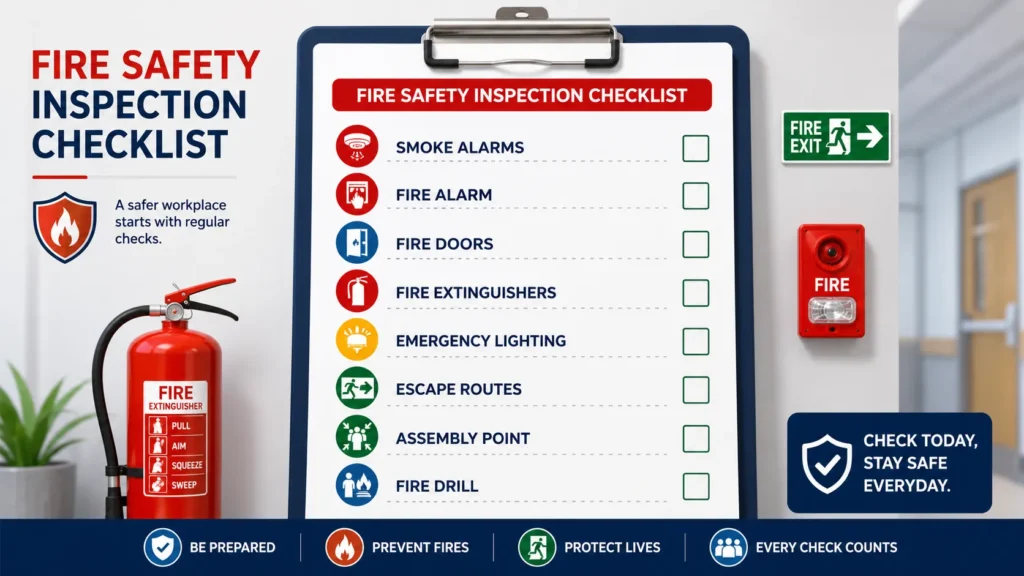
Regular inspections help identify potential hazards before they become serious risks.
Building a Strong Fire Safety Culture
Fire safety is most effective when everyone takes responsibility. Employers, managers, employees, landlords, and residents all have an important role in preventing fires and responding appropriately during emergencies.
Organisations can strengthen their fire safety culture by:
- Encouraging employees to report fire hazards.
- Providing regular fire safety training.
- Conducting routine workplace inspections.
- Reviewing fire risk assessments after significant changes.
- Testing emergency procedures through scheduled fire drills.
- Maintaining fire protection equipment.
- Promoting continuous learning and awareness.
A positive safety culture reduces complacency and encourages proactive fire prevention.
Related Fire Safety Courses at Inspire College
Readers who want to develop practical fire safety knowledge or build a professional career in fire safety can explore the following programmes offered by Inspire College:
| Course | Best For |
|---|---|
| ProQual Accredited Certified Fire Safety Training Course | Building a strong foundation in fire prevention, fire risk assessment, emergency procedures, and workplace fire safety. |
| Qualsafe Level 2 Award in Fire Safety (RQF) | Individuals seeking recognised workplace fire safety knowledge, fire prevention skills, and emergency response training. |
| ProQual Level 4 Certificate in Fire Risk Assessment | Professionals who want to conduct fire risk assessments and improve fire safety compliance across different types of premises. |
| ProQual Level 4 Award in Advanced Fire Risk Assessment | Learners looking to develop advanced skills in identifying fire hazards, evaluating risks, and recommending suitable control measures. |
| ProQual Level 5 Diploma in Fire Risk Assessment | Experienced professionals aiming to become competent fire risk assessors for commercial, industrial, and public-sector environments. |
| ProQual Level 5 Diploma in Fire Safety and Risk Management | Fire safety professionals, HSE practitioners, and managers responsible for leading fire safety strategies and regulatory compliance. |
| ProQual Level 3 Award in the Inspection and Testing of Fire Resisting Door Installations | Individuals responsible for inspecting and maintaining fire-resisting door installations in line with safety standards. |
Additional Related Programmes
Depending on the reader’s career goals, you may also recommend:
- ICTQual Level 4 Diploma Senior Fire Safety Advisor – for progressing into senior advisory and leadership roles in fire safety.
- ProQual Level 2 Award for Fire Marshals – ideal for employees taking on workplace fire marshal or fire warden responsibilities.
Conclusion
Fire safety is a shared responsibility that requires awareness, preparation, and continuous improvement. From testing smoke alarms and maintaining fire extinguishers to carrying out fire risk assessments and practising evacuation procedures, every preventive action contributes to a safer environment.
Whether at home, in the workplace, or in public buildings, understanding the common causes of fire and following essential fire safety tips can help reduce risks, protect lives, and minimise property damage. Regular inspections, employee training, good housekeeping, and well-maintained fire protection systems all play a vital role in preventing fire emergencies.
By making fire safety part of everyday routines instead of treating it as an occasional compliance exercise, individuals and organisations can build a stronger safety culture and improve emergency preparedness.
Continue Your Fire Safety Learning Journey
Looking to build professional knowledge in fire prevention and workplace safety?
Explore Inspire College’s Fire Safety Courses, Fire Risk Assessment Qualifications, and Health and Safety Training Programmes to develop practical skills, improve workplace compliance, and advance your career in the health and safety sector.
Whether you are an employer, manager, safety professional, or someone starting a career in fire safety, Inspire College offers flexible, industry-relevant qualifications designed to support your professional development.
Explore More Fire Safety & Risk Assessment Articles
Discover expert guides on fire safety careers, fire risk assessments, workplace compliance, fire protection systems, and professional qualifications to expand your knowledge and advance your career in fire safety.
- What is Fire Safety?
- Fire Risk Assessment
- Fire Safety: Essential Tips for Homes and Workplaces
- What Does a Senior Fire Safety Advisor Do? Roles, Responsibilities, and Career Guide
- Top Skills Every Senior Fire Safety Advisor Should Develop
- Is Fire Safety a Good Career Choice in the UK?
- Senior Fire Safety Advisor Career Progression: Exciting Roles, Salary & Leadership Path
- Is Fire Safety a Good Career Choice in the UK?
- Top Skills Every Senior Fire Safety Advisor Should Develop
- Senior Fire Safety Advisor vs Fire Risk Assessor: Which Career Is Right for You?
- Senior Fire Safety Advisor: Top Industries Hiring Across the UK
- Fire Risk Assessment Explained: A Complete Beginner’s Guide
- Qualified Fire Risk Assessor Career Guide: Training, Skills, and Job Opportunities
- Senior Fire Safety Advisor: Top Industries Hiring Across the UK
- The 5 Essential Steps of Fire Risk Assessment Explained
- Common Risk Assessment Mistakes and How to Avoid Them
- How Fire Safety and Risk Assessment Reduce Workplace Hazards
- Fire Safety Planning and Risk Assessment for Businesses
- Fire Risk Assessment vs Fire Safety Audit: What’s the Difference?
- How to Conduct an Effective Risk Assessment Step by Step
- Fire Safety Checklist for Homes, Offices & Commercial Buildings
- How Often Should a Fire Risk Assessment Be Reviewed?
- Top Workplace Fire Hazards Every Inspection Reveals
- Essential Fire Safety Duties for Landlords and Property Managers