
Fire Risk Assessment Explained: A Complete Beginner’s Guide
Fire safety is a legal and practical responsibility for businesses, landlords, employers, and property owners across the UK. One of the most effective ways to reduce the risk of fire and protect lives is through a Fire Risk Assessment. Whether you manage a workplace, own a commercial property, or simply want to understand how fire safety works, knowing the purpose and process of a fire risk assessment is essential.
A fire can spread within minutes, causing injuries, property damage, business disruption, and legal consequences. A properly conducted fire risk assessment helps identify hazards before they become emergencies, ensuring that suitable fire prevention measures and emergency procedures are in place.
This beginner’s guide explains what a fire risk assessment is, why it matters, who needs one, the legal requirements in the UK, and the basic process involved. By the end of this guide, you’ll have a clear understanding of how fire risk assessments contribute to safer buildings and stronger legal compliance.
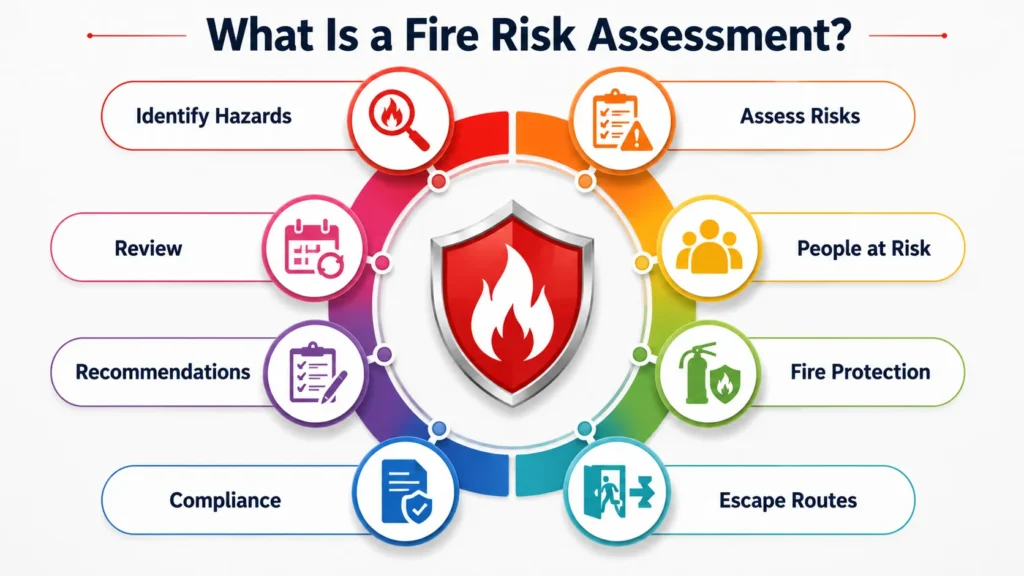
What Is a Fire Risk Assessment?
A Fire Risk Assessment is a systematic inspection of a building or workplace that identifies potential fire hazards, evaluates the level of risk, and recommends practical measures to reduce or eliminate those risks.
Rather than simply checking fire extinguishers or alarms, a fire risk assessment examines every aspect of fire safety, including the building layout, escape routes, fire protection systems, occupancy, and emergency procedures.
The goal is to answer three important questions:
- What could start a fire?
- Who could be affected?
- What can be done to prevent or minimise the risk?
A properly completed fire risk assessment provides a clear action plan that helps organisations improve safety while meeting their legal responsibilities.
Why Is a Fire Risk Assessment Important?
Fire risk assessments play a vital role in preventing fires, protecting occupants, and ensuring that buildings remain compliant with UK fire safety legislation.
Without regular assessments, hazards such as faulty electrical equipment, blocked escape routes, damaged fire doors, or inadequate emergency procedures may go unnoticed until an incident occurs.
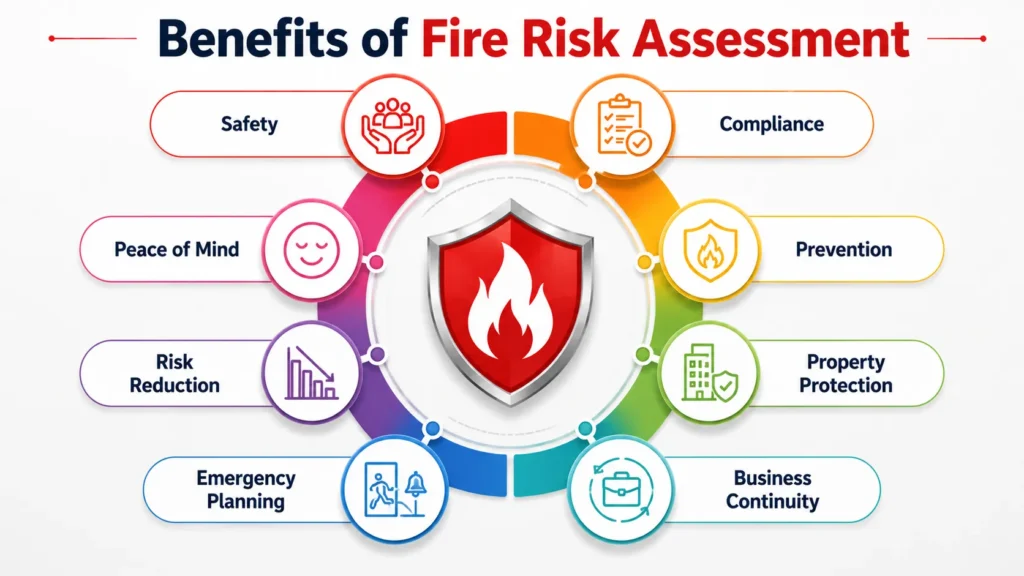
Key Benefits
- Protects employees, residents, and visitors
- Reduces the likelihood of fire incidents
- Supports legal compliance
- Protects buildings and valuable assets
- Improves emergency preparedness
- Reduces business interruption
- Supports insurance requirements
- Promotes a strong fire safety culture
Regular fire risk assessments are not only a legal requirement for many premises but also an important investment in long-term safety and business resilience.
Featured Snippet: What Is a Fire Risk Assessment?
A Fire Risk Assessment is a structured evaluation of a building to identify fire hazards, assess the level of risk, and recommend measures that improve fire safety and legal compliance. It helps protect people, property, and businesses by reducing the likelihood and impact of fire incidents.
Is a Fire Risk Assessment a Legal Requirement?
Yes. In the UK, many non-domestic premises and the common areas of multi-occupied residential buildings are legally required to have a suitable and sufficient fire risk assessment.
The primary legislation governing fire safety is the Regulatory Reform (Fire Safety) Order 2005, which places responsibility on the “Responsible Person” to identify fire risks and implement appropriate fire safety measures.
Additional legislation has strengthened these responsibilities, including:
- Fire Safety Act 2021
- Building Safety Act 2022
- Fire Safety (England) Regulations 2022
These laws require organisations to regularly review fire risks, maintain fire protection systems, and ensure that occupants can evacuate safely in the event of a fire.
Who Is Responsible for a Fire Risk Assessment?
The legal responsibility usually falls to the Responsible Person. This may vary depending on the type of premises.
Examples include:
| Premises | Responsible Person |
|---|---|
| Office Building | Employer or Building Owner |
| Factory | Employer or Site Manager |
| Retail Store | Business Owner |
| Hotel | Hotel Manager |
| School | Headteacher or Governing Body |
| Hospital | NHS Trust or Facility Manager |
| Apartment Building | Landlord or Managing Agent |
| Warehouse | Employer or Property Manager |
The Responsible Person may carry out the assessment if they have sufficient competence or appoint a qualified Fire Risk Assessor for more complex premises.
Who Needs a Fire Risk Assessment?
A fire risk assessment is required in most non-domestic buildings and shared areas of residential properties where people work, visit, or live.
Buildings That Typically Require Fire Risk Assessments
- Offices
- Shops and retail stores
- Restaurants and cafés
- Hotels
- Warehouses
- Factories
- Hospitals
- Schools and colleges
- Universities
- Apartment buildings
- Care homes
- Leisure centres
- Community buildings
- Industrial facilities
Although private single-family homes generally do not require a formal fire risk assessment under this legislation, homeowners are still encouraged to identify and manage fire risks to protect their families.
What Does a Fire Risk Assessor Look For?
A Fire Risk Assessor carefully examines the building to identify anything that could increase the likelihood of a fire or make evacuation more difficult.
The assessment covers much more than visible hazards.
Key Areas Reviewed
| Inspection Area | Purpose |
|---|---|
| Fire Hazards | Identify ignition and fuel sources |
| Electrical Safety | Detect faulty wiring or equipment |
| Fire Doors | Prevent fire and smoke spread |
| Escape Routes | Ensure safe evacuation |
| Emergency Lighting | Support evacuation during power failure |
| Fire Alarms | Verify early warning systems |
| Fire Extinguishers | Confirm suitable firefighting equipment |
| Housekeeping | Reduce combustible materials |
| Staff Training | Improve emergency preparedness |
| Fire Safety Records | Verify ongoing compliance |
Every recommendation made by the assessor is intended to reduce risk and improve overall fire safety.
The Five Principles of a Fire Risk Assessment
Although every building is different, most professional assessments follow the same structured principles.
Fire Risk Assessment Process
Identify Fire Hazards
↓
Identify People at Risk
↓
Evaluate Existing Fire Safety Measures
↓
Determine the Level of Risk
↓
Record Findings and Recommend Improvements
↓
Implement Control Measures
↓
Review and Update Regularly
Following this systematic approach helps organisations maintain compliance while continuously improving fire safety standards.
Common Fire Hazards Found During Assessments
Many fires are caused by everyday hazards that can easily be controlled if identified early.
Some of the most common hazards include:
- Faulty electrical wiring
- Overloaded sockets
- Portable heaters
- Hot work activities
- Smoking materials
- Flammable liquids
- Poor housekeeping
- Blocked fire exits
- Damaged fire doors
- Improper storage of combustible materials
Recognising these hazards early allows organisations to take corrective action before an incident occurs.
Fire Risk Assessment Responsibilities
Different people contribute to maintaining a safe environment.
| Responsibility | Purpose |
|---|---|
| Identify Hazards | Reduce fire risks |
| Assess People at Risk | Protect occupants |
| Inspect Fire Protection Systems | Verify effectiveness |
| Review Escape Routes | Support safe evacuation |
| Evaluate Existing Controls | Improve fire prevention |
| Recommend Improvements | Strengthen compliance |
| Maintain Fire Safety Records | Demonstrate legal compliance |
| Review Assessments | Keep information current |
These responsibilities help create a proactive approach to fire safety rather than reacting after an incident has occurred.
Why Fire Risk Assessments Are Becoming More Important
The importance of fire risk assessments has increased significantly due to changes in UK legislation, growing urban development, and a stronger focus on building safety.
Organisations are expected to demonstrate greater accountability for protecting occupants and maintaining safe buildings. At the same time, businesses recognise that effective fire safety also protects productivity, reputation, and financial stability.
As a result, fire risk assessments are now considered an essential part of overall health and safety management rather than simply a legal requirement.
Step-by-Step Fire Risk Assessment Process
A professional fire risk assessment follows a structured approach to identify hazards, evaluate existing fire safety measures, and recommend improvements. While every building is different, the overall process remains consistent across most workplaces and commercial premises.
Understanding each stage helps organisations appreciate how fire risks are managed and why every step is important.
Step 1: Gather Information About the Building
The assessment begins by collecting information about the premises.
This may include:
- Building layout and floor plans
- Occupancy levels
- Building use
- Existing fire safety arrangements
- Previous fire risk assessments
- Fire safety records
- Maintenance records
- Emergency procedures
This information helps the assessor understand how the building operates before carrying out a physical inspection.
Step 2: Identify Fire Hazards
The next step is identifying anything that could start a fire or contribute to its spread.
Fire hazards generally fall into three categories.
Ignition Sources
- Faulty electrical equipment
- Portable heaters
- Cooking appliances
- Smoking materials
- Hot work activities
- Open flames
Fuel Sources
- Paper and cardboard
- Wooden furniture
- Waste materials
- Chemicals
- Flammable liquids
- Textiles
Oxygen Sources
- Natural ventilation
- Medical oxygen systems
- Oxidising chemicals
- Air conditioning systems
Identifying these hazards allows the assessor to evaluate where fires are most likely to occur.
Fire Risk Assessment Workflow
Building Information Review
↓
Building Inspection
↓
Identify Fire Hazards
↓
Identify People at Risk
↓
Evaluate Existing Controls
↓
Determine Risk Level
↓
Recommend Improvements
↓
Prepare Fire Risk Assessment Report
↓
Implement Actions
↓
Review Assessment Regularly
Following this structured workflow ensures a consistent and comprehensive assessment.
Step 3: Identify People at Risk
A fire risk assessment focuses not only on hazards but also on the people who could be affected.
This may include:
- Employees
- Visitors
- Customers
- Contractors
- Residents
- Students
- Patients
- People with disabilities
- Elderly occupants
- Children
Special consideration is given to anyone who may need additional assistance during an evacuation.
Step 4: Evaluate Existing Fire Safety Measures
The assessor then reviews the effectiveness of current fire protection arrangements.
Areas Commonly Inspected
| Fire Safety Measure | Purpose |
|---|---|
| Fire Alarm Systems | Early fire detection |
| Emergency Lighting | Safe evacuation |
| Fire Doors | Prevent smoke and fire spread |
| Fire Extinguishers | Initial fire suppression |
| Escape Routes | Safe exit from the building |
| Fire Signage | Guide occupants during emergencies |
| Sprinkler Systems | Automatic fire suppression |
| Fire Compartmentation | Limit fire spread |
The objective is to determine whether these systems are suitable, properly maintained, and sufficient for the building.
Step 5: Evaluate the Level of Risk
Once hazards and existing controls have been identified, the assessor evaluates the overall level of fire risk.
Factors considered include:
- Likelihood of fire occurring
- Potential consequences
- Number of occupants
- Building complexity
- Existing fire protection measures
- Emergency preparedness
The findings help prioritise corrective actions according to the level of risk.
Step 6: Recommend Improvements
After completing the inspection, the assessor provides practical recommendations to reduce identified risks.
Recommendations may include:
- Repair damaged fire doors
- Improve housekeeping
- Install additional fire extinguishers
- Upgrade emergency lighting
- Improve fire alarm coverage
- Remove combustible storage
- Improve evacuation signage
- Deliver staff fire safety training
Recommendations should be realistic, achievable, and proportionate to the risks identified.
Step 7: Prepare the Fire Risk Assessment Report
The assessment concludes with a detailed report summarising:
- Building information
- Fire hazards identified
- People at risk
- Existing fire safety arrangements
- Risk evaluation
- Recommended actions
- Review date
The report becomes an important document for demonstrating legal compliance and planning future improvements.
What Does a Fire Risk Assessor Check?
A Fire Risk Assessor examines every aspect of fire safety that could influence the likelihood of a fire or the safety of occupants during an emergency.
Comprehensive Inspection Checklist
| Inspection Area | Examples |
|---|---|
| Electrical Systems | Wiring, sockets, equipment |
| Fire Alarm System | Detection and warning devices |
| Fire Doors | Self-closing operation and condition |
| Escape Routes | Clear and unobstructed exits |
| Emergency Lighting | Functionality during power failure |
| Fire Extinguishers | Location and maintenance |
| Housekeeping | Waste management and storage |
| Combustible Materials | Paper, chemicals, packaging |
| Staff Awareness | Fire training and drills |
| Documentation | Maintenance and testing records |
Each inspection contributes to a complete picture of the building’s fire safety performance.
Types of Fire Risk Assessments
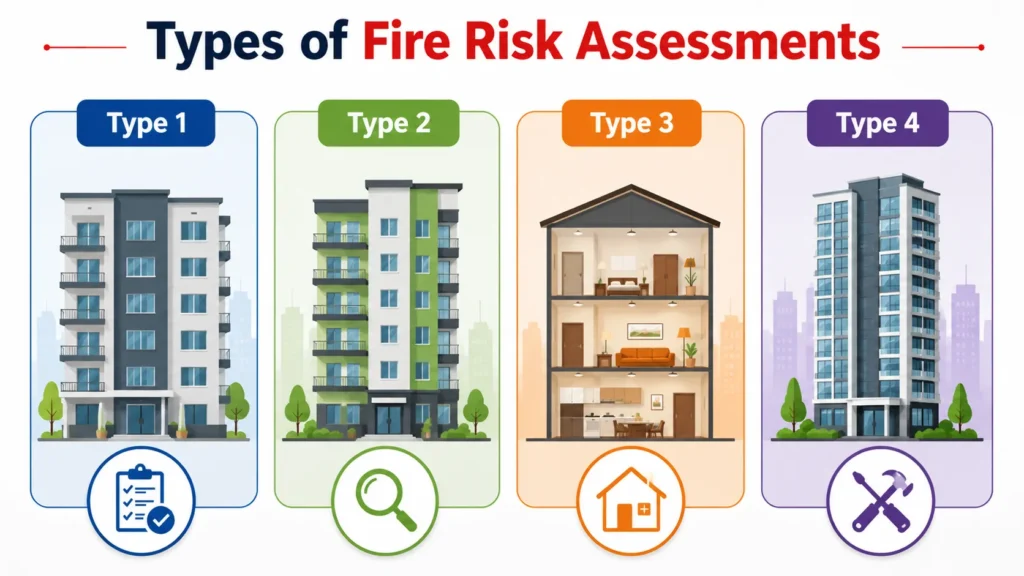
Not every building requires the same type of assessment. Different assessment types are used depending on the building’s purpose, occupancy, and level of risk.
Fire Risk Assessment Types
| Type | Purpose | Common Application |
|---|---|---|
| Type 1 | Common areas, non-destructive inspection | Blocks of flats and HMOs |
| Type 2 | Common areas with limited destructive inspection | Residential buildings requiring further investigation |
| Type 3 | Individual dwellings | Flats and apartments |
| Type 4 | Common areas and individual dwellings with destructive inspection | Higher-risk residential buildings |
Understanding these assessment types helps property owners choose the most appropriate inspection for their premises.
Common Fire Hazards
Many fire incidents result from hazards that could have been identified and controlled during routine inspections.
Typical Workplace Fire Hazards
| Hazard | Example |
|---|---|
| Electrical Faults | Damaged cables and overloaded sockets |
| Heating Equipment | Portable heaters placed near combustible materials |
| Cooking Equipment | Unattended cooking appliances |
| Flammable Liquids | Improper chemical storage |
| Smoking Materials | Carelessly discarded cigarettes |
| Waste Accumulation | Cardboard, paper, and packaging |
| Hot Work | Welding and cutting operations |
| Blocked Escape Routes | Stored equipment obstructing exits |
Regular inspections significantly reduce these risks.
Fire Risk Assessment Checklist
Although every building is unique, most professional assessments cover the following essential areas.
Basic Checklist
✔ Fire alarm system operational
✔ Emergency lighting tested
✔ Fire extinguishers serviced
✔ Escape routes unobstructed
✔ Fire exits clearly signed
✔ Fire doors functioning correctly
✔ Electrical equipment maintained
✔ Staff fire safety training completed
✔ Emergency procedures available
✔ Fire drills conducted regularly
This checklist provides a useful starting point but should never replace a full professional assessment where one is required.
Common Mistakes to Avoid
Many organisations unintentionally reduce the effectiveness of their fire safety arrangements by overlooking important details.
Frequent Mistakes
- Treating the assessment as a one-time exercise
- Blocking emergency exits
- Ignoring damaged fire doors
- Overloading electrical circuits
- Storing combustible materials near ignition sources
- Failing to maintain fire alarm systems
- Not updating assessments after building changes
- Providing insufficient staff training
- Poor record keeping
- Delaying corrective actions
Avoiding these mistakes helps maintain safer premises and reduces the likelihood of enforcement action.
Who Should Carry Out a Fire Risk Assessment?
The Responsible Person may complete the assessment if they possess sufficient knowledge, training, and experience to identify hazards and recommend appropriate controls.
However, many organisations choose to appoint a competent Fire Risk Assessor, particularly when dealing with:
- Large commercial buildings
- Hospitals
- Schools and universities
- Hotels
- Manufacturing facilities
- High-rise residential buildings
- Complex workplaces
- Multi-site organisations
Using a qualified professional provides greater confidence that the assessment is thorough, accurate, and aligned with current fire safety requirements.
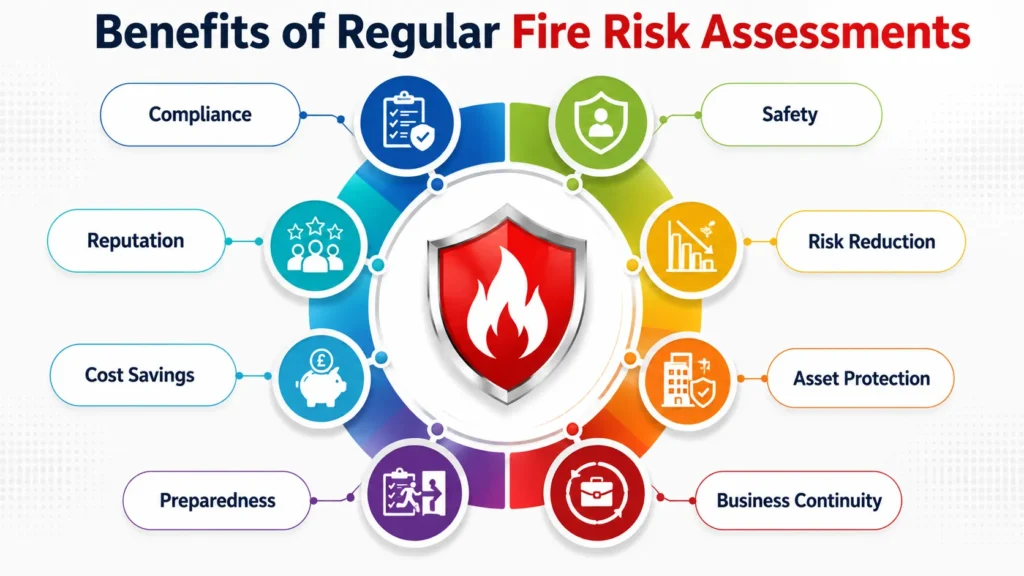
Benefits of Regular Fire Risk Assessments
Fire risk assessments should not be viewed as a one-time legal requirement. When carried out regularly, they become an important part of an organisation’s overall health and safety strategy.
Routine assessments help identify new hazards, evaluate the effectiveness of existing fire safety measures, and ensure that buildings remain compliant as they change over time.
Key Benefits
| Benefit | Why It Matters |
|---|---|
| Protects Lives | Reduces the likelihood of injuries and fatalities |
| Supports Legal Compliance | Helps meet UK fire safety legislation |
| Reduces Fire Risks | Identifies hazards before they become serious |
| Protects Property | Minimises damage to buildings and equipment |
| Improves Business Continuity | Reduces operational disruption after incidents |
| Strengthens Emergency Preparedness | Improves evacuation planning and staff readiness |
| Supports Insurance Requirements | Demonstrates proactive risk management |
| Enhances Reputation | Builds trust with employees, customers, and stakeholders |
A proactive approach to fire safety is often more cost-effective than dealing with the consequences of a fire incident.
How Often Should a Fire Risk Assessment Be Reviewed?
A fire risk assessment should be reviewed regularly to ensure it remains accurate and reflects the current conditions of the premises. Although legislation does not specify a fixed review interval for every building, reviews should take place whenever significant changes could affect fire safety.
Common Reasons for a Review
- Changes to the building layout
- Renovation or refurbishment work
- Introduction of new equipment or machinery
- Changes in occupancy levels
- New work processes
- Fire incidents or near misses
- Updates to fire safety legislation
- Installation of new fire protection systems
Regular reviews help ensure that fire safety measures continue to provide appropriate protection.
Signs That Your Fire Risk Assessment Needs Updating
Many organisations continue using outdated assessments even after major changes have taken place.
You should consider updating an assessment if:
- Escape routes have changed.
- The building has been extended.
- Occupancy has increased significantly.
- New hazards have been introduced.
- Fire doors or alarm systems have been modified.
- Staff responsibilities have changed.
- A previous action plan has not been completed.
Keeping assessments current is just as important as carrying them out in the first place.
Digital Tools Transforming Fire Risk Assessments
Technology is changing how Fire Risk Assessors collect information, generate reports, and monitor compliance.
Digital solutions improve efficiency while making fire safety records easier to manage across multiple buildings.
Common Digital Tools
| Technology | Purpose |
|---|---|
| Mobile Inspection Apps | Conduct assessments electronically |
| Digital Checklists | Standardise inspections |
| Cloud Reporting Systems | Store and share reports securely |
| Compliance Management Software | Track corrective actions |
| Building Information Modelling (BIM) | Improve building safety planning |
| Fire Alarm Monitoring Systems | Monitor system performance |
| Document Management Platforms | Maintain compliance records |
| QR Code Inspection Systems | Access maintenance information quickly |
Digital technology is helping organisations move towards more efficient and transparent fire safety management.
Fire Risk Assessment Best Practices
Organisations that consistently maintain high fire safety standards usually follow a number of recognised best practices.
Best Practice Workflow
Identify Hazards
↓
Assess Risks
↓
Prioritise Actions
↓
Implement Improvements
↓
Train Staff
↓
Inspect Fire Protection Systems
↓
Review Fire Risk Assessment
↓
Continuous Improvement
This cycle supports ongoing compliance rather than treating fire safety as a one-off activity.
Future of Fire Risk Assessments (2026–2030)
Fire safety is becoming increasingly technology-driven, and the role of fire risk assessments continues to evolve.
Several trends are expected to influence the profession over the coming years.
Digital Compliance
More organisations are replacing paper-based systems with cloud-based inspection and compliance management platforms.
Smart Buildings
Modern buildings are increasingly equipped with intelligent fire detection systems, automated alarms, smoke control systems, and integrated building management technologies.
Data-Driven Decision Making
Fire safety professionals are beginning to use digital reporting and analytics to identify trends, monitor recurring issues, and improve long-term risk management.
Greater Focus on Competency
Organisations are placing increasing emphasis on using competent Fire Risk Assessors who possess appropriate knowledge, practical experience, and ongoing professional development.
Sustainable Buildings
As sustainable construction grows across the UK, Fire Risk Assessors will need to understand how new building materials and renewable energy systems influence fire safety strategies.
Future Skills for Fire Risk Assessors
The profession continues to expand beyond traditional inspections.
| Technical Skills | Professional Skills |
|---|---|
| Digital Inspection Software | Leadership |
| Building Safety Knowledge | Communication |
| Fire Safety Legislation | Decision-Making |
| Fire Protection Systems | Problem Solving |
| Risk Analysis | Strategic Thinking |
| Compliance Management | Team Collaboration |
| Report Writing | Stakeholder Engagement |
| Data Interpretation | Continuous Learning |
Professionals who develop these skills will be well positioned for future career opportunities.
Why Every Organisation Should Take Fire Risk Assessments Seriously
Regardless of the size or type of premises, fire safety should always be treated as an ongoing responsibility. A well-planned fire risk assessment helps organisations identify hazards early, implement effective control measures, and create safer environments for employees, visitors, residents, and customers.
Investing in regular assessments not only supports legal compliance but also reduces operational risks, protects valuable assets, and demonstrates a genuine commitment to health and safety.
Conclusion
A Fire Risk Assessment is one of the most effective tools for preventing fire incidents and protecting people, property, and businesses. By identifying hazards, evaluating existing fire safety measures, and implementing practical improvements, organisations can significantly reduce fire risks while meeting their legal responsibilities under UK fire safety legislation.
Whether you manage a small office, a large commercial building, a residential property, or a public facility, understanding the fire risk assessment process is essential for maintaining a safe environment. Regular reviews, competent assessors, and a commitment to continuous improvement ensure that fire safety remains effective as buildings, operations, and regulations evolve.
Taking a proactive approach today can help prevent emergencies tomorrow.
Learn Fire Risk Assessment with Inspire College
If you want to strengthen your fire safety knowledge or build a career in the industry, Inspire College offers professional training designed to develop practical skills and industry-relevant expertise.
Explore our programmes in:
Whether you’re an employer looking to improve workplace safety or an individual planning a career in fire safety, Inspire College provides the knowledge and practical learning needed to support your goals.
Explore More Fire Safety & Risk Assessment Articles
Discover expert guides on fire safety careers, fire risk assessments, workplace compliance, fire protection systems, and professional qualifications to expand your knowledge and advance your career in fire safety.
- What is Fire Safety?
- Fire Risk Assessment
- Fire Safety Equipment
- Fire Safety: Essential Tips for Homes and Workplaces
- Industrial Fire Safety: Complete Guide to Risk Assessment, Hazards & Prevention (2026)
- Fire Safety Training (2026): Complete Guide, Certification & Workplace Safety
- Level 4 Diploma in Fire Safety: Complete Guide to Career Growth, Skills, Compliance, and Professional Certification
- What Does a Senior Fire Safety Advisor Do? Roles, Responsibilities, and Career Guide
- Top Skills Every Senior Fire Safety Advisor Should Develop
- Is Fire Safety a Good Career Choice in the UK?
- Senior Fire Safety Advisor Career Progression: Exciting Roles, Salary & Leadership Path
- Is Fire Safety a Good Career Choice in the UK?
- Top Skills Every Senior Fire Safety Advisor Should Develop
- Senior Fire Safety Advisor vs Fire Risk Assessor: Which Career Is Right for You?
- Senior Fire Safety Advisor: Top Industries Hiring Across the UK
- Qualified Fire Risk Assessor Career Guide: Training, Skills, and Job Opportunities
- The 5 Essential Steps of Fire Risk Assessment Explained
- Qualified Fire Risk Assessor Career Guide: Training, Skills, and Job Opportunities
- Senior Fire Safety Advisor: Top Industries Hiring Across the UK
- How Fire Safety and Risk Assessment Reduce Workplace Hazards
- Fire Safety Planning and Risk Assessment for Businesses
- Essential Fire Safety Tips Everyone Should Know to Stay Safe
- Fire Risk Assessment vs Fire Safety Audit: What’s the Difference?
- How to Conduct an Effective Risk Assessment Step by Step
- Fire Safety Checklist for Homes, Offices & Commercial Buildings
- How Often Should a Fire Risk Assessment Be Reviewed?
- Top Workplace Fire Hazards Every Inspection Reveals
- Failed a Fire Safety Inspection? Here’s What Happens Next