
Top Workplace Fire Hazards Every Inspection Reveals
Workplace fires can happen in any industry, from offices and warehouses to construction sites, schools, hospitals, and manufacturing facilities. While some fires are caused by unexpected equipment failures, many result from hazards that could have been identified and corrected during routine workplace inspections. Something as simple as a blocked fire exit, overloaded electrical socket, or improperly stored flammable material can quickly turn a minor issue into a serious emergency.
Regular workplace inspections play a vital role in preventing fires before they occur. They help employers identify unsafe conditions, ensure compliance with UK fire safety legislation, and protect employees, visitors, contractors, and business assets. Fire inspectors and fire risk assessors are trained to recognise hazards that may not be obvious to someone working in the building every day.
Understanding the most common fire hazards found during workplace inspections allows organisations to take proactive action rather than reacting after an incident has occurred. Whether you are a business owner, facilities manager, fire warden, health and safety professional, or the Responsible Person, knowing what inspectors look for can significantly improve your organisation’s fire safety performance.
This guide explores the most frequently identified fire hazards during workplace inspections, explains why they are dangerous, and outlines practical ways to eliminate or reduce the associated risks. By following these best practices, organisations can create safer workplaces while demonstrating compliance with UK fire safety requirements.
Quick Answer: What Are the Most Common Fire Hazards Found During Workplace Inspections?
The most common fire hazards identified during workplace inspections include faulty electrical equipment, overloaded sockets, blocked fire exits, damaged fire doors, poor housekeeping, improperly stored flammable materials, obstructed fire extinguishers, defective fire alarm systems, inadequate emergency lighting, and unsafe employee practices. Regular inspections help identify these hazards before they develop into serious fire risks.
Why Workplace Fire Inspections Matter
A workplace inspection is far more than a compliance exercise. It is a systematic process that identifies fire hazards before they have an opportunity to cause injury, damage property, or interrupt business operations.
Professional inspectors assess every part of a workplace, including:
- Escape routes
- Fire doors
- Electrical installations
- Fire detection systems
- Emergency lighting
- Firefighting equipment
- Storage areas
- Housekeeping standards
- Staff awareness
- Fire safety documentation
The objective is to identify hazards, evaluate existing fire protection measures, and recommend improvements where necessary.
Regular inspections help organisations:
- Prevent workplace fires
- Improve employee safety
- Maintain legal compliance
- Reduce business interruption
- Protect valuable assets
- Support insurance requirements
- Strengthen emergency preparedness
Fire safety should never rely solely on equipment. It depends equally on good management, employee awareness, and continuous monitoring.
How Fire Inspectors Identify Workplace Hazards
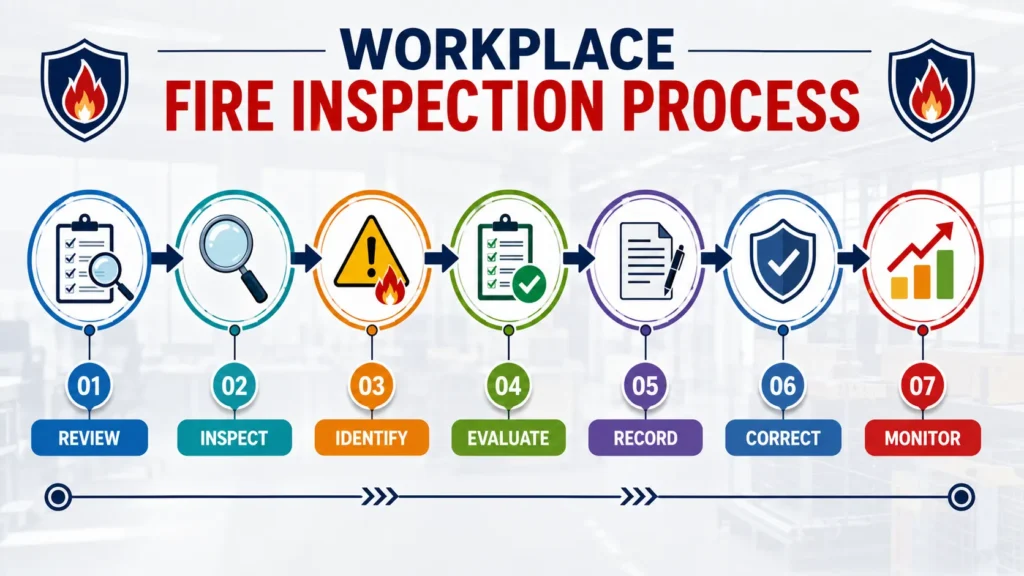
Professional fire inspections follow a structured process to ensure every area of the premises is assessed consistently.
Start Inspection

↓

Review Fire Safety Records

↓

Inspect Building Layout

↓

Check Escape Routes

↓

Inspect Fire Protection Systems

↓

Assess Electrical Safety

↓

Review Storage Areas

↓

Identify Fire Hazards

↓

Record Findings

↓

Recommend Corrective Actions
This systematic approach ensures that both visible and hidden hazards are identified before they become significant risks.
Categories of Fire Hazards Found During Workplace Inspections
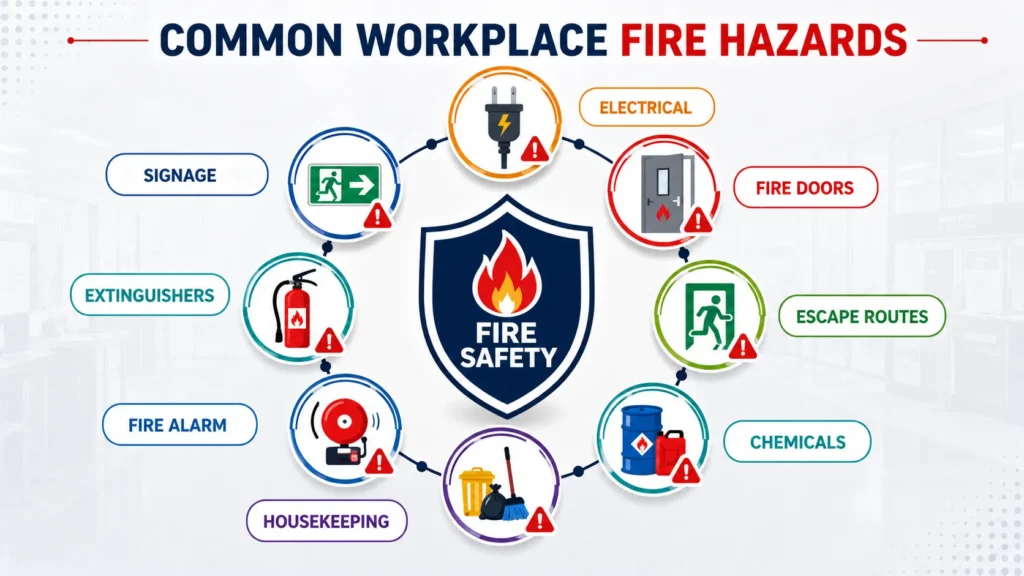
Rather than viewing fire hazards as one long checklist, inspectors generally assess them under several key categories.
| Category | Examples |
|---|---|
| Electrical Hazards | Faulty wiring, overloaded sockets, damaged equipment |
| Housekeeping Hazards | Waste accumulation, clutter, poor storage |
| Fire Protection Failures | Faulty alarms, blocked extinguishers, damaged fire doors |
| Human Behaviour | Smoking, unsafe work practices, lack of training |
| Chemical Hazards | Flammable liquids, gases, aerosols |
| Structural Hazards | Blocked exits, poor compartmentation, damaged escape routes |
Organising hazards into categories makes inspections more thorough and helps organisations prioritise corrective actions.
1. Faulty Electrical Equipment
Electrical faults remain one of the leading causes of workplace fires. During inspections, damaged or poorly maintained electrical equipment is one of the first areas examined because electrical failures can ignite combustible materials within seconds.
Inspectors commonly identify:
- Frayed electrical cables
- Exposed wiring
- Damaged plugs
- Loose electrical connections
- Defective appliances
- Poorly maintained machinery
- Temporary electrical installations
Even minor electrical defects can generate excessive heat or sparks capable of starting a fire.
How to Reduce the Risk
- Schedule routine electrical inspections.
- Remove damaged equipment from service immediately.
- Replace worn cables and plugs.
- Carry out Portable Appliance Testing (PAT) where appropriate.
- Ensure repairs are completed by competent electricians.
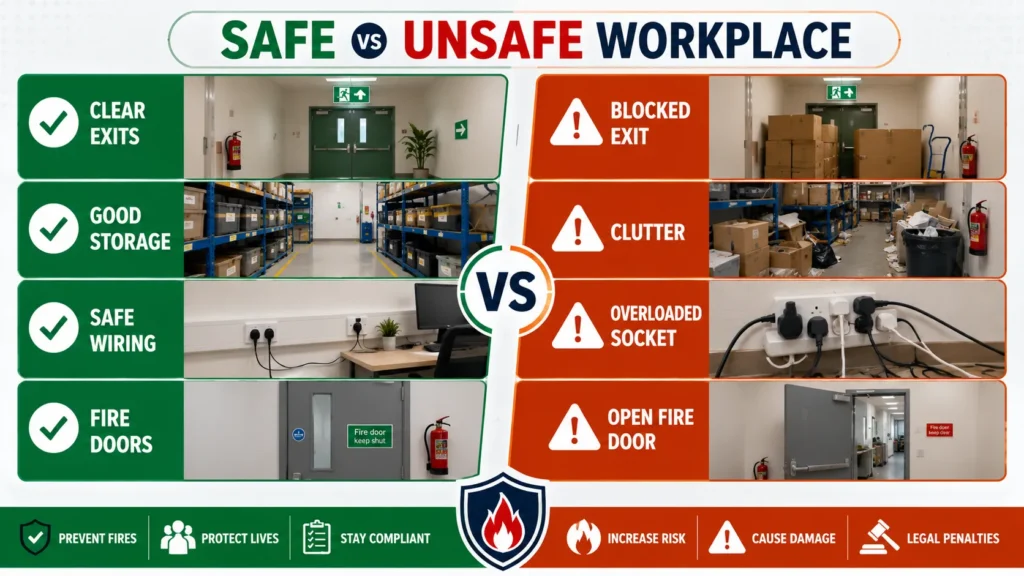
2. Overloaded Electrical Sockets and Extension Leads
One of the simplest yet most common hazards found during workplace inspections is overloaded electrical outlets.
Employees often connect multiple appliances to a single extension lead without realising the increased fire risk.
Inspectors regularly find:
- Multi-plug adaptors
- Daisy-chained extension leads
- High-powered appliances sharing one socket
- Cables running beneath carpets
- Overheated extension reels
Overloaded circuits generate excessive heat and increase the likelihood of electrical fires.
Warning Signs
| Inspection Finding | Risk Level |
|---|---|
| Multiple extension leads connected together | High |
| Warm or discoloured sockets | High |
| Loose electrical plugs | Medium |
| Damaged extension cables | High |
| Trailing cables | Medium |
3. Blocked Fire Exits and Escape Routes
Escape routes save lives during emergencies. Unfortunately, blocked exits remain one of the most frequent findings during workplace inspections.
Common examples include:
- Boxes stored in corridors
- Equipment placed near exits
- Furniture blocking escape routes
- Deliveries left in hallways
- Locked emergency exits
Even partial obstruction can delay evacuation during a fire.
Good Practice
Inspectors expect escape routes to remain:
- Clearly marked
- Fully accessible
- Free from storage
- Adequately illuminated
- Easy to open without delay
Daily housekeeping checks significantly reduce this risk.
4. Fire Doors Held Open or Damaged
Fire doors are designed to slow the spread of fire and smoke, protecting escape routes and giving occupants valuable time to evacuate safely.
However, inspections frequently reveal problems such as:
- Fire doors wedged open
- Missing self-closing devices
- Damaged seals
- Broken hinges
- Holes drilled through doors
- Damaged glazing
A fire door that cannot close properly loses much of its protective function.
Inspector Tip
Never wedge open a fire door unless it is fitted with an approved automatic hold-open device connected to the fire alarm system.
5. Poor Housekeeping and Waste Accumulation
Poor housekeeping is one of the easiest fire hazards to prevent, yet it remains one of the most common issues identified during inspections.
Combustible waste can fuel a fire and accelerate its spread.
Inspectors often find:
- Cardboard boxes
- Packaging materials
- Paper waste
- Wooden pallets
- Dust accumulation
- Overflowing waste bins
These materials become especially hazardous when stored near ignition sources.
Prevention Measures
- Remove waste regularly.
- Keep storage areas organised.
- Separate combustible waste from ignition sources.
- Maintain clear access around electrical equipment.
- Implement daily housekeeping inspections.
6. Improper Storage of Flammable Liquids and Chemicals
Many workplaces use chemicals capable of producing flammable vapours.
Examples include:
- Paints
- Solvents
- Cleaning products
- Aerosols
- Petrol
- Diesel
- LPG cylinders
Inspectors pay close attention to chemical storage because even small quantities can significantly increase fire severity.
Safe Storage Practices
| Unsafe Practice | Recommended Practice |
|---|---|
| Chemicals stored near heaters | Store in designated flammable cabinets |
| Open containers | Keep containers sealed |
| Mixed incompatible chemicals | Store according to manufacturer guidance |
| Poor ventilation | Ensure adequate ventilation |
| Unlabelled containers | Clearly label all substances |
7. Faulty Fire Alarm Systems
A fire alarm provides the earliest warning during an emergency. If it fails, occupants may lose valuable evacuation time.
During inspections, common alarm-related issues include:
- Missed maintenance
- Fault indicators
- Obstructed detectors
- Covered smoke detectors
- Disabled alarm zones
- Missing testing records
Regular testing and servicing are essential to ensure reliable operation.
Top Workplace Fire Hazards by Inspection Priority
| Fire Hazard | Likelihood | Potential Impact | Inspection Priority |
|---|---|---|---|
| Faulty electrical equipment | High | Very High | Immediate |
| Overloaded sockets | High | High | Immediate |
| Blocked fire exits | High | Very High | Immediate |
| Damaged fire doors | Medium | Very High | High |
| Poor housekeeping | High | High | High |
| Flammable chemical storage | Medium | Very High | High |
| Faulty fire alarms | Medium | Very High | Immediate |
Prioritising hazards in this way helps organisations focus resources on the issues that present the greatest risk to life and property.
8. Obstructed or Inaccessible Fire Extinguishers
Fire extinguishers are often the first line of defence against a small fire. However, during workplace inspections, inspectors frequently discover extinguishers that cannot be accessed quickly because they are blocked by furniture, stock, machinery, or stored materials.
Other common issues include:
- Missing extinguishers
- Incorrect extinguisher type for the hazard
- Overdue servicing
- Damaged pressure gauges
- Missing inspection tags
- Poor signage
An extinguisher that cannot be located or used immediately may allow a small fire to develop into a major incident.
Best Practice
- Keep extinguishers visible and unobstructed.
- Install appropriate signage above each unit.
- Carry out routine visual inspections.
- Arrange annual servicing by a competent technician.
- Train employees on the correct use of extinguishers.
9. Inadequate Emergency Lighting
Power failures are common during fires, making emergency lighting essential for safe evacuation.
Inspectors commonly identify:
- Damaged emergency lights
- Burnt-out lamps
- Battery failures
- Poor lighting coverage
- Missed maintenance records
Without adequate emergency lighting, occupants may struggle to locate exits, increasing evacuation times and the risk of injury.
10. Missing or Damaged Fire Safety Signage
Fire safety signs provide clear instructions during an emergency. If signs are missing, damaged, or poorly positioned, occupants may become confused during an evacuation.
Common inspection findings include:
- Missing exit signs
- Faded safety notices
- Incorrect directional arrows
- Obstructed signage
- Outdated evacuation information
Fire safety signage should always remain visible, easy to understand, and appropriate for the building layout.
11. Unsafe Human Behaviour
People are often the biggest factor in workplace fire incidents. Even where fire protection systems are well maintained, unsafe behaviour can introduce unnecessary risks.
Inspectors frequently observe:
- Smoking in prohibited areas
- Leaving electrical equipment switched on
- Using portable heaters incorrectly
- Carrying out hot work without permits
- Blocking escape routes for convenience
- Poor housekeeping practices
Creating a strong fire safety culture through regular training and supervision is one of the most effective ways to reduce these risks.
12. Lack of Fire Safety Training
Employees who are unfamiliar with emergency procedures may respond incorrectly during a fire.
Common training-related deficiencies include:
- Employees unaware of evacuation routes
- Fire wardens not appointed
- New staff receiving no induction
- Contractors unaware of emergency procedures
- Fire drills not conducted regularly
A knowledgeable workforce is far more likely to recognise hazards and respond effectively during emergencies.
Fire Hazards by Workplace Type
Different industries present different fire risks. During inspections, assessors pay particular attention to hazards specific to each working environment.
| Workplace | Common Fire Hazards |
|---|---|
| Office | Overloaded sockets, portable heaters, blocked exits, paper storage |
| Warehouse | Combustible stock, forklift charging areas, pallet storage, blocked aisles |
| Construction Site | Temporary electrics, hot works, gas cylinders, combustible waste |
| Manufacturing | Machinery, welding, chemicals, dust accumulation |
| Retail Store | Seasonal displays, overloaded sockets, stockrooms, decorative materials |
| School or College | Laboratories, kitchens, electrical equipment, evacuation challenges |
| Hospital | Oxygen cylinders, medical equipment, vulnerable occupants |
| Hotel | Commercial kitchens, laundry facilities, guest electrical appliances |
| Care Home | Resident evacuation, oxygen equipment, electrical appliances |
Tailoring inspections to the specific workplace environment ensures that hazards unique to each industry are not overlooked.
Daily Workplace Fire Inspection Checklist
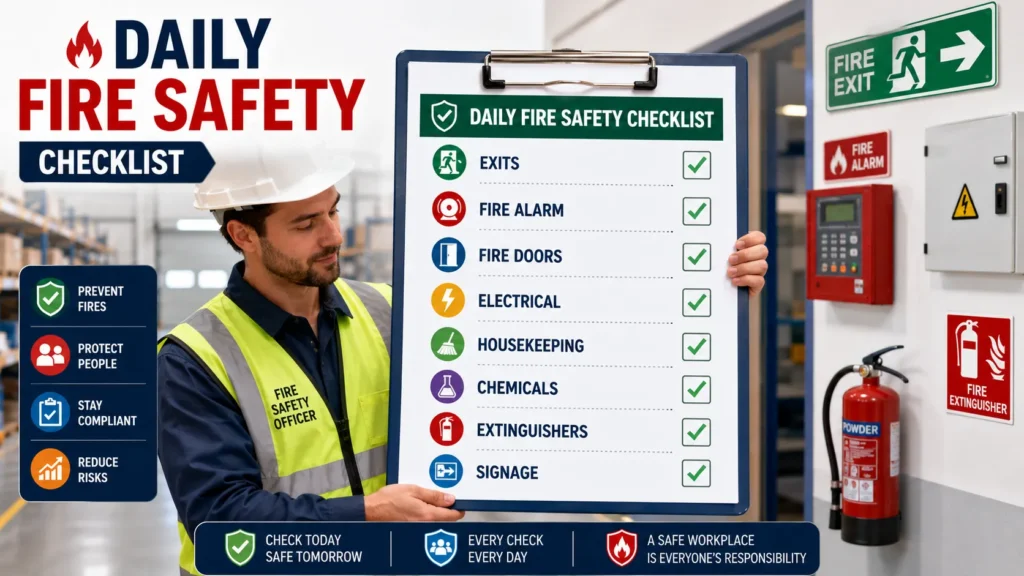
Routine inspections between formal fire risk assessments help organisations identify hazards before they become serious problems.
The following checklist can be used as part of daily or weekly workplace inspections.
| Inspection Item | Status |
|---|---|
| Fire exits are unobstructed | ✓ |
| Escape routes are clearly marked | ✓ |
| Fire doors close properly | ✓ |
| Fire extinguishers are accessible | ✓ |
| Fire alarm panel shows no faults | ✓ |
| Emergency lighting is operational | ✓ |
| Electrical equipment shows no visible damage | ✓ |
| Extension leads are not overloaded | ✓ |
| Flammable liquids are stored safely | ✓ |
| Waste has been removed | ✓ |
| Fire safety signs are clearly visible | ✓ |
| Staff understand emergency procedures | ✓ |
Using a simple checklist encourages consistency and helps maintain high standards of workplace fire safety.
Professional Workplace Fire Inspection Process
The most effective inspections follow a logical sequence to ensure no area is missed.
Arrival

↓

Review Fire Safety Documents

↓

Inspect Building Exterior

↓

Check Escape Routes

↓

Inspect Fire Doors

↓

Inspect Fire Alarm System

↓

Inspect Emergency Lighting

↓

Inspect Fire Extinguishers

↓

Review Electrical Safety

↓

Inspect Storage Areas

↓

Identify Hazards

↓

Assign Risk Rating

↓

Recommend Corrective Actions

↓

Complete Inspection Report

↓

Monitor Improvements
Following a structured workflow ensures inspections are thorough, repeatable, and aligned with best practice.
Fire Hazard Risk Matrix
Not every hazard presents the same level of risk. Inspectors often prioritise issues based on the likelihood of a fire occurring and the potential consequences if it does.
| Fire Hazard | Likelihood | Severity | Priority |
|---|---|---|---|
| Blocked emergency exit | High | Very High | Immediate |
| Faulty electrical wiring | High | Very High | Immediate |
| Fire door wedged open | Medium | High | High |
| Missing fire extinguisher | Medium | High | High |
| Poor housekeeping | High | Medium | High |
| Damaged emergency lighting | Medium | High | High |
| Missing signage | Low | Medium | Medium |
| Improper chemical storage | Medium | Very High | Immediate |
Addressing high-priority hazards first significantly reduces overall fire risk.
Best Practices for Preventing Workplace Fire Hazards
Preventing workplace fires requires continuous monitoring rather than relying solely on annual inspections.
Organisations should:
- Carry out regular workplace inspections.
- Keep escape routes clear at all times.
- Maintain fire alarms and emergency lighting.
- Service fire extinguishers annually.
- Inspect electrical equipment routinely.
- Store flammable substances correctly.
- Maintain excellent housekeeping standards.
- Conduct regular fire drills.
- Train all employees in fire safety awareness.
- Review fire risk assessments whenever significant changes occur.
A proactive approach not only improves safety but also demonstrates a commitment to legal compliance and responsible workplace management.
Common Mistakes During Workplace Fire Inspections
Even organisations that perform regular inspections can overlook important details.
Some of the most common mistakes include:
- Focusing only on fire extinguishers while ignoring housekeeping.
- Failing to inspect storage rooms or plant areas.
- Ignoring temporary hazards created by contractors.
- Not reviewing previous inspection findings.
- Leaving corrective actions incomplete.
- Assuming employees know evacuation procedures.
- Forgetting to inspect external storage areas.
- Failing to document inspection results.
Avoiding these mistakes leads to more effective inspections and stronger fire safety performance.
Why Fire Safety Training Is Essential
The effectiveness of workplace inspections depends on the competence of the people responsible for carrying them out.
Employees who understand fire hazards are more likely to:
- Identify unsafe conditions early.
- Report defects immediately.
- Follow safe working practices.
- Keep escape routes clear.
- Respond correctly during emergencies.
- Support ongoing compliance with workplace fire safety requirements.
Investing in fire safety training helps organisations build a proactive safety culture rather than relying solely on periodic inspections.
Expand Your Fire Safety Knowledge with Inspire College
If you want to improve your understanding of workplace fire safety, inspections, and risk assessment, professional training can help you develop the practical knowledge required to identify hazards and maintain compliance.
- Accredited Certified Fire Safety Training Course
- Level 4 Certificate in Fire Risk Assessment
- Fire Marshal Training
- Level 3 Award for Canine First Aid Skills
Final Thoughts
Workplace inspections are one of the most effective ways to prevent fires before they occur. By identifying hazards such as faulty electrical equipment, blocked escape routes, damaged fire doors, poor housekeeping, improperly stored chemicals, inaccessible firefighting equipment, and inadequate staff training, organisations can significantly reduce the likelihood of fire incidents and protect both people and property.
The most successful organisations do not treat fire inspections as a one-off compliance exercise. Instead, they integrate regular inspections into their everyday health and safety management systems, monitor corrective actions, and encourage employees to report hazards as soon as they are identified.
Combining routine workplace inspections with comprehensive fire risk assessments, ongoing maintenance, and professional fire safety training creates a safer working environment, supports compliance with UK fire safety legislation, and demonstrates a genuine commitment to protecting everyone who enters the workplace. By adopting a proactive approach to fire hazard identification and prevention, organisations can reduce risk, minimise disruption, and build a stronger culture of workplace safety.
Explore More Fire Safety & Risk Assessment Articles
Discover expert guides on fire safety careers, fire risk assessments, workplace compliance, fire protection systems, and professional qualifications to expand your knowledge and advance your career in fire safety.
- What is Fire Safety?
- Fire Risk Assessment
- Fire Safety: Essential Tips for Homes and Workplaces
- What Does a Senior Fire Safety Advisor Do? Roles, Responsibilities, and Career Guide
- Top Skills Every Senior Fire Safety Advisor Should Develop
- Is Fire Safety a Good Career Choice in the UK?
- Senior Fire Safety Advisor Career Progression: Exciting Roles, Salary & Leadership Path
- Is Fire Safety a Good Career Choice in the UK?
- Top Skills Every Senior Fire Safety Advisor Should Develop
- Senior Fire Safety Advisor vs Fire Risk Assessor: Which Career Is Right for You?
- Senior Fire Safety Advisor: Top Industries Hiring Across the UK
- Fire Risk Assessment Explained: A Complete Beginner’s Guide
- Qualified Fire Risk Assessor Career Guide: Training, Skills, and Job Opportunities
- Senior Fire Safety Advisor: Top Industries Hiring Across the UK
- The 5 Essential Steps of Fire Risk Assessment Explained
- Common Risk Assessment Mistakes and How to Avoid Them
- How Fire Safety and Risk Assessment Reduce Workplace Hazards
- Essential Fire Safety Tips Everyone Should Know to Stay Safe
- Fire Safety Planning and Risk Assessment for Businesses
- How to Conduct an Effective Risk Assessment Step by Step
- Fire Safety Checklist for Homes, Offices & Commercial Buildings
- Fire Safety Checklist for Homes, Offices & Commercial Buildings
- Common Risk Assessment Mistakes and How to Avoid Them
- Fire Risk Assessment vs Fire Safety Audit: What’s the Difference?
- How Often Should a Fire Risk Assessment Be Reviewed?
- Essential Fire Safety Duties for Landlords and Property Managers