
Is Fire Safety a Good Career Choice in the UK?
Choosing the right career is one of the most important decisions anyone can make. In today’s rapidly evolving workplace, professionals are increasingly looking for careers that offer long-term job security, competitive salaries, meaningful work, and opportunities for continuous growth. If you’re wondering “Is Fire Safety a Good Career?”, the answer is increasingly yes. Fire safety is one profession that meets all of these expectations while playing a critical role in protecting lives, property, and businesses.
Across the UK, organisations are under increasing pressure to comply with fire safety legislation and maintain safe environments for employees, customers, residents, and visitors. From commercial offices and hospitals to schools, warehouses, hotels, and residential developments, every workplace requires effective fire safety management. This growing demand has created excellent career opportunities for qualified fire safety professionals, particularly those with specialist knowledge of fire risk assessment, regulatory compliance, emergency planning, and fire prevention.
Whether you are leaving education, considering a career change, or already working in health and safety, fire safety offers a rewarding and future-focused profession with diverse employment opportunities. Qualified professionals can work across multiple industries, progress into senior leadership positions, establish independent consultancy businesses, or specialise in areas such as fire risk assessment, fire engineering, compliance management, and building safety.
One of the biggest advantages of choosing fire safety as a career is that the skills are transferable across almost every sector. As legislation evolves and organisations continue investing in workplace safety, the demand for competent fire safety professionals is expected to remain strong for years to come.
This guide explains why fire safety has become one of the UK’s fastest-growing professional fields, explores career opportunities, salary expectations, qualification pathways, essential skills, and future industry trends, helping you decide whether it is the right career choice.
Why Fire Safety Is Becoming One of the UK’s Fastest-Growing Careers
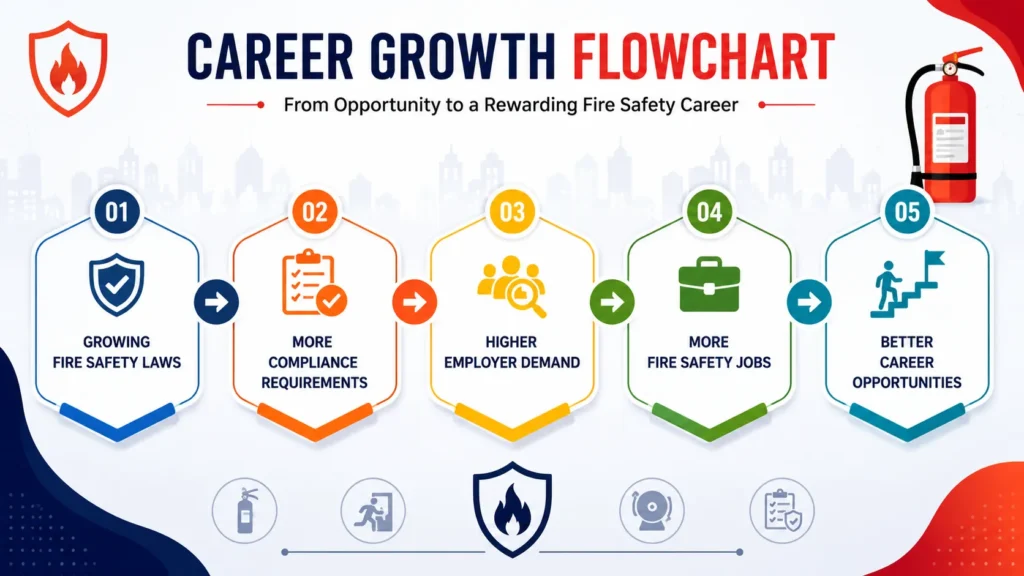
Fire safety has evolved significantly over the past decade. It is no longer viewed simply as a compliance requirement but as an essential part of organisational risk management, business continuity, and public safety. High-profile fire incidents, updated legislation, and greater awareness of building safety have encouraged employers to invest in experienced fire safety professionals who can proactively identify risks and improve safety standards.
The UK’s regulatory environment has also contributed to increased demand. Employers, landlords, facilities managers, and building owners have legal responsibilities to ensure that fire risks are properly assessed and controlled. Failing to meet these responsibilities can result in financial penalties, reputational damage, business disruption, and, most importantly, risks to human life.
This combination of legal obligations and growing awareness has created a stable and expanding employment market for professionals with recognised fire safety qualifications.
Key reasons why fire safety careers continue to grow include:
- Increasing demand for qualified fire safety professionals
- Strong focus on workplace health and safety
- Ongoing improvements to building safety standards
- Greater emphasis on fire risk assessment and prevention
- Expansion of commercial, industrial, and residential developments
- Higher expectations from insurers and regulatory authorities
- Growth in specialist fire safety consultancy services
- Increased investment in compliance and risk management
Unlike many industries that experience fluctuations in demand, fire safety remains an essential function because every organisation must protect people, property, and business operations.
What Does a Fire Safety Professional Do?
Fire safety professionals are responsible for preventing fires, reducing risks, ensuring legal compliance, and helping organisations prepare for emergencies. Rather than responding to fires after they occur, they focus on preventing incidents through effective planning, inspections, training, and risk management.
Depending on their role, responsibilities may include conducting fire risk assessments, inspecting buildings, reviewing fire protection systems, developing emergency evacuation procedures, delivering fire safety training, investigating incidents, and advising management on legal compliance.
A typical working day may involve visiting different sites, inspecting fire safety measures, reviewing documentation, meeting with clients or management teams, and preparing professional reports with practical recommendations for improvement.
Common Responsibilities of Fire Safety Professionals
| Responsibility | Purpose |
|---|---|
| Fire Risk Assessments | Identify hazards and evaluate fire risks |
| Building Inspections | Verify compliance with fire safety standards |
| Emergency Planning | Develop evacuation procedures and emergency response plans |
| Fire Safety Training | Improve staff awareness and preparedness |
| Compliance Audits | Ensure legal and regulatory compliance |
| Report Writing | Document findings and recommend corrective actions |
| Fire Protection Reviews | Assess alarms, extinguishers, emergency lighting, fire doors, and other safety systems |
| Incident Investigation | Analyse fire-related incidents and recommend preventive measures |
Every responsibility contributes to creating safer environments and reducing the likelihood of fire-related emergencies.
Why Fire Safety Professionals Are Essential in Every Industry
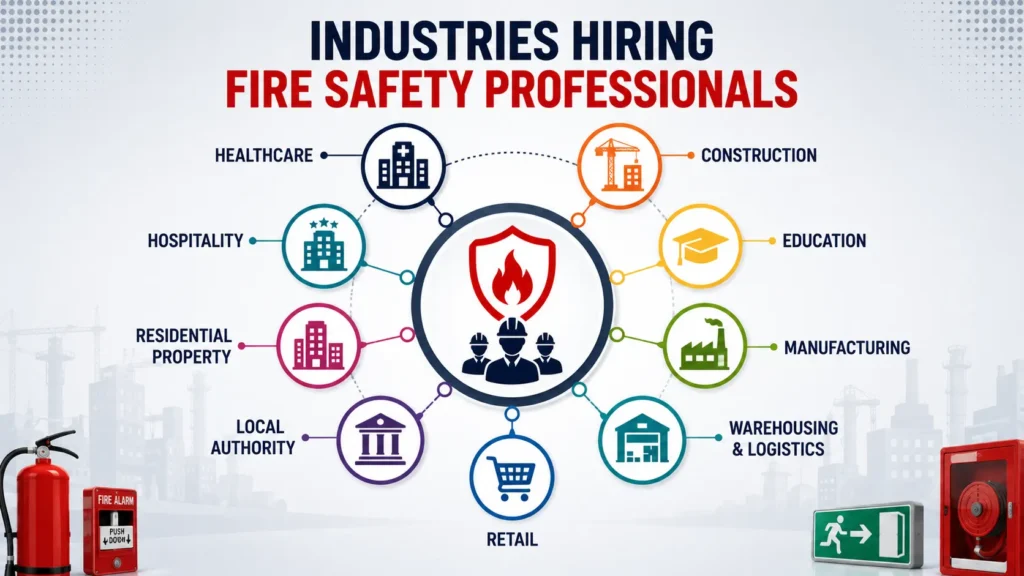
One of the strongest reasons to consider fire safety as a career is its universal relevance. Unlike professions that are tied to a single industry, fire safety expertise is needed wherever people live, work, study, or receive services.
A manufacturing facility requires fire safety professionals to manage combustible materials and industrial processes. Hospitals depend on them to protect vulnerable patients and ensure safe evacuation procedures. Schools need robust fire prevention strategies to safeguard staff and students, while hotels, shopping centres, warehouses, and office buildings all require ongoing fire risk management to remain compliant with legal requirements.
This broad demand creates exceptional career flexibility. Professionals can move between industries, specialise in particular sectors, or build expertise in complex environments such as healthcare, construction, or high-rise residential buildings.
Industries Employing Fire Safety Professionals
| Industry | Typical Responsibilities |
|---|---|
| Construction | Site fire safety planning and compliance |
| Healthcare | Patient evacuation planning and risk management |
| Education | School fire safety policies and emergency drills |
| Hospitality | Guest safety and evacuation procedures |
| Manufacturing | Process fire prevention and hazardous material management |
| Warehousing and Logistics | Storage safety and emergency response planning |
| Retail | Public safety and compliance inspections |
| Residential Property Management | Fire risk assessments and building compliance |
| Local Authorities | Public building inspections and enforcement support |
| Facilities Management | Ongoing maintenance of fire safety systems |
The ability to work across multiple sectors makes fire safety one of the most versatile career choices within the health and safety profession.
Career Opportunities in Fire Safety
Fire safety is not limited to a single job title. It offers a wide range of career paths, allowing professionals to specialise according to their interests, qualifications, and experience.
Many people begin their careers in entry-level fire safety or health and safety roles before progressing into specialist or leadership positions. With additional qualifications and practical experience, opportunities expand into consultancy, compliance management, and strategic advisory roles.
Typical Career Path
Fire Safety Assistant
↓
Fire Safety Officer
↓
Fire Risk Assessor
↓
Senior Fire Safety Advisor
↓
Fire Safety Consultant
↓
Fire Safety Manager
↓
Head of Fire Safety
↓
Director of Health, Safety and Fire Compliance
This progression demonstrates that fire safety offers clear opportunities for professional development, increased responsibility, and higher earning potential.
Is There Demand for Fire Safety Professionals in the UK?
The simple answer is yes. Demand for competent fire safety professionals continues to grow across both the public and private sectors.
Several factors contribute to this demand. Organisations must comply with UK fire safety legislation, conduct regular fire risk assessments, maintain fire protection systems, and provide appropriate fire safety training. As buildings become more complex and safety expectations continue to rise, employers increasingly seek qualified professionals who can provide expert guidance and ensure compliance.
In addition, ongoing investment in commercial developments, infrastructure projects, healthcare facilities, educational institutions, and residential housing has expanded the need for skilled fire safety specialists. Employers value professionals who can combine technical knowledge with practical experience to reduce risks and support organisational resilience.
The profession also offers strong long-term stability. Fire safety is a legal and operational necessity rather than a discretionary function, making it less vulnerable to economic fluctuations than many other career sectors.
Benefits of Choosing a Career in Fire Safety
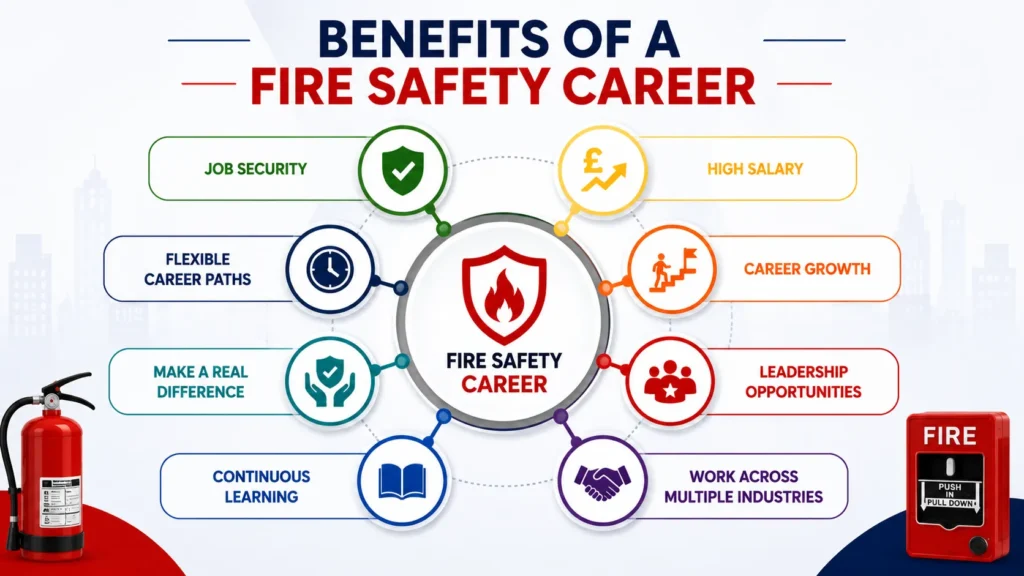
One of the biggest reasons people choose a career in fire safety is the combination of purpose, stability, and professional growth. Unlike many careers that are heavily influenced by changing market trends, fire safety remains an essential function because every organisation has a legal and moral responsibility to protect people from fire risks.
Whether you work in the public sector, private industry, construction, healthcare, or facilities management, your expertise contributes directly to saving lives, protecting valuable assets, and ensuring businesses remain compliant with UK fire safety legislation.
Key Benefits of a Fire Safety Career
| Benefit | Why It Matters |
|---|---|
| Excellent Job Security | Every organisation requires fire safety expertise. |
| Competitive Salaries | Salaries increase significantly with experience and qualifications. |
| Career Progression | Clear pathways from entry-level roles to senior leadership positions. |
| Diverse Industries | Opportunities across healthcare, construction, education, retail, manufacturing, and more. |
| Meaningful Work | Help prevent fires and protect lives every day. |
| Continuous Learning | Regular opportunities to develop new technical and leadership skills. |
| Consultancy Opportunities | Experienced professionals can work independently or establish their own consultancy. |
| International Recognition | Fire safety knowledge is valued in many countries. |
These advantages make fire safety an attractive option for both new professionals and experienced individuals looking for a rewarding career change.
Is Fire Safety a Stable Career in the UK?
Job stability is an important consideration when choosing a profession, and fire safety performs exceptionally well in this area.
Unlike careers that depend on consumer demand or seasonal trends, fire safety is driven by legislation, regulatory compliance, insurance requirements, and organisational responsibility. Every business, regardless of size or industry, must manage fire risks effectively.
Growing investment in infrastructure, commercial developments, healthcare facilities, schools, residential buildings, and industrial sites has further increased the need for competent fire safety professionals.
Additional factors supporting long-term career stability include:
- Ongoing updates to UK fire safety legislation
- Increased focus on building safety and compliance
- Expansion of specialist fire risk assessment services
- Greater employer investment in workplace safety
- Growing awareness of fire prevention and emergency planning
- Strong demand for experienced advisors and consultants
For professionals seeking a career with long-term security and continuous demand, fire safety remains one of the strongest choices within the health and safety sector.
How Much Do Fire Safety Professionals Earn in the UK?
Salary is often one of the first questions people ask when exploring a new career.
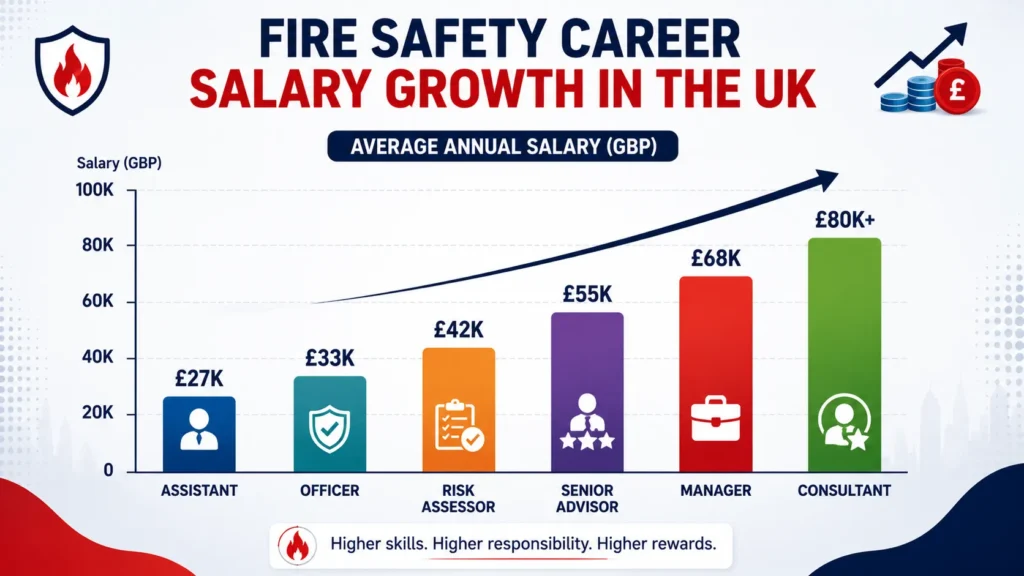
Although earnings vary depending on qualifications, experience, industry, employer, and location, fire safety professionals generally enjoy competitive salaries with excellent progression opportunities.
Typical UK Salary Guide
| Job Role | Approximate Annual Salary |
|---|---|
| Fire Safety Assistant | £24,000–£30,000 |
| Fire Safety Officer | £28,000–£38,000 |
| Fire Risk Assessor | £35,000–£50,000 |
| Senior Fire Safety Advisor | £45,000–£65,000 |
| Fire Safety Manager | £55,000–£80,000 |
| Fire Safety Consultant | £60,000–£90,000+ |
Professionals with specialist expertise in healthcare, high-rise residential buildings, construction, petrochemical facilities, or complex commercial environments often command higher salaries.
Those who establish independent consultancy businesses may increase their earnings further by providing services such as:
- Fire Risk Assessments
- Fire Safety Audits
- Compliance Consultancy
- Fire Safety Training
- Emergency Planning
- Building Safety Advice
What Qualifications Do Employers Look For?
Employers increasingly seek professionals who possess recognised qualifications alongside practical experience and a strong understanding of UK fire safety legislation.
While there is no single qualification that guarantees employment, developing a combination of technical knowledge, industry-recognised training, and workplace experience significantly improves career prospects.
Typical qualification pathways include:
- Level 3 Fire Safety qualifications
- Level 4 Fire Safety qualifications
- Fire Risk Assessment training
- Health and Safety qualifications
- Building Safety and Compliance training
- Specialist fire protection courses
- Continuing Professional Development (CPD)
Qualifications demonstrate commitment to professional development, but employers also value practical experience, communication skills, and the ability to apply knowledge effectively in real workplace situations.
Why a Level 4 Qualification Can Enhance Your Career
As professionals gain experience, many employers look for evidence of advanced technical knowledge and leadership capability.
A Level 4 qualification provides a broader understanding of fire safety management, fire legislation, risk assessment methodologies, emergency planning, compliance management, and organisational leadership.
Professionals holding a Level 4 qualification are often better positioned for roles involving:
- Senior advisory responsibilities
- Compliance management
- Fire safety leadership
- Policy development
- Team supervision
- High-risk premises
- Complex fire risk assessments
- Strategic planning
For those aiming to progress into senior positions, structured professional education provides a solid foundation for long-term career development.
Step-by-Step Roadmap to Becoming a Fire Safety Professional
One of the biggest misconceptions is that people must already have firefighting experience before entering the profession.
In reality, individuals from many different backgrounds—including construction, facilities management, engineering, health and safety, property management, and maintenance—successfully transition into fire safety careers.
The following roadmap provides a practical pathway.
Career Roadmap
Develop an Interest in Fire Safety
↓
Study Fire Safety Principles
↓
Gain a Recognised Qualification
↓
Learn UK Fire Safety Legislation
↓
Develop Fire Risk Assessment Skills
↓
Gain Practical Workplace Experience
↓
Build Professional Competence
↓
Progress to Senior Fire Safety Roles
↓
Continue Professional Development
↓
Become a Fire Safety Consultant or Manager
This progression reflects the journey followed by many successful professionals working within the UK’s fire safety sector.
Who Can Start a Career in Fire Safety?
Fire safety welcomes people from a wide range of educational and professional backgrounds.
Many employers value transferable skills just as highly as previous fire safety experience.
Suitable backgrounds include:
- Health and Safety Professionals
- Construction Managers
- Site Supervisors
- Facilities Managers
- Building Surveyors
- Engineers
- Electricians
- Maintenance Engineers
- Property Managers
- Compliance Officers
- Ex-Military Personnel
- Emergency Services Personnel
- Graduates seeking a specialist career
Individuals with strong analytical thinking, attention to detail, communication skills, and a genuine interest in protecting people often thrive within the profession.
Internal Learning Resources from Inspire College
If you are considering a career in fire safety or looking to progress into senior roles, these programmes available through Inspire College can support your professional development.
Recommended Fire Safety Courses
- ICTQual Level 4 Diploma Senior Fire Safety Advisor
- ProQual Level 4 Certificate in Fire Risk Assessment
- ProQual Level 5 Diploma in Fire Engineering Design
- ICTQual AB Level 6 International Diploma in Fire Safety & Firefighting Technology
These related programmes create a structured learning pathway, enabling learners to build knowledge progressively and prepare for increasingly senior responsibilities within the fire safety profession.
Industries Hiring Fire Safety Professionals
One of the greatest strengths of a career in fire safety is the variety of employment opportunities available. Almost every organisation has a legal responsibility to manage fire risks, which means qualified professionals are needed across both the public and private sectors.
Rather than being limited to a single industry, Fire Safety Advisors, Fire Risk Assessors, and Fire Safety Managers can build careers in healthcare, education, construction, manufacturing, local government, facilities management, and many other sectors. This flexibility allows professionals to explore different working environments while expanding their technical expertise.
Major Industries Employing Fire Safety Professionals
| Industry | Typical Responsibilities |
|---|---|
| Construction | Site inspections, fire prevention planning, compliance monitoring |
| Healthcare | Patient fire safety, evacuation planning, compliance audits |
| Education | School fire risk assessments, emergency planning, staff training |
| Hospitality | Fire safety management for hotels, restaurants, and entertainment venues |
| Manufacturing | Hazard identification, process safety, fire protection systems |
| Warehousing & Logistics | Storage safety, emergency response planning, fire prevention |
| Retail | Customer safety, evacuation procedures, compliance inspections |
| Residential Property | Fire risk assessments, building safety management, landlord compliance |
| Local Government | Public building inspections, enforcement support, policy implementation |
| Facilities Management | Ongoing fire safety maintenance and compliance management |
| Oil & Gas | High-risk fire prevention, emergency preparedness, hazardous material management |
| Energy & Utilities | Fire protection systems, operational safety, compliance monitoring |
| Airports & Transport | Passenger safety, emergency planning, infrastructure inspections |
This diversity means that professionals can specialise in an industry that matches their interests while continuing to develop valuable technical skills.
Essential Technical Skills Employers Look For
A successful Fire Safety Professional requires more than a qualification. Employers seek individuals who can apply technical knowledge to real-world situations, identify hazards, and recommend practical solutions that improve safety and ensure compliance.
Developing these skills increases employability and prepares professionals for senior advisory roles.
Core Technical Skills
- Fire Risk Assessment
- Fire Safety Legislation
- Building Construction Principles
- Fire Behaviour and Fire Dynamics
- Passive Fire Protection
- Active Fire Protection Systems
- Fire Alarm Systems
- Emergency Lighting
- Fire Doors and Fire Compartmentation
- Means of Escape Design
- Emergency Planning
- Fire Safety Management Systems
- Incident Investigation
- Risk Evaluation Techniques
- Fire Safety Auditing
- Fire Safety Report Writing
Professionals with expertise across these areas are highly valued because they can assess complex environments and provide informed recommendations that enhance workplace safety.
Soft Skills That Support Career Success
Technical expertise alone is not enough to build a successful career in fire safety. Professionals regularly interact with clients, contractors, senior managers, regulators, and employees, making strong interpersonal skills equally important.
Most Valued Soft Skills
| Skill | Why It Is Important |
|---|---|
| Communication | Explain technical issues clearly to different audiences |
| Leadership | Guide teams and promote a strong safety culture |
| Critical Thinking | Evaluate risks and identify practical solutions |
| Problem Solving | Resolve compliance and safety challenges efficiently |
| Attention to Detail | Identify hazards that others may overlook |
| Time Management | Prioritise inspections, reports, and compliance deadlines |
| Report Writing | Produce clear, accurate, and professional documentation |
| Decision-Making | Recommend suitable control measures with confidence |
| Teamwork | Collaborate with health and safety teams, engineers, and management |
| Adaptability | Respond effectively to changing legislation and workplace environments |
The combination of technical knowledge and professional skills enables Fire Safety Advisors to build trust with employers and clients while delivering high-quality fire safety solutions.
Is Fire Safety a Future-Proof Career?
One of the strongest reasons to enter the profession is its long-term sustainability.
Fire safety is not a temporary trend or a career that becomes obsolete as technology evolves. Instead, advances in building design, digital compliance systems, and smart technologies are creating new opportunities for professionals with up-to-date knowledge and specialist expertise.
Several factors indicate that demand for competent fire safety professionals will continue to grow over the coming years.
Why Demand Will Continue to Increase
- Continued development of commercial and residential buildings
- Ongoing investment in infrastructure projects
- Increased emphasis on workplace health and safety
- Stricter compliance and enforcement requirements
- Greater awareness of fire prevention and risk management
- Adoption of digital inspection and reporting systems
- Expansion of smart buildings with integrated fire safety technologies
- Increased focus on sustainable and resilient building design
As organisations continue to invest in compliance and operational resilience, qualified fire safety professionals will remain an essential part of modern business operations.
Emerging Trends Shaping the Fire Safety Profession
Technology is transforming the way organisations manage fire safety. Professionals who understand these developments will be well positioned to take advantage of future career opportunities.
Key Trends
- Artificial Intelligence supporting fire risk analysis
- Smart fire detection and monitoring systems
- Internet of Things (IoT) sensors for early warning
- Digital fire risk assessment software
- Building Information Modelling (BIM) integration
- Cloud-based compliance management systems
- Data-driven maintenance planning
- Enhanced evacuation modelling
- Sustainable building fire safety strategies
- Remote inspections using digital technologies
Keeping pace with these innovations through continuous professional development helps professionals remain competitive in a rapidly evolving industry.
Fire Safety Career Compared with Other Health and Safety Careers
Many individuals considering a career in workplace safety are unsure whether to specialise in fire safety or pursue a broader health and safety role.
Although both professions contribute to safer workplaces, fire safety offers a specialist pathway with significant opportunities for advancement.
| Career | Primary Focus | Typical Workplace |
|---|---|---|
| Fire Safety Officer | Fire prevention and compliance | Commercial, industrial, residential |
| Fire Risk Assessor | Building fire risk evaluations | Multiple property types |
| Senior Fire Safety Advisor | Strategic fire safety management | Large organisations and complex sites |
| Health and Safety Officer | General workplace safety | All industries |
| Fire Safety Consultant | Specialist advisory services | Consultancy and independent practice |
| Fire Safety Manager | Organisation-wide fire safety leadership | Large public and private organisations |
Professionals who develop specialist expertise often enjoy greater career flexibility and opportunities to work on complex, high-value projects.
Why Fire Safety Offers Excellent Career Progression
Unlike many occupations where advancement is limited, fire safety provides a clear and structured progression pathway. As qualifications, experience, and competence increase, professionals can move into increasingly senior and specialised roles.
Career Progression Flowchart
Entry-Level Fire Safety Role
↓
Fire Safety Officer
↓
Fire Risk Assessor
↓
Senior Fire Safety Advisor
↓
Fire Safety Manager
↓
Lead Fire Safety Consultant
↓
Head of Fire Safety
↓
Director of Health, Safety and Fire Compliance
Each stage brings greater responsibility, broader technical expertise, leadership opportunities, and improved earning potential.
Can You Become Self-Employed?
Yes. Many experienced professionals eventually choose to establish their own consultancy after gaining sufficient industry experience and building a strong professional reputation.
Independent consultants commonly provide services including:
- Fire Risk Assessments
- Fire Safety Audits
- Fire Strategy Reviews
- Fire Safety Training
- Emergency Evacuation Planning
- Fire Door Inspections
- Compliance Consultancy
- Building Safety Advice
- Policy Development
- Independent Fire Safety Reviews
Self-employment offers flexibility, the opportunity to work with a wide range of clients, and the potential for higher earnings. However, success requires strong technical competence, effective communication skills, and a commitment to maintaining professional standards through ongoing learning.
Why Fire Safety Is More Than Just a Job
For many professionals, fire safety becomes more than a career—it becomes a commitment to protecting lives and creating safer communities.
Every fire risk assessment completed, every emergency plan developed, and every safety improvement recommended has the potential to prevent incidents before they occur. This sense of purpose is one of the reasons many professionals remain in the industry throughout their careers.
In addition to professional satisfaction, fire safety offers stability, excellent progression opportunities, competitive salaries, and the chance to work across a wide range of industries. As the UK’s focus on building safety and regulatory compliance continues to strengthen, there has never been a better time to build a career in this rewarding profession.
How to Choose the Right Fire Safety Qualification
Selecting the right qualification is one of the most important decisions when starting or advancing a career in fire safety. While experience is invaluable, employers increasingly seek candidates who can demonstrate recognised training, technical knowledge, and a commitment to continuous professional development.
The best qualification depends on your current experience, career goals, and the level of responsibility you want to achieve. Entry-level qualifications help build a strong understanding of fire prevention and workplace safety, while advanced diplomas prepare professionals to manage complex fire safety programmes, conduct detailed risk assessments, advise organisations on compliance, and lead fire safety initiatives.
Before enrolling on a course, consider the following factors:
- Does the qualification align with your career goals?
- Is the curriculum relevant to current UK fire safety practices?
- Does it develop both technical knowledge and practical skills?
- Will it support progression into senior roles?
- Does it enhance your professional credibility with employers?
- Does it encourage continuous professional development?
Investing in the right qualification not only improves employability but also builds the confidence needed to make informed decisions in real workplace environments.
Why Professional Development Matters
Fire safety is a profession that continues to evolve. Changes in legislation, advances in fire protection technology, and new approaches to building safety require professionals to keep their knowledge current.
Successful Fire Safety Advisors recognise that learning does not stop after achieving a qualification. Ongoing professional development enables them to stay informed about best practices, emerging risks, and industry innovations.
Continuous development may include:
- Attending professional training courses
- Participating in industry seminars and workshops
- Reading updated fire safety guidance
- Learning about new fire protection technologies
- Expanding report-writing and communication skills
- Gaining experience across different building types
- Developing leadership and management capabilities
Employers value professionals who actively maintain and improve their competence throughout their careers.
Learning Pathway with Inspire College
Whether you are entering the profession or preparing for a senior leadership role, Inspire College offers qualifications that can support every stage of your career.
Recommended Internal Learning Pathway
Step 1
ICTQual Level 3 Award in Fire Safety Awareness
↓
Step 2
ICTQual Level 3 Certificate in Fire Safety
↓
Step 3
ICTQual Level 4 Certificate in Fire Risk Assessment
↓
Step 4
ICTQual Level 4 Diploma Senior Fire Safety Advisor
↓
Step 5
ICTQual Level 5 Diploma in Fire Safety Management
↓
Step 6
ICTQual Level 6 Diploma in Occupational Health and Safety
↓
Step 7
ICTQual Level 7 Diploma in Strategic Health and Safety Leadership
Is Fire Safety the Right Career for You?
Fire safety is an excellent career choice for individuals who enjoy solving problems, protecting people, and working in a profession that has a direct impact on public safety. It combines technical expertise with practical decision-making, communication, and leadership, making it a rewarding option for those who want a career with purpose.
It may be the right career if you:
- Enjoy identifying and solving workplace risks.
- Have strong attention to detail.
- Want a stable profession with long-term demand.
- Like working across different industries and environments.
- Are interested in legislation, compliance, and safety management.
- Want opportunities for career progression and leadership.
- Value continuous learning and professional development.
- Aspire to become a consultant or independent specialist in the future.
As organisations continue to prioritise fire prevention, regulatory compliance, and building safety, the need for competent professionals will remain strong. This makes fire safety one of the most resilient and future-focused career paths available in the UK.
Final Thoughts
So, is fire safety a good career choice in the UK? The answer is yes.
Fire safety offers an outstanding combination of job security, competitive salaries, meaningful work, and long-term career progression. Professionals are needed across virtually every sector, including construction, healthcare, education, manufacturing, hospitality, facilities management, local government, and residential property.
The profession also provides multiple pathways for growth. Whether your goal is to become a Fire Risk Assessor, Senior Fire Safety Advisor, Fire Safety Manager, or an independent Fire Safety Consultant, there are opportunities to develop specialist expertise and progress into leadership positions.
Success in this field depends on more than gaining a qualification. Employers look for professionals who combine recognised training with practical experience, sound judgement, effective communication, and a commitment to lifelong learning. Building these qualities will not only improve your career prospects but also enable you to make a real difference by helping organisations create safer workplaces and protect lives.
If you are ready to begin or advance your journey, the ICTQual Level 4 Diploma Senior Fire Safety Advisor at Inspire College provides a strong foundation for developing the technical knowledge, practical competence, and leadership skills required for senior fire safety roles. Combined with continuous professional development and workplace experience, it can help you build a successful and rewarding career in one of the UK’s most important and rapidly growing professions.
Explore More Fire Safety & Risk Assessment Articles
Discover expert guides on fire safety careers, fire risk assessments, workplace compliance, fire protection systems, and professional qualifications to expand your knowledge and advance your career in fire safety.
- What is Fire Safety?
- Fire Risk Assessment
- Fire Safety Equipment
- Fire Safety: Essential Tips for Homes and Workplaces
- Industrial Fire Safety: Complete Guide to Risk Assessment, Hazards & Prevention (2026)
- Fire Safety Training (2026): Complete Guide, Certification & Workplace Safety
- Level 4 Diploma in Fire Safety: Complete Guide to Career Growth, Skills, Compliance, and Professional Certification
- What Does a Senior Fire Safety Advisor Do? Roles, Responsibilities, and Career Guide
- Top Skills Every Senior Fire Safety Advisor Should Develop
- Senior Fire Safety Advisor vs Fire Risk Assessor: Which Career Is Right for You?
- Senior Fire Safety Advisor Career Progression: Exciting Roles, Salary & Leadership Path
- Top Skills Every Senior Fire Safety Advisor Should Develop
- The 5 Essential Steps of Fire Risk Assessment Explained
- Fire Risk Assessment Explained: A Complete Beginner’s Guide
- Qualified Fire Risk Assessor Career Guide: Training, Skills, and Job Opportunities
- Senior Fire Safety Advisor: Top Industries Hiring Across the UK
- How Fire Safety and Risk Assessment Reduce Workplace Hazards
- Fire Safety Planning and Risk Assessment for Businesses
- Essential Fire Safety Tips Everyone Should Know to Stay Safe
- How to Conduct an Effective Risk Assessment Step by Step
- Fire Safety Checklist for Homes, Offices & Commercial Buildings
- Failed a Fire Safety Inspection? Here’s What Happens Next