
Senior Fire Safety Advisor: Top Industries Hiring Across the UK
The demand for Senior Fire Safety Advisors in the UK has grown significantly over the past few years, driven by stricter fire safety regulations, increased investment in infrastructure, and a stronger focus on protecting people, property, and business continuity. From hospitals and high-rise residential developments to manufacturing plants and transport networks, organisations across multiple sectors are actively recruiting experienced fire safety professionals to manage risk, ensure compliance, and develop effective fire prevention strategies.
Following major legislative changes such as the Building Safety Act 2022, the Fire Safety Act 2021, and updates to the Regulatory Reform (Fire Safety) Order 2005, employers are placing greater emphasis on competent fire safety leadership. As a result, Senior Fire Safety Advisors have become essential members of health and safety teams, helping organisations meet legal obligations while creating safer environments for employees, residents, patients, and visitors.
Whether working as an in-house specialist, consultant, or independent advisor, these professionals contribute to fire risk assessments, emergency planning, staff training, compliance audits, and continuous improvement programmes. Their expertise is highly valued across both public and private sectors, making fire safety one of the UK’s most stable and rewarding career fields.
This guide explores the top industries hiring Senior Fire Safety Advisors in the UK, explains why demand continues to increase, highlights the responsibilities employers expect, and provides valuable insights for anyone looking to build a successful career in fire safety.
What Is a Senior Fire Safety Advisor?
A Senior Fire Safety Advisor is an experienced fire safety professional responsible for developing, implementing, monitoring, and improving fire safety management systems within an organisation. They ensure that buildings, operations, and emergency procedures comply with UK fire safety legislation while reducing fire-related risks.
Unlike entry-level fire safety roles, senior advisors often lead fire safety strategies, manage complex risk assessments, mentor junior professionals, liaise with enforcing authorities, and provide expert guidance to senior management.
Typical Responsibilities of a Senior Fire Safety Advisor
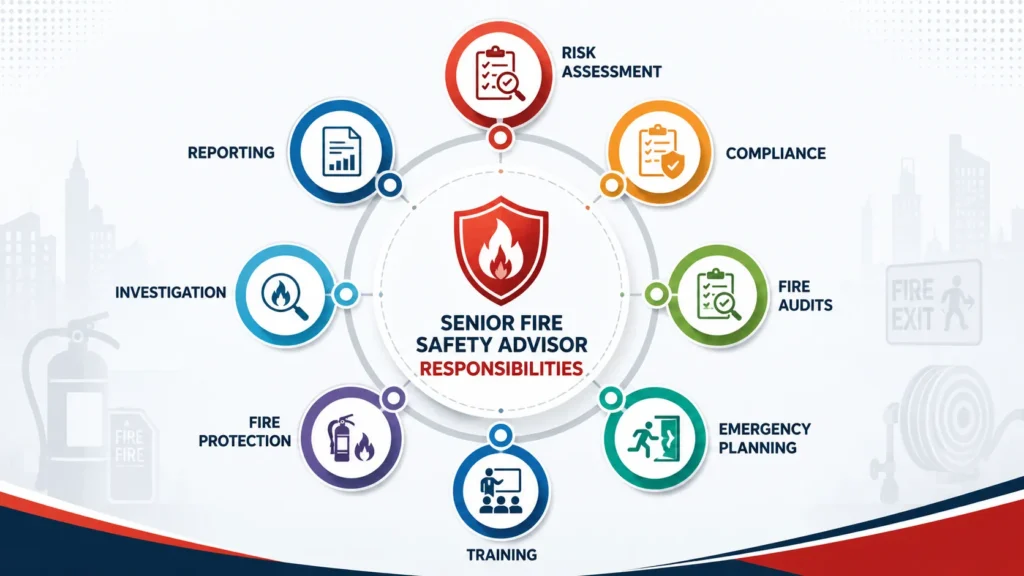
| Responsibility | Purpose |
|---|---|
| Fire Risk Assessments | Identify hazards and recommend risk reduction measures |
| Fire Safety Audits | Evaluate compliance with UK fire safety regulations |
| Emergency Planning | Develop evacuation and emergency response procedures |
| Staff Training | Improve fire awareness and emergency preparedness |
| Compliance Monitoring | Ensure legal and organisational compliance |
| Incident Investigation | Analyse fire-related incidents and recommend improvements |
| Fire Protection Systems | Monitor alarms, sprinklers, extinguishers, and passive fire protection |
| Policy Development | Create and update fire safety policies and procedures |
| Contractor Management | Ensure third-party work complies with fire safety standards |
| Continuous Improvement | Enhance fire safety performance through regular reviews |
Core Skills Employers Look For
Senior Fire Safety Advisors are expected to combine technical expertise with leadership and communication skills.
| Technical Skills | Professional Skills |
|---|---|
| Fire Risk Assessment | Leadership |
| Fire Safety Legislation | Communication |
| Building Safety Compliance | Decision-Making |
| Fire Investigation | Problem Solving |
| Emergency Planning | Project Management |
| Passive Fire Protection | Report Writing |
| Active Fire Protection Systems | Team Collaboration |
| Fire Safety Auditing | Training and Coaching |
Why Is Demand for Senior Fire Safety Advisors Increasing in the UK?
The UK fire safety sector is undergoing rapid transformation. Regulatory reforms, ageing infrastructure, urban development, and increased public awareness have encouraged organisations to invest more heavily in fire safety management. As a result, experienced professionals are in demand across a wide range of industries.
Several factors are driving this sustained growth.
Stronger Fire Safety Legislation
Recent legislative reforms have increased accountability for organisations responsible for managing fire risks. Employers now require qualified professionals who understand legal requirements and can implement effective fire safety strategies.
Key legislation influencing recruitment includes:
- Building Safety Act 2022
- Fire Safety Act 2021
- Regulatory Reform (Fire Safety) Order 2005
- Fire Safety (England) Regulations 2022
These regulations place greater emphasis on competent fire safety management, regular risk assessments, and documented compliance.
Increasing Construction and Infrastructure Projects
The UK continues to invest in residential developments, commercial buildings, transport infrastructure, healthcare facilities, and public buildings. Every new project requires fire safety expertise during planning, construction, occupation, and maintenance.
Senior Fire Safety Advisors help ensure that buildings meet fire safety standards throughout their lifecycle.
Greater Focus on Risk Management
Modern organisations recognise that effective fire safety is not only about legal compliance but also about protecting people, safeguarding assets, maintaining business continuity, and preserving organisational reputation.
Companies increasingly integrate fire safety into broader health and safety and enterprise risk management strategies.
Growing Demand for Competent Professionals
Many employers are seeking experienced advisors who can provide strategic guidance rather than simply completing inspections.
Senior professionals are expected to:
- Lead fire safety programmes
- Advise executive leadership
- Manage compliance across multiple sites
- Coordinate emergency planning
- Deliver fire safety training
- Improve organisational resilience
This shift has created attractive career opportunities for qualified fire safety specialists.
UK Fire Safety Recruitment Trends in 2026
Fire safety recruitment continues to expand across both public and private sectors. Employers are looking for professionals who possess practical experience, recognised qualifications, and an up-to-date understanding of UK fire safety legislation.
Several recruitment trends are shaping the market.
Trend 1: Increased Demand Across Multiple Industries
Fire safety roles are no longer limited to local authorities or fire and rescue services. Today, organisations across healthcare, construction, housing, education, manufacturing, transport, energy, and facilities management actively recruit Senior Fire Safety Advisors.
Trend 2: Competency Is Becoming More Important Than Ever
Employers increasingly prioritise candidates who can demonstrate competence through recognised qualifications, practical experience, and continuing professional development.
Professional certifications and specialised fire safety training help candidates stand out in competitive recruitment processes.
Trend 3: Multi-Site Fire Safety Management
Large organisations often operate multiple facilities across different regions. Senior advisors are expected to oversee fire safety compliance across entire property portfolios while maintaining consistent standards.
Trend 4: Digital Fire Safety Management
Technology is transforming fire safety management through digital inspections, cloud-based compliance systems, building information modelling (BIM), and smart fire detection systems.
Senior advisors who understand digital fire safety tools are becoming increasingly valuable.
Featured Snippet: Which Industries Hire the Most Senior Fire Safety Advisors in the UK?
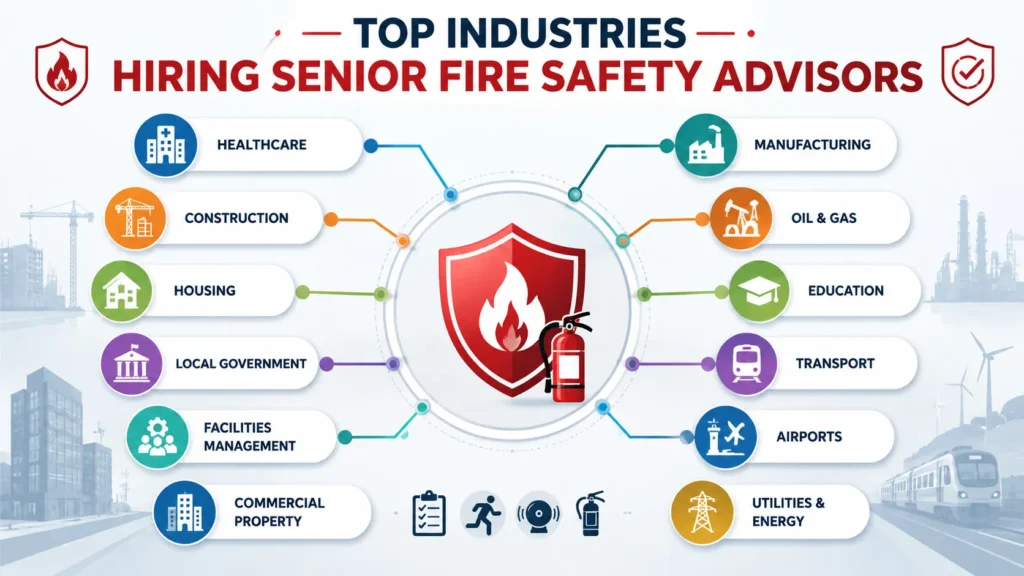
The industries with the highest demand for Senior Fire Safety Advisors in the UK include:
- Healthcare (NHS and Private Hospitals)
- Construction
- Housing Associations
- Local Government
- Facilities Management
- Commercial Property
- Manufacturing
- Oil and Gas
- Education
- Rail and Transport
- Airports
- Utilities and Energy
These sectors require experienced fire safety professionals to manage compliance, conduct fire risk assessments, oversee emergency planning, and protect people, buildings, and critical infrastructure.
Top Industries by Hiring Demand
The following table highlights the sectors currently offering the strongest career opportunities for Senior Fire Safety Advisors.
| Industry | Hiring Demand | Primary Focus |
|---|---|---|
| NHS and Healthcare | Very High | Patient safety, compliance, emergency planning |
| Construction | Very High | Building safety, design compliance, site inspections |
| Housing Associations | Very High | Residential fire risk management |
| Local Authorities | Very High | Public building compliance |
| Facilities Management | Very High | Multi-site fire safety management |
| Commercial Property | High | Office buildings, retail, mixed-use developments |
| Manufacturing | High | Industrial fire prevention and process safety |
| Oil and Gas | High | High-hazard environment protection |
| Education | High | Campus and student accommodation safety |
| Rail and Transport | High | Passenger safety and infrastructure protection |
| Airports | High | Aviation fire safety and emergency preparedness |
| Utilities and Energy | High | Critical infrastructure resilience |
How Employers Recruit Senior Fire Safety Advisors
The recruitment process typically follows a structured path to ensure candidates possess both technical expertise and leadership capability.
Career Flow
Education or Professional Qualification
↓
Fire Safety Training
↓
Practical Industry Experience
↓
Fire Risk Assessment Expertise
↓
Senior Fire Safety Advisor Role
↓
Leadership and Compliance Management
↓
Head of Fire Safety or Fire Safety Consultant
Top Industries Hiring Senior Fire Safety Advisors in the UK
Senior Fire Safety Advisors are employed across a wide range of industries where protecting lives, property, and business operations is a legal and operational priority. While the core objective remains the same—preventing fire incidents and ensuring compliance—the responsibilities can vary depending on the sector.
Below are the industries offering the strongest employment opportunities for experienced fire safety professionals in the UK.
1. Healthcare and the NHS
The healthcare sector is one of the largest employers of Senior Fire Safety Advisors in the UK. NHS Trusts, private hospitals, specialist healthcare facilities, mental health centres, rehabilitation units, and care homes all require comprehensive fire safety management due to the vulnerability of patients and the complexity of healthcare environments.
Healthcare buildings often operate around the clock and accommodate individuals who may be unable to evacuate without assistance. Fire safety professionals therefore play a critical role in developing evacuation strategies, conducting fire risk assessments, inspecting fire protection systems, and ensuring compliance with national fire safety regulations.
Typical Responsibilities
- Conduct fire risk assessments across healthcare facilities
- Develop compartmentation and evacuation strategies
- Monitor fire alarm and suppression systems
- Train healthcare staff in emergency procedures
- Support compliance inspections and audits
- Investigate fire incidents and recommend improvements
Demand Level: ★★★★★
Typical Employers
- NHS Trusts
- Private hospitals
- Care homes
- Mental health facilities
- Specialist healthcare providers
2. Construction and Building Development
Construction remains one of the fastest-growing sectors for Senior Fire Safety Advisors. Every major construction project requires fire safety expertise throughout planning, design, construction, handover, and occupancy.
Following the introduction of the Building Safety Act 2022, developers and contractors are investing more heavily in competent fire safety professionals to ensure buildings comply with modern safety standards.
Senior advisors often collaborate with architects, engineers, principal contractors, and project managers to integrate fire safety into every stage of a project.
Key Responsibilities
- Review fire safety designs
- Assess construction site fire risks
- Ensure compliance with Building Regulations
- Inspect passive fire protection systems
- Advise on fire-resistant construction materials
- Support regulatory approvals
Demand Level: ★★★★★
Typical Employers
- Construction companies
- Building developers
- Engineering consultancies
- Fire engineering firms
- Design consultants
3. Housing Associations and Residential Property
The UK’s housing sector has experienced a significant increase in fire safety recruitment due to enhanced building safety regulations and increased expectations for residential fire risk management.
Housing associations manage thousands of residential properties, including high-rise buildings, sheltered accommodation, and mixed-use developments. These organisations require experienced professionals to ensure residents remain safe while meeting legal responsibilities.
Responsibilities Include
- Fire risk assessments for residential buildings
- Inspection of communal areas
- Fire door compliance inspections
- Emergency evacuation planning
- Resident fire safety awareness
- Contractor compliance monitoring
Demand Level: ★★★★★
4. Local Government and Public Sector
Local authorities oversee numerous public buildings including libraries, offices, leisure centres, museums, schools, community centres, and civic buildings.
Each property must comply with UK fire safety legislation while remaining safe for employees and the public.
Senior Fire Safety Advisors often manage extensive property portfolios, requiring strong organisational and leadership skills.
Typical Duties
- Fire safety audits
- Compliance inspections
- Emergency planning
- Policy development
- Contractor supervision
- Fire safety reporting
Demand Level: ★★★★★
Public Sector Fire Safety Management Flow
Public Buildings
↓
Fire Risk Assessment
↓
Identify Hazards
↓
Recommend Controls
↓
Implement Improvements
↓
Staff Training
↓
Compliance Monitoring
↓
Continuous Review
5. Facilities Management
Facilities management companies oversee fire safety across multiple commercial and public-sector properties on behalf of clients.
This sector offers excellent career opportunities because advisors gain experience working across offices, retail premises, industrial facilities, healthcare sites, educational institutions, and mixed-use developments.
The role requires excellent planning, communication, and compliance management skills.
Typical Responsibilities
- Multi-site fire inspections
- Contractor management
- Fire equipment maintenance oversight
- Compliance reporting
- Client advisory services
- Emergency response planning
Demand Level: ★★★★★
Why Employers Value Fire Safety Advisors in Facilities Management
| Employer Requirement | Why It Matters |
|---|---|
| Multi-site experience | Consistent compliance across locations |
| Fire legislation knowledge | Legal compliance |
| Leadership | Managing contractors and teams |
| Communication | Working with clients and stakeholders |
| Risk assessment expertise | Reducing operational risks |
| Audit experience | Maintaining certification and compliance |
6. Commercial Property and Real Estate
Commercial property owners manage office buildings, shopping centres, mixed-use developments, business parks, hotels, and corporate headquarters.
Fire safety is essential for protecting occupants while maintaining insurance compliance and business continuity.
Senior Fire Safety Advisors work closely with property managers to ensure fire protection systems remain effective and that buildings meet legal requirements.
Responsibilities
- Fire safety audits
- Tenant compliance inspections
- Fire evacuation planning
- Fire protection system reviews
- Contractor monitoring
- Compliance reporting
Demand Level: ★★★★☆
7. Manufacturing and Industrial Facilities
Manufacturing environments often contain combustible materials, high-temperature equipment, hazardous chemicals, electrical machinery, and complex production processes.
These factors significantly increase fire risks, making experienced fire safety professionals essential.
Senior Fire Safety Advisors help manufacturers minimise operational risks while ensuring production can continue safely.
Common Manufacturing Fire Hazards
| Hazard | Risk |
|---|---|
| Electrical machinery | Equipment fires |
| Flammable liquids | Rapid fire spread |
| Dust accumulation | Explosion risk |
| Welding activities | Ignition sources |
| Chemical storage | Hazardous fires |
| Hot work operations | Workplace fires |
Key Responsibilities
- Process fire risk assessments
- Hazard identification
- Fire prevention programmes
- Emergency planning
- Investigation of incidents
- Compliance audits
Demand Level: ★★★★☆
8. Oil, Gas and Energy Sector
Few industries require stronger fire safety controls than oil and gas.
Refineries, offshore installations, fuel storage facilities, chemical plants, and energy infrastructure present high-risk environments where even small incidents can have severe consequences.
Senior Fire Safety Advisors contribute to risk management strategies, emergency preparedness, and regulatory compliance while supporting operational safety.
Responsibilities
- Process hazard reviews
- Fire protection strategy development
- Emergency response planning
- High-risk permit monitoring
- Fire system inspections
- Incident investigation
Demand Level: ★★★★☆
Skills Most Requested by Employers
Across these industries, employers consistently look for candidates who possess a balance of technical expertise, regulatory knowledge, and leadership capability.
| Technical Skills | Management Skills |
|---|---|
| Fire Risk Assessment | Leadership |
| Fire Safety Auditing | Strategic Planning |
| Building Regulations | Communication |
| Passive Fire Protection | Decision Making |
| Active Fire Systems | Team Management |
| Emergency Planning | Problem Solving |
| Fire Investigation | Stakeholder Engagement |
| Health & Safety Compliance | Report Writing |
Average Salary by Industry
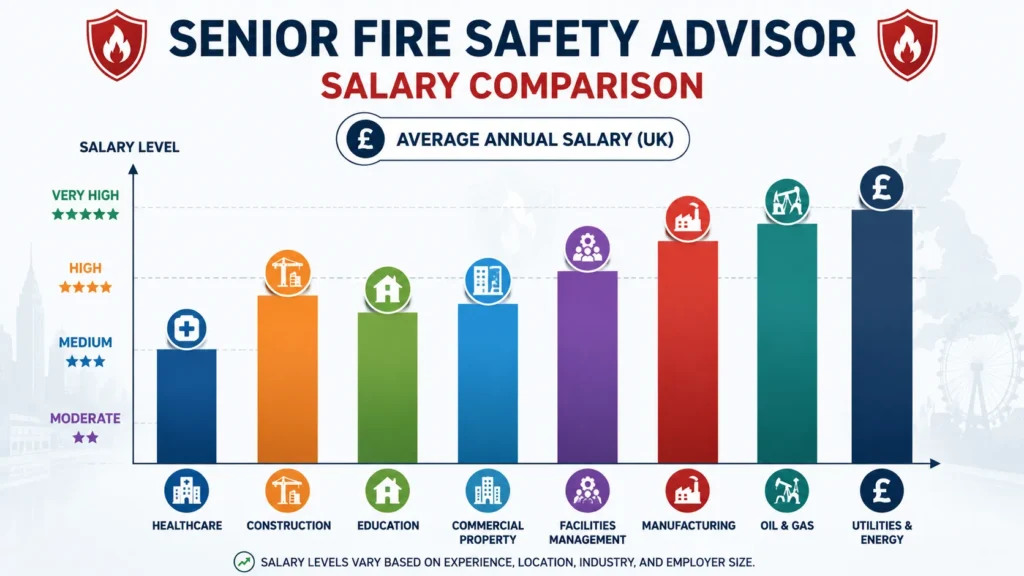
Although salaries vary by location, employer, qualifications, and experience, Senior Fire Safety Advisors generally enjoy competitive earning potential across the UK.
| Industry | Average Annual Salary (Approx.) |
|---|---|
| NHS & Healthcare | £48,000–£65,000 |
| Construction | £50,000–£75,000 |
| Housing Associations | £45,000–£65,000 |
| Local Government | £45,000–£60,000 |
| Facilities Management | £50,000–£70,000 |
| Commercial Property | £50,000–£70,000 |
| Manufacturing | £50,000–£72,000 |
| Oil & Gas | £60,000–£90,000+ |
How Employers Select Senior Fire Safety Advisors
Recruitment decisions are increasingly based on a combination of qualifications, experience, technical competence, and leadership ability rather than academic credentials alone.
Employer Hiring Process
Relevant Fire Safety Qualification
↓
Professional Training
↓
Industry Experience
↓
Fire Risk Assessment Expertise
↓
Knowledge of UK Fire Safety Legislation
↓
Leadership and Communication Skills
↓
Interview and Technical Assessment
↓
Appointment as Senior Fire Safety Advisor
As fire safety regulations continue to evolve, employers are placing greater emphasis on professionals who can not only interpret legislation but also implement practical, organisation-wide fire safety strategies. In the next section, we’ll explore the remaining high-demand industries, career progression opportunities, qualifications employers value most, recommended training pathways, internal learning resources from Inspire College, and the future outlook for Senior Fire Safety Advisors in the UK through 2030.
9. Education Sector
Schools, colleges, universities, and student accommodation providers have a legal responsibility to maintain safe learning environments for thousands of students, staff, and visitors every day. Large campuses often include lecture theatres, laboratories, libraries, sports facilities, halls of residence, and administrative buildings, each presenting different fire safety challenges.
Senior Fire Safety Advisors help educational institutions develop comprehensive fire safety programmes that protect occupants while ensuring compliance with UK legislation.
Key Responsibilities
- Conduct campus-wide fire risk assessments
- Review laboratory and workshop fire hazards
- Develop evacuation strategies for large buildings
- Deliver fire safety training to staff
- Monitor fire alarm and emergency lighting systems
- Support inspections by enforcing authorities
Demand Level: ★★★★☆
10. Rail and Transport
Rail operators, underground networks, bus depots, logistics hubs, and transport authorities rely on experienced fire safety professionals to manage risks associated with high passenger volumes, electrical infrastructure, and operational continuity.
Senior Fire Safety Advisors work closely with engineering, maintenance, and operational teams to reduce fire risks while maintaining safe transport services.
Typical Responsibilities
- Fire risk assessments for stations and depots
- Tunnel and infrastructure safety reviews
- Emergency response planning
- Fire system inspections
- Staff competency training
- Incident investigations
Demand Level: ★★★★☆
11. Airports and Aviation
Airports operate around the clock and include terminals, maintenance facilities, fuel storage areas, baggage systems, offices, retail outlets, and aircraft operations. These environments require robust fire safety management due to their complexity and the large number of passengers they serve.
Senior Fire Safety Advisors help airport operators maintain compliance while coordinating emergency preparedness across multiple departments.
Responsibilities
- Fire safety audits
- Emergency evacuation planning
- Fuel storage risk assessments
- Fire protection system management
- Contractor compliance monitoring
- Collaboration with airport fire and rescue teams
Demand Level: ★★★★☆
12. Utilities and Energy
Electricity generation, renewable energy projects, water treatment facilities, power distribution networks, and utility infrastructure all require comprehensive fire safety management.
As investment in renewable energy and critical infrastructure continues across the UK, demand for experienced fire safety professionals is expected to remain strong.
Responsibilities
- Infrastructure fire risk assessments
- Fire protection strategy development
- Compliance monitoring
- Emergency response planning
- Contractor management
- Fire safety audits
Demand Level: ★★★★☆
Comparison of the Top Hiring Industries
The table below summarises the sectors offering the strongest opportunities for Senior Fire Safety Advisors.
| Industry | Hiring Demand | Career Growth | Fire Risk Level |
|---|---|---|---|
| Healthcare | Very High | Excellent | High |
| Construction | Very High | Excellent | High |
| Housing Associations | Very High | Excellent | Medium |
| Local Government | Very High | High | Medium |
| Facilities Management | Very High | Excellent | Medium |
| Commercial Property | High | High | Medium |
| Manufacturing | High | Excellent | High |
| Oil & Gas | High | Excellent | Very High |
| Education | High | High | Medium |
| Rail & Transport | High | Excellent | High |
| Airports | High | Excellent | High |
| Utilities & Energy | High | Excellent | High |
Career Progression for Senior Fire Safety Advisors
Fire safety offers excellent long-term career prospects. With experience, recognised qualifications, and continuous professional development, professionals can progress into leadership, consultancy, or strategic management positions.
Career Progression Flowchart
Fire Safety Assistant
↓
Fire Safety Officer
↓
Fire Risk Assessor
↓
Senior Fire Safety Advisor
↓
Fire Safety Manager
↓
Head of Fire Safety
↓
Principal Fire Consultant
↓
Independent Fire Safety Consultant
As professionals gain experience, they often become responsible for managing larger teams, overseeing multi-site compliance programmes, and advising executive leadership on fire safety strategy.
Qualifications Employers Value
While practical experience is highly valued, employers increasingly seek candidates who combine industry experience with recognised qualifications and ongoing professional development.
The most competitive candidates typically demonstrate expertise in:
- Fire risk assessment
- Fire safety legislation
- Building safety compliance
- Passive and active fire protection
- Emergency planning
- Health and safety management
- Leadership and communication
- Incident investigation
- Fire safety auditing
- Compliance management
Continuous learning is particularly important because UK fire safety legislation, standards, and best practices continue to evolve.
Recommended Fire Safety Courses
Professionals looking to strengthen their knowledge and improve career prospects should consider relevant fire safety and health and safety qualifications.
- Senior Fire Safety Advisor Course
- Fire Safety Courses
- Fire Risk Assessment Couse
- Fire Marshal Training
Skills That Will Keep You Competitive
The role of a Senior Fire Safety Advisor continues to evolve. Employers increasingly value professionals who possess both technical competence and strategic thinking.
Future-Proof Skills
| Technical Expertise | Leadership Capability |
|---|---|
| Fire Engineering Principles | Team Leadership |
| Digital Fire Safety Systems | Strategic Planning |
| Building Safety Regulations | Project Management |
| Fire Risk Assessment | Stakeholder Communication |
| Compliance Auditing | Decision-Making |
| Emergency Planning | Change Management |
| Passive Fire Protection | Coaching and Mentoring |
| Fire Investigation | Report Writing |
Developing these skills can significantly improve employability across multiple industries.
Future Outlook for Senior Fire Safety Advisors in the UK
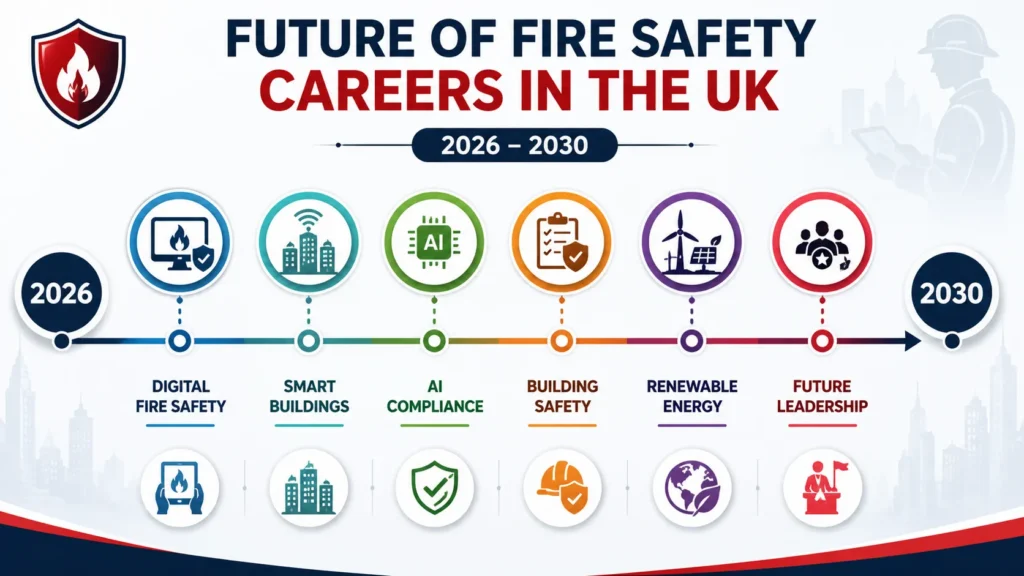
The employment outlook for Senior Fire Safety Advisors remains highly positive. Growing regulatory requirements, increased investment in infrastructure, ageing building stock, and heightened awareness of building safety continue to drive recruitment across both public and private sectors.
Several long-term trends are expected to shape the profession over the coming years:
- Increased demand for competent fire safety professionals
- Expansion of Building Safety Act compliance roles
- Greater investment in high-rise residential safety
- Growth in healthcare infrastructure projects
- Rising demand within facilities management
- Increased adoption of digital fire safety management systems
- More opportunities in renewable energy and critical infrastructure
- Continued emphasis on competency, training, and professional development
As organisations prioritise safety, resilience, and regulatory compliance, experienced Senior Fire Safety Advisors will remain essential to protecting people, assets, and business operations.
Why Choose a Career as a Senior Fire Safety Advisor?
A career as a Senior Fire Safety Advisor offers more than strong earning potential. It provides the opportunity to make a meaningful contribution to workplace safety, influence organisational decision-making, and help prevent incidents that could have serious consequences.
Professionals in this field enjoy:
- Strong employment demand across multiple industries
- Competitive salaries and benefits
- Clear career progression opportunities
- Opportunities to specialise in different sectors
- Continuous professional development
- Leadership and consultancy pathways
- Long-term career stability
- The satisfaction of protecting lives and property
For individuals passionate about safety, compliance, and risk management, this profession offers a rewarding and future-focused career.
Conclusion
The UK’s fire safety landscape continues to evolve, creating exceptional opportunities for experienced professionals across healthcare, construction, housing, facilities management, manufacturing, transport, energy, education, and many other sectors. Organisations are no longer seeking fire safety professionals solely to meet legal obligations—they are investing in Senior Fire Safety Advisors who can lead compliance programmes, strengthen organisational resilience, and create safer environments for employees, residents, patients, and the public.
Whether your goal is to advance within your current organisation or transition into a specialist fire safety role, developing recognised qualifications, practical experience, and leadership skills will significantly enhance your career prospects. As demand continues to grow, Senior Fire Safety Advisors will remain among the most sought-after professionals in the UK’s health and safety sector.
Advance Your Fire Safety Career with Inspire College
If you’re ready to build or progress your career in fire safety, explore Inspire College’s range of professional training programmes designed to develop practical skills, regulatory knowledge, and industry-recognised competence.
Browse our courses to find qualifications in:
- Senior Fire Safety Advisor Course
- Fire Safety Courses
- Fire Risk Assessment Couse
- Fire Marshal Training
With flexible learning options and career-focused training, Inspire College can help you gain the knowledge and confidence needed to succeed in today’s growing fire safety industry.
Explore More Fire Safety & Risk Assessment Articles
Discover expert guides on fire safety careers, fire risk assessments, workplace compliance, fire protection systems, and professional qualifications to expand your knowledge and advance your career in fire safety.
- What is Fire Safety?
- Fire Risk Assessment
- Fire Safety Equipment
- Fire Safety: Essential Tips for Homes and Workplaces
- Industrial Fire Safety: Complete Guide to Risk Assessment, Hazards & Prevention (2026)
- Fire Safety Training (2026): Complete Guide, Certification & Workplace Safety
- Level 4 Diploma in Fire Safety: Complete Guide to Career Growth, Skills, Compliance, and Professional Certification
- What Does a Senior Fire Safety Advisor Do? Roles, Responsibilities, and Career Guide
- Top Skills Every Senior Fire Safety Advisor Should Develop
- Is Fire Safety a Good Career Choice in the UK?
- Senior Fire Safety Advisor Career Progression: Exciting Roles, Salary & Leadership Path
- Is Fire Safety a Good Career Choice in the UK?
- Top Skills Every Senior Fire Safety Advisor Should Develop
- Senior Fire Safety Advisor vs Fire Risk Assessor: Which Career Is Right for You?
- The 5 Essential Steps of Fire Risk Assessment Explained
- Fire Risk Assessment Explained: A Complete Beginner’s Guide
- Qualified Fire Risk Assessor Career Guide: Training, Skills, and Job Opportunities
- How Fire Safety and Risk Assessment Reduce Workplace Hazards
- Fire Safety Planning and Risk Assessment for Businesses
- Essential Fire Safety Tips Everyone Should Know to Stay Safe
- Fire Risk Assessment vs Fire Safety Audit: What’s the Difference?
- How to Conduct an Effective Risk Assessment Step by Step
- Fire Safety Checklist for Homes, Offices & Commercial Buildings
- How Often Should a Fire Risk Assessment Be Reviewed?
- Failed a Fire Safety Inspection? Here’s What Happens Next