
Fire Safety Professional: What Employers Look for When Hiring
The demand for qualified fire safety professionals continues to grow as organisations place greater emphasis on workplace safety, regulatory compliance, and risk management. Across industries such as construction, healthcare, education, hospitality, manufacturing, retail, and commercial property management, employers are actively seeking skilled individuals who can identify fire risks, ensure legal compliance, and create safer working environments.
However, securing a role as a Fire Safety Professional requires more than simply obtaining a qualification. Employers look for candidates who combine technical expertise with practical experience, strong communication skills, problem-solving abilities, and a commitment to continuous professional development. Whether applying for an entry-level fire safety role or a senior advisory position, understanding what hiring managers expect can significantly improve career prospects.
The fire safety industry has also evolved rapidly in recent years. New legislation, stricter building safety standards, digital inspection technologies, and increasing focus on competency have reshaped employer expectations. Today’s organisations are looking for professionals who not only understand fire safety regulations but can also use modern technologies, conduct thorough fire risk assessments, prepare detailed compliance reports, and work effectively with multidisciplinary teams.
For aspiring professionals, understanding these recruitment trends is just as important as developing technical knowledge. Employers value candidates who demonstrate initiative, adaptability, and a genuine commitment to protecting people and property.
This comprehensive guide explains what employers look for when hiring a Fire Safety Professional, including the technical skills, qualifications, personal attributes, and industry knowledge that can help candidates stand out in today’s competitive job market.
What is a Fire Safety Professional?
A Fire Safety Professional is a trained specialist responsible for preventing fire-related incidents, protecting building occupants, and ensuring organisations comply with fire safety legislation and industry standards. These professionals assess fire risks, recommend safety improvements, develop emergency procedures, deliver fire safety training, and help organisations maintain safe environments.
Unlike a Fire Marshal, whose responsibilities are typically limited to supporting emergency procedures within a specific workplace, a Fire Safety Professional performs broader duties that often involve inspections, audits, compliance management, consultancy, and strategic fire safety planning.
Depending on qualifications and experience, a Fire Safety Professional may work in roles such as:
- Fire Risk Assessor
- Fire Safety Advisor
- Fire Safety Officer
- Health and Safety Advisor
- Fire Safety Consultant
- Building Safety Manager
- Compliance Manager
- Facilities Manager
- Fire Protection Specialist
- Safety and Risk Consultant
Many professionals work directly for organisations, while others are employed by consultancy firms, local authorities, construction companies, housing associations, educational institutions, healthcare providers, or fire safety service providers.
Core Responsibilities of a Fire Safety Professional
Although responsibilities vary by industry and role, employers generally expect a Fire Safety Professional to:
- Conduct comprehensive fire risk assessments.
- Identify workplace fire hazards.
- Recommend practical fire safety improvements.
- Ensure compliance with UK fire safety legislation.
- Develop emergency evacuation procedures.
- Deliver fire safety training and awareness programmes.
- Inspect fire protection systems and equipment.
- Prepare detailed inspection and compliance reports.
- Advise management on fire safety strategies.
- Support continuous improvement in workplace safety.
These responsibilities require a combination of technical knowledge, analytical thinking, and excellent communication skills.
Why demand for Fire Safety Professionals Is Growing
The demand for qualified Fire Safety Professionals has increased significantly across the UK due to changing legislation, stricter regulatory requirements, and greater awareness of workplace safety. Employers are investing more resources in fire prevention and compliance, creating new opportunities for qualified professionals.
Several factors continue to drive this demand.
Increasing Regulatory Requirements
Recent developments in UK fire safety legislation have placed greater emphasis on competent fire safety management.
Employers are expected to demonstrate compliance with regulations relating to:
- Fire risk assessments
- Emergency planning
- Building safety
- Fire protection systems
- Employee training
- Ongoing safety management
As legislation evolves, organisations increasingly rely on competent professionals to interpret requirements and implement effective fire safety strategies.
Greater Focus on Building Safety
Following significant changes to UK building safety regulations, organisations are strengthening their fire safety arrangements to improve occupant protection and regulatory compliance.
This has created demand for professionals capable of:
- Assessing fire risks
- Reviewing building layouts
- Evaluating evacuation strategies
- Advising on passive and active fire protection
- Supporting long-term safety planning
Growth Across Multiple Industries
Fire safety is no longer viewed solely as a construction or industrial discipline.
Today, employers across numerous sectors actively recruit Fire Safety Professionals, including:
- Commercial offices
- Healthcare facilities
- Educational institutions
- Hospitality businesses
- Retail organisations
- Manufacturing plants
- Warehousing and logistics
- Residential property management
- Public sector organisations
This broad demand offers diverse career opportunities for qualified candidates.
Increased Investment in Workplace Safety
Organisations increasingly recognise that proactive fire safety management reduces:
- Workplace incidents
- Business disruption
- Financial losses
- Insurance claims
- Regulatory penalties
- Reputational risks
Employers therefore seek professionals who can contribute directly to organisational resilience and business continuity.
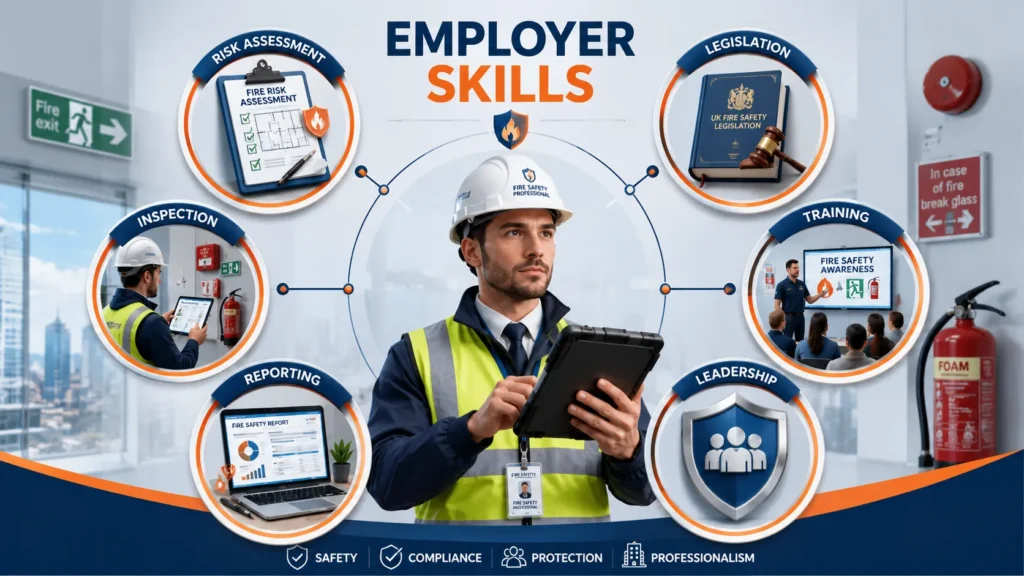
What Employers Look for When Hiring a Fire Safety Professional
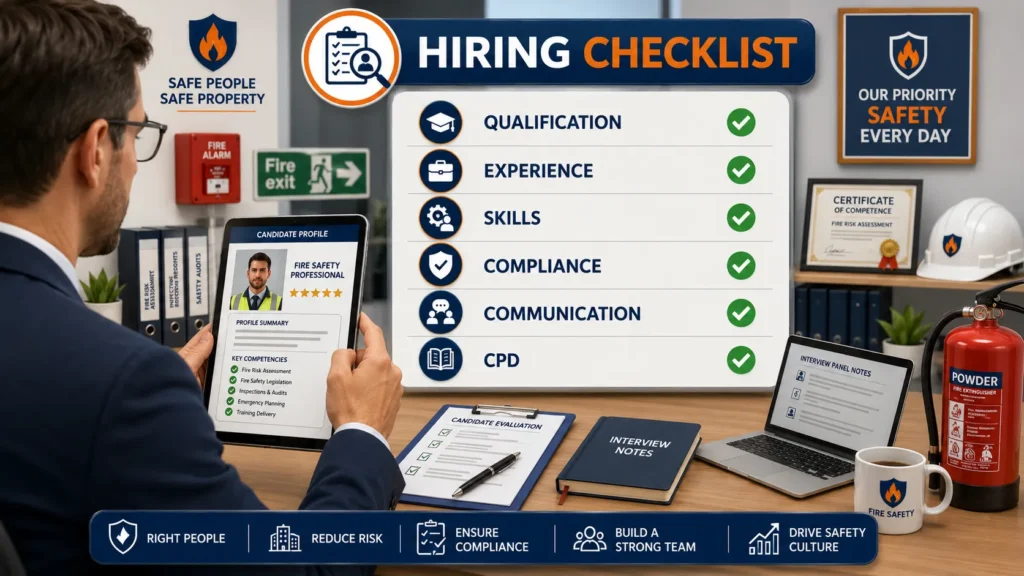
Recruitment decisions rarely depend on qualifications alone. Employers assess whether candidates possess the technical competence, practical experience, professional behaviour, and communication skills needed to perform effectively in real workplace situations.
Understanding these expectations allows candidates to tailor their CVs, prepare more effectively for interviews, and demonstrate greater value throughout the recruitment process.
Strong Technical Knowledge
Technical competence remains one of the most important hiring factors.
Employers expect candidates to understand:
- Fire behaviour and fire science
- Fire prevention principles
- Fire protection systems
- Fire risk assessment methodologies
- Building fire safety
- Emergency evacuation planning
- Passive and active fire protection
- Fire alarm systems
- Fire detection technologies
- Fire safety legislation
A strong technical foundation enables professionals to provide accurate advice and make informed decisions.
Knowledge of UK Fire Safety Legislation
A competent Fire Safety Professional should demonstrate familiarity with relevant UK legislation, including:
- Regulatory Reform (Fire Safety) Order 2005
- Fire Safety Act 2021
- Building Safety Act 2022
- Health and Safety at Work etc. Act 1974
- Management of Health and Safety at Work Regulations 1999
Employers value candidates who understand how legislation applies to different workplaces rather than simply memorising legal requirements.
Practical Fire Risk Assessment Skills
Many employers specifically recruit candidates with practical fire risk assessment experience.
They expect professionals to:
- Identify fire hazards
- Evaluate risks
- Recommend control measures
- Prioritise improvements
- Produce professional reports
- Communicate findings clearly
The ability to apply knowledge in real workplace environments is often more valuable than theoretical understanding alone.
Digital Competence
Modern fire safety increasingly relies on digital technologies.
Employers appreciate candidates who are comfortable using:
- Digital inspection software
- Mobile reporting applications
- Risk assessment tools
- Compliance management systems
- Building information modelling (BIM)
- Document management platforms
- Microsoft Office applications
Digital skills improve efficiency and support accurate record keeping.
Essential Technical Skills Employers Value
The following technical competencies consistently rank among the most desirable qualities employers seek when hiring a Fire Safety Professional.
| Technical Skill | Employer Importance |
|---|---|
| Fire Risk Assessment | ⭐⭐⭐⭐⭐ |
| UK Fire Safety Legislation | ⭐⭐⭐⭐⭐ |
| Emergency Evacuation Planning | ⭐⭐⭐⭐⭐ |
| Fire Safety Auditing | ⭐⭐⭐⭐⭐ |
| Fire Protection Systems | ⭐⭐⭐⭐☆ |
| Building Safety Knowledge | ⭐⭐⭐⭐☆ |
| Fire Safety Training Delivery | ⭐⭐⭐⭐☆ |
| Inspection and Reporting | ⭐⭐⭐⭐⭐ |
| Risk Management | ⭐⭐⭐⭐☆ |
| Digital Compliance Software | ⭐⭐⭐⭐☆ |
Candidates who demonstrate competence across several of these areas are generally more competitive in today’s recruitment market.
Problem-Solving Ability
Every workplace presents unique fire safety challenges. Employers value professionals who can analyse situations objectively, identify practical solutions, and balance legal compliance with operational requirements.
Strong problem-solving skills help professionals:
- Resolve compliance issues.
- Improve workplace safety.
- Recommend realistic control measures.
- Support continuous improvement.
- Build confidence among clients and stakeholders.
A Fire Safety Professional who combines technical expertise with sound judgement becomes an invaluable asset to any organisation.
Essential Soft Skills Employers Value
Technical expertise may help a candidate secure an interview, but soft skills often determine whether they receive a job offer. Employers want a Fire Safety Professional who can communicate effectively, build trust with clients and colleagues, and make informed decisions in challenging situations.
Fire safety professionals regularly interact with building owners, managers, contractors, regulatory authorities, and employees. The ability to explain technical information clearly is just as important as understanding fire safety legislation.
Communication Skills
One of the most valued qualities is strong communication.
A Fire Safety Professional should be able to:
- Explain complex fire safety requirements in simple language.
- Deliver engaging fire safety training sessions.
- Present findings confidently during meetings.
- Provide clear recommendations to management.
- Communicate effectively during inspections and audits.
Excellent communication ensures recommendations are understood and implemented correctly.
Attention to Detail
Fire safety inspections often involve identifying small issues that could become major risks if overlooked.
Employers look for professionals who can:
- Identify hidden fire hazards.
- Review documentation accurately.
- Inspect fire protection systems carefully.
- Verify compliance with regulations.
- Produce accurate reports.
Strong attention to detail helps organisations reduce risk and maintain compliance.
Problem-Solving and Critical Thinking
Every workplace presents different fire safety challenges.
Employers value candidates who can:
- Analyse workplace risks.
- Evaluate multiple solutions.
- Prioritise corrective actions.
- Balance safety with operational needs.
- Make informed recommendations.
Practical problem-solving demonstrates professional competence and confidence.
Leadership
Many Fire Safety Professionals coordinate inspections, lead training sessions, or advise senior management.
Leadership skills help professionals:
- Influence workplace safety culture.
- Encourage compliance.
- Support Fire Marshals.
- Coordinate emergency planning.
- Guide teams during inspections.
Leadership becomes increasingly important as professionals progress into senior advisory or management positions.
Time Management
Fire safety projects often involve multiple inspections, documentation deadlines, and client meetings.
Effective time management enables professionals to:
- Complete inspections efficiently.
- Meet reporting deadlines.
- Prioritise urgent risks.
- Manage multiple projects.
- Maintain high-quality work.
Employers appreciate professionals who consistently deliver reliable results.
Continuous Learning
Fire safety legislation, building technologies, and industry standards continue to evolve.
Successful Fire Safety Professionals actively:
- Attend CPD courses.
- Update technical knowledge.
- Follow industry guidance.
- Learn new inspection technologies.
- Improve professional competencies.
Employers increasingly favour candidates who demonstrate a commitment to lifelong learning.
Qualifications and Certifications Employers Prefer
Although practical experience is highly valued, recognised qualifications demonstrate competence and provide employers with confidence in a candidate’s knowledge and professional capability.
The qualifications required vary depending on the role, industry, and level of responsibility.
Fire Safety Qualifications
Many employers seek candidates with recognised fire safety qualifications covering topics such as:
- Fire safety management
- Fire prevention
- Fire protection
- Fire risk assessment
- Emergency planning
- Building fire safety
- Fire legislation
- Fire safety inspections
Higher-level qualifications often improve career progression opportunities.
Fire Risk Assessment Training
Employers increasingly value candidates who can carry out suitable and sufficient fire risk assessments.
Competence in this area demonstrates the ability to:
- Identify hazards.
- Evaluate risks.
- Recommend improvements.
- Produce professional reports.
- Support legal compliance.
Fire risk assessment skills remain one of the strongest differentiators during recruitment.
Health and Safety Qualifications
Because fire safety forms part of wider workplace risk management, many organisations also value qualifications in:
- Occupational health and safety
- Risk management
- Workplace safety
- Safety leadership
- Compliance management
Broader safety knowledge enables professionals to contribute more effectively across multiple disciplines.
Continuous Professional Development (CPD)
Professional development does not end after gaining a qualification.
Employers appreciate candidates who regularly:
- Attend workshops.
- Complete refresher courses.
- Participate in webinars.
- Study updated legislation.
- Expand technical knowledge.
Demonstrating ongoing learning reflects professionalism and commitment.
Industries That Hire Fire Safety Professionals
Demand for qualified Fire Safety Professionals extends across almost every sector of the economy. Organisations responsible for protecting employees, visitors, customers, or residents require competent professionals to manage fire safety and regulatory compliance.
Industries Recruiting Fire Safety Professionals
| Industry | Typical Employer Requirements |
|---|---|
| Construction | Site fire risk assessments, temporary fire safety, Building Safety Act compliance |
| Healthcare | Patient safety, evacuation planning, fire audits, healthcare compliance |
| Education | School and campus fire safety, emergency planning, staff training |
| Hospitality | Hotel fire safety, guest evacuation procedures, compliance inspections |
| Retail | Customer safety, emergency planning, fire prevention strategies |
| Manufacturing | High-risk process safety, hazardous materials, fire protection systems |
| Warehousing & Logistics | Storage fire risks, lithium battery safety, warehouse inspections |
| Property Management | Building compliance, residential fire safety, fire risk assessments |
| Public Sector | Regulatory compliance, inspections, emergency preparedness |
| Fire Safety Consultancy | Risk assessments, audits, client advisory services, compliance support |
Why Employers Recruit Across Multiple Sectors
Each industry presents unique fire safety challenges.
For example:
- Construction companies require professionals familiar with temporary site risks.
- Healthcare providers focus on patient evacuation and compartmentation.
- Hotels prioritise guest safety and emergency communication.
- Warehouses require expertise in storage risks and suppression systems.
- Schools require effective evacuation planning for large numbers of occupants.
Candidates with sector-specific knowledge often have a competitive advantage.
Fire Safety Professional Career Roadmap
Career progression within fire safety offers excellent opportunities for continuous development. As qualifications, experience, and professional competence increase, individuals can progress into more specialised and senior positions.
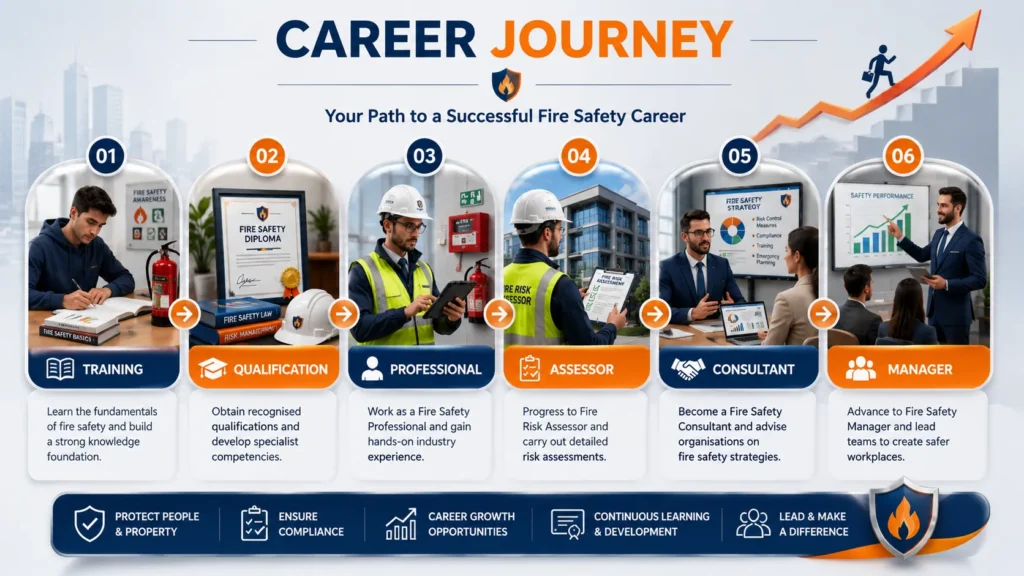
Career Progression Flowchart
Fire Safety Training
↓
Recognised Qualification
↓
Junior Fire Safety Role
↓
Fire Safety Professional
↓
Fire Risk Assessor
↓
Senior Fire Safety Advisor
↓
Fire Safety Consultant
↓
Fire Safety Manager
↓
Independent Fire Safety Consultant
This pathway is not fixed, and career progression will vary depending on experience, qualifications, industry sector, and professional development.
Fire Marshal vs Fire Safety Professional
Many people assume that a Fire Marshal and a Fire Safety Professional perform the same role. In reality, they have different responsibilities, levels of training, and career pathways.
Understanding this distinction helps employers recruit appropriately and helps candidates choose the right professional development route.
Comparison Table
| Fire Marshal | Fire Safety Professional |
|---|---|
| Workplace emergency role | Dedicated fire safety career |
| Supports emergency evacuation | Conducts fire risk assessments |
| Receives workplace Fire Marshal training | Holds specialist fire safety qualifications |
| Monitors local fire safety arrangements | Develops organisation-wide fire safety strategies |
| Assists during fire drills | Plans and evaluates emergency procedures |
| Reports hazards to management | Advises organisations on legal compliance |
| Limited workplace responsibilities | Broad technical and advisory responsibilities |
Which Role Do Employers Need?
The answer depends on the organisation’s requirements.
A Fire Marshal supports day-to-day emergency preparedness within a workplace, while a Fire Safety Professional provides specialist expertise in fire prevention, compliance, inspections, training, and strategic risk management.
Many organisations require both roles to ensure effective fire safety management.
Developing the Right Career Path
Individuals who begin as Fire Marshals often choose to expand their knowledge through recognised fire safety qualifications and practical experience.
Progressing towards becoming a Fire Safety Professional can lead to opportunities in:
- Fire risk assessment
- Fire safety consultancy
- Building safety
- Health and safety management
- Compliance management
- Facilities management
- Property safety
- Fire engineering support
As the demand for competent fire safety specialists continues to increase across the UK, employers are increasingly looking for professionals who combine technical expertise with practical experience, strong communication skills, and a commitment to continuous learning.
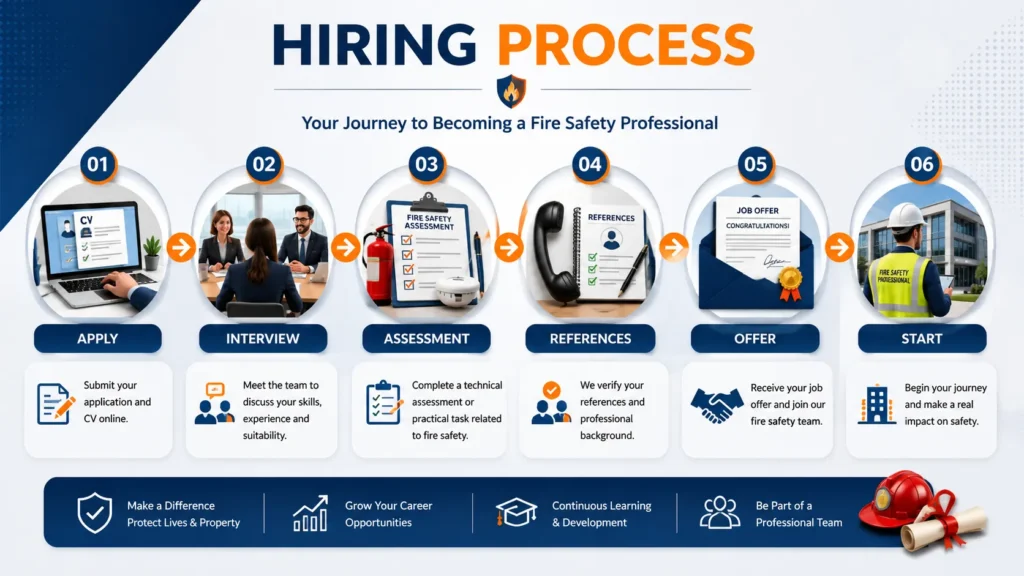
How to Build a Strong Fire Safety Professional CV
Your CV is often the first impression an employer has of your skills and experience. A well-structured CV should demonstrate technical competence, practical achievements, and a commitment to professional development. Rather than simply listing qualifications, focus on showing how your knowledge has been applied in real workplace situations.
A strong Fire Safety Professional CV should include:
- A professional profile summarising your experience and career goals.
- Relevant fire safety qualifications and certifications.
- Experience conducting fire risk assessments or safety inspections.
- Knowledge of UK fire safety legislation.
- Emergency evacuation planning experience.
- Fire safety training delivered to employees.
- Digital inspection or compliance software experience.
- Professional memberships or CPD activities.
- Measurable achievements and successful projects.
Whenever possible, include evidence of results rather than general responsibilities.
For example:
- Completed fire risk assessments across multiple commercial buildings.
- Developed emergency evacuation procedures for a multi-site organisation.
- Improved fire safety compliance following workplace audits.
- Delivered fire safety awareness training to over 200 employees.
Employers value candidates who demonstrate practical impact as well as technical knowledge.
Interview Tips for Fire Safety Professionals
Employers use interviews to assess more than technical competence. They want to understand how candidates think, communicate, solve problems, and respond to real workplace situations.
Preparing thoroughly can significantly improve your chances of success.
Understand Current UK Fire Safety Legislation
Interviewers often expect candidates to discuss legislation confidently.
Be familiar with topics such as:
- Regulatory Reform (Fire Safety) Order 2005
- Fire Safety Act 2021
- Building Safety Act 2022
- Health and Safety at Work etc. Act 1974
- Fire risk assessment principles
Rather than quoting legislation, explain how it influences workplace decision-making.
Prepare Practical Examples
Many employers use competency-based interview questions.
Examples include:
- Describe a fire safety challenge you solved.
- Explain how you would conduct a fire risk assessment.
- How would you manage conflicting safety priorities?
- How would you communicate fire safety recommendations to senior management?
Using the STAR method (Situation, Task, Action, Result) helps provide structured, evidence-based answers.
Demonstrate Professional Behaviour
Employers also assess professionalism through:
- Clear communication.
- Logical thinking.
- Positive attitude.
- Attention to detail.
- Confidence without overstatement.
- Willingness to continue learning.
Professional behaviour often distinguishes equally qualified candidates.
Emerging Skills Employers Now Expect
The fire safety profession continues to evolve alongside advances in technology, building design, and regulatory requirements. Employers increasingly seek candidates who combine traditional fire safety expertise with modern technical capabilities.
Digital Inspection Software
Many organisations have replaced paper-based inspections with digital platforms.
A Fire Safety Professional who can use mobile inspection tools, cloud-based reporting systems, and digital compliance software is often more efficient and productive.
Building Information Modelling (BIM)
Large construction and property management organisations increasingly use Building Information Modelling to manage building information throughout its lifecycle.
Understanding how fire safety integrates with BIM can improve career opportunities within construction and building safety.
Artificial Intelligence and Data Analytics
AI is beginning to support:
- Predictive fire risk analysis.
- Inspection scheduling.
- Compliance monitoring.
- Document management.
- Building performance analysis.
Professionals who embrace emerging technologies will be well positioned for future roles.
Smart Fire Protection Systems
Modern workplaces increasingly rely on:
- Intelligent fire alarm systems.
- Smart smoke detection.
- Integrated building management systems.
- Digital emergency communication platforms.
- Remote monitoring technologies.
Employers value professionals who understand how these systems support fire safety management.
Sustainability and Building Safety
Environmental sustainability is becoming increasingly important across the construction and property sectors.
Many organisations now seek Fire Safety Professionals who understand:
- Sustainable building design.
- Low-carbon construction.
- Building lifecycle management.
- Fire safety implications of modern materials.
- Environmental compliance.
This broader knowledge strengthens long-term career prospects.
Common Hiring Mistakes Candidates Should Avoid
Many capable candidates fail to secure employment because they overlook important aspects of the recruitment process.
Avoiding these common mistakes can improve your chances of success.
Relying Only on Qualifications
Qualifications are valuable, but employers also expect practical knowledge, communication skills, and professional judgement.
Demonstrating workplace experience, even through placements or supervised projects, strengthens your application.
Weak Knowledge of Legislation
Employers expect Fire Safety Professionals to understand how legislation applies in practice.
Candidates who struggle to discuss legal responsibilities confidently may appear less prepared for professional roles.
Poorly Structured CVs
A cluttered or generic CV makes it difficult for employers to identify key strengths.
Ensure your CV highlights:
- Relevant qualifications.
- Practical experience.
- Technical competencies.
- Achievements.
- Continuous professional development.
Ignoring Continuous Learning
Fire safety is a constantly evolving profession.
Candidates who demonstrate ongoing professional development often stand out during recruitment.
Underestimating Soft Skills
Technical competence alone is rarely enough.
Employers also evaluate:
- Communication.
- Teamwork.
- Leadership.
- Customer service.
- Problem-solving.
- Adaptability.
These qualities often influence final hiring decisions.
Factors That Influence Fire Safety Professional Salaries
Salary levels vary depending on several professional and organisational factors.
Understanding these influences helps individuals plan their long-term career development.
Qualifications
Higher-level qualifications often increase employability and may support progression into senior advisory or management roles.
Experience
Employers generally reward professionals who demonstrate practical experience across multiple building types and workplace environments.
Industry
Some sectors require highly specialised fire safety expertise, including:
- Construction.
- Healthcare.
- Manufacturing.
- High-rise residential buildings.
- Oil and gas.
- Infrastructure projects.
Specialist knowledge may increase earning potential.
Location
Salaries often vary depending on regional demand, project complexity, and local employment markets.
Professional Development
Individuals who continue expanding their knowledge through CPD, specialist training, and recognised certifications often become more competitive in the recruitment market.
Continue Your Fire Safety Career with Inspire College
Whether you are starting your journey or looking to advance into a senior role, investing in recognised qualifications and continuous professional development can significantly improve your career opportunities.
Conclusion
Becoming a successful Fire Safety Professional requires far more than meeting minimum qualification requirements. Today’s employers are looking for individuals who combine technical expertise with practical experience, strong communication skills, sound judgement, and a genuine commitment to protecting people and property.
As UK fire safety legislation continues to evolve and organisations place greater emphasis on compliance, risk management, and building safety, the demand for competent professionals is expected to remain strong across sectors including construction, healthcare, education, hospitality, manufacturing, retail, logistics, and property management.
Candidates who invest in recognised qualifications, develop practical fire risk assessment skills, stay informed about legislative changes, embrace digital technologies, and commit to continuous professional development will be well positioned to succeed in an increasingly competitive job market.
Whether your goal is to become a Fire Risk Assessor, Fire Safety Advisor, Fire Safety Consultant, Building Safety Manager, or another specialist, understanding what employers expect is the first step towards building a rewarding and resilient career. By developing the right combination of technical knowledge, professional skills, and industry experience, you can establish yourself as a trusted Fire Safety Professional who adds real value to employers while helping create safer workplaces for everyone.