
Fire Safety Enforcement Notices: What Happens When a Business Fails to Comply?
Fire safety is a fundamental responsibility for every organisation operating commercial premises, workplaces and public buildings. Businesses must identify fire hazards, assess potential risks, maintain suitable fire prevention arrangements and ensure that employees, visitors and other relevant persons can evacuate safely during an emergency. When these responsibilities are neglected, enforcing authorities can take formal action to address unsafe conditions and protect people from harm.
Fire Safety Enforcement Notices are formal legal instruments used by fire safety enforcing authorities when businesses fail to meet applicable fire safety requirements. Depending on the seriousness of the identified risks, an organisation may receive an enforcement notice, prohibition notice or alterations notice. Each notice has a different purpose, legal effect and set of compliance requirements.
Understanding Fire Safety Enforcement Notices: What Happens When a Business Fails to Comply? is particularly important for business owners, employers, facilities managers, health and safety professionals and Responsible Persons. Failure to respond appropriately can result in further enforcement, financial penalties, prosecution and restrictions on business operations.
In England and Wales, the Regulatory Reform (Fire Safety) Order 2005 establishes the principal framework for workplace fire safety duties and statutory enforcement. The Fire Safety Act 2021 further clarifies the application of this framework to certain parts of multi-occupied residential buildings. Scotland and Northern Ireland operate under separate fire safety legislation, so businesses must identify the requirements applicable to their location.
This guide explains why fire safety enforcement notices are issued, what happens when businesses fail to comply, how appeals work and which practical measures organisations can implement to restore compliance and prevent future enforcement action.
What Are Fire Safety Enforcement Notices?
Fire Safety Enforcement Notices are formal notices issued by an authorised enforcing authority when a person or organisation responsible for fire safety has failed to meet applicable legal requirements or when premises present a serious risk to occupants.
In England and Wales, fire and rescue authorities are the principal enforcing authorities for most workplaces and commercial premises. Other enforcing authorities may have responsibility for particular premises, depending on the nature of the building and its use.
An enforcement notice identifies the relevant fire safety failures and requires the responsible person to take appropriate corrective action within a specified period.
The main purpose is to ensure that businesses address unsafe conditions rather than allowing fire hazards to continue placing people at risk.
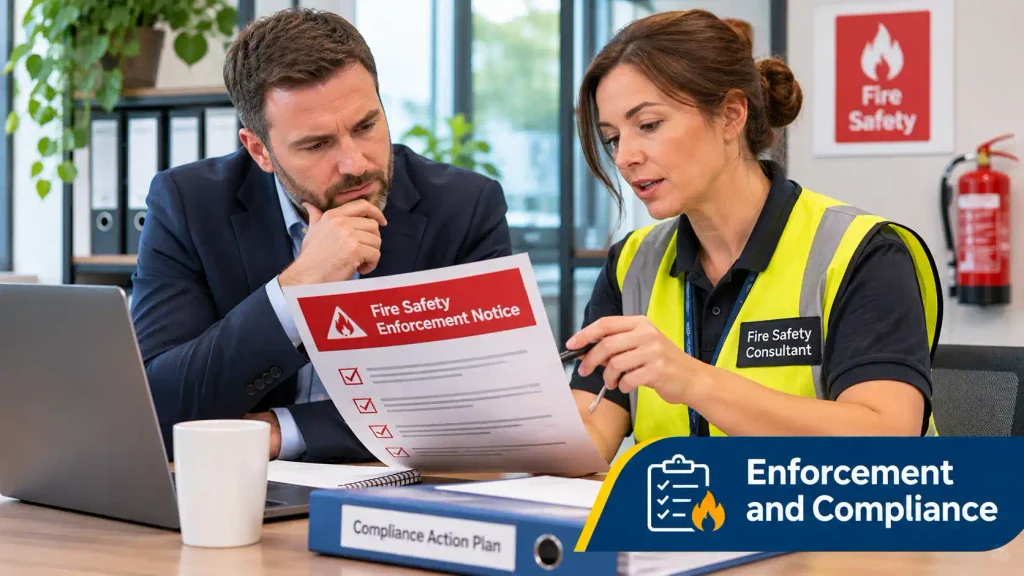
Who Is Responsible for Fire Safety Compliance?
Under the Regulatory Reform (Fire Safety) Order 2005, the Responsible Person generally means the employer where a workplace is under the employer’s control. In other premises, it may be the person controlling the premises in connection with a business or undertaking, or the owner in circumstances specified by the legislation.
Other individuals may also have duties where they have control over particular matters, such as maintenance, repair or safety arrangements. The Responsible Person must ensure that appropriate fire precautions are implemented and maintained.
These responsibilities include:
- Conducting suitable and sufficient fire risk assessments.
- Identifying fire hazards and evaluating risks to relevant persons.
- Providing appropriate fire detection and warning arrangements.
- Maintaining safe emergency routes and exits.
- Providing suitable firefighting equipment.
- Establishing effective evacuation procedures.
- Providing appropriate fire safety information and employee training.
- Maintaining fire safety equipment and protective systems.
- Reviewing fire safety arrangements when significant changes occur.
These responsibilities should be supported by documented procedures, competent personnel and regular monitoring.
Why Do Fire Authorities Issue Enforcement Notices?
An enforcing authority may consider formal action when inspections identify failures that are not being adequately addressed.
Common reasons include:
- Inadequate or outdated fire risk assessments.
- Blocked, locked or insufficient emergency exits.
- Defective fire alarm and detection systems.
- Missing, damaged or poorly maintained fire doors.
- Inadequate emergency lighting.
- Insufficient firefighting equipment.
- Poor housekeeping and excessive combustible materials.
- Inadequate staff fire safety training.
- Inappropriate storage of dangerous or flammable substances.
- Failure to implement effective evacuation procedures.
The seriousness of the problem, the level of risk and the organisation’s response can influence the enforcement approach.
What Happens When a Business Fails a Fire Safety Inspection?
A failed fire safety inspection does not automatically mean that a business will receive a statutory enforcement notice. Enforcing authorities have several options, depending on the circumstances and the level of risk identified.
An inspection may identify relatively minor deficiencies that can be corrected through advice and voluntary action. More serious failures may require formal statutory intervention.
The enforcement process generally involves examining the premises, identifying non-compliance, assessing risks and deciding which enforcement measures are appropriate.
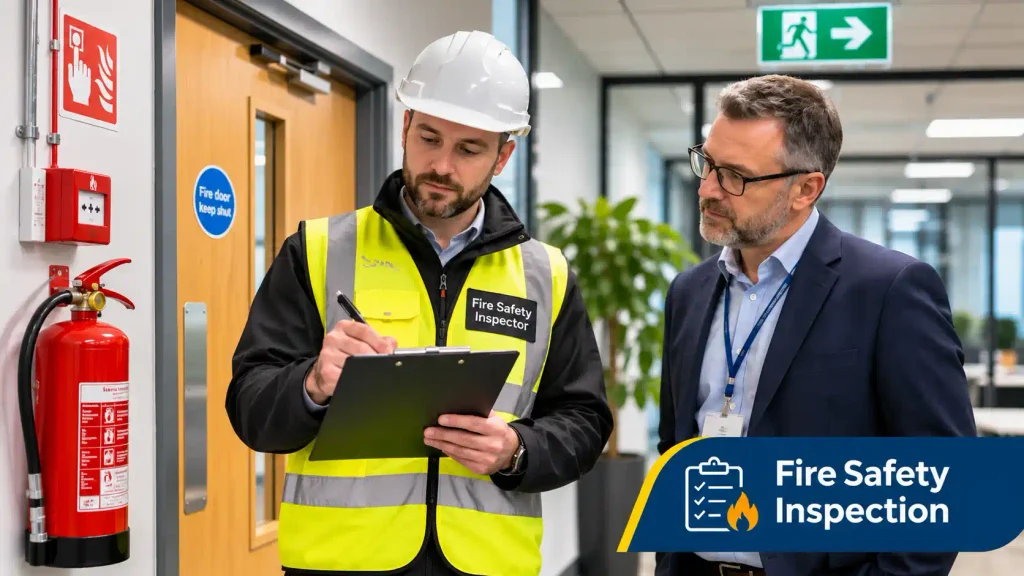
Initial Fire Safety Inspection
Fire safety inspections allow authorised officers to examine whether the premises have suitable fire precautions and whether the Responsible Person is meeting relevant legal duties.
During an inspection, officers may examine:
- Fire risk assessment records.
- Fire alarm and detection arrangements.
- Emergency lighting systems.
- Fire doors and compartmentation.
- Escape routes and emergency exits.
- Fire extinguishers and other firefighting equipment.
- Employee training records.
- Emergency evacuation arrangements.
- Maintenance and inspection documentation.
Inspectors may also speak with employees and management representatives to understand how fire safety procedures operate in practice.
Identification of Non-Compliance
If inspectors identify deficiencies, they assess whether the organisation has failed to meet its legal responsibilities.
For example, a warehouse may have combustible materials stored in front of emergency exits. This could obstruct evacuation and increase the risk to employees during a fire.
Similarly, a hotel with defective fire doors or an inadequate fire alarm system may expose guests and staff to unacceptable risks.
The enforcing authority considers the nature of the failure, its potential consequences and the measures required to address it.
Informal Advice and Enforcement Action
Where appropriate, inspectors may provide verbal or written advice explaining the improvements expected from the business.
An informal notification is not necessarily a statutory enforcement notice. It is important for businesses to understand this distinction because formal notices have specific legal requirements and consequences.
If the organisation does not take satisfactory corrective action, or the risk is sufficiently serious, the authority may consider statutory enforcement.
Fire Safety Enforcement Process
The following flowchart illustrates the general enforcement process.
Fire Safety Inspection and Enforcement Process
The exact enforcement route depends on the legal framework, the enforcing authority’s assessment and the circumstances of the premises.
Types of Fire Safety Enforcement Notices in the UK
Under the Regulatory Reform (Fire Safety) Order 2005, three principal statutory notices are available to enforcing authorities in England and Wales. These are enforcement notices, prohibition notices and alterations notices. Understanding their differences is essential because they impose different obligations and may affect business operations in different ways.
Enforcement Notice: Article 30
An enforcement notice is issued when the enforcing authority believes that the Responsible Person or another relevant dutyholder has failed to comply with a requirement of the Fire Safety Order or regulations made under it. The notice identifies the non-compliance and requires the recipient to take specified corrective steps.
Under Article 30, an enforcement notice must:
- Explain why the authority believes a legal requirement has not been met.
- Identify the provisions that have been breached.
- Specify the corrective measures or steps required.
- Establish a compliance period of at least 28 days from the date of service.
The authority may also provide directions concerning the measures necessary to remedy the failure, potentially allowing the recipient a choice between different suitable solutions.
For example, a manufacturing facility may receive an enforcement notice because its emergency escape arrangements are inadequate. The business may be required to improve escape routes, correct deficiencies in fire protection arrangements and update its emergency procedures.
The Responsible Person must examine the notice carefully and ensure that every identified requirement is addressed.
Prohibition Notice: Article 31
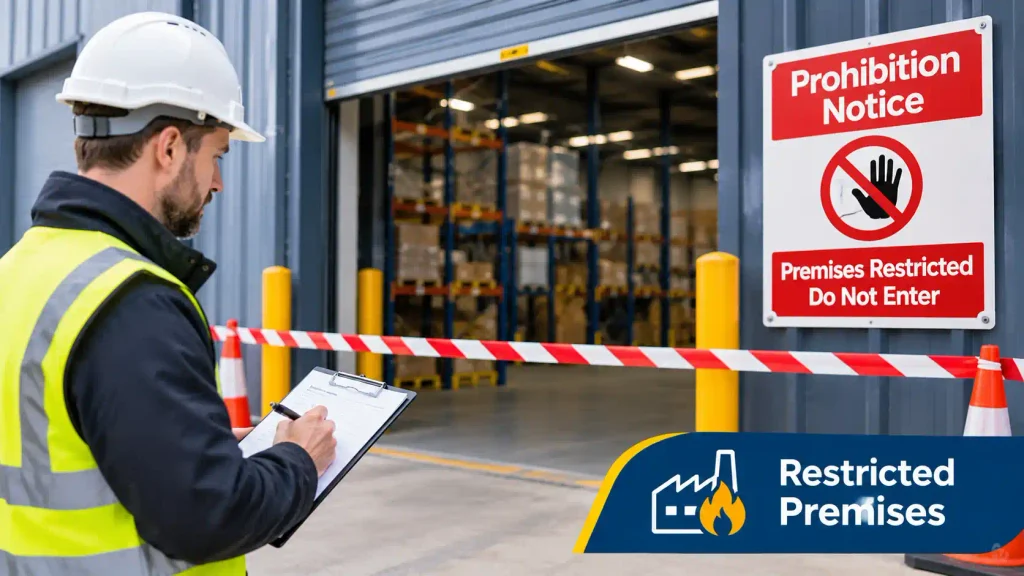
A prohibition notice is a more serious enforcement measure used when the use of premises presents, or will present, a sufficiently serious risk to relevant persons.
The enforcing authority may prohibit or restrict the use of all or part of the premises until the identified risks have been addressed.
Examples of circumstances that may justify a prohibition notice include:
- Emergency escape routes that cannot provide safe evacuation.
- Serious failures in fire protection arrangements.
- Dangerous building conditions that expose occupants to serious fire risks.
- Premises where inadequate protection creates a significant risk to people.
Under Article 31, a prohibition notice takes effect immediately when the authority considers and states that the risk of serious personal injury is imminent. In other cases, it takes effect at the time specified in the notice.
For example, if a nightclub has dangerously inadequate escape arrangements and large numbers of people could be exposed to serious harm, the authority may prohibit the relevant use of the premises.
A prohibition notice can therefore result in immediate business disruption, including the closure of affected areas or suspension of particular activities.
Alterations Notice: Article 29
An alterations notice may be issued where premises present a serious risk to relevant persons or may present such a risk if changes are made to the premises or their use. The purpose is to ensure that proposed changes do not create additional fire safety risks without the enforcing authority being informed. Depending on the requirements of the notice, the Responsible Person may need to notify the authority before making specified changes that could significantly increase risk.
These changes may include:
- Structural modifications.
- Changes to fire safety equipment or building services.
- Changes in the use of premises.
- Increases in quantities of dangerous substances.
- Modifications that affect existing fire protection arrangements.
For example, a business operating a storage facility may receive an alterations notice because its existing building layout and activities create significant fire risks. If it proposes to increase combustible material storage or change the building’s use, it may need to notify the enforcing authority before implementing the relevant changes.
Comparison of the Three Statutory Notices
| Notice type | Legal provision | Main purpose | Potential business impact |
|---|---|---|---|
| Enforcement Notice | Article 30 | Correct identified legal non-compliance | Mandatory remedial action |
| Prohibition Notice | Article 31 | Restrict or prohibit unsafe premises or activities | Partial or complete operational restrictions |
| Alterations Notice | Article 29 | Control specified changes that may increase fire risk | Additional notification and planning requirements |
The three notices serve different purposes, and more than one may be issued in relation to the same premises where the circumstances justify it.
What Happens If a Business Ignores a Fire Safety Enforcement Notice?
Ignoring a statutory notice can create additional legal and operational problems for a business. An organisation cannot assume that an enforcement notice is simply an advisory document. It creates formal obligations that must be taken seriously.
Under Article 32 of the Regulatory Reform (Fire Safety) Order 2005, failure to comply with requirements imposed by an enforcement notice or prohibition notice can constitute a criminal offence.
Further Enforcement Action
When a business fails to address the problems identified in a statutory notice, the enforcing authority may take further action in accordance with its legal powers.
This may involve additional inspections, consideration of prosecution or further restrictions where serious risks remain. The authority may also investigate whether the organisation has failed to meet other fire safety duties.
Criminal Prosecution
Failure to comply with a statutory notice is a specific offence under the Fire Safety Order. Prosecution may also arise from serious underlying fire safety failures, particularly where the relevant offences involve exposing people to the risk of death or serious injury.
The precise offence and penalty depend on the circumstances and applicable statutory provisions. The government enforcement guidance explains that relevant serious offences and failures to comply with statutory notices can carry unlimited fines and imprisonment of up to two years on conviction on indictment.
Financial Penalties
Financial penalties can create significant pressure on businesses, particularly where the organisation has failed to address known fire safety problems.
Depending on the offence and the method of prosecution, penalties may include fines of up to £5,000 for certain less serious offences, while more serious offences can result in unlimited fines. Businesses should not assume that paying a fine removes the responsibility to correct the original fire safety failures.
Business Disruption and Reputational Damage
Non-compliance can also affect business performance beyond the immediate legal consequences.
Potential consequences include:
- Temporary closure or restrictions on business activities.
- Increased expenditure on fire safety improvements.
- Disruption to employees, customers and suppliers.
- Loss of customer confidence.
- Contractual and insurance difficulties.
- Damage to organisational reputation.
- Additional management and compliance costs.
For example, a hotel receiving a prohibition notice affecting its sleeping accommodation may be unable to continue operating the affected areas until the serious risks have been addressed and the restriction is no longer in force.
What Happens When Enforcement Notices Are Not Followed?
The flowchart illustrates possible outcomes rather than an automatic sequence. Enforcement decisions depend on the nature of the breach, the applicable law and the circumstances of the case.
How Much Is the Fine for Fire Safety Non-Compliance in the UK?
There is no single fixed penalty for every fire safety breach. The applicable penalty depends on the offence, the statutory provision involved and whether the case is dealt with in the magistrates’ court or Crown Court.
Under the Regulatory Reform (Fire Safety) Order 2005, serious offences can attract unlimited fines and imprisonment of up to two years. Failure to comply with statutory notices is also treated as a separate offence. The government’s enforcement and sanctions guidance explains the potential penalties associated with these failures.
Factors that may influence enforcement and prosecution decisions include:
- The seriousness of the fire safety breach.
- The likelihood and potential consequences of a fire.
- Whether people were exposed to serious danger.
- Whether the organisation had previously received warnings.
- Whether the Responsible Person took reasonable corrective action.
- Whether the business deliberately ignored its legal responsibilities.
- Whether inaccurate information or misleading records were provided.
For businesses, the most effective approach is to prevent breaches through effective fire safety management rather than attempting to manage the financial consequences after enforcement action has begun.
Can a Business Appeal a Fire Safety Enforcement Notice?
Yes. A person served with an alterations notice, enforcement notice or prohibition notice under the Regulatory Reform (Fire Safety) Order 2005 can generally appeal to the magistrates’ court within 21 days from the date the notice is served.
An appeal may be appropriate where the recipient believes that:
- The notice has been issued incorrectly.
- The identified legal requirements have been misunderstood.
- The circumstances do not justify the enforcement action.
- The proposed remedial requirements are inappropriate.
- The notice requires modification or cancellation.
How the Appeal Process Works
The recipient should carefully examine the notice, obtain appropriate professional or legal advice and identify the reasons for challenging the authority’s decision.
Supporting information may include:
- The original fire risk assessment.
- Inspection and maintenance records.
- Photographs of the relevant premises.
- Fire alarm and emergency lighting test reports.
- Fire door inspection records.
- Evidence of completed remedial work.
- Correspondence with the enforcing authority.
The court may cancel the notice or affirm it, potentially with modifications.
Does an Appeal Suspend a Notice?
This is an important distinction.
Under Article 35:
- An appeal against an enforcement notice generally suspends its operation until the appeal is resolved or withdrawn.
- An appeal against an alterations notice generally suspends its operation during the appeal.
- An appeal against a prohibition notice does not automatically suspend the restriction. The court must specifically direct otherwise.
Businesses must therefore avoid assuming that lodging an appeal allows them to continue activities restricted by a prohibition notice. The appeal period is limited, so professional advice should be obtained promptly.
What Should a Business Do After Receiving a Fire Safety Enforcement Notice?
Receiving a fire safety enforcement notice requires an organised and timely response. The Responsible Person should ensure that the notice is understood, corrective measures are properly planned and all relevant people within the organisation understand their responsibilities. A structured approach helps businesses address the identified failures and demonstrate that they are taking their legal duties seriously.
Review the Notice Carefully
The first step is to examine the complete notice and identify:
- The legal provisions referenced.
- The specific fire safety failures.
- The corrective actions required.
- The compliance deadline.
- Any restrictions or additional conditions.
- The enforcing authority’s contact information.
The notice should be shared with senior management, facilities teams and other relevant personnel.
Review the Fire Risk Assessment
A suitable and sufficient fire risk assessment is central to effective fire safety management. Businesses should review the existing assessment to establish whether it accurately identifies hazards and reflects the current condition and use of the premises. Where the notice identifies deficiencies, the assessment should be reviewed and updated where necessary.
The review should consider:
- Fire hazards and ignition sources.
- Combustible materials and dangerous substances.
- Occupancy levels and vulnerable persons.
- Means of escape.
- Fire detection and warning systems.
- Firefighting arrangements.
- Emergency procedures.
- Existing control measures.
The purpose is to ensure that corrective actions address the actual causes of non-compliance rather than simply treating individual symptoms.
Develop a Corrective Action Plan
Businesses should convert the notice requirements into a structured action plan. Each action should have a responsible person, completion deadline, required resources and verification method.
For example, if an enforcement notice identifies defective emergency lighting, the organisation should arrange suitable inspection, repair or replacement and retain evidence of the completed work.
A corrective action plan can include the following:
| Identified issue | Required action | Responsible person | Evidence |
|---|---|---|---|
| Blocked emergency exits | Remove obstructions and introduce regular checks | Facilities Manager | Inspection records and photographs |
| Defective fire alarm | Arrange competent inspection and necessary repairs | Maintenance Manager | Service and testing reports |
| Damaged fire doors | Repair or replace defective doors | Building Manager | Inspection and repair records |
| Outdated risk assessment | Arrange a suitable review | Responsible Person | Updated assessment |
| Insufficient staff training | Deliver appropriate fire safety training | HR or Safety Manager | Training records |
The organisation should prioritise urgent life-safety risks and ensure that all statutory requirements are addressed within the applicable timeframe.
Appoint Competent Fire Safety Professionals
Some fire safety failures require specialist knowledge and technical expertise. Depending on the circumstances, businesses may need competent fire risk assessors, fire alarm engineers, emergency lighting specialists, fire door inspectors or other relevant professionals.
Competence should be assessed according to the specific work being undertaken. Employing an experienced professional can help businesses identify underlying problems, select appropriate remedial measures and produce reliable evidence of compliance.
Maintain Evidence of Corrective Action
Documentation is essential when demonstrating that a business has responded appropriately to an enforcement notice.
Organisations should retain relevant records, including:
- Updated fire risk assessments.
- Fire alarm inspection and maintenance reports.
- Emergency lighting test records.
- Fire door inspection reports.
- Photographic evidence of improvements.
- Employee training records.
- Contractor reports and certificates.
- Updated emergency procedures.
- Corrective action completion records.
These records help demonstrate the work completed and support future compliance monitoring.
Communicate with the Enforcing Authority
Businesses should maintain appropriate communication with the authority that issued the notice. If clarification is required, the Responsible Person should request it promptly rather than making assumptions about the required corrective action.
Where the business experiences difficulties completing work within the specified period, it should communicate with the authority as early as possible. Under Article 30, an enforcing authority may extend the compliance period where an appeal is not pending. However, businesses should never assume that an extension has been granted without confirmation.
Verify Compliance Before Closing Actions
Completing maintenance work does not automatically mean that every fire safety issue has been resolved. Businesses should verify that the corrective measures have achieved their intended purpose.
For example, replacing a fire alarm component should be followed by appropriate testing to establish that the system functions correctly. Similarly, repairing an emergency exit should involve checking that the route remains accessible and suitable for evacuation.
A final compliance review should confirm that all relevant requirements have been addressed and that effective arrangements are in place to prevent recurrence.
How Can Businesses Avoid Fire Safety Enforcement Notices?
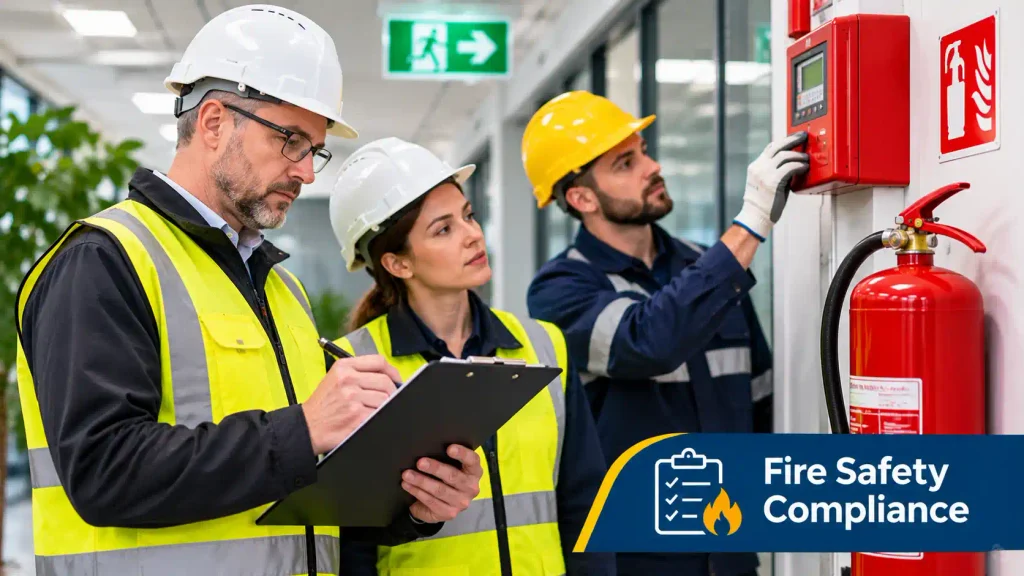
Preventing enforcement action requires an ongoing commitment to fire safety rather than occasional inspections or reactive maintenance. Businesses should establish a systematic approach that integrates fire prevention, risk assessment, employee training, maintenance and management oversight.
Conduct Regular Fire Risk Assessments
Fire risk assessments help organisations identify hazards, evaluate risks and establish suitable control measures. The Responsible Person should ensure that assessments remain suitable and sufficient and are reviewed regularly, particularly when significant changes occur.
Changes that may require a review include:
- Building alterations.
- Changes in business activities.
- Increased occupancy.
- New machinery or equipment.
- Introduction of dangerous substances.
- Changes to escape routes.
- Fire incidents or significant near misses.
Maintain Fire Detection and Protection Systems
Fire detection and protection systems must remain suitable for the premises and their intended purpose.
Businesses should establish appropriate inspection, testing and maintenance arrangements for:
- Fire alarm systems.
- Emergency lighting.
- Fire extinguishers.
- Automatic fire suppression systems.
- Fire doors.
- Smoke control systems.
- Other relevant protective equipment.
Maintenance should be carried out by competent persons, with appropriate records retained.
Keep Emergency Routes and Exits Clear
Blocked or inadequate escape routes can significantly increase the consequences of a workplace fire. Organisations should ensure that emergency routes remain accessible, clearly identified and suitable for the number and needs of people using the premises.
Routine inspections should identify obstructions, damaged exit doors, inadequate signage and other conditions that could prevent safe evacuation.
Provide Employee Fire Safety Training
Employees need appropriate information and training to understand workplace fire risks and their responsibilities.
Training should address:
- Common workplace fire hazards.
- Fire prevention practices.
- Emergency warning systems.
- Evacuation procedures.
- Assembly points.
- Reporting fire hazards.
- Appropriate use of firefighting equipment.
- Individual responsibilities during emergencies.
Training should be relevant to the employees’ duties and the risks associated with the premises.
Establish Effective Fire Safety Management
An organisation should establish clear responsibilities for planning, implementing, monitoring and reviewing fire safety arrangements. Senior management should ensure that adequate resources are available and that identified risks are addressed without unnecessary delays. Regular management reviews can help identify recurring problems and improve organisational accountability.
Fire Safety Compliance Management Framework
The following flowchart illustrates how organisations can maintain continuous fire safety compliance.
Fire Safety Management Process
This continuous improvement approach helps businesses maintain effective fire safety arrangements and reduce the likelihood of future enforcement action.
UK Fire Safety Legislation: What Businesses Need to Understand
Although fire safety responsibilities apply across the UK, the specific legislation and enforcement arrangements differ between the four nations. Businesses operating in multiple locations should not assume that a single statutory framework applies everywhere.
England and Wales
The Regulatory Reform (Fire Safety) Order 2005 is the principal legislation governing fire safety duties in most workplaces and relevant non-domestic premises. It establishes requirements concerning risk assessment, general fire precautions, maintenance, employee training and emergency arrangements. Articles 29, 30 and 31 provide the legal framework for alterations, enforcement and prohibition notices.
The Fire Safety Act 2021 amended the Fire Safety Order to clarify its application to the structure and external walls of buildings containing two or more domestic premises, including relevant doors between domestic premises and common parts. The Fire Safety (England) Regulations 2022 also introduce additional requirements for relevant premises in England.
Scotland
Scotland operates under a separate fire safety framework. The Fire (Scotland) Act 2005 and Fire Safety (Scotland) Regulations 2006 establish the principal duties for non-domestic fire safety.
The Scottish Fire and Rescue Service is responsible for enforcing fire safety requirements across most relevant non-domestic premises. Its enforcement approach includes inspections, advice, statutory notices and prosecution where appropriate.
Northern Ireland
Northern Ireland has its own fire safety legislation, including:
- Fire and Rescue Services (Northern Ireland) Order 2006.
- Fire Safety Regulations (Northern Ireland) 2010.
The Northern Ireland Fire and Rescue Service undertakes fire safety enforcement responsibilities under the applicable framework. Businesses must understand the requirements relevant to their premises rather than relying exclusively on guidance written for England and Wales.
UK Fire Safety Legislation Comparison
| Nation | Principal fire safety legislation | Main enforcing organisation |
|---|---|---|
| England | Regulatory Reform (Fire Safety) Order 2005 and relevant additional regulations | Relevant fire and rescue authority or other enforcing authority |
| Wales | Regulatory Reform (Fire Safety) Order 2005 | Relevant fire and rescue authority or other enforcing authority |
| Scotland | Fire (Scotland) Act 2005 and Fire Safety (Scotland) Regulations 2006 | Scottish Fire and Rescue Service for most relevant non-domestic premises |
| Northern Ireland | Fire and Rescue Services (Northern Ireland) Order 2006 and Fire Safety Regulations (Northern Ireland) 2010 | Northern Ireland Fire and Rescue Service |
The legal procedures, terminology, notice requirements and appeal arrangements are not identical across all four nations. Organisations should consult the legislation and guidance applicable to their location.
Fire Safety Training and Professional Development for Business Compliance
Effective fire safety management depends on competent individuals who understand workplace hazards, risk assessment principles, legal responsibilities and appropriate preventive measures. Professional training can help employees, supervisors, managers and fire safety specialists develop the knowledge required to support safer workplaces.
For organisations seeking to strengthen internal fire safety capabilities, relevant training and professional development can support better hazard identification, risk management, compliance monitoring and emergency preparedness.
InspireCollege offers fire safety and risk assessment learning opportunities suitable for different levels of professional development.
Recommended Fire Safety Courses at InspireCollege
The following courses may be relevant to professionals involved in workplace fire safety, fire risk assessment and regulatory compliance.
1. Qualsafe Level 1 Award in Fire Safety Awareness (RQF)
This course supports foundational workplace fire safety awareness. It is relevant to employees and individuals who need to understand common fire hazards, prevention measures and emergency procedures.
2. ProQual Level 3 Award in Fire Risk Assessment Awareness
This course develops knowledge of fire risk assessment principles and workplace safety responsibilities. It is relevant to individuals involved in identifying hazards and supporting fire safety arrangements.
3. ProQual Level 4 Certificate in Fire Risk Assessment
This qualification supports the development of professional knowledge and competence in fire risk assessment, hazard identification and the implementation of appropriate control measures.
4. ProQual Level 5 Diploma in Fire Risk Assessment
This advanced qualification is relevant to experienced professionals seeking to develop their competence in assessing and managing fire risks across different types of premises.
5. ProQual Level 5 Award in Fire Risk Assessment
This programme supports professional development for experienced fire safety practitioners involved in evaluating complex and higher-risk environments.
6. ProQual Level 4 Award in Advanced Fire Risk Assessment
This qualification develops advanced understanding of fire risk assessment, professional competence and the evaluation of fire safety arrangements in more demanding environments.
Businesses should select training according to employees’ responsibilities, existing competence and the specific risks associated with their premises. Completing a course does not automatically establish legal compliance or replace the Responsible Person’s statutory duties.
Conclusion
Fire Safety Enforcement Notices play an important role in ensuring that businesses meet their legal responsibilities and protect employees, visitors and other relevant persons from fire-related dangers. When an organisation fails to maintain suitable fire safety arrangements, enforcing authorities can use formal notices to require corrective action, restrict unsafe activities or control changes that could increase risk.
Understanding Fire Safety Enforcement Notices: What Happens When a Business Fails to Comply? is essential for business owners, employers, facilities managers and health and safety professionals who are responsible for maintaining safe premises.
An enforcement notice requires the recipient to address identified legal failures within the specified compliance period. A prohibition notice can restrict or prevent the use of premises where serious fire risks exist, while an alterations notice can introduce additional requirements for specified changes that may increase risk.
Ignoring statutory notices can result in further enforcement action, criminal prosecution, financial penalties and significant operational disruption. Businesses should therefore review notices carefully, obtain competent professional support where necessary, implement corrective measures and maintain reliable evidence of compliance.
The most effective way to reduce enforcement risks is to establish a proactive fire safety management system supported by suitable risk assessments, regular inspections, properly maintained equipment, employee training and effective management oversight.
Through continuous improvement and professional development, organisations can strengthen their fire safety arrangements, meet applicable legal responsibilities and create safer working environments.
Official References and Further Reading
The following authoritative resources provide further information about UK fire safety legislation, enforcement responsibilities and compliance requirements.
- Regulatory Reform (Fire Safety) Order 2005 – Full Legislation
- Fire Safety Act 2021 – Full Legislation
- GOV.UK – Fire Safety Legislation and Guidance for Those with Legal Duties
- GOV.UK – Workplace Fire Safety: Enforcement, Appeals and Penalties
- GOV.UK – Fire Safety Order: Enforcement and Sanctions for Non-Compliance
- Scottish Government – Non-Domestic Fire Safety
- Fire and Rescue Services (Northern Ireland) Order 2006
- Fire Safety Regulations (Northern Ireland) 2010
Editorial note: This article provides general educational information and is not a substitute for legal advice or a premises-specific fire risk assessment. Legal references and guidance should be checked against the latest applicable versions before publication.
Frequently Asked Questions About Fire Safety Management
Find answers to common questions about workplace fire safety, fire risk assessments, employee responsibilities, compliance, inspections, and effective fire safety management in the UK.
What is a fire safety management process?
A fire safety management process is a structured approach to preventing fires, protecting employees and visitors, and maintaining a safe working environment. It involves assigning fire safety responsibilities, conducting fire risk assessments, identifying hazards, implementing preventive measures, training employees, maintaining fire safety equipment, and reviewing control effectiveness. Regular monitoring helps organisations identify weaknesses and improve workplace fire protection.
Who is responsible for managing fire safety in a workplace?
Fire safety responsibility generally rests with the employer, building owner, occupier, or another person who has control over the premises. The exact responsibilities depend on the organisation, building arrangements, and applicable legal duties. Managers should assign clear responsibilities to competent individuals, ensure employees understand emergency procedures, and maintain appropriate fire safety arrangements.
How often should a fire risk assessment be reviewed in the UK?
A fire risk assessment should be reviewed regularly and whenever there is a significant change that could affect fire safety. Examples include changes to building layouts, work activities, equipment, occupancy levels, storage arrangements, or fire protection systems. It should also be reviewed after a fire incident, near miss, or identification of previously overlooked hazards. There is no single review interval suitable for every workplace.
What should a business do after identifying fire safety hazards?
A business should evaluate the likelihood and potential consequences of each identified hazard, then introduce appropriate preventive and protective measures. Actions may include improving housekeeping, controlling ignition sources, maintaining escape routes, upgrading fire detection arrangements, providing suitable firefighting equipment, and training employees. Each action should have a responsible person and a realistic completion deadline.
What is the difference between fire prevention and fire protection?
Fire prevention focuses on reducing the likelihood of a fire starting, while fire protection focuses on limiting harm if a fire occurs. Prevention measures include safe electrical practices, controlling combustible materials, and managing hot work activities. Protection measures include fire alarms, emergency lighting, fire doors, extinguishers, evacuation procedures, and appropriate compartmentation. Effective fire safety management requires both approaches.
What fire safety responsibilities should employers assign to employees?
Employers should clearly define responsibilities for reporting hazards, maintaining good housekeeping, keeping escape routes clear, following emergency procedures, and participating in fire safety training. Specific employees may also be appointed to support evacuation arrangements, equipment checks, or workplace inspections where appropriate. Responsibilities should reflect individual competence, available resources, and the level of fire risk.
How can businesses check whether their fire safety controls are effective?
Businesses can evaluate fire safety controls through scheduled inspections, maintenance records, evacuation exercises, staff feedback, incident reviews, and periodic reassessment of workplace risks. They should also investigate repeated faults, blocked escape routes, equipment defects, and training gaps. A control should not be considered effective simply because it exists; it must work reliably and remain suitable for the risks present.
What should be included in a workplace fire safety inspection?
A workplace fire safety inspection should examine emergency exits, escape routes, fire doors, alarm systems, emergency lighting, firefighting equipment, electrical safety, combustible material storage, signage, and general housekeeping. The inspection should also consider whether employees understand evacuation arrangements and whether identified defects have been corrected. Findings should be documented, assigned to responsible individuals, and followed up.
Why is employee fire safety training important?
Employee fire safety training helps workers recognise hazards, understand emergency procedures, report unsafe conditions, and respond appropriately when a fire occurs. Training should be relevant to workplace activities and the responsibilities of individual employees. It should also be refreshed when risks, procedures, equipment, or workplace arrangements change. Effective training supports a stronger safety culture and reduces the likelihood of preventable incidents.
What records should a business maintain for fire safety compliance?
Businesses should maintain suitable records of fire risk assessments, assessment reviews, fire safety inspections, alarm and emergency lighting tests, equipment maintenance, employee training, evacuation drills, reported hazards, and completed corrective actions. These records help demonstrate how fire safety arrangements are managed and provide evidence when reviewing whether controls remain effective.
What happens if fire safety equipment is defective or not properly maintained?
Defective or poorly maintained fire safety equipment can compromise early warning, emergency response, and safe evacuation. Businesses should report faults immediately, arrange competent inspection or repair, and introduce suitable temporary precautions where necessary. Affected equipment should not be assumed to be operational until its condition has been confirmed. Maintenance arrangements should be documented and monitored.
What is the role of continuous improvement in fire safety management?
Continuous improvement ensures that fire safety arrangements remain suitable as workplaces, activities, equipment, and risks change. Organisations should use inspection findings, risk assessment reviews, incident investigations, employee feedback, and maintenance records to identify opportunities for improvement. Corrective actions should be tracked until completion, followed by an evaluation to confirm that the changes have addressed the original problem.
What are the consequences of poor fire safety management for a business?
Poor fire safety management can increase the likelihood of fire incidents, injuries, property damage, operational disruption, insurance difficulties, reputational harm, and regulatory enforcement. Where legal duties are not met, responsible persons may face enforcement action or prosecution depending on the circumstances and applicable legislation. Maintaining effective fire safety arrangements helps protect people, business continuity, and organisational credibility.
Which fire safety training is suitable for employees and workplace managers?
The appropriate training depends on job responsibilities, workplace hazards, and the level of fire safety knowledge required. General employees may benefit from fire safety awareness training, while supervisors, managers, and designated responsible personnel may require more advanced learning in fire risk assessment, fire prevention, and safety management. Training should be relevant to the person’s actual duties and workplace risks.
How does a fire risk assessment support business continuity?
A fire risk assessment helps organisations identify conditions that could cause a fire or disrupt essential operations. By evaluating hazards, escape arrangements, protective systems, and emergency procedures, businesses can introduce measures that reduce the potential impact of fire. Combining fire risk assessment with maintenance planning, staff training, and emergency preparedness can strengthen operational resilience and support business continuity.
What is the difference between a fire safety policy and a fire risk assessment?
A fire safety policy explains an organisation’s overall approach to managing fire safety, including responsibilities, arrangements, and management commitments. A fire risk assessment identifies specific fire hazards, evaluates risks to people, and determines the preventive and protective measures required. The policy establishes the management framework, while the risk assessment provides the evidence needed to identify and control workplace fire risks.