
Responsible Person Under UK Fire Safety Law: Legal Duties Explained
Fire safety is a fundamental legal responsibility for every organisation operating non-domestic premises in the United Kingdom. Whether managing an office, warehouse, retail store, hotel, school, healthcare facility, manufacturing plant, or construction site, businesses must take reasonable steps to prevent fires, protect occupants, and comply with UK fire safety legislation. At the centre of these responsibilities is the Responsible Person—the individual legally accountable for ensuring appropriate fire safety measures are implemented and maintained.
Under the Regulatory Reform (Fire Safety) Order 2005, every non-domestic premises must have a Responsible Person who manages fire risks, carries out or arranges a suitable and sufficient fire risk assessment, maintains fire protection systems, develops emergency procedures, and ensures employees receive appropriate fire safety training. While competent fire safety professionals can assist with these tasks, the legal responsibility cannot simply be transferred to another person.
Understanding the legal responsibilities of the Responsible Person is essential for maintaining compliance, protecting lives, reducing business risks, and avoiding enforcement action. This guide explains who can be a Responsible Person, outlines their legal duties, and provides practical guidance to help organisations meet UK fire safety requirements with confidence.
Why the Responsible Person Role Matters
The Responsible Person plays a critical role in workplace fire safety management. Their decisions directly influence how effectively fire risks are identified, controlled, and monitored throughout a building’s lifecycle.
Without clear leadership, organisations may overlook important fire hazards, delay maintenance, fail to train employees, or neglect emergency planning. These shortcomings can increase the likelihood of fire incidents and place occupants at unnecessary risk.
An effective Responsible Person helps organisations:
- Protect employees, visitors, and contractors.
- Maintain legal compliance.
- Reduce the likelihood of workplace fires.
- Improve emergency preparedness.
- Support business continuity.
- Demonstrate due diligence.
- Maintain accurate fire safety records.
- Promote a positive fire safety culture.
Rather than viewing the role as an administrative requirement, organisations should recognise it as a key part of effective health and safety management.
Understanding the Regulatory Reform (Fire Safety) Order 2005
The Regulatory Reform (Fire Safety) Order 2005 is the primary legislation governing fire safety in non-domestic premises across England and Wales. It replaced several previous fire safety laws with a single, risk-based framework that places responsibility on those who control or manage buildings.
Instead of prescribing identical fire precautions for every workplace, the legislation requires organisations to assess their own fire risks and implement measures that are appropriate for their specific premises, activities, and occupancy.
The Order requires the Responsible Person to:
- Identify fire hazards.
- Assess fire risks.
- Protect relevant persons.
- Implement suitable fire precautions.
- Maintain fire safety equipment.
- Develop emergency procedures.
- Provide fire safety information.
- Deliver appropriate staff training.
- Monitor and review fire safety arrangements.
This flexible approach recognises that fire risks vary significantly between different industries and building types.
Who Can Be the Responsible Person?
One of the most common questions employers ask is, “Who is the Responsible Person under UK fire safety law?”
The answer depends on who has control over the premises.
The Responsible Person may be:
- Employer
- Business owner
- Building owner
- Landlord
- Facilities manager
- Property manager
- Managing agent
- Occupier
- Organisation with control of the premises
Where multiple organisations occupy the same building, more than one Responsible Person may exist. In these situations, all duty holders must cooperate and coordinate their fire safety arrangements to ensure occupants remain protected.
For example:
- In a multi-tenant office building, the landlord may be responsible for communal areas, while each tenant is responsible for their leased premises.
- On a construction project, both the principal contractor and individual employers may have specific fire safety responsibilities.
- In a shopping centre, the centre management and individual retailers may each have separate legal duties.
Understanding who holds responsibility is essential because legal accountability remains with the Responsible Person, even when specialist contractors or consultants are appointed to provide support.
Who Can Act as the Responsible Person?
The following table provides examples of who is commonly recognised as the Responsible Person in different workplace settings.
| Workplace | Typical Responsible Person |
|---|---|
| Office | Employer or Office Manager |
| Warehouse | Warehouse Manager or Employer |
| Retail Store | Store Owner or Store Manager |
| Hotel | Hotel Manager or Owner |
| School | Headteacher or Governing Body |
| College or University | Senior Facilities Manager or Employer |
| Hospital | NHS Trust or Healthcare Provider |
| Factory | Employer or Operations Manager |
| Construction Site | Principal Contractor |
| Multi-Occupancy Building | Landlord for common areas and each tenant for their own premises |
Regardless of job title, the Responsible Person must have sufficient authority to ensure fire safety measures are implemented effectively.
Can the Responsible Person Delegate Their Duties?
Many organisations appoint external fire safety consultants or competent fire risk assessors to assist with compliance. While this is good practice, it is important to understand that legal responsibility cannot be delegated.
The Responsible Person may delegate tasks such as:
- Conducting a fire risk assessment.
- Servicing fire alarms.
- Maintaining emergency lighting.
- Inspecting fire extinguishers.
- Delivering staff training.
- Carrying out fire door inspections.
However, they remain legally accountable for ensuring these activities are completed correctly and at appropriate intervals.
This means the Responsible Person should:
- Select competent contractors.
- Monitor completed work.
- Review inspection reports.
- Verify corrective actions.
- Maintain accurate records.
- Ensure ongoing compliance.
Delegation reduces workload but does not remove legal accountability.
Key Legal Responsibilities of the Responsible Person
The Responsible Person is expected to manage fire safety proactively rather than reacting only after incidents occur. Their responsibilities cover prevention, protection, preparedness, and continuous improvement.
The most important legal duties include the following.
Carry Out a Suitable and Sufficient Fire Risk Assessment
A fire risk assessment forms the foundation of workplace fire safety. The Responsible Person must ensure that a suitable and sufficient assessment is completed by a competent individual and reviewed whenever significant changes occur.
The assessment should identify:
- Fire hazards.
- People at risk.
- Existing control measures.
- Areas requiring improvement.
- Prioritised corrective actions.
Identify and Reduce Fire Hazards
The Responsible Person should regularly inspect the workplace to identify potential ignition sources, combustible materials, and unsafe working practices.
Examples include:
- Faulty electrical equipment.
- Portable heaters.
- Hot work activities.
- Flammable liquids.
- Combustible waste.
- Lithium-ion battery charging.
- Smoking materials.
- Poor housekeeping.
Early identification helps prevent fire incidents before they occur.
Protect Relevant Persons
UK fire safety law requires protection of all relevant persons, not just employees.
This includes:
- Visitors.
- Contractors.
- Customers.
- Temporary workers.
- Agency staff.
- Members of the public.
- Vulnerable occupants.
- Persons unfamiliar with the premises.
Fire safety arrangements should consider the needs of everyone who may be affected during an emergency.
Provide Appropriate Fire Safety Measures
The Responsible Person must ensure suitable fire protection measures are available and maintained.
These commonly include:
- Fire detection systems.
- Fire alarm systems.
- Emergency lighting.
- Fire extinguishers.
- Fire doors.
- Fire signage.
- Smoke control systems.
- Means of escape.
The level of protection should be proportionate to the fire risks identified during the assessment.
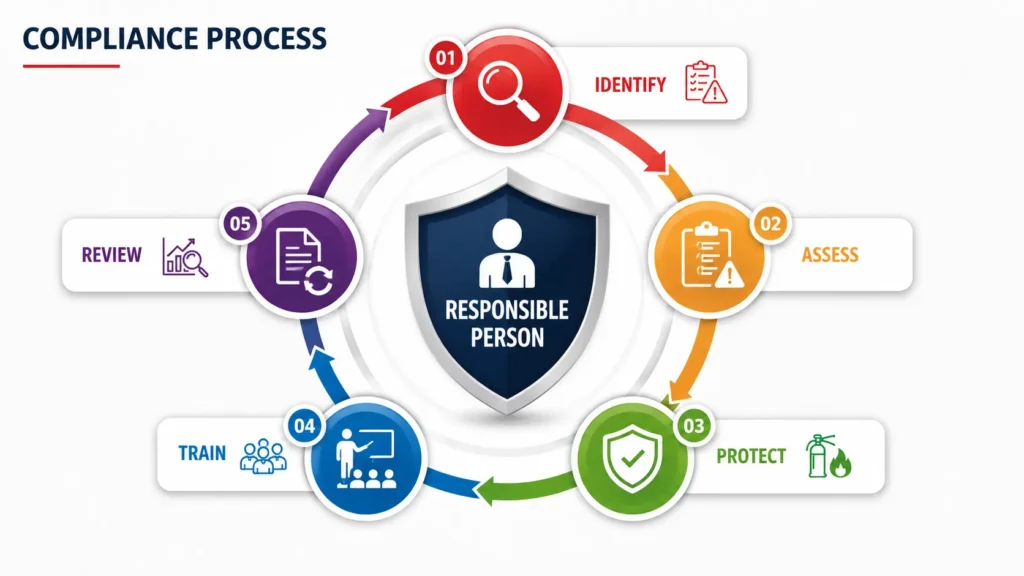
Responsible Person Compliance Process
The following workflow illustrates how the Responsible Person should manage fire safety within an organisation.
Identify Legal Responsibilities
↓
Understand Workplace Fire Risks
↓
Carry Out Fire Risk Assessment
↓
Implement Fire Safety Measures
↓
Maintain Fire Protection Systems
↓
Train Employees
↓
Monitor Fire Safety Performance
↓
Review Documentation
↓
Update Fire Risk Assessment
↓
Maintain Continuous Compliance
Why Competence Matters
A Responsible Person does not need to carry out every fire safety task personally, but they must have enough knowledge to understand their legal obligations, recognise significant fire risks, and make informed decisions about workplace fire safety.
Where specialist expertise is required, competent professionals should be appointed to provide technical support. However, the Responsible Person should always remain actively involved in reviewing recommendations, monitoring progress, and ensuring that fire safety remains an integral part of the organisation’s overall health and safety management system.
Responsible Person vs Employer vs Fire Marshal
Many organisations confuse the roles of the Responsible Person, Employer, and Fire Marshal. Although these roles often work closely together, they have different responsibilities under UK fire safety law.
The Responsible Person has legal accountability for fire safety compliance. The Employer manages the business and provides the resources needed to implement fire safety measures. A Fire Marshal (also known as a Fire Warden) supports emergency preparedness by assisting with evacuations, reporting hazards, and promoting fire safety awareness.
The following comparison highlights the differences.
| Responsible Person | Employer | Fire Marshal |
|---|---|---|
| Legally accountable for fire safety compliance | Provides resources to achieve compliance | Assists during emergencies and evacuations |
| Ensures a suitable and sufficient fire risk assessment is completed | Supports implementation of fire safety policies | Checks designated areas during evacuation where appropriate |
| Maintains fire safety arrangements | Ensures employees receive fire safety training | Reports fire hazards and unsafe conditions |
| Reviews fire safety performance | Supports continuous improvement | Helps communicate emergency procedures |
| Coordinates fire safety management | Promotes a positive safety culture | Assists at assembly points during fire drills and emergencies |
| Ensures compliance with UK fire safety legislation | Cooperates with the Responsible Person | Provides feedback following fire drills |
In many smaller organisations, the employer and Responsible Person may be the same individual. Larger organisations often assign these responsibilities to different people while ensuring they work together.
Fire Risk Assessment Responsibilities
One of the most important legal responsibilities of the Responsible Person is ensuring that a suitable and sufficient fire risk assessment is completed and kept up to date.
The assessment should not be treated as a one-time document. It is a continuous management process that reflects changes in the workplace, occupancy, and operations.
A high-quality fire risk assessment should:
- Identify potential fire hazards.
- Determine who may be at risk.
- Evaluate existing fire safety measures.
- Recommend additional control measures where required.
- Prioritise corrective actions.
- Be reviewed following significant changes.
The Responsible Person should ensure the assessment accurately reflects the current condition of the premises and that all recommendations are implemented within appropriate timescales.
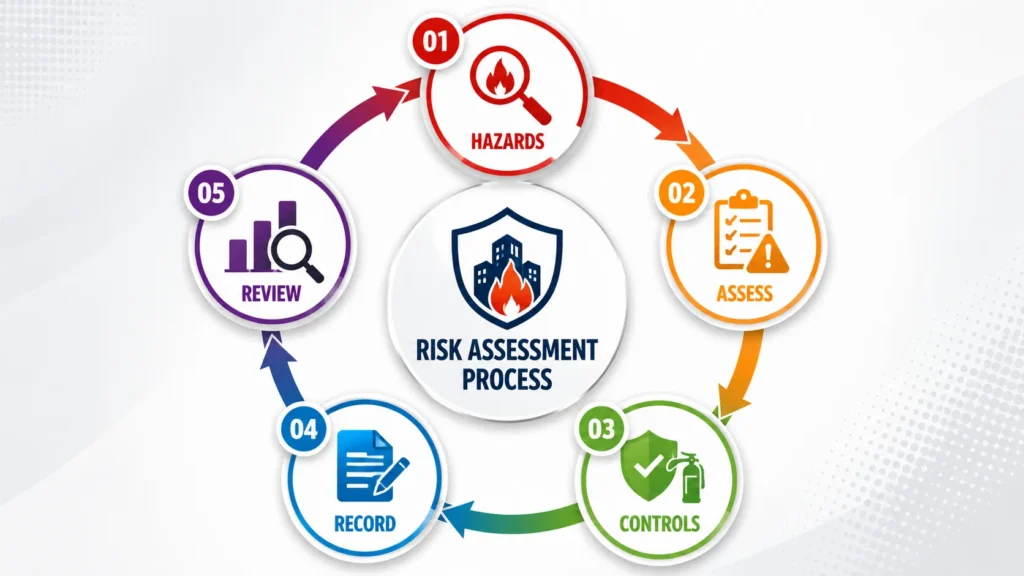
Fire Risk Assessment Workflow
The following workflow demonstrates how the Responsible Person should manage the fire risk assessment process.
Identify Fire Hazards
↓
Identify People at Risk
↓
Evaluate Existing Fire Safety Measures
↓
Implement Risk Control Measures
↓
Record Significant Findings
↓
Assign Corrective Actions
↓
Monitor Progress
↓
Review Following Changes
↓
Maintain Continuous Compliance
This structured approach helps ensure that fire safety remains an ongoing management activity rather than a periodic exercise.
Fire Safety Documentation Responsibilities
Maintaining accurate documentation is essential for demonstrating compliance and supporting effective fire safety management. During inspections, enforcement officers often review records to verify that fire safety arrangements are being actively managed.
The Responsible Person should ensure important documents are current, accessible, and regularly reviewed.
Essential Fire Safety Documentation
| Document | Purpose |
|---|---|
| Fire Risk Assessment | Identifies hazards, risks, and control measures |
| Emergency Evacuation Plan | Explains emergency procedures and escape arrangements |
| Fire Alarm Test Records | Demonstrates routine testing and maintenance |
| Emergency Lighting Test Records | Confirms emergency lighting remains operational |
| Fire Extinguisher Service Records | Evidence of equipment maintenance |
| Fire Door Inspection Records | Demonstrates passive fire protection maintenance |
| Fire Drill Reports | Records evacuation exercises and lessons learned |
| Fire Safety Training Records | Demonstrates employee competence |
| Maintenance Certificates | Confirms servicing of fire protection systems |
| Corrective Action Register | Tracks outstanding fire safety improvements |
Keeping organised records not only supports legal compliance but also enables organisations to monitor long-term performance and continuous improvement.
Maintaining Fire Protection Systems
Fire protection systems only provide effective protection when they are regularly inspected, tested, and maintained.
The Responsible Person should ensure suitable maintenance arrangements are in place for all critical fire safety equipment.
Fire Detection and Alarm Systems
Routine maintenance should confirm:
- Fire alarms operate correctly.
- Smoke and heat detectors remain unobstructed.
- Manual call points are accessible.
- Faults are repaired promptly.
- Maintenance records are retained.
Emergency Lighting
Emergency lighting should provide adequate illumination when normal lighting fails.
Routine inspections should verify:
- Emergency lighting activates correctly.
- Batteries remain serviceable.
- Escape routes are illuminated.
- Functional testing is completed at appropriate intervals.
Fire Doors
Fire doors help prevent the spread of fire and smoke while protecting escape routes.
Routine inspections should examine:
- Self-closing devices.
- Smoke seals.
- Door leaves.
- Hinges.
- Door gaps.
- Fire-resistance labels.
- Overall condition.
Fire Extinguishers
The Responsible Person should ensure:
- Correct extinguisher types are available.
- Equipment is accessible.
- Inspection labels remain current.
- Annual servicing is completed by competent personnel.
- Employees receive basic extinguisher awareness training where appropriate.
Means of Escape
Escape routes should remain available whenever the premises are occupied.
Regular inspections should confirm:
- Corridors remain unobstructed.
- Emergency exits are unlocked where required.
- Exit signage remains visible.
- External escape routes remain clear.
- Refuge areas remain accessible.
Maintaining these systems is essential for ensuring occupants can evacuate safely during an emergency.
Emergency Planning Responsibilities
Every workplace should have an emergency plan that reflects the building layout, occupancy, and identified fire risks.
The Responsible Person should ensure the emergency plan includes:
- Fire alarm activation procedures.
- Emergency evacuation arrangements.
- Escape routes.
- Assembly points.
- Fire Marshal responsibilities.
- Procedures for assisting disabled or vulnerable persons.
- Emergency contact details.
- Communication arrangements.
- Re-entry procedures following evacuation.
Emergency procedures should be reviewed periodically and updated whenever significant workplace changes occur.
Fire Safety Training Responsibilities
Providing suitable fire safety training is another legal responsibility of the Responsible Person.
Employees should understand:
- Common fire hazards.
- Fire prevention measures.
- How to raise the alarm.
- Emergency evacuation procedures.
- Assembly point locations.
- Safe use of electrical equipment.
- Hazard reporting procedures.
- Fire door awareness.
Additional training may be required for:
- Fire Marshals.
- Supervisors.
- Managers.
- Facilities teams.
- Maintenance personnel.
Training should be provided during employee induction and refreshed whenever workplace changes or new risks are introduced.
Monitoring Corrective Actions
Completing a fire risk assessment is only the beginning. The Responsible Person should monitor progress to ensure identified improvements are implemented effectively.
An action tracking system should record:
- Required improvement.
- Priority level.
- Responsible individual.
- Target completion date.
- Current status.
- Date completed.
Tracking corrective actions demonstrates proactive fire safety management and provides valuable evidence during audits or inspections.
Why Regular Reviews Are Essential
Fire safety arrangements should evolve alongside the organisation.
The Responsible Person should review fire safety measures whenever:
- Building layouts change.
- Occupancy levels increase.
- New machinery or equipment is introduced.
- Refurbishment work takes place.
- Fire incidents or near misses occur.
- Fire protection systems are upgraded.
- New legislation or official guidance is introduced.
Regular reviews help ensure that fire safety arrangements remain effective, proportionate, and compliant with current UK fire safety law.
Responsible Person Compliance Timeline
Meeting the legal responsibilities of the Responsible Person requires continuous monitoring rather than occasional inspections. Establishing a structured schedule helps ensure that fire safety measures remain effective and that legal obligations are met throughout the year.
The following timeline provides a practical framework for ongoing compliance.
| Frequency | Typical Responsibilities |
|---|---|
| Daily | Check escape routes, ensure fire exits remain unobstructed, identify obvious fire hazards, maintain good housekeeping |
| Weekly | Test fire alarm systems, inspect emergency exits, review workplace fire hazards |
| Monthly | Inspect fire extinguishers, test emergency lighting, check fire doors and fire safety signage |
| Quarterly | Review fire safety procedures, monitor corrective actions, inspect fire protection systems |
| Annually | Review the fire risk assessment, service fire safety equipment, conduct refresher training and evacuation drills |
Following a planned maintenance programme helps organisations demonstrate due diligence while reducing the likelihood of equipment failures or compliance issues.
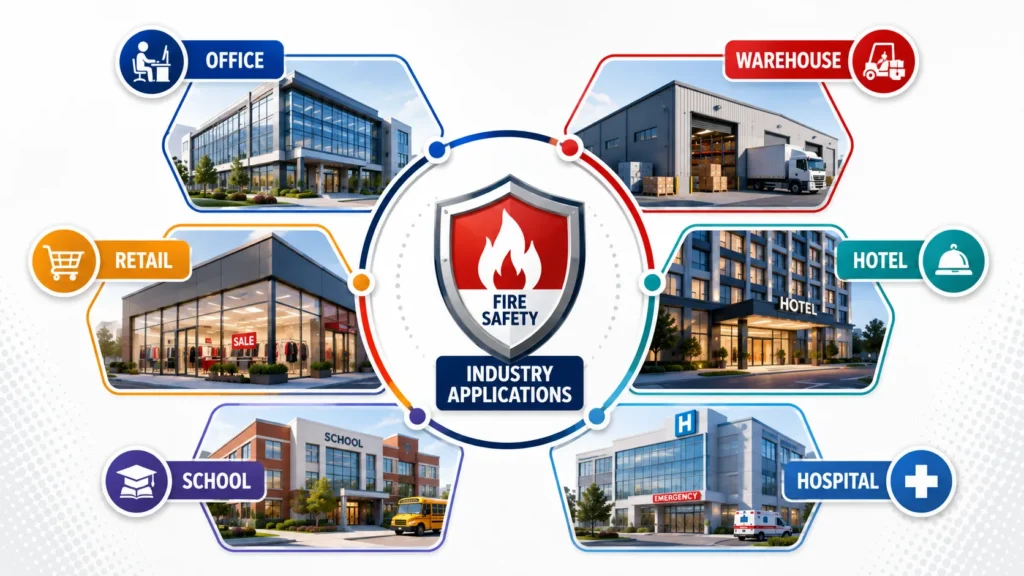
Industry-Specific Responsibilities of the Responsible Person
Although the legal principles remain consistent across all workplaces, the Responsible Person should adapt fire safety management to the specific risks presented by different industries.
Office Buildings
Responsible Persons in office environments should focus on:
- Electrical equipment safety
- Server rooms
- Escape route management
- Fire alarm systems
- Visitor procedures
- Emergency lighting
- Fire door maintenance
Warehouses
Warehouses generally present higher fire loads due to storage arrangements and operational activities.
Key responsibilities include:
- Combustible storage management
- Forklift charging areas
- High-rack storage
- Flammable liquid storage
- Smoke ventilation systems
- Sprinkler systems
- Loading bay safety
Retail Premises
Retail environments require attention to:
- Customer evacuation
- Display layouts
- Seasonal decorations
- Stock storage
- Fire detection systems
- Public escape routes
- Employee emergency training
Hotels and Hospitality Businesses
Responsible Persons should ensure:
- Guest evacuation procedures
- Commercial kitchen fire protection
- Fire compartmentation
- Bedroom smoke detection
- Emergency lighting
- Fire safety signage
- Staff emergency preparedness
Healthcare Facilities
Healthcare settings require additional planning because many occupants may require assistance during evacuation.
Priority areas include:
- Progressive evacuation strategies
- Refuge areas
- Medical gas storage
- Oxygen cylinders
- Patient evacuation equipment
- Staff competency
Educational Institutions
Schools, colleges, and universities should regularly review:
- Classroom occupancy
- Laboratories
- Assembly halls
- Libraries
- Student evacuation procedures
- Fire drills
- Electrical equipment
Tailoring fire safety arrangements to the specific workplace improves both compliance and occupant safety.
Common Compliance Mistakes Responsible Persons Should Avoid
Many enforcement actions arise because relatively simple fire safety responsibilities have been overlooked. Recognising these common mistakes can help Responsible Persons strengthen compliance and reduce organisational risk.
Common errors include:
- Failing to review fire risk assessments after significant workplace changes.
- Allowing emergency exits to become blocked.
- Wedging fire doors open.
- Ignoring damaged fire safety equipment.
- Missing scheduled maintenance.
- Providing inadequate employee training.
- Failing to conduct fire drills.
- Keeping incomplete documentation.
- Delaying corrective actions.
- Assuming contractors have responsibility for workplace fire safety.
- Overlooking vulnerable occupants during emergency planning.
- Using generic fire risk assessment templates without considering site-specific risks.
Avoiding these issues helps create a more effective and resilient fire safety management system.
Preparing for a Fire Safety Inspection
A fire safety inspection provides an opportunity to demonstrate that fire safety is actively managed rather than simply documented.
Before an inspection, the Responsible Person should verify that:
- The fire risk assessment is current.
- Outstanding corrective actions have been completed.
- Fire alarm records are available.
- Emergency lighting records are complete.
- Fire extinguisher servicing is up to date.
- Fire door inspections have been carried out.
- Employee training records are available.
- Fire drill reports have been retained.
- Escape routes remain unobstructed.
- Emergency procedures remain current.
Well-prepared organisations generally experience smoother inspections and can address questions with confidence.
Legal Consequences of Non-Compliance
Failing to fulfil the legal responsibilities of the Responsible Person can result in serious legal, financial, and operational consequences.
Depending on the severity of non-compliance, enforcement authorities may issue:
Alterations Notice
Issued where changes to the building or its use could significantly increase fire risk. The Responsible Person may be required to notify the enforcing authority before making certain alterations.
Enforcement Notice
Requires identified fire safety deficiencies to be corrected within a specified timescale.
Prohibition Notice
Issued where serious fire risks place occupants in immediate danger. Part or all of the premises may be prohibited from use until appropriate improvements have been completed.
Prosecution
Serious breaches of UK fire safety legislation may lead to prosecution, substantial financial penalties, and, in severe cases, imprisonment.
Beyond legal penalties, organisations may also experience:
- Business interruption.
- Increased insurance premiums.
- Damage to reputation.
- Loss of customer confidence.
- Operational delays.
- Financial losses following fire incidents.
Proactive compliance is considerably less costly than responding to enforcement action after problems have been identified.
Best Practices for Responsible Persons
Successful Responsible Persons treat fire safety as an ongoing management process rather than a compliance exercise completed once a year.
Best practices include:
- Review the fire risk assessment regularly.
- Maintain organised fire safety records.
- Encourage employees to report hazards promptly.
- Monitor corrective actions until completion.
- Conduct routine workplace inspections.
- Test emergency procedures through regular fire drills.
- Ensure contractors follow workplace fire safety requirements.
- Promote continuous employee awareness.
- Stay informed about changes to legislation and industry guidance.
- Regularly evaluate the effectiveness of fire safety management systems.
Embedding these practices into everyday operations helps organisations build a stronger fire safety culture and maintain long-term compliance.
The Future of the Responsible Person Role
Fire safety management continues to evolve as technology and workplace practices develop. Responsible Persons increasingly have access to digital tools that improve efficiency, record-keeping, and compliance monitoring.
Emerging developments include:
- Cloud-based fire safety management systems.
- Digital fire risk assessments.
- Smart fire alarm monitoring.
- Internet of Things (IoT) sensors.
- QR code equipment inspections.
- Mobile inspection applications.
- Predictive maintenance using data analytics.
- Artificial intelligence to identify compliance trends and prioritise corrective actions.
While technology enhances fire safety management, the Responsible Person remains legally responsible for ensuring appropriate fire safety arrangements are implemented and maintained.
Explore Fire Safety Courses on Inspire College
Building professional knowledge is one of the most effective ways to fulfil the responsibilities of a Responsible Person. Whether you are an employer, facilities manager, property manager, health and safety professional, or aspiring fire safety practitioner, appropriate training can help you understand legal duties, improve fire risk management, and strengthen workplace compliance.
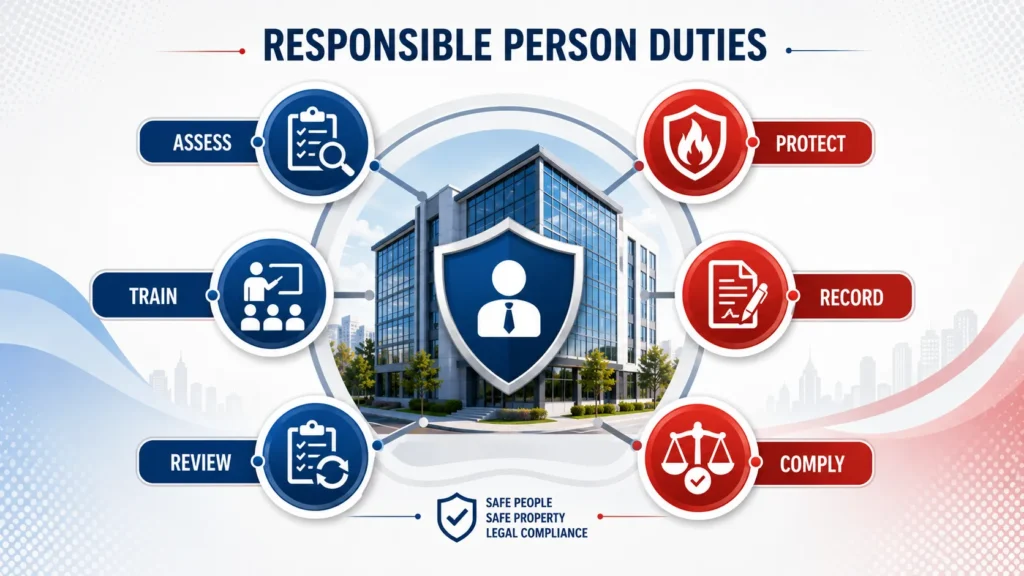
Conclusion
The Responsible Person plays a central role in ensuring that workplaces comply with UK fire safety law and provide a safe environment for employees, visitors, contractors, and the public. Their responsibilities extend far beyond completing a fire risk assessment—they include maintaining fire protection systems, implementing emergency procedures, providing staff training, keeping accurate records, and continuously reviewing fire safety arrangements.
By understanding and fulfilling these legal duties, Responsible Persons can reduce fire risks, improve emergency preparedness, support business continuity, and demonstrate compliance with the Regulatory Reform (Fire Safety) Order 2005. Regular inspections, proactive maintenance, ongoing training, and effective documentation are all essential components of a successful fire safety management system.
Investing in recognised fire safety qualifications and maintaining a culture of continuous improvement not only supports legal compliance but also helps protect lives, safeguard property, and strengthen organisational resilience.