
What Is Health and Social Care? Complete Guide to Services, Careers, Skills and Qualifications (2026)
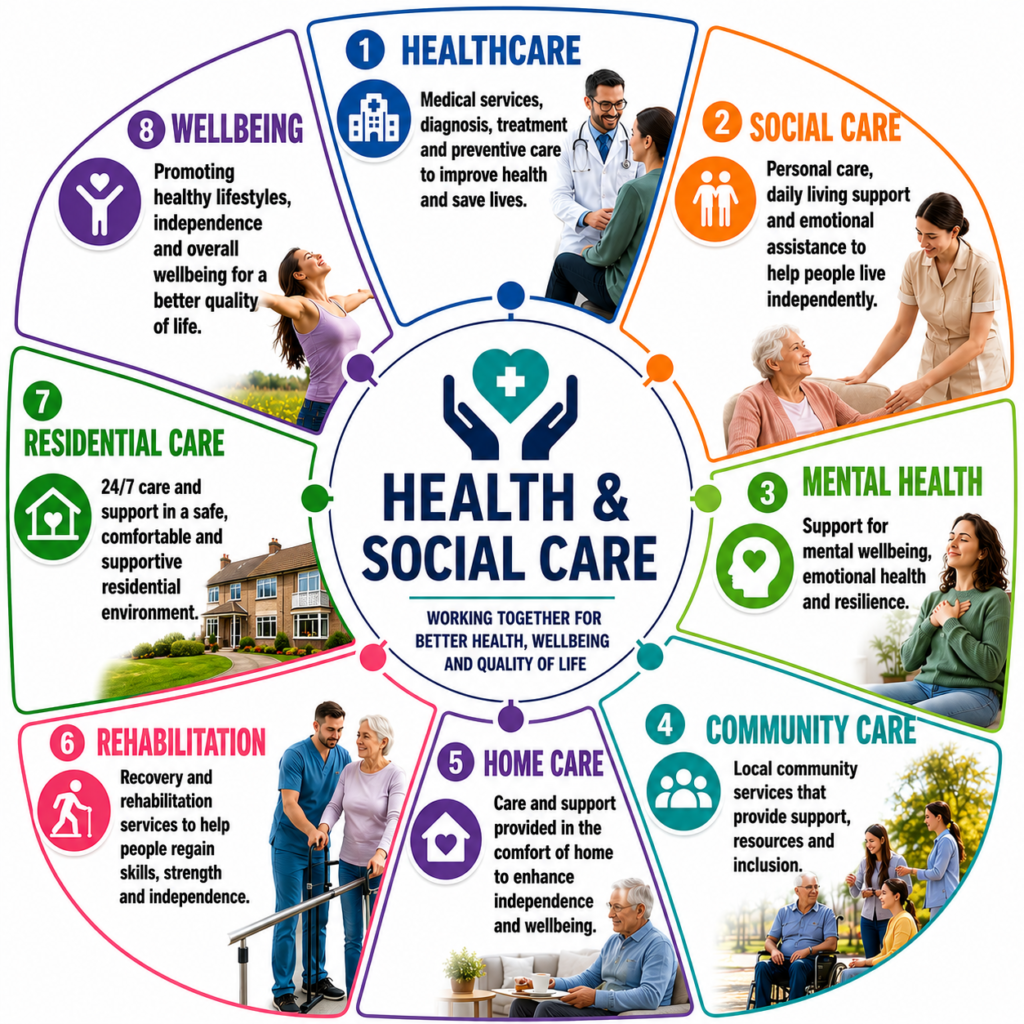
Health and social care is a vital sector dedicated to improving people’s health, wellbeing, independence, and overall quality of life through a combination of healthcare services, social support, and professional care practices. It includes medical services that help prevent, diagnose, and manage health conditions, alongside social care services that support individuals with daily living, personal needs, and maintaining independence.
With growing healthcare demands, ageing populations, increased awareness of mental health, and the need for personalised support, the health and social care sector has become one of the most important sectors in modern society. According to the World Health Organization (WHO), the global population aged 60 years and older is projected to reach 2.1 billion by 2050, significantly increasing the demand for accessible, high-quality health and social care services. The sector plays a crucial role in supporting children, older adults, people with disabilities, individuals living with long-term conditions, and vulnerable groups by providing safe, respectful, and person-centred care.
This complete guide to health and social care explains its definition, purpose, key principles, types of services, roles and responsibilities, essential skills, career opportunities, qualifications, and future developments shaping the sector in 2026.
What Is Health and Social Care?
Health and social care refers to the range of professional services and support systems designed to maintain and improve people’s physical health, mental wellbeing, and social independence.
Health care focuses mainly on preventing, diagnosing, and treating medical conditions, while social care focuses on helping individuals with daily living activities, personal support, and maintaining independence.
Together, health and social care create a person-centred approach where professionals work collaboratively to support individuals according to their specific needs, preferences, and circumstances.
Examples of Health and Social Care Services
- Medical treatment and healthcare services
- Support for older adults
- Disability assistance
- Mental health support
- Rehabilitation services
- Community care
- Residential care services
- Home care support
- Health promotion and wellbeing programmes
The main purpose of health and social care is not only to treat illness but also to help people live healthier, safer, and more independent lives.
Definition of Health Care
Health care refers to services provided by trained healthcare professionals to prevent, manage, and treat physical and mental health conditions.
Healthcare services include:
- Diagnosis and medical treatment
- Hospital care
- Emergency services
- Primary healthcare
- Mental health services
- Rehabilitation
- Preventive healthcare
- Health education
Healthcare professionals such as doctors, nurses, therapists, and healthcare assistants play an important role in maintaining and improving individual health outcomes.
Definition of Social Care
Social care provides support to individuals who need help with daily activities, personal care, independence, and participation in everyday life.
Social care services commonly support:
- Older adults
- People with disabilities
- Individuals with long-term conditions
- People requiring mental health support
- Children and young people needing additional care
Social care workers help individuals maintain dignity, independence, and quality of life by providing practical and emotional support.
Difference Between Health Care and Social Care
Although health care and social care are closely connected, they have different focuses.
| Health Care | Social Care |
|---|---|
| Focuses on medical treatment and health improvement | Focuses on personal support and daily living |
| Treats illnesses, injuries, and health conditions | Helps individuals maintain independence |
| Usually delivered by healthcare professionals | Delivered by social care professionals and support workers |
| Includes hospitals, clinics, and medical services | Includes home care, residential care, and community support |
In modern care systems, health and social care professionals often work together to provide integrated support that addresses both medical and personal needs.
Why Is Health and Social Care Important?
Health and social care is essential for improving people’s health, wellbeing, independence, and overall quality of life. It provides vital support to individuals, families, and communities by addressing physical health needs, emotional wellbeing, personal care requirements, and social support needs. From healthcare treatment and disease prevention to daily living assistance and community support, health and social care services help people live safer, healthier, and more fulfilling lives.
The growing importance of the sector is reflected in the increasing demand for skilled professionals. According to the World Health Organization (WHO), the world is projected to face a shortage of approximately 11 million health workers by 2030, highlighting the need for continued investment in health and social care education, workforce development, and high-quality care services.
The importance of health and social care can be understood through the following key areas:
Improving Quality of Life
Health and social care services help individuals manage health conditions, recover from illness or injury, and maintain independence. Through personalised care, medical support, rehabilitation, and wellbeing programmes, people can receive the assistance they need to improve their daily lives and achieve better health outcomes.
Supporting Vulnerable Individuals
Health and social care provides essential support for vulnerable individuals, including older adults, people with disabilities, individuals with long-term health conditions, and those requiring additional assistance. Care professionals help ensure these individuals receive safe, respectful, and appropriate support while protecting their wellbeing and independence.
Promoting Health and Wellbeing
One of the main purposes of health and social care is to promote prevention and healthier lifestyles. Professionals support individuals through health education, early intervention, mental health support, and wellbeing initiatives. These approaches help reduce health risks, encourage positive choices, and improve long-term health outcomes.
Protecting Dignity and Individual Rights
High-quality health and social care is based on respect, dignity, equality, and person-centred support. Care providers ensure that individuals have their choices recognised, their privacy protected, and their personal needs respected. This helps create a supportive environment where people feel valued and empowered.
Reducing Pressure on Healthcare Services
Effective social care support helps individuals manage their needs within their communities and reduces unnecessary dependence on hospitals and emergency healthcare services. By providing appropriate assistance, rehabilitation, and ongoing care, social care services contribute to more efficient and sustainable healthcare systems.
Supporting Families and Communities
Health and social care also plays an important role in supporting families and communities. By providing professional guidance, care services, and emotional support, it helps families manage challenges and ensures individuals receive the right level of care when needed.
Overall, health and social care is a fundamental part of modern society, helping people maintain independence, access essential services, and achieve better physical, mental, and social wellbeing.
Principles of Health and Social Care
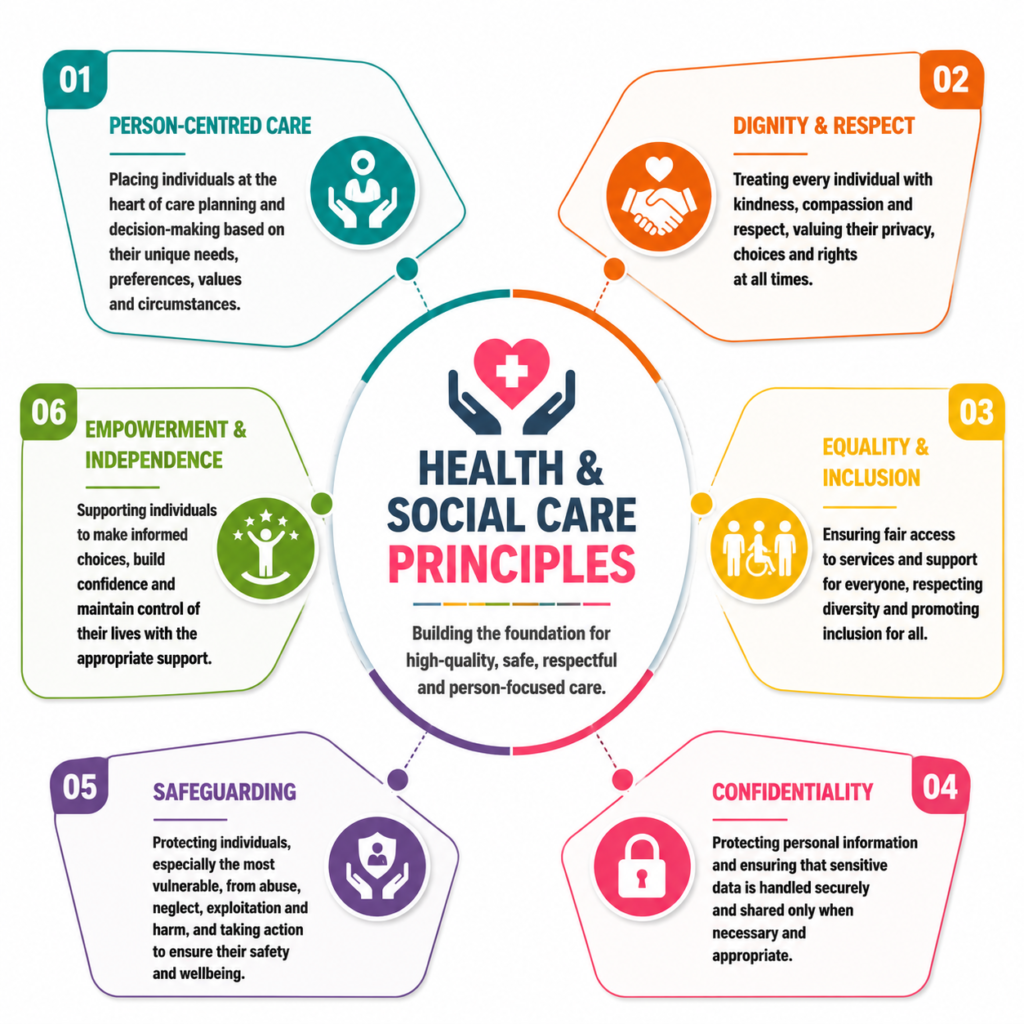
High-quality health and social care is built on a set of core principles that ensure individuals receive safe, respectful, inclusive, and personalised support. These principles guide care professionals in delivering services that protect people’s rights, promote independence, and improve overall wellbeing.
Person-Centred Care
Person-centred care focuses on placing the individual at the heart of care planning and decision-making. It ensures that support is based on each person’s unique needs, preferences, values, and personal circumstances rather than following a standard approach.
Care providers consider:
- Individual preferences and choices
- Personal values and beliefs
- Health and care needs
- Personal goals and aspirations
- Lifestyle and circumstances
This approach helps individuals feel respected, involved, and empowered in decisions about their own care.
Dignity and Respect
Dignity and respect are fundamental principles of health and social care. Every individual should be treated with kindness, compassion, and fairness, regardless of their age, background, disability, health condition, or personal circumstances.
Respectful care involves protecting privacy, listening to individuals, recognising their choices, and ensuring they feel valued throughout their care journey.
Equality and Inclusion
Equality and inclusion ensure that everyone has fair access to health and social care services without discrimination. Care professionals must recognise and respect differences in people’s backgrounds, cultures, beliefs, abilities, and needs.
Inclusive care promotes fairness and ensures that all individuals receive appropriate support according to their circumstances.
Confidentiality
Confidentiality involves protecting an individual’s personal information and ensuring that sensitive health and care data is handled responsibly. Health and social care professionals must follow appropriate policies and regulations to maintain privacy and build trust with service users.
Safeguarding
Safeguarding focuses on protecting individuals, especially vulnerable adults and children, from abuse, neglect, exploitation, and harm. Care professionals have a responsibility to identify risks, report concerns, and take appropriate action to ensure people’s safety and wellbeing.
Empowerment and Independence
Empowerment and independence involve supporting individuals to make informed choices and take control of their own lives wherever possible. Effective care encourages people to participate in decisions, develop confidence, and maintain their independence while receiving appropriate support.
Together, these principles form the foundation of effective health and social care practice, ensuring services are safe, ethical, person-focused, and responsive to individual needs. Maintaining high standards of care also requires effective quality management systems. Understanding the differences between Quality Assurance and Quality Control helps organisations improve care quality, prevent errors, and maintain consistent service standards.
Types of Health and Social Care Services
Health and social care services include a broad range of professional support systems designed to meet people’s medical, personal, emotional, and social needs. These services aim to improve health outcomes, promote independence, provide ongoing support, and enhance the quality of life for individuals at different stages of life.
Health and social care services are delivered through healthcare organisations, community services, care providers, and trained professionals who work together to provide person-centred support.
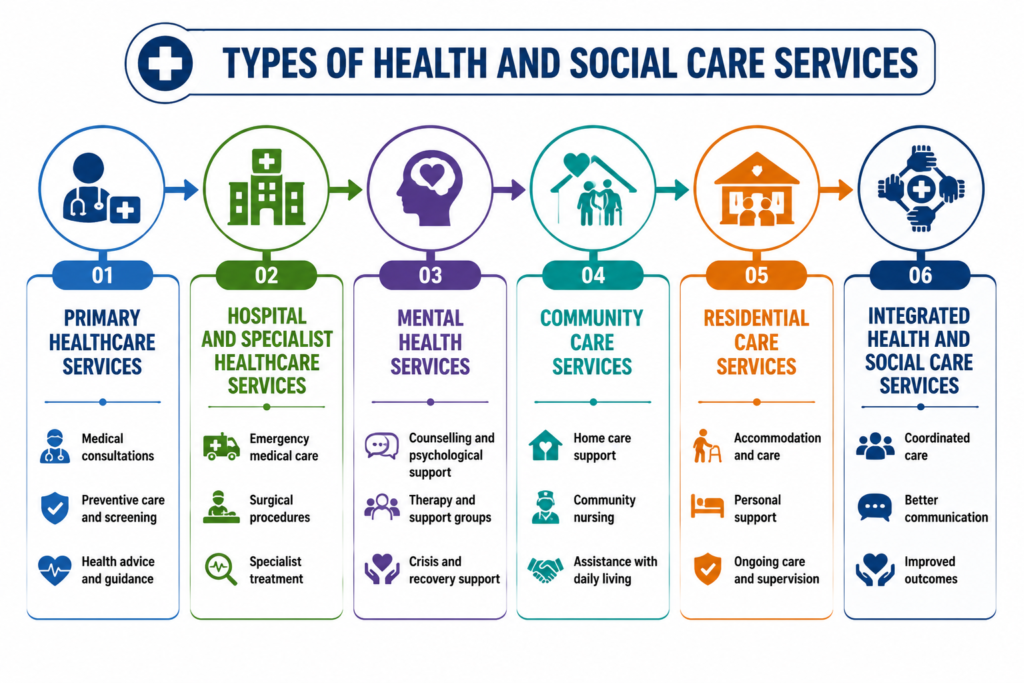
The main types of health and social care services include:
Primary Healthcare Services
Primary healthcare services are usually the first point of contact for individuals seeking medical advice, treatment, or health support. These services focus on preventing illness, managing common health conditions, and promoting overall wellbeing.
Examples of primary healthcare services include:
- General medical consultations
- Health advice and guidance
- Routine health checks
- Preventive care and health screening
- Management of common illnesses
- Advice on healthy lifestyles
Primary healthcare plays an important role in early identification of health problems and ensuring individuals receive appropriate support before conditions become more serious.
Hospital and Specialist Healthcare Services
Hospital and specialist healthcare services provide advanced medical treatment, diagnosis, and support for individuals with complex or serious health conditions. These services are delivered by specialist healthcare professionals with expertise in specific areas of medicine.
Examples of hospital and specialist healthcare services include:
- Emergency medical care
- Surgical procedures
- Specialist consultations
- Diagnosis and treatment of complex conditions
- Rehabilitation and recovery services
- Specialist medical support
Hospitals play a critical role in providing intensive treatment and supporting individuals during serious illness, injury, or recovery.
Mental Health Services
Mental health services provide support for individuals experiencing emotional, psychological, or behavioural challenges. These services aim to improve mental wellbeing, support recovery, and help people manage mental health conditions effectively.
Examples of mental health services include:
- Counselling and psychological support
- Therapy services
- Mental health awareness programmes
- Community mental health support
- Crisis support services
- Recovery-focused care
Mental health support is an essential part of health and social care because emotional wellbeing directly affects a person’s overall quality of life.
Community Care Services
Community care services allow individuals to receive support within their own homes or local communities rather than relying only on hospital-based care. These services help people maintain independence while receiving the assistance they need.
Examples of community care services include:
- Home care support
- Community nursing services
- Social support programmes
- Rehabilitation support
- Assistance with daily living activities
Community care is particularly important for older adults, people with disabilities, and individuals managing long-term health conditions.
Residential Care Services
Residential care services provide accommodation, personal support, and ongoing assistance for individuals who require a higher level of care. These services ensure that people receive safe and professional support in a dedicated care environment.
Residential care may support:
- Older adults requiring ongoing assistance
- People with physical or learning disabilities
- Individuals with complex care needs
- People requiring specialist support services
Residential care focuses on maintaining dignity, safety, independence, and quality of life while providing continuous care and supervision.
Integrated Health and Social Care Services
Modern health and social care systems increasingly focus on integrated care, where healthcare professionals and social care providers work together to deliver coordinated support.
Integrated services help ensure that individuals receive:
- Continuous and personalised care
- Better communication between professionals
- Improved health outcomes
- Support based on individual needs
By combining medical care with social support, integrated health and social care provides a more effective approach to improving people’s wellbeing and independence.
Role of Health and Social Care Workers
Health and social care workers play an essential role in supporting individuals, families, and communities by providing personalised care, promoting wellbeing, and helping people maintain independence. Their key responsibilities include:
- Supporting Daily Activities: Assist individuals with personal care, mobility, nutrition, and everyday tasks while promoting dignity, choice, and independence.
- Monitoring Health and Wellbeing: Observe changes in physical health, emotional wellbeing, and behaviour to ensure individuals receive appropriate support when needed.
- Providing Emotional and Social Support: Offer encouragement, companionship, and emotional support to help individuals manage challenges and improve their quality of life.
- Maintaining Care Records: Keep accurate records of care activities, health changes, and individual needs to support effective care planning and communication.
- Communicating with Families and Professionals: Work with families, healthcare professionals, and care teams to ensure coordinated and consistent support.
- Following Safeguarding Procedures: Identify risks of abuse, neglect, or harm and follow safeguarding policies to protect vulnerable individuals. In addition, health and social care professionals must follow health and safety procedures to identify workplace hazards, assess risks, prevent accidents, and maintain a safe environment for service users, visitors, and colleagues. Understanding workplace safety principles helps organisations deliver safer, higher-quality care while meeting legal and professional responsibilities.
- Promoting Independence: Encourage individuals to make choices, participate in decisions, and maintain control over their daily lives.
Different professionals work together to provide effective health and social care services, including:
- Healthcare Assistants: Provide support with personal care, daily activities, and basic healthcare needs.
- Nurses: Deliver medical care, monitor health conditions, and support treatment, recovery, and ongoing health management.
- Social Workers: Support individuals and families by providing guidance, advocacy, and access to appropriate services.
- Support Workers: Assist individuals with disabilities, mental health needs, and additional care requirements.
- Care Coordinators: Organise care plans, coordinate services, and ensure individuals receive suitable support.
- Health and Social Care Managers: Manage care services, lead teams, improve quality standards, and ensure effective service delivery.
Essential Skills Required in Health and Social Care
Professionals working in health and social care need a combination of practical, communication, and interpersonal skills to provide safe, effective, and person-centred support. These skills help care workers understand individual needs, build positive relationships, and deliver high-quality care that promotes health, dignity, and independence.
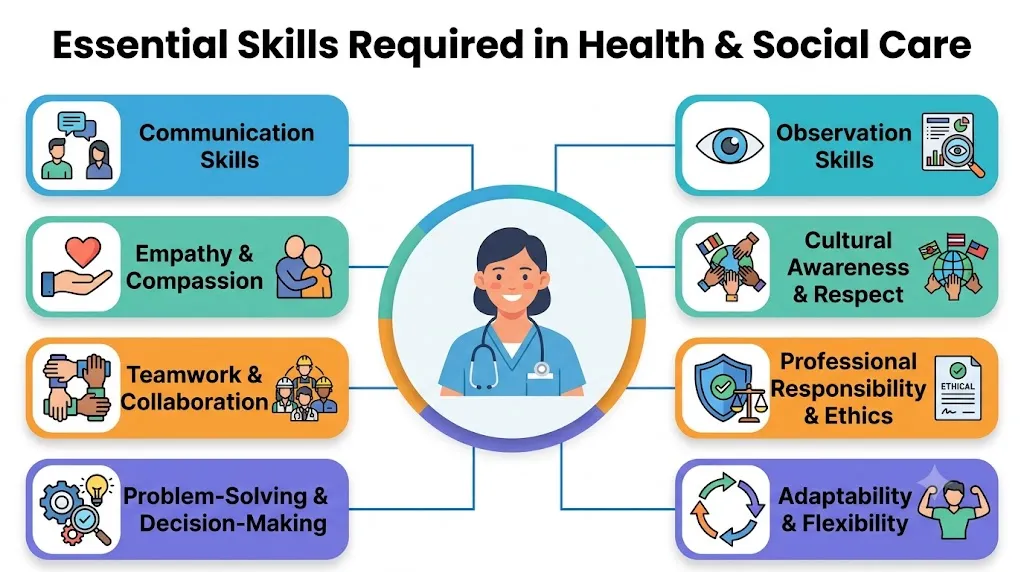
Key skills required in health and social care include:
Cultural Awareness and Respect
Understanding and respecting different cultures, beliefs, and personal values helps professionals provide inclusive care that promotes equality and dignity.
Communication Skills
Effective communication helps health and social care professionals understand individual needs, provide clear information, and build trust with service users, families, and other professionals.
Empathy and Compassion
Empathy allows care workers to understand people’s emotions, experiences, and challenges. Compassion helps professionals provide respectful, supportive, and person-focused care.
Teamwork and Collaboration
Health and social care requires cooperation between different professionals, including healthcare workers, social workers, and support staff. Effective teamwork ensures coordinated and consistent care.
Problem-Solving and Decision-Making Skills
Care professionals must assess situations, identify challenges, and make appropriate decisions to support individuals safely and effectively.
Observation Skills
Strong observation skills help professionals recognise changes in a person’s health, behaviour, or wellbeing, allowing early action and appropriate support.
Professional Responsibility and Ethics
Health and social care workers must follow ethical principles, safeguarding procedures, workplace policies, and professional standards to ensure safe and responsible care.
Adaptability and Flexibility
Care professionals need to adapt to different situations, changing needs, and diverse care environments while continuing to provide effective support.
Health and Social Care Qualifications and Training
Health and social care qualifications provide learners with the knowledge, practical skills, and professional understanding needed to work effectively in healthcare and social care environments. These qualifications are designed for different learning levels, from beginners entering the sector to experienced professionals developing advanced leadership and management skills.
Health and social care training helps learners understand key areas such as person-centred care, safeguarding, communication, health promotion, equality and diversity, risk management, and professional practice.
Entry-Level Health and Social Care Qualifications
Entry-level qualifications are suitable for beginners who want to develop a basic understanding of the sector and start their career in health and social care.
These qualifications typically cover:
- Introduction to health and social care
- Basic care principles
- Communication skills
- Health and safety practices
- Supporting individuals’ wellbeing
- Understanding the needs of service users
They are ideal for learners starting their first care role or those who want to explore career opportunities in the sector.
Intermediate Health and Social Care Qualifications
Intermediate qualifications are designed for individuals who already have basic knowledge or workplace experience and want to improve their professional skills.
These programmes may focus on:
- Person-centred care approaches
- Safeguarding responsibilities
- Supporting individuals with specific needs
- Mental health awareness
- Care planning and assessment
- Effective communication in care settings
These qualifications can help learners progress into more responsible support roles.
Advanced Health and Social Care Qualifications
Advanced qualifications are designed for experienced professionals who want to develop specialist knowledge, leadership skills, and career progression opportunities.
Advanced training may include:
- Health and social care management
- Leadership in care services
- Quality improvement
- Risk management
- Strategic planning
- Professional development
- Managing care teams
These qualifications support progression into supervisory, managerial, and senior care roles.
Professional Development and Specialist Training
Continuous professional development (CPD) is important in health and social care because the sector continues to change due to new technologies, updated regulations, and evolving care practices.
Specialist training may include:
- Safeguarding training
- Mental health awareness
- Dementia care
- Infection prevention and control
- First aid training
- Equality and diversity
- Healthcare leadership
Regular training helps professionals maintain high standards of care and provide safe, effective, and person-centred support.
Career Opportunities in Health and Social Care
Health and social care provides a wide range of rewarding career opportunities for individuals who want to support people’s health, wellbeing, independence, and quality of life. The sector offers career pathways for beginners entering the workforce as well as experienced professionals progressing into specialist, supervisory, and management roles.
With increasing demand for healthcare and social care services, skilled professionals are needed across hospitals, care homes, community care services, mental health organisations, and private healthcare providers. Careers in this sector allow individuals to make a meaningful contribution by supporting people at different stages of life.
Healthcare Assistant
Healthcare assistants provide essential support to patients and service users by assisting with personal care, daily activities, and basic healthcare needs. They often work alongside nurses and other healthcare professionals to ensure individuals receive safe, effective, and compassionate care.
Their responsibilities may include supporting personal hygiene, assisting with mobility and nutrition, monitoring wellbeing, providing emotional support, and maintaining accurate care records. Healthcare assistants play an important role in improving patient comfort and supporting recovery.
Social Care Worker
Social care workers support individuals who require assistance with daily living, personal care, and maintaining independence. They commonly work with older adults, people with disabilities, individuals with long-term conditions, and those who need additional support in their daily lives.
Their role involves providing practical assistance, supporting community participation, promoting dignity and choice, and helping individuals achieve a better quality of life through personalised care and support.
Support Worker
Support workers provide tailored assistance to individuals with disabilities, mental health needs, learning difficulties, or other support requirements. Their main focus is to empower individuals, encourage independence, and help them participate more actively in everyday life.
Support workers may assist with daily routines, emotional wellbeing, developing life skills, accessing community services, and achieving personal goals based on individual needs and preferences.
Care Coordinator
Care coordinators are responsible for organising and managing care services to ensure individuals receive appropriate and continuous support. They work closely with service users, families, healthcare professionals, and care providers to coordinate effective care delivery.
Their responsibilities include developing care plans, arranging services, monitoring care quality, communicating with care teams, and ensuring support meets each individual’s specific needs.
Health and Social Care Manager
Health and social care managers oversee the operation and delivery of care services within organisations such as care homes, community services, and healthcare facilities. They are responsible for maintaining quality standards, managing teams, improving services, and ensuring compliance with professional requirements.
Their role may involve staff development, quality improvement, risk management, safeguarding responsibilities, and strategic planning to ensure individuals receive safe and effective care.
Career Progression in Health and Social Care
Health and social care offers excellent opportunities for professional growth and career advancement. Individuals can progress from entry-level care roles to senior positions by gaining experience, developing specialist skills, and completing relevant health and social care qualifications.
A typical career pathway may include progression from healthcare assistant or support worker roles into senior care positions, care coordination, supervision, and health and social care management.
With the right training, skills, and professional development, careers in health and social care provide long-term opportunities to make a positive impact on individuals, families, and communities.
A typical career pathway in the health and social care sector:
Student
↓
Health & Social Care Qualification
↓
Healthcare Assistant
↓
Support Worker
↓
Senior Care Worker
↓
Care Coordinator
↓
Health & Social Care Manager
↓
Director / Head of Care
Career progression may vary depending on qualifications, experience, employer, and area of specialisation.
Future of Health and Social Care in 2026
The future of health and social care is being shaped by technological innovation, changing population needs, workforce development, and a growing focus on person-centred care. As healthcare systems continue to evolve, organisations are adopting new approaches to improve service quality, enhance patient outcomes, and provide more accessible and efficient care.
In 2026 and beyond, several trends are expected to transform the health and social care sector.
Digital Healthcare
Digital healthcare is changing the way health and social care services are delivered. Technologies such as electronic health records, telehealth, mobile health applications, and remote patient monitoring are making healthcare more accessible, efficient, and convenient. These digital solutions enable professionals to deliver timely care while allowing individuals to access healthcare services from their homes.
Artificial Intelligence in Health and Social Care
Artificial intelligence (AI) is becoming an increasingly valuable tool in health and social care. AI supports healthcare professionals by analysing medical data, assisting with clinical decision-making, improving diagnostic accuracy, automating administrative tasks, and helping organisations deliver more efficient and personalised care. While AI enhances healthcare delivery, it complements rather than replaces the expertise and judgement of healthcare professionals.
Greater Focus on Person-Centred Care
Modern health and social care services are placing greater emphasis on person-centred care, where individuals are actively involved in decisions about their own health and wellbeing. Care plans are becoming more personalised, ensuring services reflect each person’s preferences, goals, values, and individual circumstances.
Growing Demand for Skilled Health and Social Care Professionals
An ageing population, increasing life expectancy, and the rising prevalence of long-term health conditions are driving greater demand for qualified health and social care professionals. Organisations continue to invest in workforce development, professional training, and leadership programmes to ensure high-quality care services can meet future healthcare needs.
Increased Use of Preventive Healthcare
Health and social care is increasingly shifting from treating illness to preventing it. Greater investment in health promotion, early intervention, regular health screening, vaccination programmes, and public health education is helping individuals maintain healthier lifestyles and reduce the risk of chronic diseases.
Integration of Health and Social Care Services
Healthcare providers and social care organisations are working more closely together to deliver integrated care. This collaborative approach improves communication between professionals, ensures continuity of care, and provides individuals with coordinated support that addresses both their medical and social care needs.
Greater Emphasis on Mental Health and Wellbeing
Mental health is becoming an increasingly important priority within health and social care. Organisations are expanding access to mental health services, promoting emotional wellbeing, and integrating mental health support into wider healthcare and community care programmes to provide more holistic care.
Sustainability and Environmentally Responsible Healthcare
Healthcare organisations are increasingly adopting sustainable practices to reduce environmental impact while maintaining high-quality care. This includes improving energy efficiency, reducing waste, embracing digital technologies, and implementing environmentally responsible healthcare practices.
As these developments continue, the future of health and social care will become more technology-enabled, person-centred, collaborative, and sustainable. Professionals who continuously develop their knowledge, skills, and qualifications will be well positioned to contribute to the sector and meet the changing needs of individuals and communities.
Conclusion
Health and social care is an essential sector that promotes the health, wellbeing, and independence of individuals at every stage of life. By combining healthcare services with social support, it helps people manage illness, recover from injury, live independently, and improve their overall quality of life. Throughout this guide, we have explored the definition of health and social care, its core principles, key services, career opportunities, qualifications, and the emerging trends shaping the sector in 2026. Together, these elements highlight the significant contribution health and social care makes to improving lives and strengthening communities.
As the demand for skilled professionals continues to grow, health and social care offers excellent career prospects and opportunities for professional development. Advances in digital healthcare, artificial intelligence, integrated care, and person-centred approaches are transforming the way services are delivered, making this an exciting time to enter the profession. Whether you are planning to start a career, expand your knowledge, or enhance your professional skills, investing in recognised health and social care qualifications and continuous learning can help you build a rewarding career while making a meaningful difference to individuals, families, and communities.