
UK Fire Safety Regulations Every Employer Should Know
Fire safety is a legal responsibility that every employer in the United Kingdom must take seriously. Regardless of whether a business operates from an office, warehouse, retail store, hotel, educational institution, healthcare facility, manufacturing plant, or construction site, employers have a duty to protect employees, visitors, contractors, and members of the public from the risks associated with fire.
A fire can have devastating consequences, including injuries, loss of life, business interruption, property damage, financial losses, and legal enforcement. However, many workplace fires are preventable when organisations understand and comply with UK fire safety regulations. Effective fire safety management goes beyond installing alarms and fire extinguishers—it requires ongoing risk assessment, staff training, maintenance of fire protection systems, emergency planning, and continuous monitoring of workplace hazards.
This guide explains the essential UK fire safety regulations every employer should know, outlines legal responsibilities, and provides practical guidance on achieving compliance. Whether you are an employer, Responsible Person, facilities manager, business owner, or health and safety professional, this article will help you understand your obligations and implement best practices to create a safer workplace.
Why UK Fire Safety Regulations Matter
Every year, workplace fires cause significant financial losses, operational disruption, and serious harm to people. While modern buildings often include advanced fire protection systems, these systems are only effective when supported by strong fire safety management and legal compliance.
UK fire safety regulations are designed to ensure that employers:
- Identify and control fire hazards.
- Protect employees and building occupants.
- Provide safe means of escape.
- Maintain fire protection systems.
- Prepare for emergencies.
- Reduce the likelihood of workplace fires.
- Meet legal obligations.
- Improve business resilience.
For employers, compliance is not simply about avoiding penalties—it is about creating a workplace where people can work safely and confidently.
Understanding UK Fire Safety Legislation
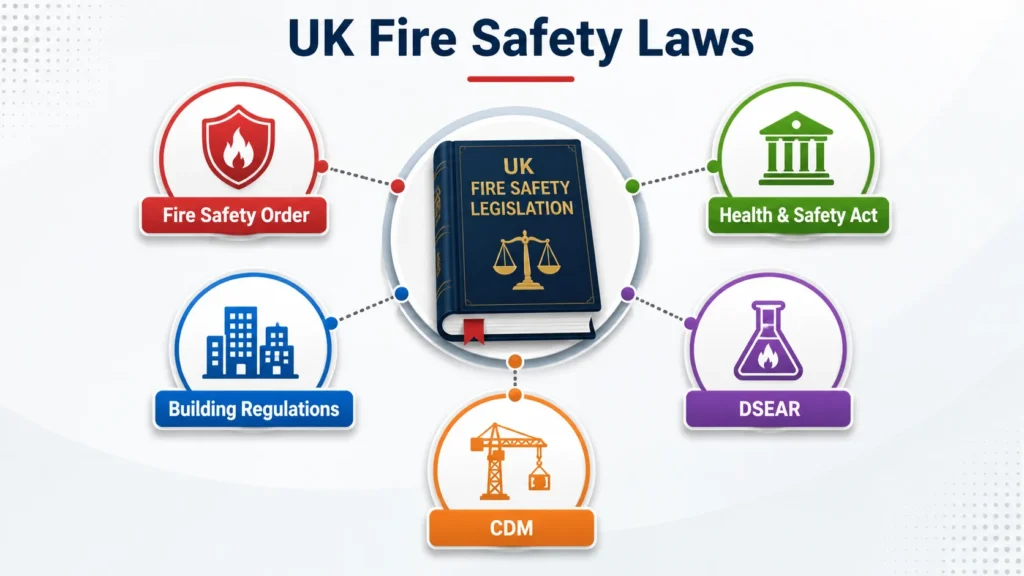
Fire safety in the UK is governed by a combination of legislation, regulations, approved guidance, and British Standards. Together, these establish the minimum legal requirements for protecting people from fire in non-domestic premises.
Rather than relying on a single law, employers must understand how different regulations work together to create an effective fire safety management system.
The legal framework generally covers:
- Fire risk assessments
- Fire prevention
- Means of escape
- Fire detection systems
- Emergency planning
- Staff training
- Fire protection equipment
- Building maintenance
- Management responsibilities
Understanding these requirements helps employers develop a proactive approach to workplace fire safety rather than reacting only after problems arise.
The Regulatory Reform (Fire Safety) Order 2005 Explained
The Regulatory Reform (Fire Safety) Order 2005 is the principal fire safety legislation for non-domestic premises in England and Wales. It places legal responsibility for fire safety on the Responsible Person, who must take appropriate steps to reduce fire risks and protect building occupants.
Instead of prescribing identical fire safety measures for every workplace, the legislation adopts a risk-based approach. This means employers are expected to assess the specific fire risks within their premises and implement measures that are suitable for their business activities, building layout, and occupancy.
Key legal duties include:
- Carrying out a suitable and sufficient fire risk assessment.
- Identifying fire hazards.
- Protecting employees and visitors.
- Maintaining fire safety equipment.
- Providing adequate fire detection and warning systems.
- Ensuring safe escape routes.
- Developing emergency procedures.
- Providing suitable fire safety training.
- Reviewing fire risk assessments when significant changes occur.
The Order applies to most non-domestic premises, including:
- Offices
- Warehouses
- Retail stores
- Restaurants
- Hotels
- Factories
- Schools
- Colleges
- Universities
- Healthcare facilities
- Construction sites
- Entertainment venues
Compliance requires continuous management rather than a one-time inspection.
Other Important UK Fire Safety Regulations Employers Should Know
Although the Regulatory Reform (Fire Safety) Order 2005 forms the foundation of workplace fire safety, employers should also be aware of additional legislation and guidance that may apply depending on their industry and premises.
These include:
Health and Safety at Work etc. Act 1974
This legislation places a general duty on employers to protect the health, safety, and welfare of employees and others affected by their work activities.
Fire safety forms an important part of this wider responsibility.
Building Regulations
Building Regulations establish fire safety requirements during the design, construction, and alteration of buildings.
They address areas such as:
- Structural fire resistance
- Fire compartmentation
- Means of escape
- Fire detection systems
- Smoke control
- Emergency access
Construction (Design and Management) Regulations
Construction projects involve temporary fire risks that require careful planning.
Employers and contractors should consider:
- Hot work
- Temporary electrical installations
- Fuel storage
- Waste management
- Emergency access
- Evacuation procedures
Dangerous Substances and Explosive Atmospheres Regulations (DSEAR)
Workplaces using flammable gases, liquids, vapours, or combustible dusts may also need to comply with DSEAR.
This legislation requires employers to:
- Assess explosion risks.
- Eliminate ignition sources.
- Control hazardous substances.
- Implement suitable emergency procedures.
Who Is the Responsible Person?
One of the most important concepts within UK fire safety legislation is the Responsible Person.
The Responsible Person is legally accountable for ensuring that appropriate fire safety measures are implemented and maintained within non-domestic premises.
Depending on the organisation, this may be:
- Employer
- Business owner
- Building owner
- Landlord
- Facilities manager
- Property manager
- Managing agent
- Occupier
Although fire safety consultants or competent fire risk assessors may assist with compliance, legal responsibility remains with the Responsible Person.
The Responsible Person should understand:
- Fire hazards within the premises.
- Existing fire protection measures.
- Emergency evacuation procedures.
- Fire safety documentation.
- Staff training requirements.
- Maintenance responsibilities.
- Review schedules.
Delegating tasks does not remove legal accountability.
Employer Fire Safety Responsibilities
Employers play a central role in ensuring that workplaces remain safe from fire. Effective fire safety management requires planning, investment, training, and regular monitoring rather than relying solely on physical fire protection equipment.
Key employer responsibilities include:
- Carry out a suitable and sufficient fire risk assessment.
- Appoint competent persons where necessary.
- Maintain fire detection and alarm systems.
- Keep emergency escape routes clear.
- Ensure emergency exits remain accessible.
- Maintain emergency lighting.
- Inspect and maintain fire doors.
- Provide suitable firefighting equipment.
- Develop emergency evacuation procedures.
- Train employees in fire safety.
- Conduct regular fire drills.
- Maintain accurate fire safety records.
- Review fire safety arrangements regularly.
- Cooperate with landlords and other duty holders where applicable.
Fire safety should be integrated into the organisation’s overall health and safety management system rather than managed as a separate activity.
Employer Fire Safety Responsibilities Matrix
| Responsibility | Why It Matters |
|---|---|
| Fire Risk Assessment | Identifies workplace fire hazards and required controls |
| Fire Detection Systems | Provides early warning of fire |
| Emergency Lighting | Supports safe evacuation during power failure |
| Fire Doors | Slows the spread of fire and smoke |
| Escape Routes | Enables safe evacuation |
| Fire Extinguishers | Assists with tackling small fires where appropriate |
| Staff Training | Improves awareness and emergency response |
| Fire Drills | Tests emergency procedures |
| Equipment Maintenance | Ensures systems remain reliable |
| Documentation | Demonstrates legal compliance |
Employers who manage these responsibilities consistently are more likely to maintain effective fire safety standards and reduce the likelihood of enforcement action.
Fire Safety Compliance Process
The following workflow illustrates how employers should approach workplace fire safety compliance.
Identify Workplace Fire Hazards
↓
Conduct Fire Risk Assessment
↓
Evaluate Existing Fire Safety Measures
↓
Implement Risk Control Measures
↓
Install and Maintain Fire Protection Systems
↓
Develop Emergency Evacuation Procedures
↓
Train Employees
↓
Conduct Fire Drills
↓
Record Fire Safety Activities
↓
Review Fire Risk Assessment
↓
Maintain Continuous Compliance
Why Fire Safety Training Is Essential for Employers
Even the most advanced fire safety equipment cannot replace a knowledgeable workforce. Employees who understand fire hazards, evacuation procedures, and emergency responsibilities are far more likely to respond effectively during a fire emergency.
Employers should ensure that training covers:
- Fire prevention
- Hazard reporting
- Emergency evacuation
- Alarm activation
- Fire extinguisher awareness
- Assembly points
- Fire warden responsibilities
- Safe workplace practices
Training should be refreshed periodically and whenever significant workplace changes occur.
Employee Fire Safety Responsibilities
While employers have the primary legal responsibility for workplace fire safety, employees also play an important role in preventing fires and ensuring a safe working environment. Every member of staff should understand how their daily actions contribute to reducing fire risks and protecting colleagues, visitors, and property.
Employees should never assume that fire safety is solely the responsibility of managers or fire wardens. Reporting hazards promptly and following workplace procedures can significantly reduce the likelihood of fire incidents.
Employees should:
- Follow workplace fire safety procedures.
- Participate in fire safety training and fire drills.
- Report fire hazards immediately.
- Keep emergency exits and escape routes clear.
- Use electrical equipment safely.
- Store combustible materials correctly.
- Never tamper with fire protection equipment.
- Follow evacuation procedures during emergencies.
- Assist visitors where appropriate.
- Report damaged fire doors, alarms, or emergency lighting.
A strong fire safety culture depends on cooperation between employers, managers, and employees.
Employer vs Employee Fire Safety Responsibilities
Understanding the difference between employer and employee responsibilities helps organisations assign duties effectively and avoid confusion during emergencies.
| Employer Responsibilities | Employee Responsibilities |
|---|---|
| Conduct fire risk assessments | Follow fire safety procedures |
| Maintain fire protection systems | Report fire hazards |
| Provide fire safety training | Attend training sessions |
| Develop emergency plans | Follow evacuation instructions |
| Conduct fire drills | Participate in fire drills |
| Maintain escape routes | Keep exits unobstructed |
| Maintain fire safety records | Use equipment safely |
| Appoint fire wardens where required | Cooperate during inspections |
Although responsibilities differ, both employers and employees share the common goal of maintaining a safe workplace.
Fire Risk Assessment Requirements
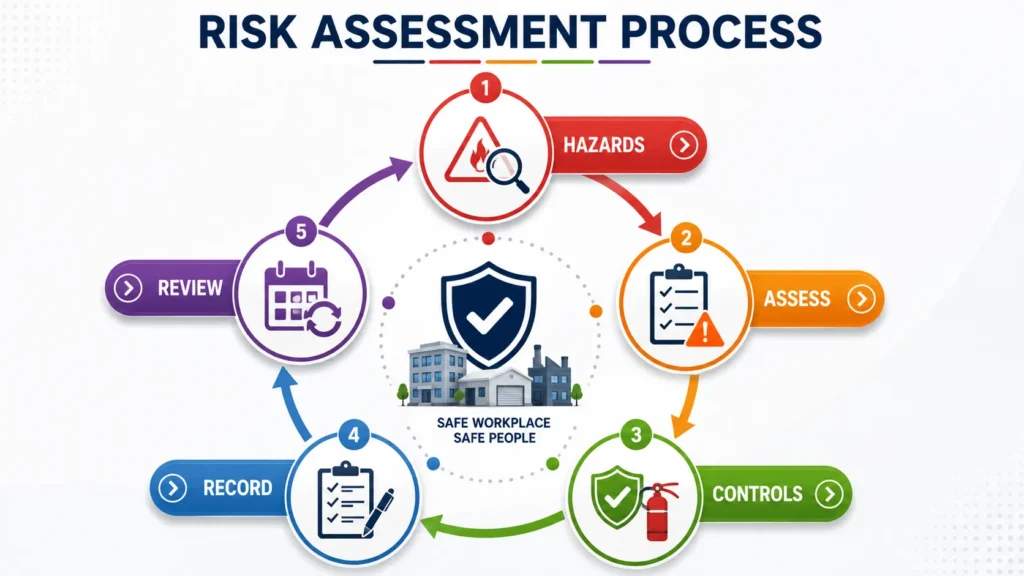
A fire risk assessment is the foundation of workplace fire safety compliance. It enables employers to identify potential fire hazards, evaluate existing precautions, and implement measures that reduce risks to an acceptable level.
A suitable fire risk assessment should be specific to the premises and should consider:
- Building construction and layout.
- Business activities.
- Fire hazards.
- Ignition sources.
- Combustible materials.
- People at risk.
- Existing fire safety measures.
- Means of escape.
- Fire detection systems.
- Emergency lighting.
- Fire doors.
- Staff training.
- Emergency procedures.
The assessment should result in practical recommendations that help improve fire safety and reduce the likelihood of fire incidents.
Fire Protection Systems Employers Must Maintain
Installing fire protection equipment is only part of an employer’s responsibility. Regular inspection, testing, and maintenance are essential to ensure these systems remain effective when needed.
Fire Detection and Alarm Systems
Fire alarm systems provide early warning, allowing occupants to evacuate safely before conditions become dangerous.
Employers should ensure:
- Routine testing is carried out.
- Detectors remain unobstructed.
- Manual call points are accessible.
- Faults are repaired promptly.
- Maintenance records are retained.
Emergency Lighting
Emergency lighting helps occupants locate escape routes when normal lighting fails.
Routine maintenance should confirm:
- Emergency lights operate correctly.
- Batteries function as intended.
- Escape routes remain illuminated.
- Testing schedules are followed.
Fire Doors
Fire doors slow the spread of fire and smoke, protecting escape routes and allowing additional evacuation time.
Routine inspections should check:
- Self-closing mechanisms.
- Smoke seals.
- Door condition.
- Hinges.
- Glazing.
- Door gaps.
- Fire door signage.
Fire Extinguishers
Fire extinguishers should be appropriate for the workplace hazards and maintained by competent personnel.
Employers should ensure:
- Correct extinguisher types are provided.
- Equipment remains accessible.
- Inspection labels are current.
- Staff understand basic extinguisher awareness.
- Annual servicing is completed.
Means of Escape
Escape routes should remain available whenever the building is occupied.
Employers should regularly inspect:
- Corridors.
- Stairwells.
- Emergency exits.
- Exit signage.
- External assembly routes.
Blocked or locked exits can significantly increase risk during an emergency.
Fire Safety Documentation Checklist
Accurate documentation demonstrates that fire safety arrangements are actively managed and maintained. Well-organised records also support inspections, audits, and insurance requirements.
The following documents should be maintained where applicable.
| Fire Safety Document | Purpose |
|---|---|
| Fire Risk Assessment | Identifies workplace fire risks and controls |
| Emergency Evacuation Plan | Details evacuation procedures |
| Fire Alarm Test Records | Demonstrates routine testing |
| Emergency Lighting Test Records | Confirms system reliability |
| Fire Extinguisher Service Records | Verifies maintenance |
| Fire Door Inspection Records | Demonstrates passive fire protection maintenance |
| Fire Drill Reports | Records emergency preparedness exercises |
| Staff Training Records | Confirms employee competency |
| Maintenance Certificates | Evidence of equipment servicing |
| Corrective Action Register | Tracks outstanding improvements |
Keeping documentation current makes it easier to demonstrate compliance and monitor continuous improvement.
Fire Safety Training Requirements
Training is one of the most effective ways to reduce workplace fire risks. Employees who understand fire hazards and emergency procedures are more likely to respond appropriately during an incident.
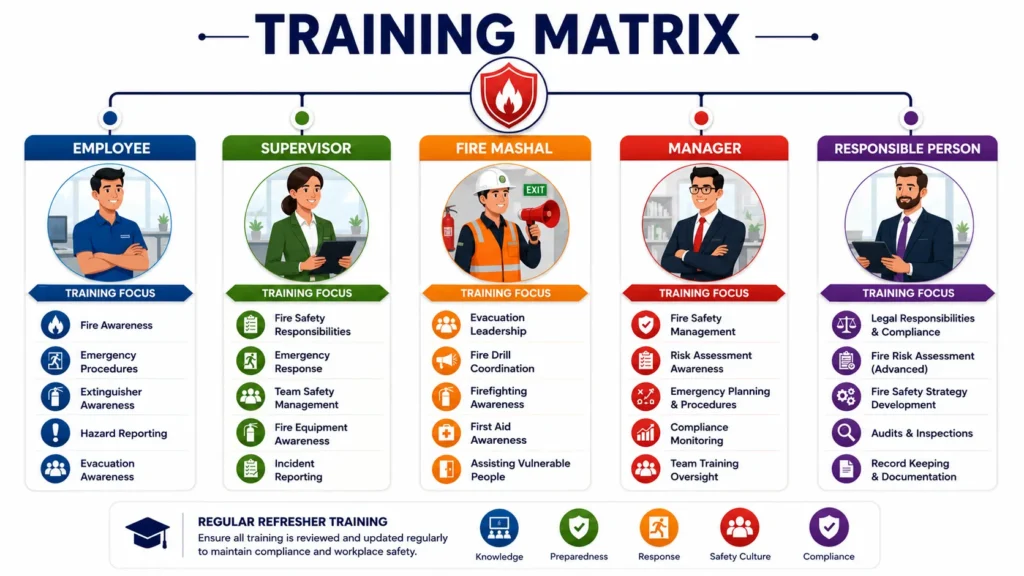
Training should be appropriate to each employee’s role and workplace responsibilities.
Typical topics include:
- Fire prevention.
- Fire hazards.
- Fire alarm procedures.
- Emergency evacuation.
- Assembly points.
- Hazard reporting.
- Fire door awareness.
- Safe use of electrical equipment.
- Fire extinguisher awareness.
- Fire warden responsibilities.
New employees should receive fire safety induction training, while existing employees should receive refresher training at appropriate intervals or following significant workplace changes.
Emergency Planning and Evacuation Procedures
Every workplace should have a documented emergency plan that explains how occupants will respond if a fire occurs.
An effective evacuation plan should include:
- Alarm activation procedures.
- Evacuation routes.
- Emergency exits.
- Assembly points.
- Fire warden responsibilities.
- Procedures for assisting vulnerable persons.
- Emergency contact information.
- Communication arrangements.
- Re-entry procedures following evacuation.
Emergency procedures should be communicated to all employees and regularly tested through fire drills.
Fire Risk Assessment Workflow
The following workflow demonstrates how employers should manage workplace fire risks as part of an effective fire safety programme.
Identify Fire Hazards
↓
Conduct Fire Risk Assessment
↓
Evaluate Existing Controls
↓
Implement Fire Safety Improvements
↓
Install and Maintain Fire Protection Systems
↓
Provide Fire Safety Training
↓
Develop Emergency Procedures
↓
Conduct Fire Drills
↓
Record Findings and Maintenance Activities
↓
Review Fire Risk Assessment
↓
Continuous Workplace Fire Safety Management
Fire Safety Training for Different Workplace Roles
Different employees require different levels of fire safety knowledge depending on their responsibilities.
Senior managers and Responsible Persons should understand legal obligations and fire safety management, while fire wardens require additional training to coordinate evacuations and support emergency procedures.
Employees should understand:
- How to identify fire hazards.
- What to do when discovering a fire.
- How to raise the alarm.
- Safe evacuation procedures.
- Assembly point locations.
- The importance of keeping escape routes clear.
Providing role-specific training helps ensure everyone understands their responsibilities during both normal operations and emergency situations.
Why Regular Fire Drills Are Essential
Fire drills allow employers to test emergency procedures under controlled conditions and identify opportunities for improvement before a real emergency occurs.
A well-planned fire drill helps organisations evaluate:
- Alarm audibility.
- Evacuation times.
- Employee understanding.
- Escape route effectiveness.
- Fire warden performance.
- Communication systems.
- Assembly point management.
- Emergency coordination.
Following each drill, employers should review the results, document lessons learned, and implement any necessary improvements to strengthen emergency preparedness.
Fire Safety Compliance Timeline for Employers
Fire safety compliance is an ongoing responsibility rather than a one-time task. Establishing a structured inspection and maintenance schedule helps employers identify hazards early, maintain fire protection systems, and demonstrate compliance with UK fire safety regulations.
The following timeline provides a practical framework for managing workplace fire safety.
| Frequency | Typical Fire Safety Activities |
|---|---|
| Daily | Keep escape routes clear, check fire exits, remove combustible waste, identify obvious hazards |
| Weekly | Test the fire alarm system, inspect emergency exits, check housekeeping standards |
| Monthly | Inspect fire extinguishers, test emergency lighting, review fire door condition |
| Quarterly | Review fire safety procedures, inspect fire signage, assess corrective actions |
| Annually | Review the fire risk assessment, service fire protection equipment, conduct refresher training and evacuation exercises |
Using a planned maintenance schedule helps organisations remain proactive rather than responding only when problems occur.
Industry-Specific Employer Responsibilities
Although UK fire safety regulations apply to all non-domestic premises, the risks and required control measures vary depending on the type of workplace.
Office Buildings
Office environments should focus on:
- Electrical equipment safety
- Server rooms
- Escape route management
- Fire alarm systems
- Emergency lighting
- Employee awareness
- Visitor evacuation procedures
Warehouses
Warehouses often contain higher fire loads and require additional precautions.
Employers should monitor:
- High-rack storage
- Forklift charging areas
- Combustible packaging
- Flammable liquid storage
- Smoke ventilation
- Sprinkler systems
- Loading bays
Retail Stores
Retail premises should consider:
- Customer evacuation
- Stock storage
- Seasonal displays
- Public escape routes
- Cash office security
- Fire alarm audibility
- Staff emergency procedures
Hotels and Hospitality Businesses
Hospitality businesses should maintain:
- Guest evacuation plans
- Commercial kitchen fire protection
- Bedroom smoke detection
- Fire compartmentation
- Emergency lighting
- Staff fire safety training
Healthcare Facilities
Healthcare premises require additional planning for vulnerable occupants.
Employers should review:
- Progressive evacuation strategies
- Refuge areas
- Oxygen storage
- Medical gas systems
- Patient evacuation equipment
- Staff competency
Educational Institutions
Schools, colleges, and universities should regularly inspect:
- Classrooms
- Laboratories
- Libraries
- Assembly halls
- Sports facilities
- Student evacuation procedures
- Fire drill programmes
Common Fire Safety Mistakes Employers Should Avoid
Many workplace fires result from avoidable management failures rather than unforeseen events. Identifying these common mistakes can help employers strengthen their fire safety arrangements and reduce compliance risks.
Some of the most frequent issues include:
- Delaying or failing to complete a fire risk assessment.
- Blocking emergency exits with stock or equipment.
- Wedging fire doors open.
- Ignoring damaged fire safety equipment.
- Failing to test fire alarm systems.
- Neglecting emergency lighting maintenance.
- Allowing combustible waste to accumulate.
- Using overloaded electrical sockets.
- Providing inadequate fire safety training.
- Failing to review emergency procedures.
- Keeping incomplete maintenance records.
- Not updating the fire risk assessment after workplace changes.
Preventing these mistakes significantly improves workplace safety and demonstrates a proactive approach to compliance.
What Happens During a Fire Safety Inspection?
Fire safety inspections help determine whether employers are meeting their legal responsibilities and maintaining appropriate fire precautions.
Although inspections vary depending on the premises, inspectors typically follow a structured process.
Step 1: Documentation Review
Inspectors may request:
- Fire risk assessment
- Fire safety policy
- Maintenance records
- Fire alarm testing records
- Emergency lighting records
- Fire drill reports
- Staff training records
Step 2: Physical Inspection
The inspector usually examines:
- Fire exits
- Escape routes
- Fire doors
- Fire alarm systems
- Emergency lighting
- Fire extinguishers
- Housekeeping
- Electrical safety
- Storage arrangements
Step 3: Discussion with Management
The Responsible Person may be asked about:
- Emergency procedures
- Staff training
- Fire wardens
- Maintenance arrangements
- Review schedules
- Outstanding corrective actions
Step 4: Inspection Outcome
Following the inspection, employers may receive:
- Recommendations for improvement
- Formal notices where necessary
- Confirmation of satisfactory compliance
- Requirements for further action
Maintaining organised documentation and effective fire safety management can significantly improve inspection outcomes.
Enforcement Actions for Non-Compliance
Failure to comply with UK fire safety regulations can lead to enforcement action by the relevant authorities.
Depending on the severity of the deficiencies, actions may include:
Alterations Notice
Issued where significant changes to premises could increase fire risk. Employers may be required to notify the enforcing authority before making certain alterations.
Enforcement Notice
Requires the Responsible Person to correct identified fire safety deficiencies within a specified timeframe.
Prohibition Notice
Used where serious fire risks place people in immediate danger. Part or all of the premises may be prohibited from use until appropriate improvements have been completed.
Prosecution
Serious breaches of fire safety legislation can result in prosecution, substantial financial penalties, and, in some cases, imprisonment.
Beyond legal consequences, non-compliance may also lead to:
- Business interruption
- Increased insurance costs
- Damage to organisational reputation
- Loss of customer confidence
- Operational delays
Best Practices for Long-Term Fire Safety Compliance
Maintaining compliance requires continuous improvement rather than occasional inspections.
Successful organisations often adopt the following best practices:
- Review fire risk assessments regularly.
- Schedule preventative maintenance.
- Encourage employees to report hazards.
- Monitor corrective actions until completion.
- Conduct regular fire drills.
- Keep documentation organised.
- Appoint trained fire wardens.
- Review contractor activities.
- Audit fire safety performance.
- Stay informed about changes to legislation and guidance.
Embedding fire safety into everyday workplace operations creates a stronger safety culture and reduces long-term risk.
The Future of UK Fire Safety
Technology is transforming the way organisations manage fire safety. Digital tools and intelligent building systems are improving efficiency, accuracy, and compliance across many industries.
Emerging developments include:
- Cloud-based fire safety management software
- Digital fire risk assessments
- IoT-enabled fire detection systems
- Smart emergency lighting
- Remote monitoring of fire alarms
- Predictive maintenance using data analytics
- Digital compliance dashboards
- Mobile inspection applications
- Artificial intelligence for risk analysis
While technology can support compliance, employers remain responsible for ensuring that fire safety measures are suitable, maintained, and effective.
Fire Safety Training Matrix
Selecting the appropriate level of training for different workplace roles helps ensure that everyone understands their responsibilities.
| Workplace Role | Recommended Training |
|---|---|
| Employees | Fire Safety Awareness |
| Supervisors | Fire Safety Awareness and Emergency Procedures |
| Fire Wardens | Fire Marshal Training |
| Facilities Managers | Fire Safety Management |
| Responsible Persons | Fire Risk Assessment and Fire Safety Management |
Providing role-specific training strengthens workplace competence and supports long-term compliance.
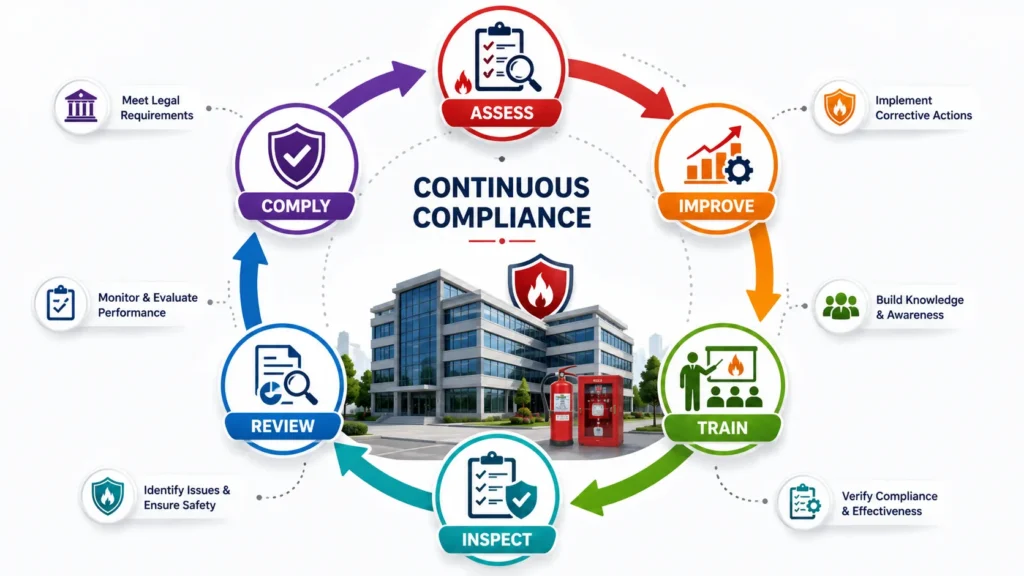
Continuous Fire Safety Compliance Cycle
Maintaining compliance should be viewed as an ongoing process rather than a one-time achievement.
Identify Fire Hazards
↓
Conduct Fire Risk Assessment
↓
Implement Fire Safety Measures
↓
Maintain Fire Protection Systems
↓
Train Employees
↓
Conduct Fire Drills
↓
Inspect and Audit Fire Safety Performance
↓
Review Documentation
↓
Update Fire Risk Assessment
↓
Continuous Improvement
Explore Fire Safety Courses on Inspire College
Developing fire safety knowledge is one of the most effective ways to improve workplace compliance and reduce fire risks. Whether you are an employer, Responsible Person, facilities manager, fire warden, or health and safety professional, professional training can help you understand legal responsibilities, carry out effective fire risk assessments, and build a safer working environment.
Conclusion
Understanding and complying with UK Fire Safety Regulations is essential for every employer, regardless of the size or sector of the business. Effective fire safety management requires more than meeting legal obligations—it involves creating a workplace where risks are identified early, control measures are maintained, employees are trained, and emergency procedures are regularly reviewed.
By carrying out suitable fire risk assessments, maintaining fire protection systems, keeping accurate records, and fostering a positive fire safety culture, employers can protect lives, safeguard assets, and reduce operational disruption. Regular reviews, continuous training, and proactive maintenance ensure that fire safety remains effective as workplaces evolve.
Investing in fire safety knowledge and professional development not only supports compliance but also demonstrates a long-term commitment to protecting employees, visitors, and the wider community.