
Health Care vs Social Care: What’s the Difference? Complete Guide (2026)
Health care and social care are two closely connected sectors that play a vital role in improving people’s health, wellbeing, independence, and overall quality of life. Although they often work together, they have distinct purposes, responsibilities, and approaches to supporting individuals. Health care primarily focuses on preventing, diagnosing, treating, and managing physical and mental health conditions through medical services, while social care provides practical, emotional, and personal support to help people live independently and participate fully in everyday life. Understanding the difference between health care and social care is important for students, professionals, caregivers, employers, and anyone considering a career in either sector.
As healthcare systems continue to evolve, collaboration between health care and social care has become increasingly important. Ageing populations, the growing prevalence of long-term health conditions, rising demand for mental health services, and advances in digital healthcare are driving the need for integrated, person-centred care. By combining medical treatment with social support, both sectors work together to improve health outcomes, promote independence, reduce hospital admissions, and enhance the overall wellbeing of individuals and communities.
This complete guide explains the key differences between health care and social care, their definitions, purposes, responsibilities, similarities, services, career opportunities, qualifications, and future trends shaping both sectors in 2026. Whether you are exploring career options, studying health and social care, or simply looking to understand how these essential services support individuals and communities, this guide provides the knowledge you need in one place.
Health Care vs Social Care: At a Glance
Although health care and social care work closely together, they serve different purposes while sharing the common goal of improving people’s wellbeing.
| Health Care | Social Care |
|---|---|
| Focuses on preventing, diagnosing, treating, and managing medical conditions | Focuses on supporting individuals with daily living, independence, and wellbeing |
| Delivered mainly by healthcare professionals | Delivered mainly by social care professionals and support workers |
| Includes hospitals, clinics, community health services, and specialist medical care | Includes home care, residential care, supported living, and community support services |
| Aims to improve physical and mental health | Aims to improve independence, dignity, inclusion, and quality of life |
| Uses clinical treatment, medication, rehabilitation, and preventive healthcare | Provides personal care, emotional support, practical assistance, and social support |
Although their responsibilities differ, health care and social care professionals often collaborate to deliver integrated, person-centred services that meet both medical and personal care needs.
What Is Health Care?
Health care is the organised system of medical services that helps people maintain, improve, and restore their physical and mental health. It includes the prevention, diagnosis, treatment, rehabilitation, and ongoing management of illnesses, injuries, and long-term health conditions. From routine health check-ups and vaccinations to emergency treatment, surgery, and specialist care, health care supports people at every stage of life.
In simple terms, health care focuses on protecting people’s health through professional medical care. Its goal is not only to treat illness but also to prevent disease, detect health problems early, promote healthier lifestyles, and improve overall quality of life. Modern healthcare systems combine medical expertise, scientific research, advanced technology, and patient-centred care to deliver safe, effective, and evidence-based services.
Today’s healthcare extends far beyond hospitals. Services are delivered through primary care practices, specialist clinics, community health centres, rehabilitation facilities, mental health organisations, pharmacies, and digital healthcare platforms. Innovations such as telemedicine, wearable health devices, electronic health records (EHRs), remote patient monitoring, and artificial intelligence (AI) are making healthcare more accessible, efficient, and personalised than ever before.
Whether someone needs emergency treatment after an accident, ongoing care for a chronic condition, preventive health screenings, or rehabilitation following surgery, health care provides the medical support needed to help people live longer, healthier, and more independent lives.
Main Purpose of Health Care
The primary purpose of health care is to protect and improve people’s health by preventing disease, diagnosing medical conditions, providing effective treatment, supporting recovery, and managing long-term illnesses. Modern healthcare systems focus on delivering person-centred, evidence-based care that meets the physical, mental, and emotional needs of individuals while promoting healthier communities.
Rather than waiting for people to become seriously ill, healthcare organisations increasingly emphasise prevention, early intervention, and continuous care. This proactive approach helps reduce complications, improve patient outcomes, and lower the overall burden of disease on healthcare systems.
The main objectives of health care include:
- Preventing diseases through vaccinations, health education, and regular screening programmes.
- Diagnosing illnesses using clinical examinations, laboratory tests, and medical imaging.
- Treating injuries, infections, and acute or chronic medical conditions with appropriate medical interventions.
- Supporting recovery through rehabilitation, physiotherapy, occupational therapy, and follow-up care.
- Managing long-term conditions such as diabetes, heart disease, asthma, and arthritis.
- Promoting healthier lifestyles through preventive healthcare, nutrition advice, mental health support, and wellness programmes.
Together, these objectives ensure that individuals receive timely, safe, and effective medical care while improving their overall health, wellbeing, and quality of life.
Examples of Health Care Services
Health care includes a wide range of medical services that help prevent illness, diagnose conditions, provide treatment, and support recovery. These services are delivered through hospitals, clinics, community settings, and digital healthcare platforms to meet people’s changing health needs.
Primary Health Care
Primary health care is usually the first point of contact for medical support. It focuses on prevention, early diagnosis, routine care, and managing common health conditions.
Examples include:
- GP consultations
- Health check-ups and screenings
- Vaccination programmes
- Preventive healthcare
- Health advice and education
Hospital and Specialist Care
Hospital and specialist services provide advanced treatment for complex conditions that require expert knowledge, medical equipment, or surgery.
Examples include:
- Specialist consultations
- Surgical procedures
- Diagnostic imaging
- Laboratory testing
- Emergency and intensive care
Rehabilitation and Long-Term Care
Rehabilitation services help people recover from illness, injury, or surgery while improving mobility, independence, and quality of life.
Examples include:
- Physiotherapy
- Occupational therapy
- Speech therapy
- Chronic disease management
- Palliative care
Community and Digital Health Services
Modern healthcare is increasingly delivered outside hospitals through community services and digital technologies. Telehealth, remote monitoring, and online consultations are improving access to care and supporting more personalised healthcare.
Examples include:
- Community healthcare
- Home healthcare
- Mental health services
- Pharmacy services
- Telehealth consultations
Mental health services are becoming an increasingly important part of healthcare. The World Health Organization (WHO) reports that nearly 1 in 7 people worldwide live with a mental disorder, highlighting the growing need for accessible mental health support and coordinated care.
Together, these healthcare services provide comprehensive support that helps individuals prevent illness, manage health conditions, recover from treatment, and maintain better overall wellbeing.
Who Works in Health Care?
Health care is delivered by a multidisciplinary workforce of professionals who work together to prevent illness, diagnose conditions, provide treatment, support recovery, and improve overall health outcomes. Each professional has a specialised role, but all contribute to delivering safe, effective, and person-centred care.
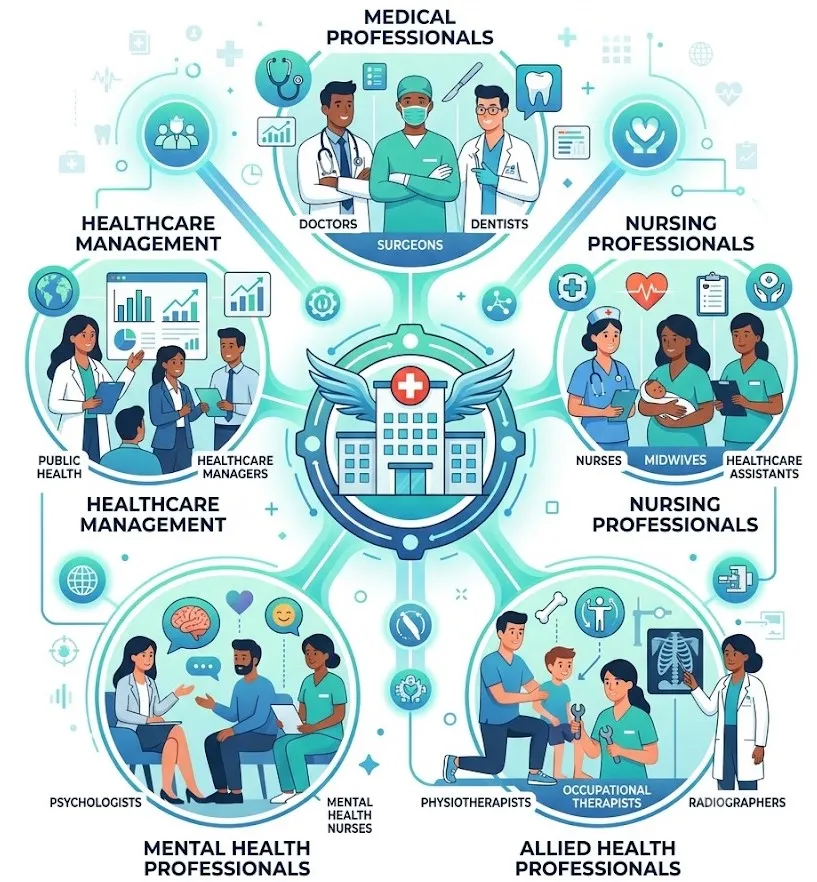
Medical Professionals
Medical professionals diagnose health conditions, provide treatments, perform procedures, and manage patient care.
Examples include:
- Doctors and Physicians
- Surgeons
- Dentists
- Anaesthetists
Nursing Professionals
Nurses provide essential patient care by monitoring health conditions, administering treatments, supporting recovery, and educating individuals and families.
Examples include:
- Registered Nurses
- Nurse Practitioners
- Midwives
- Healthcare Assistants
Allied Health Professionals
Allied health professionals support diagnosis, rehabilitation, recovery, and long-term health management through specialist services.
Examples include:
- Physiotherapists
- Occupational Therapists
- Radiographers
- Dietitians and Nutritionists
- Speech and Language Therapists
- Medical Laboratory Scientists
Mental Health Professionals
Mental health professionals support psychological wellbeing by assessing, treating, and managing mental health conditions.
Examples include:
- Psychologists
- Psychiatrists
- Mental Health Nurses
- Counsellors and Therapists
Public Health and Healthcare Management Professionals
These professionals focus on improving healthcare services, managing organisations, preventing disease, and supporting population health.
Examples include:
- Public Health Professionals
- Healthcare Managers
- Hospital Administrators
All healthcare professionals play an important role in improving health, supporting recovery, and delivering coordinated care. By working together as multidisciplinary teams, they help ensure individuals receive the right support at every stage of their healthcare journey.
What Is Social Care?
Social care is a range of services that support people who need help with everyday living, personal care, emotional wellbeing, and maintaining their independence. Unlike health care, which focuses on diagnosing and treating medical conditions, social care helps individuals live safely, comfortably, and with dignity by providing practical support tailored to their personal needs and circumstances.
In simple terms, social care focuses on improving people’s quality of life by helping them remain as independent as possible. It supports individuals who may be unable to manage daily activities without assistance due to age, disability, illness, mental health conditions, or other personal challenges.
Modern social care is based on a person-centred approach, meaning every individual receives support that reflects their needs, preferences, abilities, cultural background, and personal goals. Rather than offering a one-size-fits-all solution, social care professionals work closely with individuals, families, healthcare providers, and community organisations to develop personalised care plans that promote independence, inclusion, and wellbeing.
Social care services are delivered in a variety of settings, including people’s homes, residential care homes, supported living environments, day centres, community organisations, and specialist care facilities. As populations continue to age and demand for long-term support increases, social care has become an essential part of modern care systems, helping individuals lead safer, healthier, and more fulfilling lives.
Main Purpose of Social Care
The primary purpose of social care is to help individuals live independently, safely, and with dignity by providing practical, emotional, and personal support that meets their everyday needs. While health care focuses on medical treatment, social care focuses on enabling people to maintain their quality of life, exercise choice and control, and participate actively in their communities.
Modern social care takes a holistic approach by recognising that a person’s wellbeing depends not only on their physical health but also on their emotional, social, and psychological needs. By providing personalised support and encouraging independence, social care helps people live fulfilling lives while reducing social isolation and improving overall wellbeing.
The main objectives of social care include:
- Supporting people with daily living activities such as personal care, dressing, eating, and mobility.
- Promoting independence by helping individuals develop skills and confidence to manage everyday life.
- Protecting dignity, privacy, equality, and individual rights.
- Providing emotional support and reducing loneliness and social isolation.
- Supporting people with disabilities, long-term conditions, or age-related care needs.
- Safeguarding vulnerable children and adults from abuse, neglect, and exploitation.
- Working alongside healthcare professionals to deliver coordinated, person-centred care.
- Improving quality of life through personalised support, community participation, and social inclusion.
By focusing on the individual rather than just their care needs, social care empowers people to remain active, independent, and connected to their families and communities.
Examples of Social Care Services
Social care provides practical, emotional, and personal support that helps individuals maintain independence, manage daily activities, and improve their quality of life. Services may be provided temporarily during recovery or as ongoing support for people who need additional assistance due to age, disability, illness, or personal circumstances.
Home and Personal Care
Home-based social care helps individuals continue living safely and independently in their own homes.
Examples include:
- Personal care and hygiene support
- Home care services
- Meal preparation
- Medication support
- Mobility assistance
Residential and Supported Living
Some individuals require specialist environments where trained professionals provide ongoing care and support.
Examples include:
- Residential care homes
- Supported living services
- Assisted living
- Respite care
Community and Wellbeing Services
Community services promote independence, reduce isolation, and help people remain connected with others.
Examples include:
- Day care services
- Community support programmes
- Independent living support
- Family and caregiver assistance
- Care planning
Specialist Support Services
Specialist social care supports individuals with specific physical, mental health, or developmental needs.
Examples include:
- Disability support
- Dementia care
- Mental health support
- Learning disability services
- Safeguarding support
Together, these services help people live safely, maintain independence, and receive personalised support that meets their individual needs and circumstances.
Who Works in Social Care?
Social care is delivered by a range of professionals who support individuals with daily living, independence, wellbeing, and personal development. These professionals work with families, healthcare providers, and community organisations to provide safe, personalised, and coordinated support.
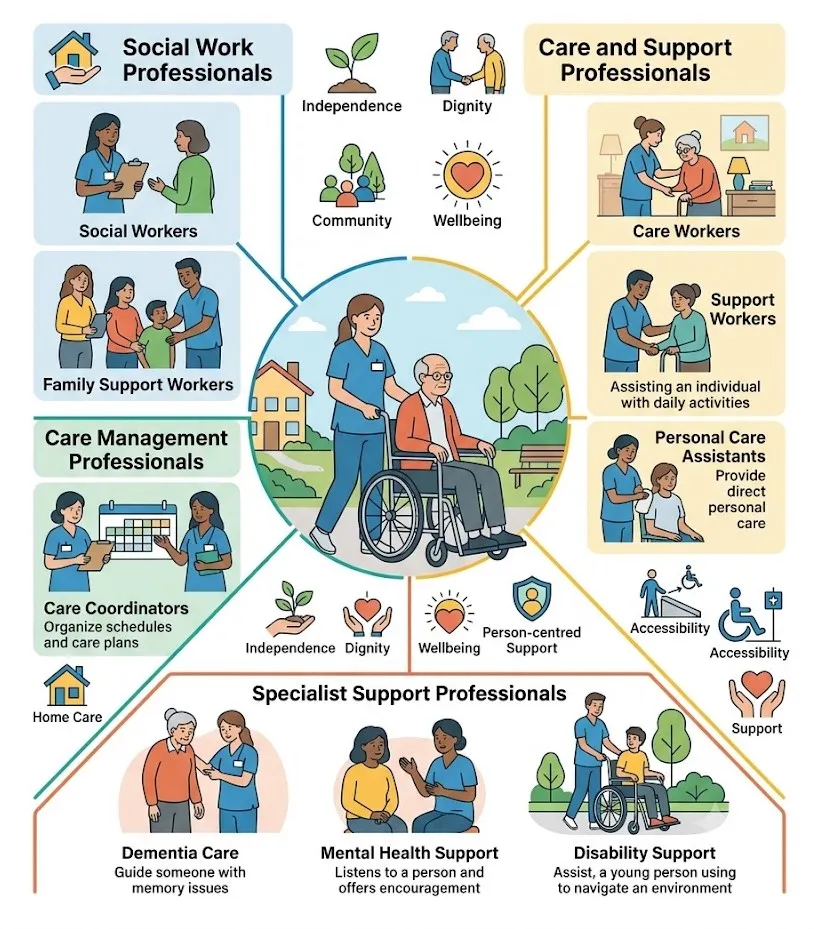
Social Work Professionals
Social workers assess needs, protect vulnerable individuals, coordinate services, and provide guidance to individuals and families.
Examples include:
- Social Workers
- Family Support Workers
- Youth Support Workers
Care and Support Professionals
Care professionals provide practical and emotional support to help people manage everyday activities while maintaining dignity and independence.
Examples include:
- Care Workers
- Support Workers
- Personal Care Assistants
- Residential Care Workers
- Community Support Workers
Care Management Professionals
Care managers organise services, develop care plans, supervise teams, and ensure individuals receive appropriate support.
Examples include:
- Care Coordinators
- Care Home Managers
- Social Care Managers
- Independent Living Advisors
Specialist Support Professionals
Specialist professionals support individuals with specific physical, mental health, or developmental needs.
Examples include:
- Mental Health Support Workers
- Occupational Therapists
- Dementia Care Specialists
- Learning Disability Specialists
Although roles vary, all social care professionals share the same goal: improving quality of life, promoting independence, protecting vulnerable people, and helping individuals receive the right support for their needs.
Health Care vs Social Care: Key Differences
Health care and social care are closely connected, but they serve different purposes and meet different needs. While both sectors aim to improve people’s wellbeing, they achieve this through different services, professionals, and approaches to care. Understanding the difference between health care and social care helps individuals access the right support, choose suitable career pathways, and appreciate how both sectors work together to improve health outcomes and quality of life.
Health care primarily focuses on preventing illness, diagnosing diseases, providing medical treatment, and supporting recovery. Social care focuses on helping people live independently by providing practical, emotional, and personal support for everyday living. Together, they create a comprehensive care system that addresses both medical and social needs.
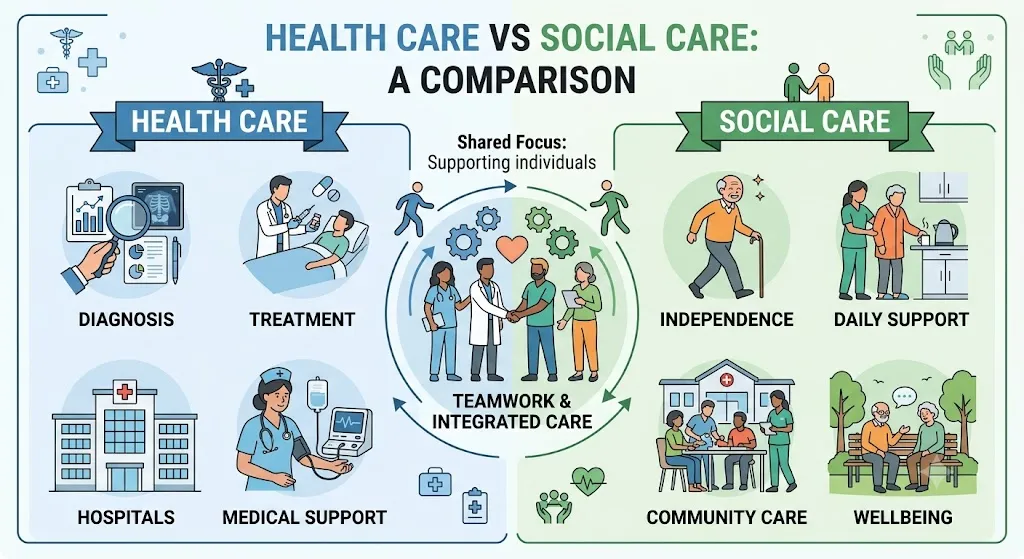
Focus
The primary focus of health care is protecting and improving physical and mental health through clinical assessment, medical treatment, rehabilitation, and disease prevention. Healthcare professionals diagnose illnesses, treat injuries, prescribe medication, and manage both acute and long-term medical conditions.
Social care focuses on supporting individuals who need help with daily living activities, personal care, emotional wellbeing, and independent living. Rather than treating medical conditions, social care enables people to live safely, confidently, and with dignity within their homes and communities.
Purpose
The purpose of health care is to prevent disease, diagnose health conditions, deliver effective treatment, promote recovery, and improve overall health. It aims to help people achieve the best possible physical and mental wellbeing through evidence-based medical care.
The purpose of social care is to improve quality of life by supporting people who require assistance with everyday activities. It encourages independence, protects individual rights, promotes social inclusion, and helps people maintain control over their lives.
Services Provided
Health care delivers a wide range of clinical and medical services, including primary care, emergency treatment, specialist consultations, surgery, diagnostic testing, rehabilitation, mental health care, and chronic disease management.
Social care provides practical support services such as personal care, home care, residential care, supported living, respite care, disability support, community programmes, safeguarding services, and assistance with daily activities.
Professionals
Health care is delivered by qualified medical professionals who diagnose, treat, and manage health conditions. These include doctors, nurses, surgeons, pharmacists, physiotherapists, psychologists, dentists, radiographers, and other healthcare specialists.
Social care is delivered by professionals who support individuals in maintaining independence and improving their quality of life. These include social workers, care workers, support workers, care coordinators, residential care staff, social care managers, and independent living advisors.
Care Settings
Healthcare services are commonly delivered in hospitals, primary care practices, specialist clinics, emergency departments, rehabilitation centres, community health organisations, and digital healthcare platforms.
Social care is typically provided in people’s homes, residential care homes, supported living environments, community centres, day care facilities, assisted living services, and other community-based settings.
Type of Support
Health care provides clinical support that includes diagnosis, treatment, surgery, rehabilitation, medication management, preventive healthcare, and ongoing medical supervision.
Social care provides practical, emotional, and personal support that helps individuals manage everyday activities, maintain independence, build confidence, and remain active within their communities.
Duration of Care
Healthcare support may be short-term, such as emergency treatment or surgery, or long-term for managing chronic illnesses like diabetes, heart disease, or cancer.
Social care is often provided over a longer period and may continue for months or years, depending on an individual’s circumstances and support needs.
Decision-Making
Healthcare decisions are based on clinical assessments, diagnostic evidence, medical guidelines, and treatment plans developed by healthcare professionals.
Social care decisions are guided by person-centred care planning, individual preferences, lifestyle choices, personal goals, and assessments of social support needs.
Primary Goal
The main goal of health care is to improve health, prevent illness, restore physical and mental function, and support recovery through professional medical care.
The main goal of social care is to help people live independently, maintain dignity, participate in their communities, and enjoy the highest possible quality of life.
Health Care vs Social Care Comparison Table
| Feature | Health Care | Social Care |
|---|---|---|
| Primary Focus | Preventing, diagnosing, treating, and managing illnesses | Supporting daily living, independence, and wellbeing |
| Main Purpose | Improve health through medical care | Improve quality of life through practical and personal support |
| Services | Medical treatment, surgery, rehabilitation, diagnostics | Home care, personal care, supported living, community support |
| Professionals | Doctors, nurses, pharmacists, therapists | Social workers, care workers, support workers |
| Care Settings | Hospitals, clinics, specialist centres | Homes, care homes, community settings |
| Type of Support | Clinical and medical care | Practical, emotional, and social support |
| Decision-Making | Clinical evidence and treatment plans | Person-centred care planning and individual preferences |
| Duration of Care | Short-term or long-term depending on medical needs | Often long-term based on support needs |
| Technology | Medical equipment, diagnostics, telehealth, AI | Assistive technology, care planning systems |
| Primary Goal | Improve health and support recovery | Promote independence, dignity, and wellbeing |
| Collaboration | Works with social care for ongoing support | Works with health care for holistic care |
| Outcome | Better health and recovery | Better quality of life and independent living |
Health care and social care are not competing systems—they are complementary services that support different aspects of an individual’s wellbeing. Health care addresses medical needs through diagnosis, treatment, and rehabilitation, while social care provides the practical and emotional support people need to live independently and participate fully in everyday life. When these sectors work together through integrated, person-centred care, individuals receive more coordinated support, experience better health outcomes, and enjoy a higher quality of life.
Similarities Between Health Care and Social Care
Although health care and social care have different responsibilities, they share the same mission—to improve people’s health, wellbeing, safety, and quality of life. Both sectors place the individual at the centre of care and work together to provide coordinated support that addresses physical, emotional, psychological, and social needs.
Understanding the similarities between health care and social care is just as important as understanding their differences. Both rely on skilled professionals, ethical practice, effective communication, and collaboration to deliver safe, high-quality, and person-centred services. Whether supporting someone in a hospital, care home, community setting, or their own home, the goal is always to help individuals achieve the best possible outcomes.
Person-Centred Care
Both health care and social care follow a person-centred approach, ensuring that care is tailored to each individual’s needs, preferences, values, and personal goals. Rather than using a one-size-fits-all model, professionals involve individuals in decisions about their care, respect their choices, and promote independence wherever possible. This personalised approach leads to better experiences, improved outcomes, and greater satisfaction with care services.
Improving Health and Wellbeing
One of the biggest similarities between health care and social care is their commitment to improving overall wellbeing. Health care achieves this through disease prevention, diagnosis, treatment, and rehabilitation, while social care focuses on practical support, independent living, emotional wellbeing, and community participation. Together, they help people live healthier, safer, and more fulfilling lives.
Respect for Dignity and Human Rights
Respect for dignity, privacy, equality, and human rights is a fundamental principle across both sectors. Every individual has the right to be treated with compassion, fairness, and respect, regardless of their age, disability, gender, cultural background, or personal circumstances. Professionals also have a responsibility to maintain confidentiality and protect personal information while encouraging informed decision-making.
Effective Communication
Clear communication is essential for delivering safe and coordinated care. Healthcare and social care professionals communicate regularly with individuals, families, carers, and multidisciplinary teams to share information, explain care plans, and ensure continuity of support. Good communication helps build trust, reduces misunderstandings, and improves the overall quality of care.
Safeguarding Vulnerable People
Both sectors have a legal and ethical responsibility to safeguard vulnerable children and adults from abuse, neglect, exploitation, and harm. Professionals are trained to recognise safeguarding concerns, assess potential risks, follow reporting procedures, and take appropriate action to protect individuals. Keeping people safe is a shared priority across health care and social care.
Teamwork and Collaboration
Health care and social care professionals rarely work in isolation. Doctors, nurses, therapists, social workers, care workers, and support staff regularly collaborate to deliver coordinated, person-centred services. This multidisciplinary approach ensures that individuals receive seamless support as they move between hospitals, community services, rehabilitation programmes, and home-based care.
Professional Ethics
Both sectors are guided by strong ethical and professional standards. Professionals are expected to act with honesty, integrity, accountability, and compassion while always working in the best interests of the individuals they support. Ethical practice helps build trust, protects individual rights, and ensures care is delivered safely and respectfully.
Continuous Learning and Professional Development
Health care and social care are constantly evolving as new technologies, research, legislation, and best practices emerge. To maintain high standards of care, professionals in both sectors participate in continuous professional development (CPD), specialist training, and lifelong learning. Ongoing education helps them develop new skills, adapt to changing care needs, and provide safe, evidence-based, and person-centred services.
Shared Values at a Glance
| Shared Principle | How It Applies to Both Sectors |
|---|---|
| Person-centred care | Care is tailored to individual needs, preferences, and goals. |
| Wellbeing | Both aim to improve health, independence, and quality of life. |
| Communication | Clear communication ensures safe, coordinated, and effective care. |
| Safeguarding | Both protect vulnerable individuals from harm and abuse. |
| Collaboration | Professionals work together to deliver integrated care. |
| Professional ethics | Care is delivered with respect, dignity, integrity, and accountability. |
Although health care and social care have different roles, they are built on the same core values of compassion, respect, collaboration, and person-centred support. By working together, both sectors provide a holistic approach to care that improves health outcomes, promotes independence, and enhances the quality of life for individuals, families, and communities.
How Health Care and Social Care Work Together
Health care and social care are different services, but they work closely together to provide comprehensive, person-centred support. While health care focuses on diagnosing, treating, and managing medical conditions, social care helps individuals live independently by providing practical, emotional, and personal support. Many people, particularly older adults and those with long-term conditions or disabilities, benefit from both services throughout their care journey.
This partnership is known as integrated care, where healthcare professionals and social care providers coordinate their efforts to ensure individuals receive seamless support without unnecessary delays or gaps in care.
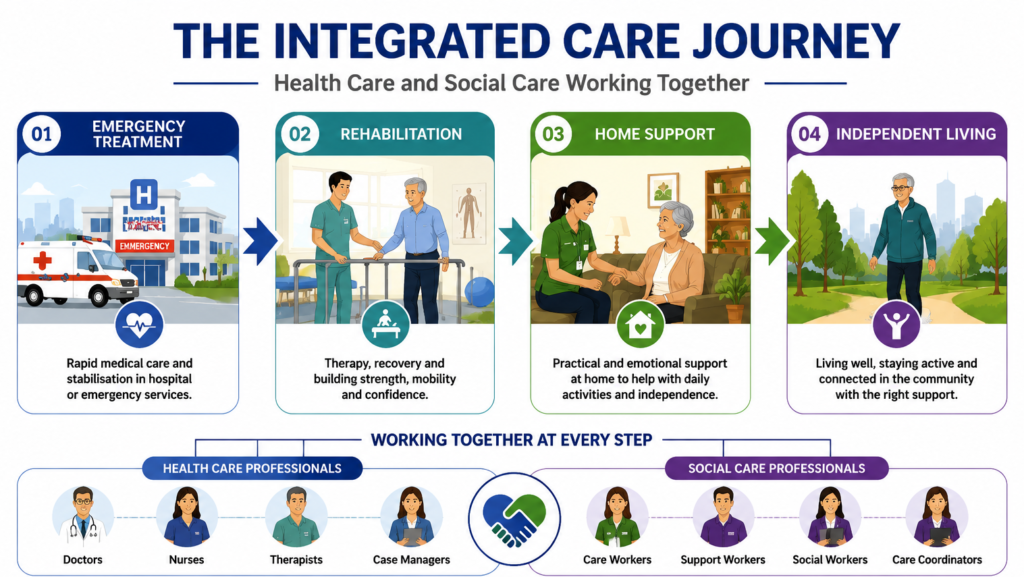
Integrated Care
Integrated care brings together medical treatment and social support to address the whole person’s needs rather than focusing on a single condition. By sharing information, coordinating services, and developing personalised care plans, professionals can deliver more efficient, consistent, and person-centred care.
The main benefits of integrated care include:
- Better communication between professionals.
- More personalised care plans.
- Reduced hospital admissions and readmissions.
- Faster recovery and rehabilitation.
- Greater independence and improved quality of life.
Multidisciplinary Teams
Integrated care is delivered through multidisciplinary teams (MDTs), where professionals from different disciplines work together to achieve the best outcomes for each individual. A typical team may include doctors, nurses, social workers, physiotherapists, occupational therapists, pharmacists, mental health specialists, care coordinators, and support workers.
Each professional contributes specialist knowledge while working towards shared goals that focus on health, wellbeing, recovery, and independence.
Continuity of Care
An individual’s care needs often change over time. Someone may move from emergency treatment to rehabilitation and then require ongoing support at home or within the community. Continuity of care ensures these transitions are well coordinated through effective communication, shared care plans, regular reviews, and timely referrals, allowing individuals to receive consistent support throughout their recovery.
Benefits of Collaboration
When health care and social care work together, individuals receive more coordinated and effective support. Collaboration helps improve health outcomes, enhances patient experiences, reduces unnecessary hospital stays, promotes independence, and provides stronger support for families and caregivers. As healthcare needs become increasingly complex, integrated working between both sectors is essential for delivering high-quality, person-centred care and achieving better long-term outcomes.
Real-Life Example: How Health Care and Social Care Work Together Through Integrated Care
The difference between health care and social care becomes clearer when looking at a real-life care journey. Although both sectors have different responsibilities, they often work together to provide continuous, person-centred support that helps individuals recover, maintain independence, and improve their quality of life.
Imagine an older adult living independently who experiences a fall at home and suffers a hip fracture. Unable to stand or move safely, emergency services are contacted, and the individual is taken to hospital for immediate medical attention.
Medical Treatment and Hospital Care
At the hospital, healthcare professionals assess the injury through physical examinations and diagnostic imaging. Doctors and specialist surgeons provide the necessary treatment, while nurses monitor recovery, manage pain, administer medication, and support the individual’s medical needs.
This stage represents health care because the focus is on diagnosing the condition, providing medical treatment, preventing complications, and supporting physical recovery.
Rehabilitation and Recovery Support
Following treatment, rehabilitation begins to help the individual regain mobility and confidence. Physiotherapists provide exercises to improve strength and movement, while occupational therapists assess daily living abilities and recommend adjustments or equipment to make returning home safer.
Although the person’s medical condition is improving, healthcare professionals recognise that additional support may be required to help them manage everyday activities after leaving hospital.
Social Care Support After Returning Home
Before discharge, healthcare and social care professionals work together to create a personalised care plan. A social care assessment helps identify the level of support needed at home and ensures the right services are arranged.
After returning home, care workers may provide assistance with personal care, preparing meals, medication reminders, household tasks, and maintaining daily routines. Community support services may also help the individual stay socially connected and continue participating in local activities.
This stage represents social care because the focus is on supporting independence, wellbeing, and everyday living rather than providing medical treatment.
Working Together for Better Outcomes
Over time, healthcare professionals continue to monitor recovery through follow-up appointments and rehabilitation, while social care professionals provide ongoing practical and emotional support. Both teams communicate regularly, review the care plan, and adapt services according to the individual’s changing needs.
By working together, health care and social care help individuals achieve:
- Effective medical treatment and recovery.
- Safe transition from hospital to home.
- Personalised support based on individual needs.
- Greater independence and confidence.
- Improved wellbeing and quality of life.
- Reduced risk of future health complications.
This example demonstrates that health care and social care are complementary services rather than separate systems. Health care addresses medical needs through diagnosis, treatment, and rehabilitation, while social care focuses on independence, daily living, and overall wellbeing. Through integrated and person-centred care, both sectors work together to provide continuous support that improves outcomes and enhances quality of life.
Careers in Health Care
Health care offers diverse career opportunities for individuals who are passionate about improving people’s health through prevention, diagnosis, treatment, and rehabilitation. Professionals work in hospitals, clinics, community health centres, laboratories, rehabilitation facilities, emergency services, and digital healthcare environments. The sector provides excellent opportunities for career progression, specialisation, and continuous professional development.
Some of the most common healthcare careers include:
- Doctor or Physician – Diagnoses illnesses, prescribes treatments, and manages patient care.
- Nurse – Provides clinical care, monitors patients, and supports recovery.
- Pharmacist – Dispenses medicines and advises on their safe and effective use.
- Physiotherapist – Helps patients recover mobility and physical function after illness or injury.
- Mental Health Professional – Supports individuals with mental health conditions through assessment and treatment.
- Healthcare Assistant – Assists healthcare professionals with patient care and daily clinical tasks.
- Healthcare Manager – Oversees healthcare services, staff, and operational performance.
Careers in Social Care
Social care careers focus on helping individuals live independently, safely, and with dignity. Professionals provide practical, emotional, and personal support to improve quality of life for older adults, people with disabilities, individuals with mental health conditions, and other vulnerable groups. Social care offers rewarding careers for those who enjoy building relationships and making a positive difference in people’s lives.
Common careers in social care include:
- Social Worker – Assesses needs, safeguards vulnerable individuals, and coordinates support services.
- Care Worker – Assists with personal care, daily living, and emotional wellbeing.
- Support Worker – Helps individuals develop life skills and maintain independence.
- Care Coordinator – Plans and manages personalised care services.
- Residential Care Worker – Supports people living in residential care settings.
- Social Care Manager – Leads care teams and ensures high-quality, person-centred services.
Health Care vs Social Care Careers
Both sectors offer rewarding careers, but they differ in their responsibilities, work environments, and the type of support they provide. Health care focuses on diagnosing and treating medical conditions, while social care concentrates on helping people live independently and improve their quality of life.
| Career Aspect | Health Care | Social Care |
|---|---|---|
| Main Focus | Medical treatment and rehabilitation | Daily living support and wellbeing |
| Common Roles | Doctors, nurses, pharmacists, therapists | Social workers, care workers, support workers |
| Work Settings | Hospitals, clinics, health centres | Homes, care homes, community services |
| Primary Goal | Improve health and recovery | Promote independence and quality of life |
| Key Skills | Clinical knowledge, critical thinking | Compassion, communication, relationship building |
Choosing between health care and social care depends on your interests and career goals. If you enjoy clinical science, diagnosing health conditions, and medical treatment, a career in health care may be the right choice. If you are passionate about supporting people, promoting independence, and making a positive impact on everyday lives, social care offers a fulfilling and meaningful career path.
Essential Skills Required in Health Care and Social Care
Working in health care and social care requires more than professional knowledge. Individuals need a combination of practical, communication, interpersonal, and ethical skills to provide safe, compassionate, and person-centred support. These skills help professionals build trust, make effective decisions, and work successfully with individuals, families, and multidisciplinary teams.
Communication
Clear communication helps professionals understand individual needs, explain care plans, maintain accurate records, and work effectively with colleagues and families. Good communication improves safety, trust, and continuity of care.
Empathy and Compassion
Empathy allows professionals to understand people’s experiences and provide support with kindness, dignity, and respect. Compassionate care helps build positive relationships and improves the overall experience of individuals receiving support.
Problem-Solving and Decision-Making
Care professionals often face complex situations that require judgement and quick responses. Strong decision-making skills help them manage risks, solve problems, and provide appropriate support.
Teamwork and Collaboration
Both sectors rely on professionals working together to deliver coordinated care. Effective teamwork ensures better communication, smoother transitions between services, and improved outcomes for individuals.
Observation Skills
Professionals must recognise changes in health, behaviour, or emotional wellbeing. Good observation skills allow early identification of concerns and timely support.
Professionalism and Ethics
Maintaining confidentiality, respecting individual rights, following professional standards, and acting with integrity are essential for delivering safe and trustworthy care.
Adaptability and Resilience
Health care and social care environments continue to change with new technologies, policies, and care needs. Professionals must remain flexible, manage challenges effectively, and continue providing high-quality support.
Developing these essential skills helps health care and social care professionals deliver better care, support independence, and build successful careers in these growing sectors.
Qualifications and Training
The right qualifications and training provide the knowledge, practical skills, and professional confidence needed to build a successful career in health care or social care. Whether you are beginning your career, developing specialist skills, or progressing into leadership and management roles, a range of health and social care qualifications and training programmes are available to support your professional development at every stage.
Entry-Level Qualifications
Entry-level qualifications introduce the fundamentals of health and social care, including communication, safeguarding, health and safety, person-centred care, equality and diversity, and professional responsibilities. They are ideal for beginners seeking to enter the sector or gain a strong foundation for future career progression.
Intermediate Qualifications
Intermediate programmes develop practical skills and deepen knowledge of care delivery. Learners gain experience in care planning, supporting individuals with different needs, promoting wellbeing, managing risks, and working effectively within multidisciplinary teams.
Advanced Qualifications
Advanced qualifications prepare professionals for senior and leadership positions by focusing on areas such as leadership, service management, safeguarding, quality improvement, strategic planning, and organisational performance. These programmes help professionals lead teams, improve care services, and manage complex healthcare and social care environments.
Continuous Professional Development (CPD)
Continuous Professional Development (CPD) is essential in both health care and social care because regulations, technologies, and best practices continue to evolve. Regular training helps professionals maintain their skills, stay up to date with industry standards, and deliver safe, evidence-based, and person-centred care. CPD may include specialist training in safeguarding, mental health, dementia care, infection prevention and control, digital healthcare, leadership, and communication.
Investing in the right qualifications and ongoing professional development enables individuals to enhance their expertise, expand career opportunities, and provide high-quality care that meets the changing needs of patients, service users, and communities.
Future of Health Care and Social Care in 2026
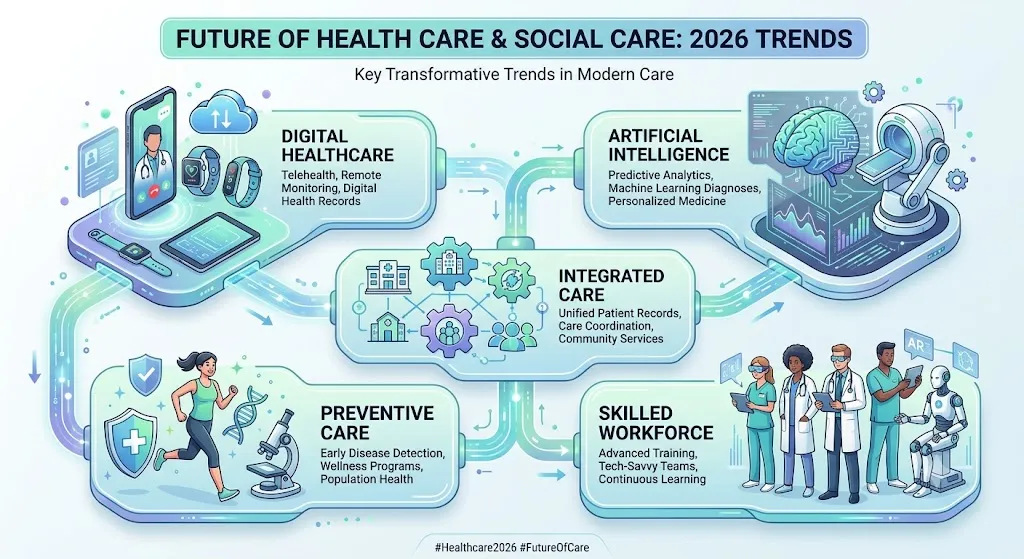
The future of health care and social care is being shaped by an ageing population, technological innovation, and a growing demand for personalised, high-quality services. In 2026 and beyond, both sectors are placing greater emphasis on prevention, integrated care, digital transformation, and community-based support to improve health outcomes and enhance quality of life.
Key Trends Shaping the Future
- Digital Healthcare: Telemedicine, electronic health records, wearable devices, and remote monitoring are making healthcare more accessible, efficient, and patient-centred while reducing unnecessary hospital visits.
- Artificial Intelligence (AI): AI is helping professionals analyse health data, support clinical decisions, automate routine tasks, improve care planning, and deliver more personalised services. However, human expertise and compassionate care remain essential.
- Integrated Care: Health care and social care providers are working more closely together to deliver coordinated, seamless services that address both medical and social needs, improving continuity of care and patient experiences.
- Preventive and Community Care: Greater investment in health education, early intervention, routine screening, and home-based care is helping prevent illness, reduce hospital admissions, and support people to live independently for longer.
- Growing Demand for Skilled Professionals: Rising healthcare needs and ageing populations continue to increase demand for qualified professionals with strong communication, digital, leadership, and person-centred care skills.
- Sustainability in Care: Healthcare and social care organisations are adopting greener practices by reducing waste, improving energy efficiency, embracing digital solutions, and building more sustainable care systems.
As technology advances and care needs become more complex, the future of health care and social care will depend on innovation, collaboration, and a highly skilled workforce. Professionals who embrace lifelong learning, digital technologies, and person-centred care will be well positioned to succeed in this rapidly evolving sector.
Which Career Path Is Right for You?
Choosing between health care and social care depends on your interests, skills, and career goals. Both sectors offer rewarding opportunities to support people and make a positive impact, but they focus on different areas of care.
If you are interested in medical science, diagnosing conditions, clinical treatment, and rehabilitation, health care may be the right career path. Healthcare professionals usually work in hospitals, clinics, rehabilitation centres, and other medical environments.
If you enjoy helping people with daily living, promoting independence, and building long-term relationships, social care may be a better choice. Social care professionals support individuals in homes, care settings, and communities to improve wellbeing and quality of life.
Both health care and social care provide strong career opportunities, professional development, and the chance to make a meaningful difference. With the right qualifications, skills, and experience, you can build a successful career in either sector.
Conclusion
Although health care and social care are closely connected, they have distinct roles in supporting individuals’ health, wellbeing, and quality of life. Health care focuses on preventing, diagnosing, treating, and managing medical conditions through clinical expertise and evidence-based practice, while social care provides practical, emotional, and personal support that helps individuals maintain independence, dignity, and participation in everyday life. Together, these sectors create a comprehensive system of care that addresses both medical and social needs through collaboration and person-centred support.
As healthcare systems continue to evolve, the integration of health care and social care is becoming increasingly important. Advances in digital healthcare, artificial intelligence, preventive care, and multidisciplinary working are transforming how services are delivered and improving outcomes for individuals and communities. Whether you are exploring career opportunities, considering professional qualifications, or simply seeking a better understanding of these essential sectors, recognising the differences and connections between health care and social care provides valuable insight into the future of modern care.