
Roles and Responsibilities of Civil Engineers: Complete Guide to Skills, Duties & Career Path
A civil engineer is a professional responsible for designing, planning, constructing, and maintaining the built environment, including buildings, roads, bridges, water systems, and other essential infrastructure. The Roles and Responsibilities of a Civil Engineer cover a wide range of activities, from analysing project requirements and preparing designs to supervising construction activities and ensuring quality, safety, and sustainability throughout the project lifecycle.
Civil engineers play a critical role in modern society because they help create safe, reliable, and efficient infrastructure that supports communities and economic development. Their expertise ensures that construction projects meet technical standards, regulatory requirements, environmental considerations, and the needs of the people who use these facilities.
In the construction industry, a civil engineer is involved at every stage of a project, including feasibility studies, site investigations, engineering design, material selection, cost estimation, construction supervision, quality control, and project completion. They work closely with architects, contractors, project managers, and other stakeholders to ensure that projects are delivered successfully within the required time, budget, and quality standards.
The responsibilities of a civil engineer extend beyond traditional construction tasks. They contribute to sustainable infrastructure development by applying innovative engineering solutions, improving construction efficiency, managing risks, and ensuring public safety. Whether working on residential buildings, transportation networks, environmental projects, or large-scale infrastructure developments, civil engineers are essential for creating safe and functional spaces for future generations.
What is a Civil Engineer?
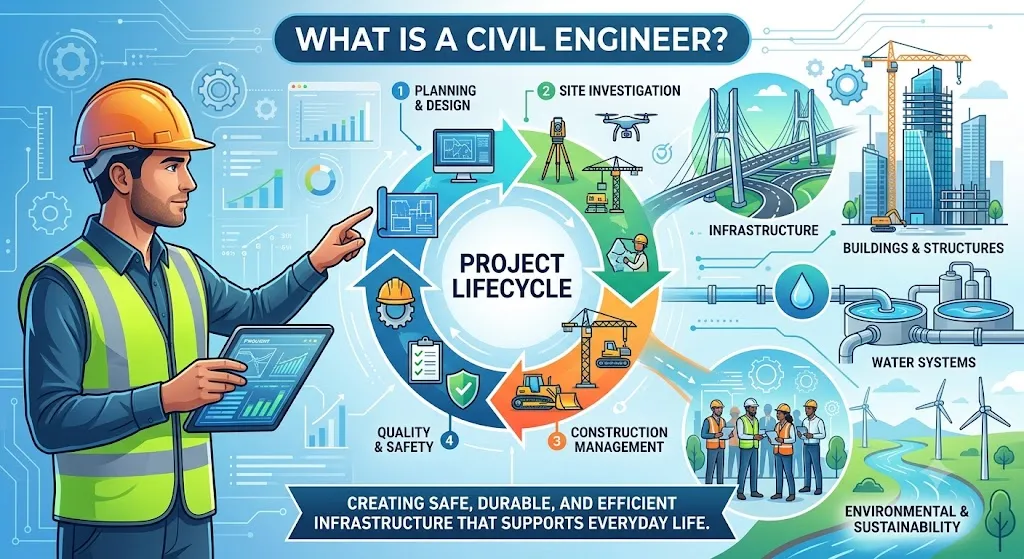
A civil engineer is a professional who applies engineering principles, scientific knowledge, and technical skills to design, develop, construct, and maintain infrastructure projects that support everyday life. Civil engineers are responsible for creating safe, durable, and efficient structures such as buildings, roads, bridges, tunnels, airports, dams, water supply systems, and other essential facilities.
When people ask “What does a civil engineer do?”, the answer involves much more than supervising construction work. Civil engineers are involved throughout the entire project lifecycle, including planning, design, site investigation, material selection, construction management, quality control, safety monitoring, and project completion. Their work ensures that infrastructure projects meet engineering standards, environmental requirements, and public safety expectations.
Areas of Work for Civil Engineers
The responsibilities of a civil engineer vary depending on their specialisation and the type of project they manage. Some major areas of civil engineering include:
Structural Engineering
Structural engineers design and analyse buildings, bridges, towers, and other structures to ensure they can safely withstand different loads and environmental conditions.
Construction Engineering and Site Management
Civil engineers working in construction oversee daily site activities, monitor progress, coordinate with contractors, inspect workmanship, and ensure that projects are completed according to approved designs and specifications.
Geotechnical Engineering
Geotechnical engineers study soil, rocks, and ground conditions to determine suitable foundation designs and ensure the stability of structures.
Transportation Engineering
Transportation engineers plan and develop roads, highways, railways, airports, and transport systems to improve connectivity and mobility.
Water Resources and Environmental Engineering
Civil engineers in this field manage water supply systems, drainage networks, wastewater treatment facilities, and sustainable environmental solutions.
Project Management
Civil engineers take leadership roles in managing construction projects by controlling budgets, schedules, resources, risks, and communication between different stakeholders.
Industries Where Civil Engineers Work
Civil engineers operate across various industries because infrastructure development is essential for economic growth and community development. Common industries include:
- Construction and building development
- Infrastructure and transportation
- Real estate and property development
- Government and public works
- Environmental and sustainability projects
- Water and wastewater management
- Energy and utility projects
- Engineering consultancy services
- Urban planning and development
Civil Engineer Responsibilities
The main civil engineer responsibilities include planning projects, preparing technical designs, supervising construction activities, ensuring quality standards, managing resources, solving engineering problems, and maintaining compliance with safety and regulatory requirements.
Civil engineers play a key role in transforming designs and concepts into practical structures that improve the quality of life for communities. Their technical expertise and decision-making skills help ensure that construction projects are safe, sustainable, cost-effective, and successfully delivered.
Roles and Responsibilities of Civil Engineers
Civil engineers perform a wide range of responsibilities throughout the lifecycle of construction and infrastructure projects. The roles and responsibilities of a civil engineer include planning, designing, supervising, managing resources, ensuring quality, and coordinating with different stakeholders to deliver safe and successful projects. Their involvement begins from the initial project assessment and continues until final completion and maintenance.
1. Project Planning and Feasibility Assessment
One of the key civil engineer project planning responsibilities is evaluating whether a construction project is practical, safe, and achievable before work begins. Proper planning helps reduce risks, control costs, and ensure successful project delivery.
Site Analysis
Civil engineers conduct detailed site investigations to understand ground conditions, environmental factors, accessibility, and other technical requirements. Site analysis helps determine suitable construction methods and identifies potential challenges before project execution.
Understanding Project Requirements
Civil engineers review project objectives, design requirements, technical specifications, client expectations, and regulatory standards. They ensure that the proposed project meets functional, health and safety, and performance requirements.
Resource Planning
Civil engineers plan the required resources, including materials, equipment, labour, and technical support. Effective resource planning ensures that construction activities progress efficiently without unnecessary delays or waste.
2. Design and Engineering Responsibilities
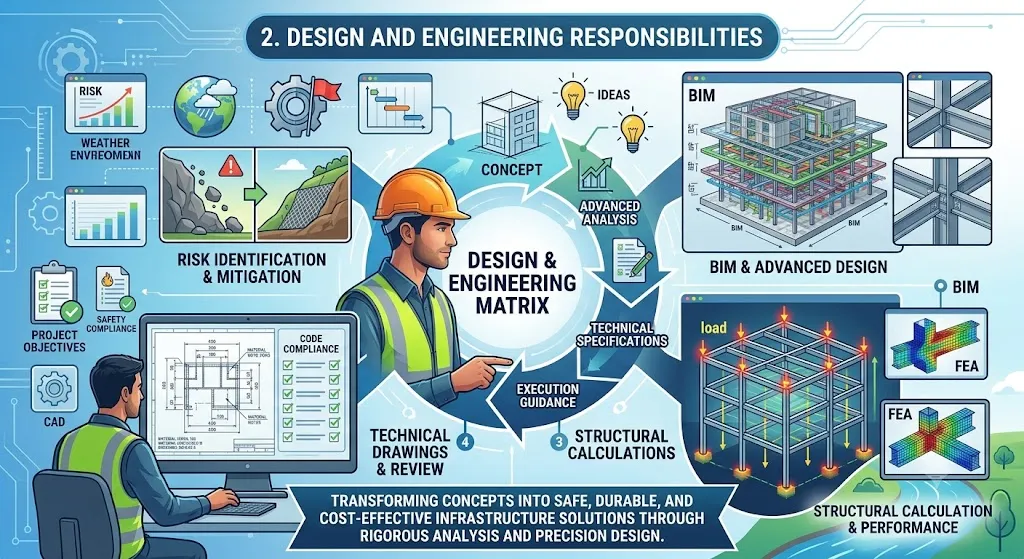
Identifying potential risks is an important part of project planning. Civil engineers evaluate construction risks related to safety, environmental conditions, technical issues, and project timelines and develop strategies to minimise their impact.
The civil engineer design responsibilities involve transforming project concepts into detailed technical solutions. Civil engineers use engineering principles and advanced tools to create designs that are safe, practical, and cost-effective.
Preparing Technical Drawings
Civil engineers prepare and review technical drawings, construction plans, and specifications that guide construction teams during project execution. These drawings provide accurate information about dimensions, materials, and construction methods.
Reviewing Designs
Civil engineers analyse designs to ensure they comply with engineering standards, safety requirements, and project objectives. They identify potential design issues and recommend improvements where necessary.
Performing Structural Calculations
Structural calculations help engineers determine the strength, stability, and durability of structures. Civil engineers assess loads, materials, and structural performance to ensure buildings and infrastructure remain safe under different conditions.
Using Engineering Software
Modern civil engineers use software tools such as Computer-Aided Design (CAD), Building Information Modelling (BIM), and project management applications to develop accurate designs and improve project coordination.
3. Construction Site Supervision
One of the most important civil engineer duties at construction site is monitoring daily construction activities to ensure work is completed according to approved designs, specifications, and quality standards.
Monitoring Construction Activities
Civil engineers regularly inspect construction progress, verify completed work, and ensure activities follow project schedules and technical requirements.
Checking Workmanship
Engineers evaluate the quality of construction work by inspecting materials, installation methods, and finished components to ensure they meet expected standards.
Ensuring Drawings Are Followed
Civil engineers make sure contractors follow approved drawings, designs, and construction procedures. Any deviations are reviewed and corrected to prevent future problems.
Coordinating Site Teams
Civil engineers coordinate with supervisors, contractors, subcontractors, and workers to solve technical issues and maintain smooth site operations.
4. Quality Control and Material Inspection
The civil engineer responsibilities in quality control focus on ensuring that construction materials and workmanship meet required standards. Quality management helps improve safety, durability, and long-term performance of structures.
Material Testing
Civil engineers inspect and test construction materials such as concrete, steel, soil, and aggregates to confirm their suitability and compliance with project requirements.
Concrete Inspection
Engineers monitor concrete-related activities, including mixing, placement, curing, and testing, to ensure structural strength and durability.
Compliance with Specifications
Civil engineers verify that construction work follows project specifications, engineering standards, and approved quality requirements.
Quality Assurance Procedures
They develop and implement quality control procedures, maintain inspection records, and identify corrective actions when quality issues occur.
5. Health and Safety Management
The civil engineer safety responsibilities involve supporting safe construction practices and reducing risks to workers, the public, and project assets.
Identifying Hazards
Civil engineers identify potential hazards related to construction activities, equipment use, materials, and site conditions.
Supporting Safe Construction Practices
They work with safety teams to ensure safe working methods, proper site organisation, and effective risk control measures.
Following Safety Regulations
Civil engineers ensure construction activities comply with relevant health and safety requirements, industry standards, and project safety procedures.
6. Cost Estimation and Budget Management
Managing project costs is another important responsibility of civil engineers. Their civil engineer cost estimation responsibilities help ensure projects remain financially controlled and achievable.
Quantity Surveying
Civil engineers estimate quantities of materials, labour requirements, and construction resources needed for project completion.
Material Calculations
They calculate material requirements to reduce waste, improve efficiency, and support accurate project budgeting.
Cost Monitoring
Civil engineers monitor project expenses, identify cost variations, and support decision-making to maintain budget control.
7. Project Documentation and Reporting
The civil engineer project management responsibilities include maintaining accurate documentation and communicating project information effectively.
Preparing Reports
Civil engineers prepare technical reports, inspection reports, progress updates, and project summaries for management and stakeholders.
Maintaining Site Records
They maintain records of construction activities, material inspections, site conditions, changes, and approvals.
Progress Documentation
Civil engineers track project progress and document completed work, delays, challenges, and corrective actions.
Technical Communication
They communicate technical information clearly with project teams, clients, contractors, and regulatory authorities.
8. Stakeholder Coordination
The role of a civil engineer in construction projects involves working closely with multiple stakeholders to ensure effective project delivery.
Working with Architects
Civil engineers collaborate with architects to convert design concepts into practical and structurally sound solutions.
Coordinating with Contractors
They communicate technical requirements, review construction progress, and resolve engineering issues with contractors.
Communicating with Clients
Civil engineers provide project updates, explain technical matters, and ensure client expectations are considered during project execution.
Liaising with Government Authorities
They coordinate with regulatory bodies to ensure projects comply with planning permissions, building codes, environmental requirements, and legal standards.
Effective stakeholder coordination helps reduce conflicts, improve communication, and ensure successful completion of construction projects.
Daily Responsibilities of a Civil Engineer
The daily responsibilities of a civil engineer vary depending on the project type, job position, and working environment. Civil engineers are involved in monitoring construction activities, ensuring quality standards, managing technical challenges, and coordinating with different project teams to achieve successful project outcomes.
A civil engineer’s daily work combines technical knowledge, site supervision, project coordination, and problem-solving skills to ensure that construction projects are completed safely, efficiently, and according to approved designs, specifications, and regulatory requirements.
Inspecting Construction Sites
One of the primary daily duties of a civil engineer is inspecting construction sites. Engineers regularly visit project locations to monitor ongoing activities, check workmanship, verify construction methods, and ensure that work is carried out according to approved drawings and specifications.
During site inspections, civil engineers identify potential issues, evaluate completed work, and provide technical guidance to construction teams to maintain quality and safety standards.
Reviewing Project Progress
Civil engineers review project progress to ensure that construction activities are completed according to the planned schedule. They compare actual progress with project timelines, identify possible delays, and recommend corrective actions to keep projects on track.
Progress reviews help engineers manage resources effectively, coordinate upcoming activities, and support successful project delivery.
Checking Materials and Quality Standards
Checking construction materials is an essential responsibility of civil engineers. They inspect materials such as concrete, steel, aggregates, and other construction components to ensure they meet project specifications and quality requirements.
Civil engineers review material test results, verify compliance documents, and ensure that only approved materials are used during construction.
Attending Project Meetings
Civil engineers participate in regular meetings with architects, contractors, project managers, clients, and other stakeholders. These meetings provide opportunities to discuss project progress, technical issues, design changes, safety matters, and construction requirements.
Effective communication during meetings helps improve coordination, reduce conflicts, and ensure that project objectives are achieved.
Solving Technical Problems
Solving technical problems is an important part of a civil engineer’s daily role. Engineers analyse construction challenges such as design conflicts, unexpected site conditions, material issues, and structural concerns.
By applying engineering principles and practical experience, civil engineers develop solutions that maintain project safety, quality, and performance.
Preparing Reports and Documentation
Civil engineers prepare different types of project documentation, including inspection reports, progress reports, material records, and technical updates. These documents provide accurate information about project activities and support effective decision-making.
Maintaining proper records also helps ensure transparency, track project performance, and improve communication among project stakeholders.
Summary of Daily Civil Engineer Activities
The daily responsibilities of a civil engineer include:
- Inspecting construction sites and monitoring site activities
- Reviewing project progress and managing construction schedules
- Checking materials and ensuring quality compliance
- Attending technical and coordination meetings
- Solving construction-related technical problems
- Preparing reports and maintaining project records
Through these responsibilities, civil engineers play a vital role in ensuring that construction projects are safe, reliable, and successfully completed according to engineering standards.
Different Types of Civil Engineers and Their Responsibilities
| Type of Civil Engineer | Main Responsibilities |
|---|---|
| Structural Engineer | Design and analyse structures |
| Site Engineer | Manage daily construction activities |
| Geotechnical Engineer | Analyse soil and foundations |
| Transportation Engineer | Design roads and transport systems |
| Environmental Engineer | Manage environmental impacts |
| Construction Engineer | Manage construction processes |
Skills Required for a Civil Engineer
A successful civil engineer requires a combination of technical expertise and professional skills to effectively plan, design, manage, and deliver construction projects. The skills required for a civil engineer include engineering knowledge, practical construction abilities, project management capabilities, and strong interpersonal skills.
Civil engineers work in complex environments where they must analyse technical challenges, coordinate with different teams, make informed decisions, and ensure that projects meet safety, quality, and performance requirements.
Technical Skills Required for a Civil Engineer
Structural Analysis
Structural analysis is one of the most important technical skills for civil engineers. It involves evaluating the strength, stability, and performance of structures under different loads and conditions. Civil engineers use structural analysis principles to design safe buildings, bridges, and other infrastructure projects.
CAD Software
Knowledge of Computer-Aided Design (CAD) software is essential for modern civil engineers. CAD tools help engineers create accurate technical drawings, develop design models, modify project plans, and communicate engineering details effectively with construction teams.
Understanding of Construction Methods
Civil engineers must have strong knowledge of construction methods and techniques. This includes understanding materials, construction processes, site practices, and installation procedures to ensure projects are completed according to design requirements and industry standards.
Project Management Skills
Project management is a key skill that enables civil engineers to plan, organise, and control construction activities. Engineers need to manage schedules, resources, costs, risks, and coordination between different project teams to achieve successful project completion.
Soft Skills Required for a Civil Engineer
Communication Skills
Effective communication is essential because civil engineers regularly interact with architects, contractors, clients, suppliers, and government authorities. Clear communication helps prevent misunderstandings and ensures that technical information is properly shared among stakeholders.
Leadership Skills
Civil engineers often take leadership roles on construction sites and within project teams. Strong leadership skills help them coordinate workers, manage responsibilities, guide teams, and ensure that project objectives are achieved.
Problem-Solving Skills
Construction projects often involve unexpected challenges, such as design issues, material problems, or site difficulties. Civil engineers must use analytical thinking and engineering knowledge to identify problems and develop practical solutions.
Decision-Making Skills
Civil engineers make important decisions throughout the project lifecycle, including choices related to design, materials, safety, and construction methods. Good decision-making skills help engineers select effective solutions while considering quality, cost, and project requirements.
Importance of Civil Engineers in Construction and Infrastructure Development
The importance of civil engineers in construction cannot be underestimated because they play a crucial role in designing, developing, and maintaining the infrastructure that supports modern society. Civil engineers ensure that construction projects are safe, efficient, durable, and capable of meeting the needs of communities.
From residential buildings and transportation networks to water systems and large-scale infrastructure projects, civil engineers apply technical knowledge, engineering principles, and project management skills to transform ideas into practical structures. Their work contributes to economic growth, improved living standards, and sustainable development.
Creating Safe Buildings and Structures
One of the most important contributions of civil engineers is ensuring the safety and stability of buildings and infrastructure. They analyse structural requirements, select suitable materials, review designs, and monitor construction activities to ensure that structures can withstand different loads and environmental conditions.
Civil engineers help prevent structural failures by applying engineering standards, conducting inspections, and ensuring that construction work follows approved specifications. Their expertise is essential for creating buildings that protect people and provide long-term reliability.
Developing Sustainable Infrastructure
Civil engineers play an important role in developing sustainable infrastructure that supports environmental protection and efficient resource use. They incorporate sustainable construction practices, environmentally friendly materials, and innovative engineering solutions to reduce the impact of infrastructure projects on the environment.
Through sustainable design approaches, civil engineers contribute to energy-efficient buildings, improved transportation systems, effective water management, and resilient infrastructure that can support future generations.
Supporting Economic Development
Infrastructure development is a key driver of economic growth, and civil engineers contribute significantly to this process. By designing and managing construction projects such as roads, bridges, commercial buildings, airports, and industrial facilities, they help improve connectivity, create employment opportunities, and support business activities.
Well-planned infrastructure enables communities and industries to grow by providing reliable facilities and improving access to essential services.
Ensuring Public Safety
Public safety is a fundamental responsibility of civil engineers. They ensure that construction projects meet safety standards, legal requirements, and engineering regulations to protect workers and the general public.
Civil engineers assess risks, monitor construction quality, and implement safety measures throughout project development. Their decisions directly influence the safety, functionality, and durability of infrastructure used by millions of people.
Role of Civil Engineers in Future Infrastructure Development
As cities continue to grow and infrastructure demands increase, civil engineers will remain essential in developing innovative, safe, and sustainable solutions. Their expertise helps create resilient communities, improve public services, and support long-term social and economic development.
Civil engineers are not only responsible for constructing physical structures but also for shaping the environments where people live, work, and connect.
Career Opportunities for Civil Engineers
Civil engineering offers a wide range of career opportunities across construction, infrastructure development, engineering consultancy, and project management sectors. With the growing demand for safe buildings, modern infrastructure, and sustainable development, civil engineers can pursue different professional roles based on their skills, experience, and areas of specialisation.
Civil engineers work in various positions that involve designing structures, managing construction activities, supervising projects, and ensuring that engineering standards are followed. Some of the most common career opportunities for civil engineers include:
Site Engineer
A Site Engineer is responsible for managing and supervising daily construction activities at project locations. They ensure that work is carried out according to approved drawings, technical specifications, safety requirements, and project schedules.
Key responsibilities include:
- Monitoring construction progress
- Inspecting workmanship and materials
- Coordinating with contractors and site teams
- Resolving technical issues on-site
- Ensuring compliance with quality and safety standards
Structural Engineer
A Structural Engineer focuses on designing and analysing structures to ensure their strength, stability, and durability. They work on projects such as buildings, bridges, towers, and other infrastructure systems.
Key responsibilities include:
- Performing structural analysis and calculations
- Preparing structural designs and drawings
- Selecting suitable construction materials
- Ensuring structures meet safety requirements
- Reviewing structural performance
Project Engineer
A Project Engineer combines technical knowledge with project coordination skills to support successful project delivery. They manage engineering activities, coordinate teams, and help ensure that projects are completed within scope, time, and budget requirements.
Key responsibilities include:
- Managing technical aspects of projects
- Coordinating with engineers, contractors, and suppliers
- Reviewing project plans and specifications
- Monitoring progress and solving technical challenges
- Supporting project planning and execution
Construction Manager
A Construction Manager oversees the overall management of construction projects from planning to completion. They are responsible for coordinating resources, managing teams, controlling costs, and ensuring successful project delivery.
Key responsibilities include:
- Managing construction operations
- Supervising project teams
- Controlling schedules and budgets
- Managing risks and resources
- Ensuring quality and safety standards
Design Engineer
A Design Engineer specialises in developing engineering designs and technical solutions for construction projects. They use engineering principles and design software to create accurate and practical project plans.
Key responsibilities include:
- Preparing technical drawings and designs
- Using CAD and engineering software
- Reviewing design requirements
- Conducting engineering calculations
- Supporting project development
Civil Project Manager
A Civil Project Manager is responsible for leading large-scale civil engineering projects and ensuring that all aspects of project delivery are effectively managed. They coordinate stakeholders, manage resources, and oversee project performance.
Key responsibilities include:
- Managing project objectives and timelines
- Coordinating with clients and stakeholders
- Controlling budgets and resources
- Managing risks and project changes
- Ensuring successful project completion
Future Career Growth in Civil Engineering
Civil engineering provides strong career growth opportunities for professionals who develop technical expertise, project management skills, and leadership abilities. With experience, civil engineers can progress into senior roles such as Senior Engineer, Engineering Manager, Project Director, or Construction Director, contributing to major infrastructure and development projects worldwide.
Advance Your Civil Engineering Career with Professional Qualifications
If you are planning to build a successful career in civil engineering, gaining a recognised vocational qualification can significantly improve your practical skills and employment prospects. Whether you want to specialise in construction site management, surveying, or structural concreting, professional qualifications help you develop industry-ready competence and demonstrate your expertise to employers.
- ProQual Level 6 NVQ Diploma in Construction Site Management (Construction) – Retrofit
- ProQual Level 3 NVQ Diploma in Construction Contracting Operations – Surveying
- ProQual Level 2 NVQ Diploma in Construction and Civil Engineering Operations (Construction)-Structural Concreting
Conclusion
The roles and responsibilities of a civil engineer are essential for the successful planning, design, construction, and maintenance of modern infrastructure. From managing construction sites and ensuring quality control to developing safe buildings and sustainable solutions, civil engineers play a key role in creating reliable infrastructure that supports communities and economic growth.
Civil engineering offers diverse career opportunities for professionals who develop strong technical knowledge, project management skills, and problem-solving abilities. As construction and infrastructure demands continue to grow, civil engineers will remain vital in delivering safe, efficient, and sustainable projects for the future.