
Fire Risk Assessment: Step-by-Step Guide for Businesses (2026)
Fire risk assessment for businesses is a fundamental legal requirement and a critical component of effective workplace safety management. It is a structured process that enables organizations to systematically identify potential fire hazards, evaluate the level of risk, and implement appropriate control measures to prevent fire incidents. In 2026, with increasingly stringent workplace safety regulations and heightened compliance expectations across the UK, conducting a thorough and well-documented fire risk assessment is not only a regulatory obligation but also a vital responsibility for safeguarding employees, visitors, property, and business operations.
A comprehensive fire risk assessment goes beyond basic hazard identification—it establishes a proactive approach to fire prevention, emergency preparedness, and risk reduction. By assessing ignition sources, combustible materials, and potential vulnerabilities within the workplace, businesses can minimize the likelihood of fire incidents and ensure that effective safety systems and procedures are in place.
Whether you manage an office environment, industrial facility, warehouse, construction site, or commercial premises, understanding how to carry out a fire risk assessment in a clear, step-by-step manner is essential. This guide provides a detailed and practical breakdown of the fire risk assessment process, enabling businesses to enhance safety standards, meet legal requirements, and create a safer, more resilient working environment.
What is a Fire Risk Assessment?
A fire risk assessment is a systematic and structured process undertaken by businesses to identify potential fire hazards, evaluate the level of risk associated with those hazards, and implement appropriate control measures to prevent fire incidents. It is a key element of workplace health and safety management, designed to protect people, property, and business operations from the potentially devastating effects of fire.
Rather than being a one-time activity, a fire risk assessment is an ongoing process that requires regular review and updates to reflect changes in the workplace, equipment, or operations. It involves a thorough examination of the environment, including sources of ignition, combustible materials, and existing fire protection systems, to ensure that all risks are effectively managed and minimized.
A comprehensive fire risk assessment typically focuses on the following key areas:
- Identifying potential fire hazards:
Recognising sources of ignition such as electrical equipment, heating systems, or open flames, as well as fuel sources like flammable materials, chemicals, and waste. - Determining who may be at risk:
Assessing all individuals who could be affected in the event of a fire, including employees, visitors, contractors, and vulnerable persons who may require additional assistance. - Evaluating and reducing risks:
Analysing the likelihood and potential impact of fire hazards and implementing control measures such as fire detection systems, safe storage practices, and risk reduction strategies. - Ensuring effective emergency procedures:
Establishing clear evacuation plans, communication systems, and emergency response protocols to ensure a safe and coordinated reaction in the event of a fire.
By following a structured approach, a fire risk assessment enables businesses to proactively manage fire safety, maintain legal compliance, and create a safer working environment for everyone.
Why Fire Risk Assessment is Important for Businesses
A workplace fire risk assessment is a vital component of effective health and safety management, playing a crucial role in creating a safe, compliant, and resilient business environment. It enables organizations to proactively identify potential fire hazards, assess associated risks, and implement appropriate control measures before incidents occur. By taking a structured and preventative approach, businesses can significantly reduce the likelihood of fire-related emergencies and ensure the safety of everyone on the premises.
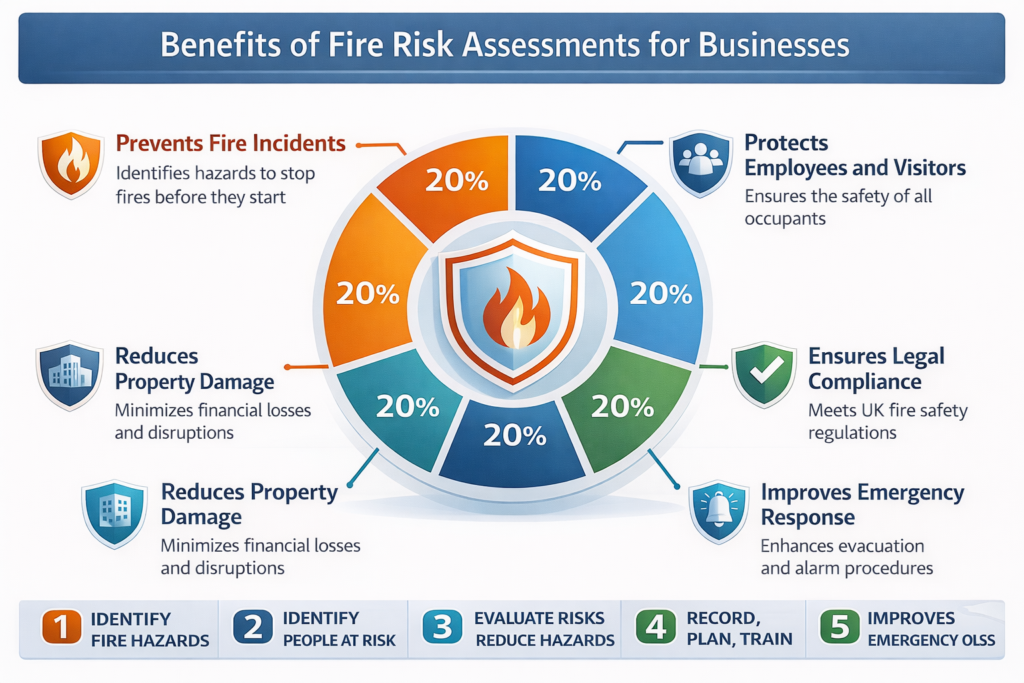
A well-conducted fire risk assessment provides several key benefits:
- Prevents fire incidents before they occur:
By identifying ignition sources, hazardous materials, and unsafe practices, businesses can take corrective actions early, minimizing the risk of fire outbreaks. - Protects employees, visitors, and customers:
Ensuring the safety of all occupants is a primary responsibility. A fire risk assessment helps establish clear safety procedures, reducing the risk of injury or loss of life during an emergency. - Reduces property damage and financial losses:
Fires can cause extensive damage to buildings, equipment, and inventory. Implementing effective fire prevention and control measures helps limit potential damage and avoid costly disruptions to operations. - Ensures compliance with UK fire safety legislation:
Businesses are legally required to conduct fire risk assessments under the Regulatory Reform (Fire Safety) Order 2005. Compliance not only avoids legal penalties but also demonstrates a commitment to maintaining high safety standards. - Improves emergency response and evacuation planning:
A thorough assessment ensures that evacuation routes, alarm systems, and emergency procedures are clearly defined and effective, enabling a swift and coordinated response in the event of a fire.
Overall, fire risk assessment is not just a legal obligation—it is a strategic investment in workplace safety, operational continuity, and long-term business protection.
Fire Risk Assessment Legal Requirements in the UK
In the United Kingdom, conducting a fire risk assessment is a statutory requirement under the Regulatory Reform (Fire Safety) Order 2005, which serves as the primary legislation governing fire safety in non-domestic premises. This law places a legal duty on the designated “responsible person” to ensure that adequate fire safety measures are in place to protect all occupants and reduce the risk of fire-related incidents.
The responsible person—typically the employer, business owner, landlord, or premises manager—is accountable for managing fire safety within the workplace. This responsibility involves taking a proactive and systematic approach to identifying risks, implementing control measures, and maintaining a safe environment at all times.
Key legal responsibilities include:
- Conducting a comprehensive fire risk assessment:
Carrying out a thorough and documented evaluation of the premises to identify potential fire hazards and assess the level of risk. - Identifying fire hazards and individuals at risk:
Recognising sources of ignition, fuel, and oxygen, as well as identifying employees, visitors, contractors, and vulnerable persons who may be affected. - Implementing appropriate fire safety measures:
Putting in place effective control measures such as fire detection systems, firefighting equipment, safe storage practices, and clear escape routes. - Maintaining fire detection and protection systems:
Ensuring that alarms, smoke detectors, fire extinguishers, and sprinkler systems are regularly inspected, tested, and fully operational. - Providing adequate fire safety training:
Ensuring that all employees are properly trained in fire prevention, emergency procedures, and evacuation protocols. - Reviewing and updating the fire risk assessment regularly:
Keeping the assessment up to date, particularly when there are changes to the workplace, processes, or occupancy, or following any fire-related incidents.
Failure to comply with these legal obligations can result in serious consequences, including substantial fines, enforcement notices, prosecution, and, in severe cases, business closure. Therefore, maintaining compliance with fire safety legislation is essential not only for legal protection but also for safeguarding lives and ensuring business continuity.
The 5 Steps of Fire Risk Assessment
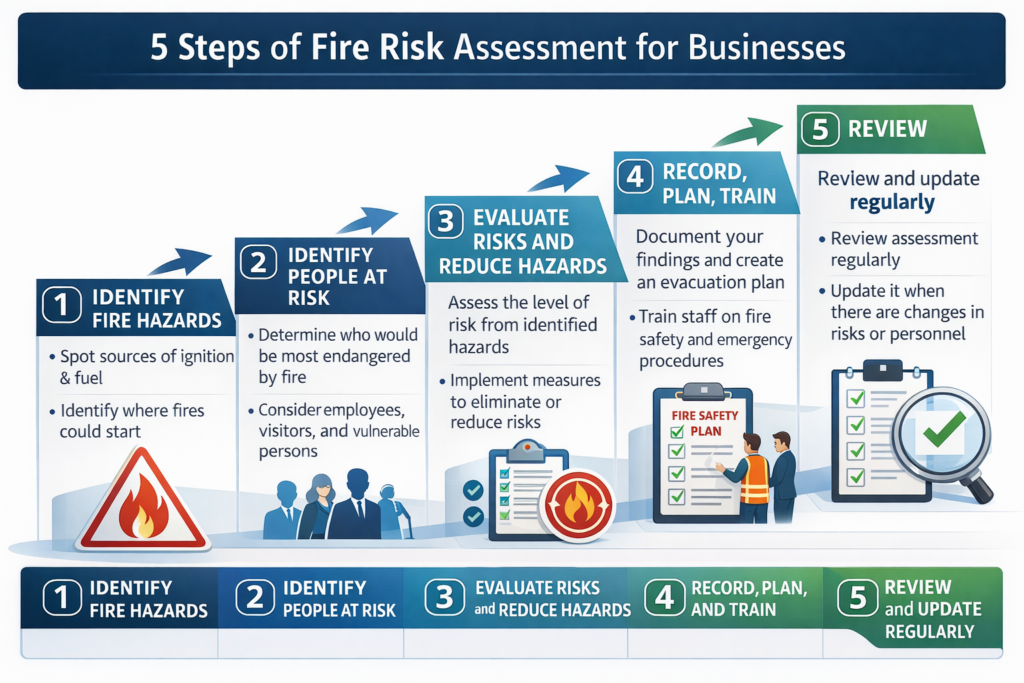
1. Identify Fire Hazards
The first and most important step in a fire risk assessment is to identify all potential fire hazards within the workplace. This requires a detailed examination of the environment to detect sources of ignition, materials that could fuel a fire, and elements that support combustion, such as oxygen.
A comprehensive inspection should cover all areas of the premises, including workspaces, storage areas, equipment zones, and high-risk locations. Early identification of hazards enables businesses to implement preventive measures and reduce the likelihood of fire incidents. To explore common workplace fire risks and learn more about hazard identification, see our detailed guide on Fire Hazards.
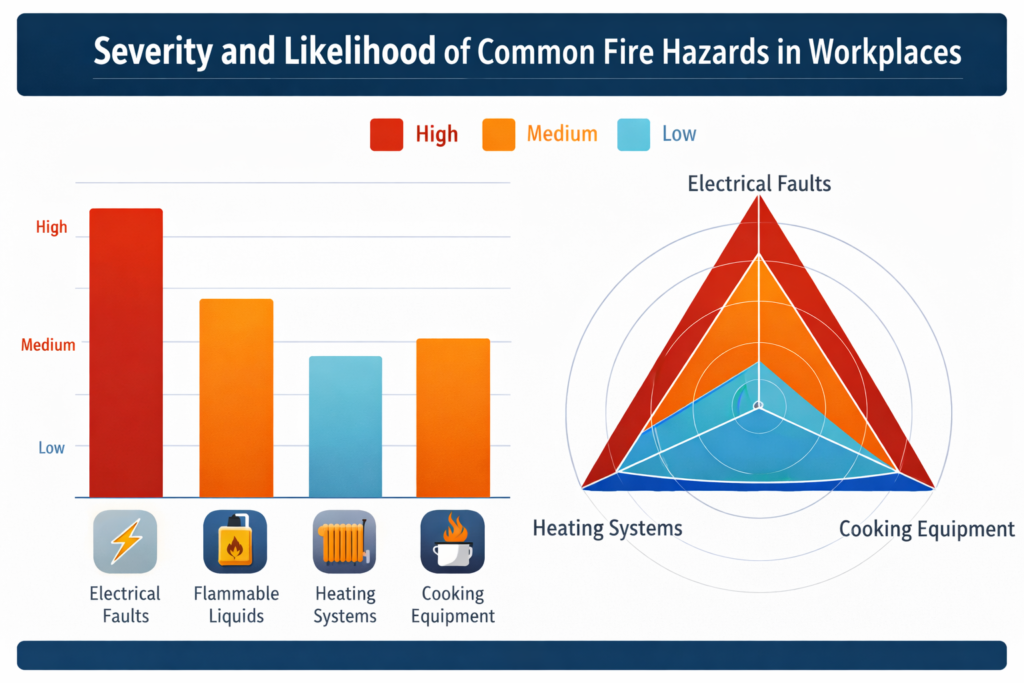
Common fire hazards found in workplaces include:
- Electrical equipment and faulty wiring:
Overloaded circuits, damaged cables, poorly maintained appliances, and outdated electrical systems can easily become ignition sources if not properly managed. - Flammable liquids and chemicals:
Substances such as fuels, solvents, cleaning agents, and industrial chemicals can ignite quickly, especially if stored or handled incorrectly. - Heating systems and machinery:
Boilers, heaters, and industrial machinery can generate high temperatures and may pose a fire risk if not regularly inspected and maintained. - Cooking equipment:
In environments such as kitchens or food preparation areas, cooking appliances are a leading cause of workplace fires due to overheating, grease buildup, or unattended use.
In addition to these, businesses should also consider other potential hazards such as combustible waste, paper storage, open flames, smoking areas, and poor housekeeping practices. By systematically identifying all possible fire hazards, organizations can lay the foundation for an effective fire prevention strategy and reduce the likelihood of fire incidents.
2. Identify People at Risk
The second step in a fire risk assessment is to identify all individuals who may be at risk in the event of a fire. This involves considering not only those who are regularly present on the premises but also anyone who may be temporarily or occasionally on-site. Understanding who could be affected is essential for developing effective evacuation procedures and ensuring that appropriate safety measures are in place for all occupants.
A comprehensive assessment should take into account the location, number, and specific needs of individuals within the workplace, as well as how easily they can respond to an emergency situation.
Key groups to consider include:
- Employees and contractors:
These are the primary occupants of the workplace and may be exposed to fire risks during daily operations. Their roles, working hours, and proximity to high-risk areas should be carefully evaluated. - Visitors and customers:
Individuals who are unfamiliar with the premises may not know evacuation routes or emergency procedures. Clear signage, guidance, and communication systems are essential to ensure their safe exit during an emergency. - Vulnerable individuals (elderly, disabled, or those with mobility or sensory impairments):
Certain individuals may require additional assistance during evacuation. This includes people with limited mobility, hearing or visual impairments, or medical conditions. Personal Emergency Evacuation Plans (PEEPs) should be developed where necessary to ensure their safety.
| Group at Risk | Special Precautions / Evacuation Needs |
|---|---|
| Employees and Contractors | Familiarize with evacuation routes; trained in fire safety procedures |
| Visitors and Customers | Provide clear signage and guidance; staff assistance during evacuation |
| Vulnerable Individuals (elderly, disabled, mobility/sensory impairments) | Develop Personal Emergency Evacuation Plans (PEEPs); assign support personnel |
In addition to these groups, businesses should also consider lone workers, night staff, and individuals working in isolated or high-risk areas. By thoroughly identifying all people at risk, organizations can implement tailored safety measures, improve evacuation planning, and ensure that no one is overlooked in an emergency situation.
3. Evaluate Risks and Reduce Hazards
Once fire hazards and individuals at risk have been identified, the next step in a fire risk assessment is to evaluate the severity of each hazard and implement appropriate control measures to either eliminate or reduce the associated risks. This involves assessing both the likelihood of a fire occurring and the potential impact if it does, allowing businesses to prioritise actions based on risk level and ensuring resources are effectively allocated.
A structured and systematic approach ensures that all identified hazards are controlled through a combination of preventive measures, protective systems, and safe workplace practices. The objective is not only to minimise the probability of a fire starting but also to reduce its potential impact on people, property, and operations.
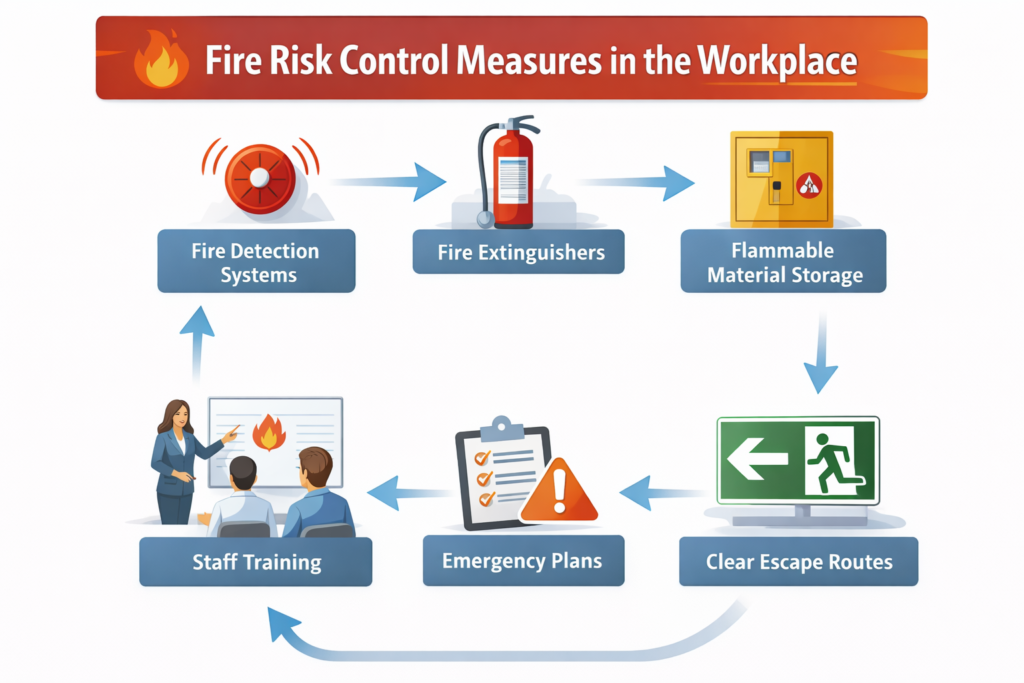
Key risk reduction measures include:
- Installing fire detection and alarm systems:
Early warning systems such as smoke detectors, heat detectors, and fire alarms are critical for alerting occupants promptly, enabling a swift and safe evacuation. For guidance on selecting, installing, and maintaining essential safety tools, refer to our comprehensive Fire Safety Equipment Guide. - Providing appropriate fire extinguishing equipment:
Fire extinguishers should be placed in accessible locations and matched to specific fire risks (e.g., electrical fires, flammable liquids, or general combustibles). Employees must receive training to operate these devices safely and effectively. - Ensuring safe storage and handling of flammable materials:
Flammable substances must be stored in designated areas, away from potential ignition sources, and handled according to safety guidelines to prevent accidental fires. - Maintaining clear and unobstructed escape routes:
Emergency exits, corridors, and evacuation pathways must be free of obstacles at all times. Signage should be clearly visible, and areas adequately lit to support efficient and safe evacuation during an emergency.
Additionally, businesses should implement regular inspection and maintenance schedules, enforce safety protocols, and promote good housekeeping practices to reduce fire risks further. By evaluating hazards carefully and applying comprehensive control measures, organizations can significantly minimise the likelihood of fire incidents and ensure a safer, more resilient workplace.
4. Record, Plan, and Train
After identifying hazards and implementing control measures, it is essential to formally document the findings, establish clear emergency procedures, and ensure that all personnel are adequately trained. This step is critical for maintaining legal compliance, improving organizational preparedness, and ensuring that everyone understands their roles and responsibilities in the event of a fire.
Proper documentation not only demonstrates compliance with fire safety regulations but also provides a reference for ongoing monitoring, audits, and future updates. At the same time, effective planning and training ensure that safety measures are not just in place, but also understood and practiced by all individuals within the workplace.
Key actions in this stage include:
- Recording fire risk assessment findings:
All identified hazards, risk evaluations, and implemented control measures should be clearly documented. This record should include details of the assessment process, actions taken, and any remaining risks that require ongoing monitoring. - Developing comprehensive evacuation plans:
Clear and well-structured evacuation procedures must be established, including designated escape routes, emergency exits, assembly points, and step-by-step instructions for safe evacuation. Plans should be tailored to the specific layout and risks of the premises. - Assigning roles and responsibilities (e.g., fire wardens):
Designated personnel such as fire wardens or marshals should be appointed to manage evacuation procedures, assist occupants, and coordinate with emergency services. Their roles must be clearly defined and communicated. - Providing fire safety training and awareness:
All employees should receive appropriate fire safety training, including how to respond to alarms, use firefighting equipment, and follow evacuation procedures. Regular refresher training and fire drills should be conducted to reinforce knowledge and ensure readiness.
By effectively recording information, planning emergency procedures, and training staff, businesses can create a well-prepared and coordinated response system that enhances safety and minimizes the impact of fire incidents.
5. Review and Update Regularly
A fire risk assessment is not a one-time exercise; it must be continuously reviewed and updated to ensure it remains accurate, relevant, and effective. Workplaces are dynamic environments where changes in operations, staffing, equipment, or layout can introduce new fire risks. Regular reviews are therefore essential to maintain compliance with fire safety regulations and to ensure that all control measures remain appropriate and effective.
An ongoing review process allows businesses to identify gaps, address emerging hazards, and improve existing safety procedures. It also ensures that fire safety measures evolve alongside the organization, supporting long-term risk management and workplace safety.
Fire risk assessments should be reviewed under the following circumstances:
- On a regular basis (annually or as required):
Periodic reviews help ensure that the assessment remains up to date and continues to reflect current workplace conditions and risks. - Following significant workplace changes:
Any changes to the premises, such as new equipment, modifications to layout, introduction of new processes, or changes in workforce size, may alter fire risks and require reassessment. - After fire incidents or near-misses:
Any fire-related incident, no matter how minor, should trigger an immediate review to identify causes, address weaknesses, and prevent recurrence. - When new hazards are identified:
If new risks emerge during routine operations or inspections, the assessment should be updated promptly to include appropriate control measures.
By regularly reviewing and updating fire risk assessments, businesses can ensure ongoing compliance, strengthen their fire safety strategy, and maintain a safe and well-prepared working environment.
Real Example of Fire Risk Assessment in a Workplace
Understanding how fire risk assessments are applied in real-world scenarios helps businesses recognise potential hazards and implement effective control measures. The following examples demonstrate how different workplace environments can identify risks and take proactive steps to improve fire safety.
Office Environment Scenario
In a typical office setting, a fire risk assessment identifies overloaded electrical sockets and poorly managed electrical equipment as a significant fire hazard. Multiple devices—such as computers, printers, and chargers—are connected to a limited number of outlets, increasing the risk of overheating and electrical faults.
To reduce this risk, the organization implements several control measures. These include upgrading the electrical infrastructure to handle higher loads, redistributing equipment to avoid overloading circuits, and installing surge protectors to safeguard against power fluctuations. Regular inspection and maintenance of electrical systems are also introduced to ensure ongoing safety.
In addition to technical improvements, employees receive fire safety training focused on the safe use of electrical equipment, recognizing warning signs such as overheating or unusual smells, and responding appropriately in emergency situations. Clear evacuation procedures are established, and regular fire drills are conducted to ensure that all staff can exit the building safely and efficiently in the event of a fire.
Warehouse Environment Scenario
In a warehouse environment, where large quantities of goods and materials are stored, a fire risk assessment identifies the improper storage of flammable substances as a major hazard. Items such as chemicals, packaging materials, and combustible goods are found to be stored too close to potential ignition sources or without adequate containment.
To address this risk, the business implements strict storage protocols, including the use of designated fire-resistant storage areas and approved containers for hazardous materials. Flammable substances are clearly labelled and separated from ignition sources, and access to these areas is controlled to minimize risk.
Additional fire protection measures are introduced, such as installing appropriate fire extinguishers suited to the specific risks, implementing fire detection and alarm systems, and ensuring that emergency exits and escape routes remain unobstructed at all times. Staff members are trained in safe handling procedures, emergency response actions, and the correct use of firefighting equipment.
Regular inspections and audits are carried out to ensure compliance with safety standards and to identify any new or emerging risks. As a result, the warehouse significantly reduces the likelihood of fire incidents while improving overall safety and emergency preparedness.
These examples highlight how a structured fire risk assessment enables businesses to identify hazards, implement targeted solutions, and create safer working environments across different industries.
Fire Risk Assessment Checklist for Businesses
A comprehensive fire risk assessment checklist is an essential tool for ensuring that all key fire safety measures are in place and functioning effectively. It enables businesses to systematically review their premises, identify any gaps in safety provisions, and maintain compliance with UK fire safety regulations. Regular use of a structured checklist also supports ongoing monitoring, helps prevent potential hazards, and ensures that the workplace remains prepared for emergency situations.
The following checklist outlines the fundamental elements that every business should evaluate as part of its fire safety management process:
- Fire detection and alarm systems installed and regularly tested:
Ensure that smoke detectors, heat detectors, and fire alarm systems are properly installed in all necessary areas. These systems should be tested routinely to confirm they are fully operational and capable of providing early warning in the event of a fire. - Fire extinguishers provided, correctly located, and well maintained:
Appropriate types of fire extinguishers should be available based on identified risks (e.g., electrical, flammable liquids, or general combustibles). They must be easily accessible, clearly labelled, and subject to regular inspection and servicing. - Emergency exits clearly marked and unobstructed:
All escape routes and emergency exits should be clearly indicated with visible signage, adequately illuminated, and kept free from obstruction at all times to ensure safe and efficient evacuation. - Evacuation procedures and emergency plans established:
A clear and well-communicated evacuation plan should be in place, including designated assembly points, escape routes, and step-by-step instructions for occupants during an emergency. - Staff trained in fire safety procedures:
Employees should receive appropriate fire safety training, including awareness of fire risks, use of firefighting equipment, and understanding of evacuation protocols. Regular refresher training should also be provided. - Fire drills conducted on a regular basis:
Routine fire drills should be carried out to test the effectiveness of evacuation procedures, improve response times, and ensure that all occupants are familiar with emergency protocols. - Electrical systems inspected and maintained:
All electrical installations and equipment should be regularly inspected by qualified personnel to identify faults, prevent overheating, and reduce the risk of electrical fires. - Flammable materials stored and managed safely:
Hazardous and combustible substances should be stored in designated areas, away from ignition sources, and handled in accordance with safety guidelines to minimize fire risk.
| Safety Measure | Description | Check |
|---|---|---|
| Fire Alarms | Installed and tested regularly | ☐ |
| Fire Extinguishers | Accessible and maintained | ☐ |
| Emergency Exits | Clear, marked, and unobstructed | ☐ |
| Evacuation Plans | Established with assembly points | ☐ |
| Staff Training | Employees trained in fire safety | ☐ |
| Fire Drills | Conducted regularly | ☐ |
| Electrical Inspection | Systems checked for faults | ☐ |
| Safe Storage of Flammables | Stored away from ignition sources | ☐ |
By consistently applying this checklist, businesses can strengthen their fire safety practices, ensure regulatory compliance, and create a safer working environment for employees, visitors, and all occupants.
Common Mistakes in Fire Risk Assessment
While conducting a fire risk assessment is a legal and essential responsibility, many businesses fail to implement it effectively due to common but avoidable mistakes. These errors can significantly increase the likelihood of fire incidents, compromise workplace safety, and lead to non-compliance with fire safety regulations. Recognising and addressing these shortcomings is crucial for ensuring a robust and reliable fire safety strategy.
The following are some of the most common mistakes businesses should avoid:
- Overlooking minor fire hazards:
Small or seemingly insignificant risks—such as overloaded sockets, cluttered storage areas, or poor housekeeping—are often ignored. However, these minor hazards can quickly escalate into serious fire incidents if not addressed promptly. - Failing to review and update assessments regularly:
Fire risk assessments that are not updated to reflect changes in the workplace, such as new equipment, layout modifications, or operational changes, can become outdated and ineffective. Regular reviews are essential to maintain accuracy and compliance. - Inadequate staff training and awareness:
Even with the best safety systems in place, a lack of proper training can lead to confusion and delayed responses during emergencies. Employees must be trained to recognise fire risks, follow evacuation procedures, and use firefighting equipment correctly. - Blocked or poorly maintained emergency exits:
Obstructed escape routes, locked exits, or unclear signage can prevent safe evacuation during a fire. All emergency exits must remain accessible, clearly marked, and regularly inspected. - Lack of proper documentation and record-keeping:
Failure to document fire risk assessments, safety measures, and training records can result in non-compliance with legal requirements. Proper documentation is essential for audits, inspections, and continuous improvement of fire safety practices.
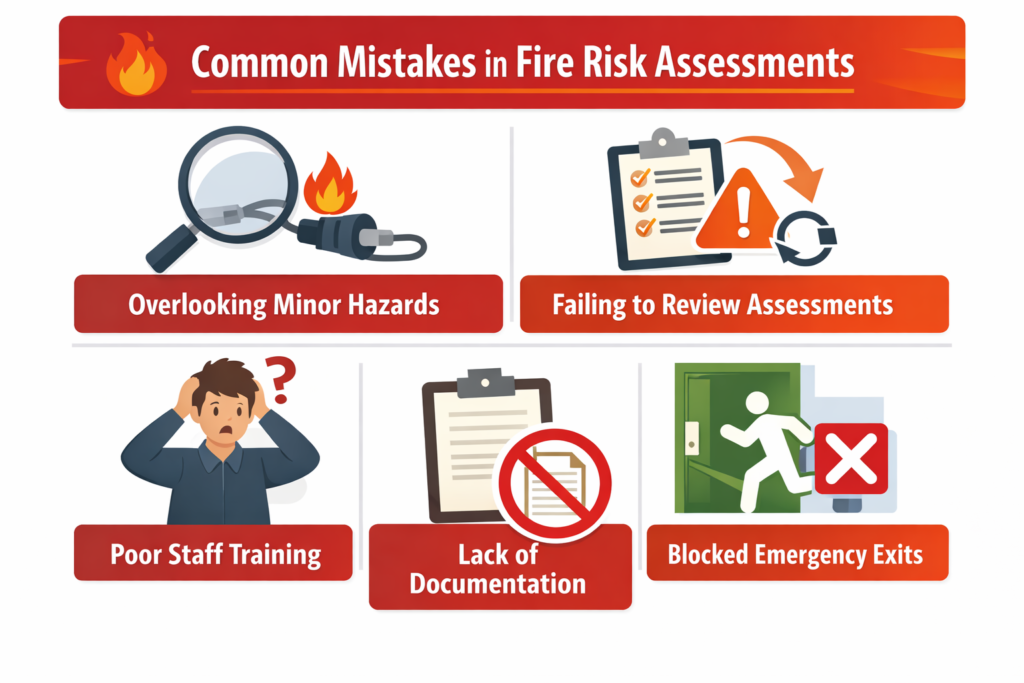
By avoiding these common mistakes, businesses can enhance the effectiveness of their fire risk assessments, improve overall safety standards, and ensure full compliance with fire safety regulations.
Why Fire Safety Training is Essential for Risk Assessment
While a fire risk assessment is essential for identifying potential hazards and implementing preventive measures, it is only one part of an effective fire safety strategy. Fire safety training plays an equally important role by ensuring that employees and occupants understand how to respond appropriately in the event of a fire. Without proper training, even the most comprehensive risk assessment may fail to deliver its intended outcomes during an emergency. Businesses can enhance this process by enrolling employees in professional Fire Safety and Risk Management courses to gain practical skills and certification.
Fire risk assessments provide the foundation by highlighting risks and establishing safety procedures, but fire safety training transforms this information into practical knowledge and actionable skills. It equips individuals with the confidence and competence needed to respond quickly, follow evacuation protocols, and use firefighting equipment correctly under pressure.
When combined, fire risk assessment and fire safety training create a comprehensive and integrated safety system that:
- Enhances hazard awareness and prevention:
Employees become more vigilant and capable of identifying potential fire risks in their daily activities, supporting ongoing risk reduction. - Improves emergency response and decision-making:
Trained individuals can act calmly and effectively, reducing panic and ensuring a coordinated response during fire incidents. - Ensures proper use of fire safety equipment:
Staff are equipped with the skills to safely operate fire extinguishers and other emergency equipment, helping to control small fires before they escalate. - Strengthens evacuation procedures:
Regular training and drills ensure that all occupants are familiar with escape routes, assembly points, and emergency protocols, enabling a swift and safe evacuation. - Supports legal compliance and organizational responsibility:
Providing fire safety training is often a regulatory requirement and demonstrates a commitment to maintaining a safe and compliant workplace.
Ultimately, fire risk assessment and fire safety training work together to create a safer, more prepared, and legally compliant workplace.
Conclusion
Fire risk assessment is a fundamental responsibility for every business and a critical component of effective workplace safety management. By following a structured and systematic step-by-step process, organizations can identify potential fire hazards, evaluate associated risks, and implement appropriate control measures to prevent incidents and minimise their impact.
In the context of UK fire safety regulations, maintaining a comprehensive and up-to-date fire risk assessment is not only a legal obligation but also a strategic approach to protecting employees, visitors, property, and overall business operations. Regular reviews and continuous improvement of fire safety measures ensure that businesses remain compliant while adapting to changes in the workplace environment.
When combined with effective fire safety training, fire risk assessments form a robust safety framework that enhances preparedness, improves emergency response, and reduces the likelihood of fire-related incidents. Ultimately, a proactive approach to fire risk management supports a safer working environment, safeguards valuable assets, and contributes to long-term operational resilience and business continuity.