
How to Become a Construction Site Manager in the UK: Step-by-Step Career Guide
Construction site management is a career route for people who want to combine practical construction knowledge with leadership, planning, health and safety, quality control and project coordination. A construction site manager plays a central role in turning drawings and project plans into completed construction work while keeping people, resources, schedules and standards under control.
So, how do you become a construction site manager in the UK?
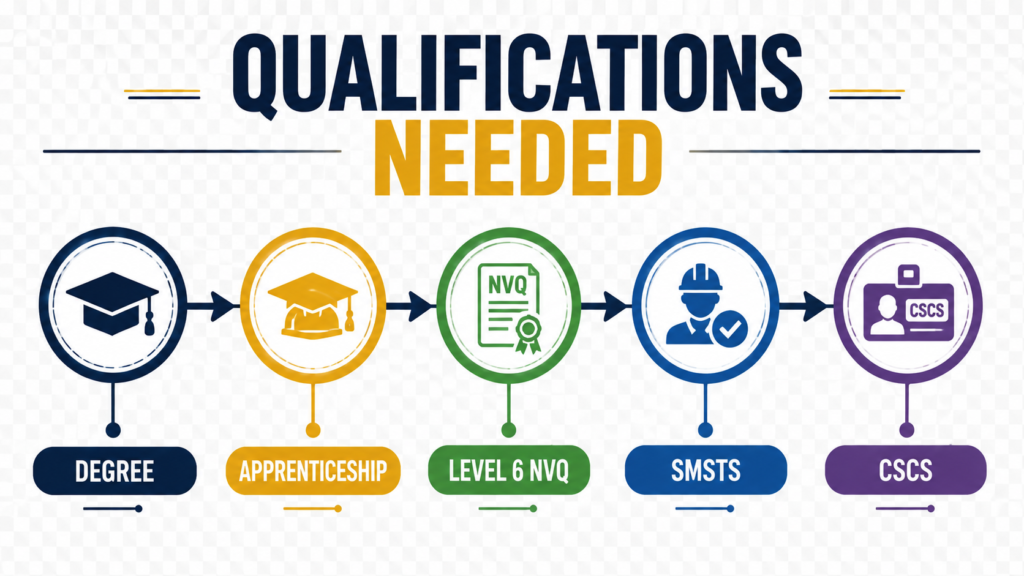
There is no single route. A person may progress from a construction trade or supervisory position, complete an apprenticeship, study construction management at college or university, or demonstrate workplace competence through a vocational qualification such as an NVQ. Experienced construction professionals may progress towards a Level 6 NVQ Diploma in Construction Site Management, while training such as SMSTS and the appropriate CSCS card can also be relevant to site-management roles.
The best pathway depends on existing experience, qualifications and career stage.
This step-by-step career guide explains what a construction site manager does, the qualifications and experience that may be required, routes into the profession, essential skills, salary expectations and opportunities for career progression in the UK.
What Is a Construction Site Manager?
A construction site manager is responsible for overseeing the day-to-day delivery of work on a construction site. The role involves coordinating workers and subcontractors, monitoring progress, maintaining health and safety standards, managing resources and helping ensure construction work meets drawings, specifications and quality requirements.
Site managers operate between strategic project planning and practical site delivery.
Depending on the size and complexity of a project, a site manager may report to a project manager, contracts manager or construction manager while supervising site supervisors, subcontractors, trades and other site personnel.
Site managers can work across residential construction, commercial developments, civil engineering, infrastructure, refurbishment, industrial facilities and specialist construction projects.
What Does a Construction Site Manager Do?
The responsibilities of a construction site manager can vary according to the project, employer and construction sector. However, the primary objective remains the same: deliver construction activities safely, efficiently and to the required standard.
Typical construction site manager responsibilities include:
- Planning and coordinating daily site activities
- Reviewing drawings, specifications and work programmes
- Organising labour, subcontractors, materials and equipment
- Monitoring construction progress against project schedules
- Conducting or coordinating site inspections
- Supporting compliance with health and safety requirements
- Identifying and managing site risks
- Monitoring workmanship and quality standards
- Coordinating different trades and subcontractors
- Maintaining site documentation and records
- Communicating with clients, designers and project teams
- Managing changes and resolving practical site problems
- Supporting budget and resource control
- Monitoring deliveries and site logistics
- Reporting project progress to senior management
Strong site management therefore requires considerably more than technical construction knowledge. Communication, organisation, leadership and decision-making are equally important.

Construction Site Manager vs Site Supervisor vs Construction Manager
These job titles are sometimes used interchangeably, but they can represent different levels of responsibility.
| Role | Main Focus | Typical Responsibilities | Career Level |
|---|---|---|---|
| Site Supervisor | Supervising specific activities or teams | Workforce supervision, safety, daily activities and productivity | Supervisory |
| Construction Site Manager | Overall day-to-day site delivery | Programme, subcontractors, safety, quality, resources and reporting | Management |
| Construction Manager | Wider construction delivery | Multiple teams, major packages, strategic coordination and senior management | Senior management |
| Project Manager | Overall project objectives | Programme, cost, client requirements, contracts and project delivery | Senior/project leadership |
The exact distinction depends on the employer and project.
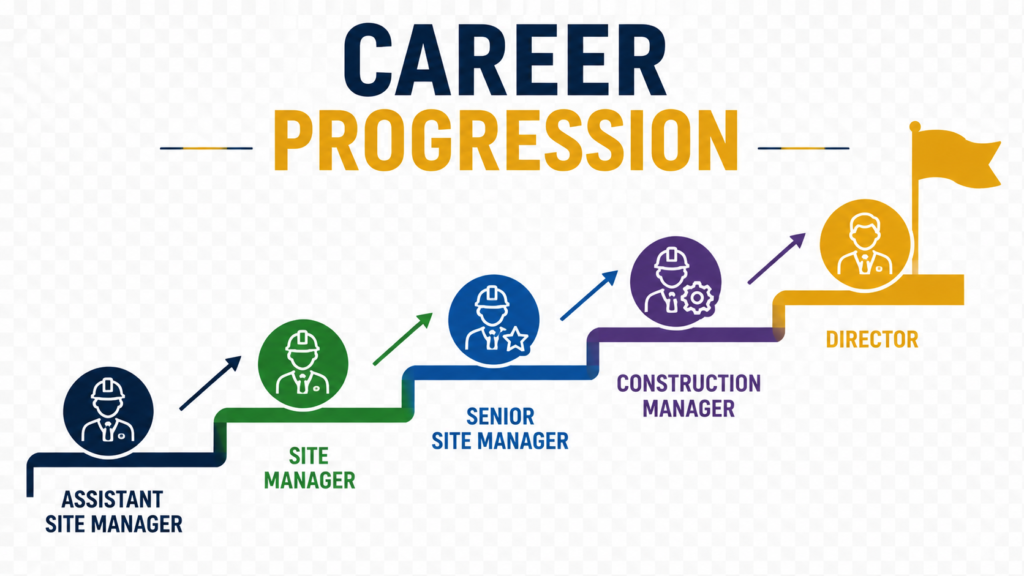
For many construction professionals, progression may look like:
Skilled Worker → Supervisor/Foreperson → Assistant Site Manager → Site Manager → Senior Site Manager → Construction Manager
Understanding these differences is important when selecting qualifications and applying for jobs.
What Qualifications Do You Need to Become a Site Manager in the UK?
There is no single qualification that every construction site manager must hold.
Employers may consider a combination of:
- Construction experience
- Vocational qualifications
- Higher education
- Apprenticeships
- Health and safety training
- Professional competence
- Leadership experience
- Appropriate CSCS card requirements
The most suitable route depends heavily on the person’s current career position.
Level 6 NVQ in Construction Site Management
A Level 6 NVQ Diploma in Construction Site Management can be particularly relevant for experienced construction professionals already performing site-management responsibilities.
An NVQ is competence based. Instead of relying solely on classroom examinations, it assesses whether a learner can demonstrate the required occupational competence through real workplace activities and evidence.
Evidence may include workplace documentation, professional discussions, observations, reports and other material demonstrating competence against the qualification requirements.
This makes the Level 6 NVQ route particularly suitable for experienced:
- Site managers
- Assistant site managers with sufficient responsibility
- Construction managers
- Project personnel undertaking relevant site-management duties
- Experienced supervisors progressing into management
Because workplace competence must be demonstrated, an NVQ should not be treated as a shortcut for someone with no relevant site experience.
SMSTS
The Site Management Safety Training Scheme (SMSTS) is a widely recognised construction management safety course associated with site-management responsibilities.
It develops understanding of areas such as health and safety responsibilities, risk management and safe management practices on construction sites.
SMSTS and an NVQ are not the same thing.
An NVQ assesses occupational competence, whereas SMSTS is focused on construction site management safety training. Depending on the role and employer, both may be relevant.
CSCS Black Manager Card
Experienced construction managers may also work towards the appropriate CSCS Manager card, commonly known as the Black Card.
Eligibility requirements should always be checked directly against current CSCS criteria because card schemes and accepted qualifications can change.
Holding the appropriate card can help demonstrate that a construction professional has achieved the relevant level of occupational qualification and health, safety and environmental knowledge required by the scheme.
Construction Management Degree
A university route is another established way to enter construction management.
Relevant subjects may include:
- Construction Management
- Construction Project Management
- Civil Engineering
- Building
- Quantity Surveying
- Construction Engineering
- Built Environment
Graduates commonly begin in positions such as graduate site manager, assistant site manager or another junior construction-management role before taking responsibility for larger projects.
A degree provides valuable theoretical knowledge, but practical site experience remains extremely important.
Construction Apprenticeships
An apprenticeship allows a person to combine structured study with workplace experience.
This route can be particularly attractive to people who want to develop practical construction-management skills while working.
Depending on the apprenticeship and employer, the learner may develop competence in areas including site operations, construction technology, health and safety, planning, leadership and project coordination.
Progressing From a Construction Trade
University is not the only pathway.
Many experienced site managers begin their careers as tradespeople or construction operatives.
A typical progression could be:
Construction Operative → Skilled Tradesperson → Supervisor/Foreperson → Assistant Site Manager → Site Manager
Practical experience can provide a strong understanding of how construction sites actually operate, including sequencing, productivity, trade coordination, safety and quality.
How to Become a Construction Site Manager in the UK: 7 Steps
There are several routes into construction site management, but the following seven-step roadmap covers the main stages.
Step 1: Choose the Right Route Into Construction
Start by identifying the pathway that matches existing experience.
| Current Position | Possible Route |
| School or college leaver | Apprenticeship or construction education |
| No construction experience | Entry-level training plus practical site experience |
| Skilled tradesperson | Supervisor/foreperson to management |
| Site supervisor | Develop management responsibility and relevant qualifications |
| University learner/graduate | Construction-related degree to graduate/assistant management |
| Experienced site professional | Competence-based qualification such as an appropriate NVQ |
There is no benefit in selecting a qualification simply because it sounds advanced. It needs to match actual career level and, for competence-based qualifications, existing workplace responsibilities.
Step 2: Develop Construction Knowledge
Site managers need to understand how construction work is planned and delivered.
Important areas of knowledge include:
- Construction methods
- Drawings and specifications
- Site logistics
- Building materials
- Construction sequencing
- Temporary works awareness
- Quality requirements
- Risk assessment
- Health and safety
- Environmental considerations
- Resource planning
- Subcontractor coordination
This knowledge can be developed through education, apprenticeships, vocational training and workplace experience.
Step 3: Gain Practical Site Experience
Practical experience is one of the most important elements of becoming a successful construction site manager.
Construction sites are dynamic working environments. Weather, deliveries, subcontractor availability, design changes and unexpected technical issues can affect progress.
Real site experience develops an understanding of:
Plan → Coordinate → Inspect → Record → Correct → Improve
A future site manager should understand not only what needs to happen, but also how different construction activities affect one another.
Step 4: Progress Into Supervisory Responsibility
The transition from worker to manager usually involves an intermediate stage.
This might be a position such as:
- Team leader
- Chargehand
- Foreperson
- Site supervisor
- Works supervisor
- Assistant site manager
Supervisory experience develops the ability to coordinate people rather than focusing solely on individual tasks.
At this stage, communication becomes particularly important.
A supervisor may need to explain work requirements, monitor progress, challenge unsafe practices, coordinate activities and report problems to management.
Step 5: Complete Relevant Management Qualifications
Once sufficient responsibility and experience have been gained, appropriate management qualifications can support progression.
Depending on the pathway, these could include:
- Level 6 NVQ Diploma in Construction Site Management
- Construction management degree
- Higher education construction qualifications
- Relevant apprenticeship
- SMSTS
- Specialist health and safety training
- Employer-specific management training
Qualifications should support demonstrated competence rather than replace practical experience.
Step 6: Obtain the Appropriate CSCS Card
Many UK construction sites use the CSCS card scheme as part of their competence and site-access arrangements.
A site manager should identify which card is appropriate for the role and confirm current requirements directly with CSCS.
For eligible construction managers, this may include the Black Manager Card.
Relevant occupational qualifications and the applicable CITB Health, Safety and Environment test may form part of the current application requirements.
Step 7: Apply for Assistant Site Manager or Site Manager Roles
The final stage is demonstrating competence to employers.
A strong construction-management CV should focus on achievements rather than simply listing duties.
Examples could include experience of:
- Coordinating subcontractors
- Managing site safety
- Delivering project milestones
- Conducting quality inspections
- Managing programmes
- Resolving site problems
- Leading teams
- Maintaining project records
- Controlling resources
- Communicating with clients
- Supporting successful project completion
For someone moving into management for the first time, an assistant site manager position can provide a valuable bridge between supervision and full site-management responsibility.
Can You Become a Site Manager Without a Degree?
Yes. A university degree is not the only route into construction site management in the UK.
Experienced construction professionals can progress through practical site roles, supervision, vocational qualifications and management experience.
A common non-degree pathway is:
Trade/Construction Role → Supervisor → Assistant Site Manager → Level 6 NVQ/Relevant Competence Route → Site Manager
This route can be particularly appropriate for people who already have substantial practical construction experience.
However, the best pathway depends on the employer, project and individual circumstances.
Some employers may prefer degree-qualified candidates for graduate management programmes, major projects or particular technical positions.
Can You Become a Construction Site Manager With No Experience?
It is possible to start the career journey with no construction experience, but moving directly into full site-management responsibility is generally unrealistic.
Site managers make decisions that affect safety, programme, quality, people and project performance. Practical understanding is therefore extremely important.
Someone starting from zero may progress through:
Education or Apprenticeship → Site Experience → Junior/Supervisory Role → Assistant Site Manager → Site Manager
The aim should be to build competence progressively rather than collect management certificates without practical experience.
Degree vs NVQ vs Apprenticeship: Which Route Is Best?
Each route serves a different type of career situation.
| Route | Best Suited To | Learning Approach | Main Advantage |
| Degree | New entrants and academic learners | University-based | Broad technical and management knowledge |
| Level 6 NVQ | Experienced construction professionals | Workplace competence | Recognises demonstrated occupational competence |
| Apprenticeship | New entrants wanting employment and training | Work + structured learning | Builds experience while studying |
| Trade-to-management route | Experienced tradespeople | Workplace progression | Strong practical construction knowledge |
There is no universally “best” option.
The right question is:
Which route matches the learner’s existing experience and intended job?
Someone already managing construction activities may benefit more from a competence-based route than restarting through full-time university study.
Someone leaving school with little site experience may benefit more from an apprenticeship or structured education.
How Long Does It Take to Become a Construction Site Manager?
There is no fixed timeframe.
A person entering construction with no experience may need several years to develop sufficient technical knowledge, site experience and management competence.
An experienced supervisor may progress considerably faster because much of the necessary practical knowledge has already been developed.
The timeline depends on:
- Existing qualifications
- Construction experience
- Current role
- Level of responsibility
- Employer opportunities
- Selected qualification
- Type and complexity of construction projects
Be cautious of claims suggesting that a short course alone can turn someone with no construction experience into a competent site manager.
Construction management is fundamentally a responsibility-based profession.
Essential Skills Every Construction Site Manager Needs
Qualifications can demonstrate knowledge and competence, but effective management also depends on practical skills.
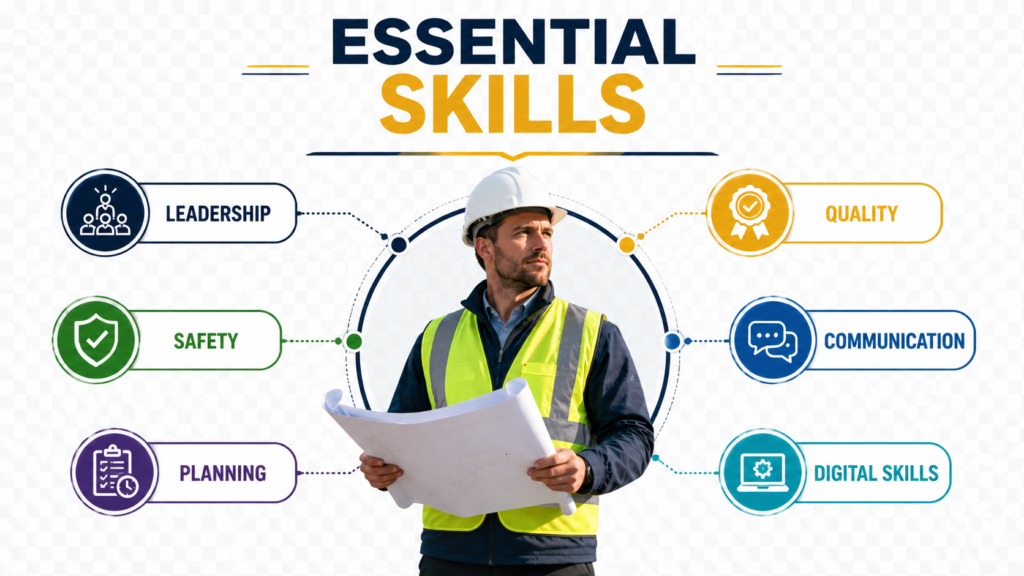
Leadership
Site managers need to provide direction, establish expectations and ensure teams understand project priorities.
Leadership also means being willing to make difficult decisions when safety, quality or programme performance is at risk.
Communication
A site manager communicates with multiple groups, including:
- Clients
- Designers
- Engineers
- Subcontractors
- Supervisors
- Trades
- Suppliers
- Senior management
Information needs to be accurate, timely and appropriate for the audience.
Planning and Organisation
Construction projects contain interconnected activities.
Poor coordination in one area can delay several others.
Site managers therefore need to understand work sequencing, labour requirements, material availability and programme priorities.
Health and Safety Awareness
Site managers have significant responsibilities within the construction environment.
They need strong awareness of risk management, safe systems of work, site rules and relevant health and safety requirements.
Problem-Solving
Construction projects rarely proceed without challenges.
Possible problems include:
- Delayed materials
- Design changes
- Labour shortages
- Access restrictions
- Quality defects
- Plant breakdowns
- Adverse weather
- Programme conflicts
A strong manager identifies the issue, assesses its impact and coordinates an appropriate response.
Quality Management
Completing work quickly is not enough.
Construction must also satisfy drawings, specifications, contractual requirements and applicable standards.
Site managers therefore need to recognise poor workmanship early and ensure corrective action is taken.
Commercial Awareness
Site decisions can affect cost.
Managers benefit from understanding how labour productivity, waste, delays, variations, rework and inefficient sequencing can affect overall project performance.
Digital Skills
Modern construction management increasingly involves digital tools.
Site managers may use software and mobile platforms for:
- Drawings
- Document control
- Progress reports
- Inspections
- Snagging
- RFIs
- Safety records
- Site diaries
- Programme monitoring
- Photographic evidence
Digital competence is therefore becoming an increasingly valuable management skill.
A Typical Day in the Life of a Construction Site Manager
No two construction projects are identical, but a typical day may begin with reviewing planned activities, checking labour and subcontractor availability and confirming that critical work areas are ready.
Morning activities might include:
Brief Team → Review Programme → Inspect Work Areas → Coordinate Trades
During the day, the manager may review deliveries, attend progress meetings, inspect workmanship, resolve clashes between trades, respond to technical queries and monitor health and safety.
The day may finish with:
Record Progress → Review Issues → Update Documentation → Plan Tomorrow
This continual cycle of planning, monitoring and corrective action is central to effective site management.
Construction Site Manager Salary in the UK
Construction site manager salaries vary considerably according to experience, location, employer, project complexity and level of responsibility.
UK career information commonly places construction-management salaries from the high-£20,000s for some starting positions to around £60,000 or more for experienced professionals.
However, salary should never be treated as a fixed figure.
Factors affecting earnings include:
- Years of experience
- Qualifications
- Location
- Project value
- Construction sector
- Size of employer
- Management responsibility
- Specialist expertise
- Permanent vs contract employment
Senior site managers and construction managers working on complex projects may earn significantly more than junior or assistant managers.
Always use current vacancy and official career data when comparing salary expectations because construction-market rates change over time.
Where Can Construction Site Managers Work?
Construction site management skills are transferable across many areas of the built environment.
Potential sectors include:
Residential Construction
Housing developments, apartments and large residential schemes.
Commercial Construction
Offices, retail developments, hotels and mixed-use buildings.
Civil Engineering
Roads, bridges, drainage, utilities and major infrastructure.
Industrial Construction
Factories, warehouses, manufacturing facilities and specialist industrial projects.
Refurbishment
Renovation, fit-out, restoration and building improvement projects.
Public Infrastructure
Schools, hospitals, transport facilities and other public-sector developments.
Each environment requires core management competence, although technical requirements can vary considerably.
Career Progression After Becoming a Site Manager
Becoming a site manager does not have to be the final career step.
A typical progression route could be:
Other professionals may specialise instead.
Possible areas include:
- Health and safety
- Quality management
- Planning
- Project management
- Commercial management
- Temporary works
- Building services
- Sustainability
- Construction consultancy
Professional development can also include membership or chartered pathways through relevant professional bodies where eligibility requirements are met.
Common Mistakes When Trying to Become a Site Manager
Understanding what not to do can make career progression more efficient.
Collecting Certificates Without Building Experience
Qualifications are valuable, but site management requires practical competence.
A certificate cannot substitute for the ability to coordinate construction work under real project conditions.
Moving Into Management Too Quickly
Managing a construction site carries significant responsibility.
Developing experience through supervision or assistant management can create a stronger foundation.
Ignoring Communication Skills
Technical expertise alone does not make an effective manager.
A site manager spends substantial time communicating, negotiating, reporting and coordinating.
Focusing Only on Health and Safety
Safety is essential, but the role is broader.
A competent manager must balance:
Safety + Quality + Programme + People + Resources + Cost
Ignoring Digital Construction Skills
Digital drawings, inspection platforms, document-management systems and reporting tools are increasingly embedded in construction delivery.
Managers who cannot work effectively with digital information may find their career options restricted.
Failing to Document Experience
Workplace evidence can be important for competence-based qualifications and future employment.
Maintaining accurate records of projects, responsibilities and achievements can make later progression easier.
Is Construction Site Management a Good Career in the UK?
Construction site management can be a strong career option for people who enjoy practical problem-solving, leadership and responsibility.
Potential advantages include:
- Clear progression opportunities
- Transferable management skills
- Work across different construction sectors
- Opportunities to manage increasingly complex projects
- Professional development pathways
- Strong earning potential with experience
However, the role can also be demanding.
Construction managers may deal with tight programmes, changing project conditions, significant safety responsibilities and pressure to coordinate multiple stakeholders.
The career is therefore best suited to people who are comfortable making decisions and managing responsibility in a dynamic working environment.
Construction Site Manager Career Roadmap
For someone researching how to become a construction site manager in the UK, the pathway can be simplified into the following roadmap:

The exact journey will differ between individuals, but experience, competence and continuous professional development remain central throughout.
Practical Checklist for Aspiring Construction Site Managers
Before applying for site-management roles, consider whether the following areas have been developed:
- Relevant construction experience
- Understanding of construction methods
- Ability to interpret drawings and specifications
- Health and safety knowledge
- Experience coordinating workers or subcontractors
- Planning and organisational skills
- Quality-control awareness
- Appropriate management qualifications
- Relevant CSCS requirements
- Communication and leadership skills
- Digital construction skills
- Evidence of previous responsibilities and achievements
- Professionally structured construction CV
Where gaps exist, use them to build a personal development plan.
Conclusion
Becoming a construction site manager in the UK requires a combination of practical site experience, recognised qualifications, technical knowledge and strong leadership skills. Whether progressing from a trade or supervisory role, completing an apprenticeship, studying construction management or following an NVQ pathway, the right route depends on individual experience and career goals. By developing competence in health and safety, project coordination, quality, communication and resource management, aspiring site managers can build a strong foundation for long-term progression into senior site management, construction management and project leadership roles across the UK construction industry.