
High-Impact Stakeholder Perspective Role-Play Method
Table of Contents
Introduction
In community development, you will rarely find a community where everyone agrees. Your job is often to mediate between a Council trying to save money, a Developer trying to make money, and Residents trying to protect their neighborhood.
The “Stakeholder Perspective” Role-Play trains you in Empathy Mapping. You must be able to “code-switch”—to step into the shoes of different stakeholders to anticipate their reactions and negotiate effectively. If you cannot understand why a stakeholder is angry, you cannot manage the conflict.
Knowledge Guide
To engage stakeholders, you must first identify them and understand what drives them. In the UK context, we map them into four main categories.
1. The Players: A “Who’s Who” in Community Development
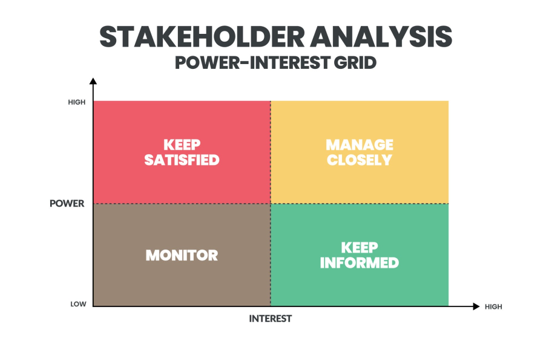
| Stakeholder Group | Who are they? | Primary Motivation (What they want) | Primary Fear (What they avoid) |
| Service Users / Residents | The people living in the area. | Quality of Life: Safety, affordable housing, green spaces, and social connection. | Displacement: Being priced out, losing local services, or change being “done to them” (loss of control). |
| Statutory Bodies | Local Authorities (Councils), NHS, Police. | Statutory Duty & Efficiency: Meeting legal targets (e.g., Housing targets) and balancing tight budgets. | Risk & Waste: Legal challenges, bad press, or wasting public money. |
| Private Sector | Property Developers, Local Businesses. | Profit & Viability: Return on investment (ROI). Sometimes CSR (Corporate Social Responsibility). | Delays: Protests or planning permission blocks that cost money. |
| Third Sector (VCS) | Charities, Faith Groups, Social Enterprises. | Mission Impact: Delivering specific outcomes (e.g., reducing homelessness) and securing grants. | Funding Cuts: Losing the contract to deliver services. |
2. Diversity: The “Intersectionality” Filter
A community is not a single block. A competent practitioner applies an “Intersectionality Filter” to understand needs. This means recognizing that a person’s experience is shaped by multiple overlapping factors (Race, Class, Age, Disability).
- The Legal Baseline (Equality Act 2010): In the UK, you must legally consider if a change disproportionately affects those with Protected Characteristics.
- Example: A “Digital-Only” parking permit system might seem efficient to a 20-year-old student, but it may be discriminatory against an 80-year-old resident with visual impairment (Age + Disability).
3. Vocational Skill: Conflict Motivation Analysis
When a stakeholder shouts at a town hall meeting, they are usually expressing an Unmet Need.
- The Position: “I don’t want this youth center built here!”
- The Underlying Interest: “I am afraid of noise and anti-social behavior late at night.”
- Practitioner Role: Address the Interest (e.g., soundproofing, curfew), not just fight the Position.
Learner Task Template
Task 3: In Their Shoes
Instructions:
You are facilitating a consultation for a controversial new project. Read the scenario below. You must write a response from the perspective of three different stakeholders.
The Scenario: “The Library Digital Hub Conversion”
The Local Council has announced that the historic “St. Peters Community Library” will be downsized. The physical book collection will be reduced by 70% to make space for a new “Co-Working Tech Hub” for freelance creatives. The Council argues this will boost the local economy and save costs on book storage. The library will also move to “Staff-less Opening Hours” (entry via smartphone app only) for 4 days a week.
Your Task:
Adopt the persona of the specific stakeholder listed below. Answer the question: “How does this proposal affect your daily life/objectives, and what is your specific demand?”
(Write 3–4 sentences for each).
Persona 1: The Elderly Resident
- Profile: 78 years old, lives alone, no smartphone, visits the library daily for heat and social contact.
- Response (in character):
- [Learner types response here]
Persona 2: The Council Regeneration Officer
- Profile: Under pressure to cut the budget by 10% and tasked with stimulating local small businesses.
- Response (in professional tone):
- [Learner types response here]
Persona 3: The Working Mother (Low Income)
- Profile: Uses the library for free children’s books and homework club because she has no internet at home.
- Response (in character):
- [Learner types response here]
Learner Guidelines: How to Perform This Task
To get a high grade, your responses must demonstrate “Vocational Empathy.”
1. Don’t Caricature—Use “Valid Concerns”
- Bad Response (Elderly): “I hate computers and I hate change!” (Too simple).
- Good Response (Elderly): “This library is the only place I speak to people. If you require a smartphone app to enter, you are effectively banning me from the building. I come here for the ‘Warm Space’ scheme; where will I go if it is a tech hub?”
2. Use Professional “Buzzwords” for the Professional Role
- When writing as the Council Officer, use terms like:
- “Budget efficiency””Modernizing assets”
- “Economic stimulus”
- “Sustainable operating model”
3. Apply the “Equality Impact”
- For the Working Mother, highlight the Digital Divide. In the UK, not everyone has broadband.
- Hint: Mention “Digital Exclusion” or “Cost of Living” in her response.
Submission Guidelines
Evidence Reference: Written Response (Task 3)
- Format: Word Document.
- Structure: Use clear headings for each Persona.
- Length: Approx. 150 words per persona.
- Grading Criteria:
- Pass: You identify obvious complaints (e.g., “I am sad”).
- Merit/Distinction: You identify specific barriers (e.g., “The app-based entry system violates the Equality Act by excluding those without technology”).