
Advanced Ethical Red Flag Review for Risk Insights
Table of Contents
Introduction
In the UK voluntary sector, “Good Intentions” are not enough to secure funding. Funders (like the National Lottery or Local Councils) require proof of Impact and Sustainability.
A common failure in community development is the “Parachute Project”: professionals drop in, spend money, take photos, and leave. Six months later, the project is dead. The “Impact Scorecard” trains you to be an Evaluator who can distinguish between a superficial success and deep, sustainable change.
Part A: Knowledge Guide
Review the vocational standards for measuring success. You must learn to speak the language of “Outputs” and “Outcomes.”
1. Success Indicators: How do we know it worked?
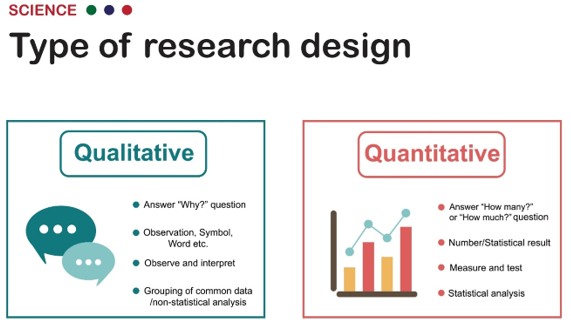
Competent practitioners gather two types of data to prove success. You need both for a valid report.
Quantitative Data (Hard Outcomes):
- What is it? Numbers, statistics, financial figures.
- Example: “We trained 50 residents.” “Crime reduced by 15%.”
- Vocational Use: Proves Value for Money to the accountant.
Qualitative Data (Soft Outcomes):
- What is it? Stories, quotes, changes in attitude, confidence levels.
- Example: “I feel less lonely now.” “The community feels safer.”
- Vocational Use: Proves Social Value and quality of life changes
2. The Sustainability Spectrum
Sustainability is not just about the environment. In Community Development, it refers to the project’s ability to survive without you.
| Type | Description | Vocational Rating |
| The “Quick Fix” (Relief) | Immediate aid (e.g., handing out food parcels). Necessary in crisis, but creates dependency if used long-term. | Low Sustainability |
| The “Service” (Maintenance) | A professional runs a service (e.g., a Council youth club). Good quality, but collapses instantly if the budget is cut. | Medium Sustainability |
| The “Empowered” (Development) | The community owns the asset and runs it (e.g., a Community Land Trust). It generates its own income or relies on volunteers. | High Sustainability |
3. Key Evaluation Questions (The “VfM” Check)
When evaluating, ask these three questions based on UK Treasury “Green Book” principles:
- Relevance: Did we solve the right problem? (Or did we build a playground when they wanted a job center?)
- Efficiency: Could we have done it cheaper? (Did we waste money?)
- Legacy (Exit Strategy): What happens when the grant money runs out?
Part B: Learner Task Template
Task 8: Project Evaluation
Instructions:
You are an external evaluator hired to review a completed project called “The Green-Space Initiative.”
Read the project summary below. You must critique it honestly.
- Assign a Sustainability Score (1–10).
- Write a ‘Reasoning Statement’ identifying exactly why it failed or succeeded.
Project Summary: “The Green-Space Initiative”
The Plan: To turn an empty plot of land on the Westbury Estate into a community garden to improve mental health.
The Action: The Community Officer applied for a £10,000 one-off grant. They hired professional landscapers to clear the land, plant expensive exotic flowers, and install benches. The Officer organized a grand opening attended by the Mayor.
The Current Status (6 Months Later): The grant money is finished. The exotic flowers have died because they needed daily watering and no money was left for the water bill. The gate is padlocked because no resident has a key (only the Officer had one). The site is now overgrown.
Your Evaluation:
1. Sustainability Score:
- Score: ______ / 10
2. Reasoning Statement (The Critique):
(Explain your score. Why did this project fail despite the £10,000 investment? Use the terms “Ownership,” “Maintenance,” and “Exit Strategy” in your answer.)
Learner Answer: [Type here]
3. The “Fix”:
(Suggest ONE thing the officer should have done differently at the start to ensure the garden survived.)
Learner Answer: [Type here]
Learner Guidelines: How to Perform This Task
To demonstrate professional competence, follow these tips:
1. Be Brutal on “Ownership”
- The scenario shows a classic “Done TO, not Done WITH” failure.
- The professionals did the work (Landscapers). The professionals held the power (Keys). The community was just an audience.
- Vocational Rule: If the community doesn’t hold the keys, it’s not Community Development; it’s just landscaping.
2. Analyze the Budget (The “Revenue” Trap)
- Capital Funding (building the thing) is easy to get.
- Revenue Funding (paying the water bill/maintenance) is hard to get.
- A competent officer never builds something unless they know who pays the bills next year. The failure here was a lack of Financial Planning for maintenance.
3. Distinguish Output vs. Outcome
- Output: They built a garden. (Success).
- Outcome: Improved mental health? (Fail – nobody can use it).
- Your score must reflect the Outcome, not the Output.
Submission Guidelines
Evidence Reference: Project Evaluation Report (Task 8)
- Format: Short report or scorecard format.
- Length: 150–200 words for the reasoning.
- Naming Convention: [Name]_Unit1_Task8_ImpactScorecard
- Assessment Criteria:
- Pass: You identify that the project failed because the money ran out.Merit: You explain that the failure was due to a lack of Community Ownership (nobody watered the plants) and poor Exit Strategy.
- Distinction: You reference the lack of Capacity Building—if the residents had been trained to garden, they could have maintained it themselves.