
Advanced Cause & Effect Investigator for Smart Analysis
Table of Contents
Introduction
When a community center closes or crime rises, it is rarely an isolated accident. It is usually the result of a chain reaction starting far away.
- The Amateur sees a closed door and says, “That’s sad.”
- The Professional sees a closed door and asks, “Did the Local Authority Grant Settlement decrease? Did inflation raise the heating bill?”
The “Cause & Effect” Investigator trains you to identify the “Golden Thread” of causality. You must learn to link Macro Factors (Government Policy/Economics) to Micro Outcomes (The daily life of a resident).
Knowledge Guide
Before you can solve a problem, you must understand its timeline. We use three concepts to investigate this.
1. The Chain Reaction (Macro → Meso → Micro)
Impact travels downwards. In the UK, the structure usually looks like this:
- Macro (The Trigger): A Global or National event.
- Example: The UK Government announces an “Austerity Budget” to reduce national debt.
- Meso (The Transmitter): The Local Authority (Council) or large Funders.
- Example: The Local Council receives less money from Central Government. They must cut “Discretionary Services” (things they don’t have to do by law, like youth clubs) to protect “Statutory Services” (things they must do, like waste collection).
- Micro (The Impact): The Neighborhood.
- Example: The local “Oakwood Youth Club” loses its £10,000 annual grant and closes.
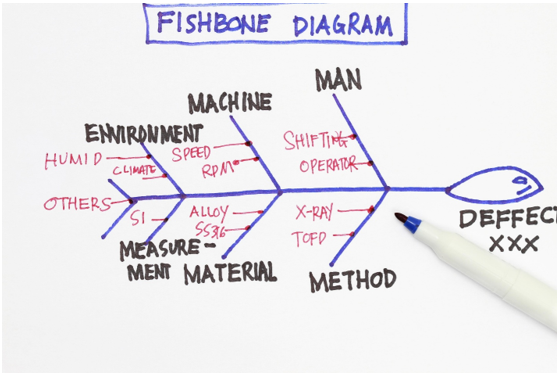
2. Root Cause Analysis (The “Why?” Game)
In vocational practice, we distinguish between the Symptom and the Root Cause.
- The Symptom: “Kids are hanging around the bus stop causing trouble.”
- The Root Cause: “The youth club closed last month, so they have nowhere else to go.”
- Vocational Rule: If you only treat the symptom (e.g., call the police), the problem returns. If you treat the root cause (re-open the club), the problem is solved.
3. Consequences of Inaction
What happens if we do nothing? We assess consequences in three areas:
- Social: Breakdown of trust, isolation, crime.
- Economic: Cost of vandalism, cost of emergency services.
- Political: Protests, petitions, loss of votes for local councilors.
Learner Task Template
Task 5: The Chain of Events Analysis
Instructions:
You are analyzing why the “Greenfield Community Kitchen” (a food bank and cooking school) is currently at risk of closure.
Using the Chain Reaction method, fill in the missing vocational steps below to connect the Global Start Event to the Local Final Outcome.
The Scenario:
The UK is experiencing a rapid rise in the cost of energy (Gas and Electricity).
Your Task:
Complete the flow chart by typing the correct vocational explanation in the gaps.
The Chain of Events Flowchart
🛑Start Event (Global/National):
Global fuel shortages lead to a 50% increase in energy caps for UK businesses and charities.
⬇️
Step 1: Impact on Resources (The Organisation):
(Explain what happens to the Community Kitchen’s operating budget. Mention “Overheads” or “Fixed Costs”.)
Learner Answer: [Type here]
⬇️
Step 2: Impact on Decision Making (The Management):
(The Kitchen cannot afford the new bills. What difficult choice does the management committee have to make regarding opening hours or food quality?)
Learner Answer: [Type here]
⬇️
Step 3: Impact on Service Users (The Community):
(The Kitchen reduces its service. How does this specifically affect the low-income families who rely on it for a warm meal?)
Learner Answer: [Type here]
⬇️
🛑Final Outcome (Consequences):
The Community Kitchen closes permanently.
- Identify one Social Consequence: [Type here]
- Identify one Health Consequence: [Type here]
Learner Guidelines: How to Perform This Task
To demonstrate Level 4 competency, follow these tips:
1. Use “Business” Language for Step 1
Don’t just say “They lose money.” Use vocational terms:
- Overheads: The costs to keep the lights on.
- Operational Budget: The money used to run the service.
- Deficit: When you spend more than you earn.
2. Connect the “Decision” to the “Value”
In Step 2, show the conflict. The management wants to help (Community Value), but they must pay bills (Economic Reality).
- Example Answer: “To avoid bankruptcy, the management decides to cut the ‘Hot Meal Service’ and only offer cold food parcels to save on gas.”
3. The Outcome Must Be Specific
For the final consequences, avoid vague phrases like “People are sad.”
- Social Consequence: “Loss of social cohesion—the kitchen was the only place these residents met.”
- Health Consequence: “Malnutrition risks increase for vulnerable families who relied on the service for their only hot meal.”
Submission Guidelines
Evidence Reference: Structured Flowchart Analysis (Task 5)
- Format: You may copy the text boxes above into a Word Document or create a simple diagram using Word shapes.
- Length: Each step requires 1–2 detailed sentences.
- Naming Convention: [Name]_Unit1_Task5_CauseEffect
- Assessment Criteria:
- Pass: You correctly identify that high bills lead to closure.
- Merit: You use correct terminology (e.g., “Operational Costs,” “Social Isolation”).
- Distinction: You clearly articulate the link between National economic pressure and Local social decline without skipping logical steps.