
Photo & Diagram Interpretation in Fire Safety
Knowledge Providing Task in Fire Safety: Linking Photo & Diagram Interpretation to Active Protection
Table of Contents
Task Purpose
The purpose of this task is to develop learners’ skills in observing, interpreting, and
analysing real-life site conditions or technical diagrams related to fire safety.
Learners will apply their knowledge of fire protection systems, hazard identification, and
regulatory requirements to identify non-compliances, assess risks, and recommend
corrective actions. This exercise enhances professional judgement and prepares
learners for on-site inspections or fire safety audits.
Learning Outcomes Covered
- Know how to identify and assess fire-related hazards and ensure the
implementation of adequate controls - Be able to understand and apply fire protection provisions
- Be able to determine the need for active fire protection systems and equipment
- Be able to ensure adequate facilities are in place to provide access to the Fire
Service
Task Scenario
You are a Fire Safety Officer assigned to inspect a large commercial building that has
recently undergone partial renovations. The building contains a mixture of office spaces,
storage rooms, and a cafeteria. The facility manager has raised concerns about the
adequacy of fire protection provisions following the renovation.
You are provided with the following photos and technical diagrams (Note: for the
purpose of this task, learners would receive actual images or diagrams in the
assessment pack):
Photo 1: Main corridor with emergency exit signs and fire extinguishers in view.
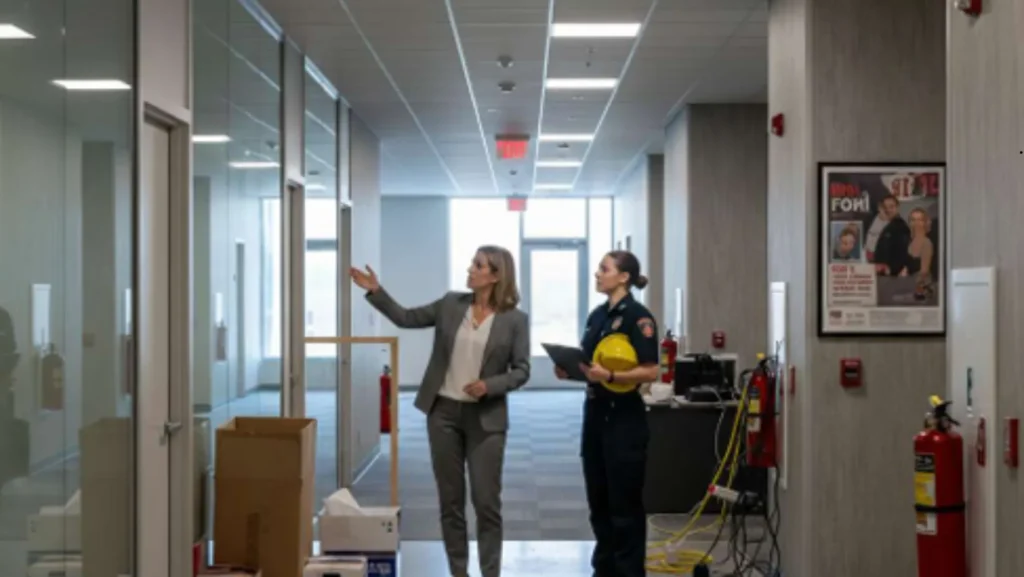
Photo 2: Ceiling-mounted smoke detectors in an office space.
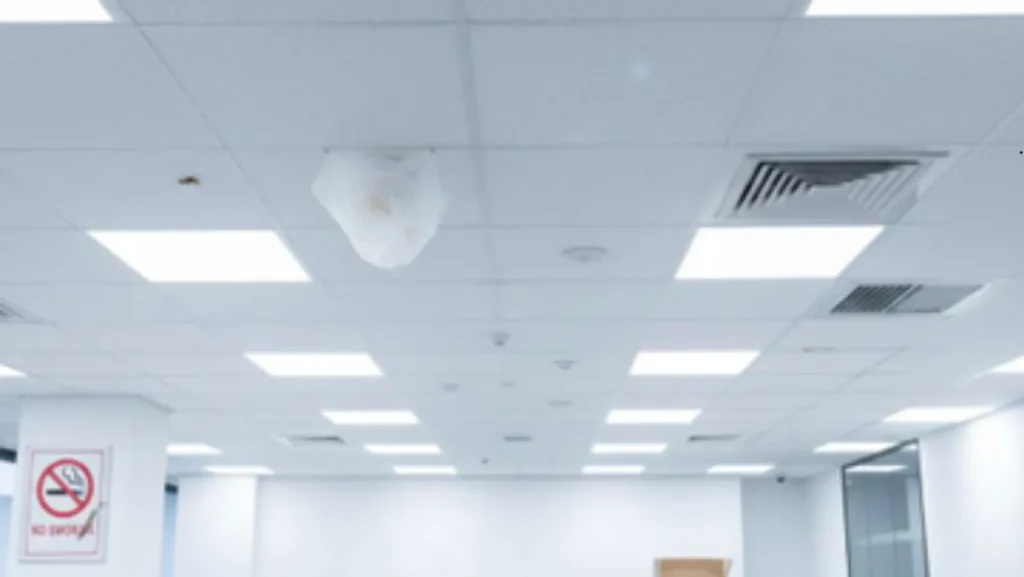
Photo 3: Sprinkler system network diagram showing pipe layout and coverage zones.
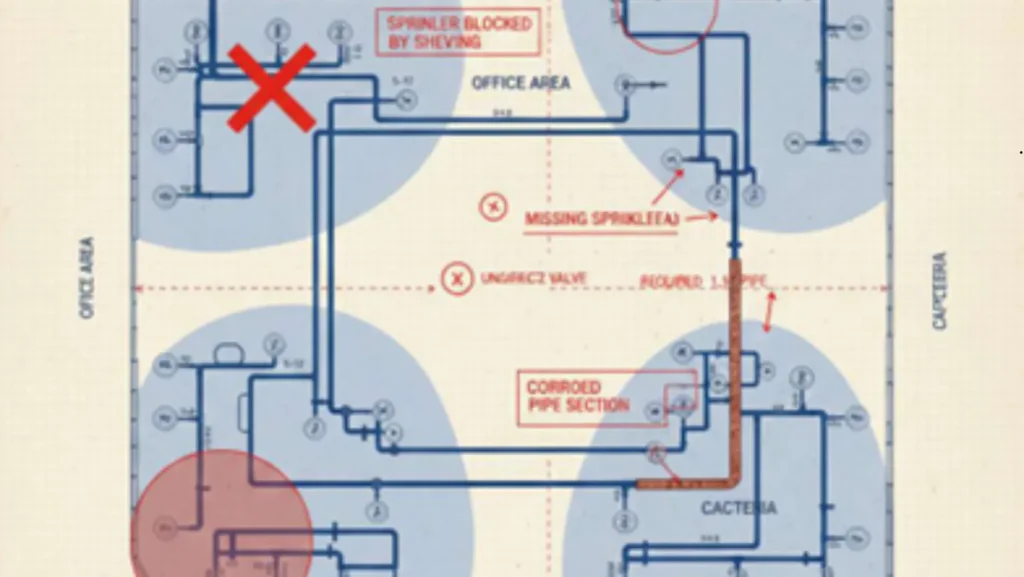
Photo 4: Kitchen area in the cafeteria showing a cooking range, wall-mounted fire
blanket, and suppression system.
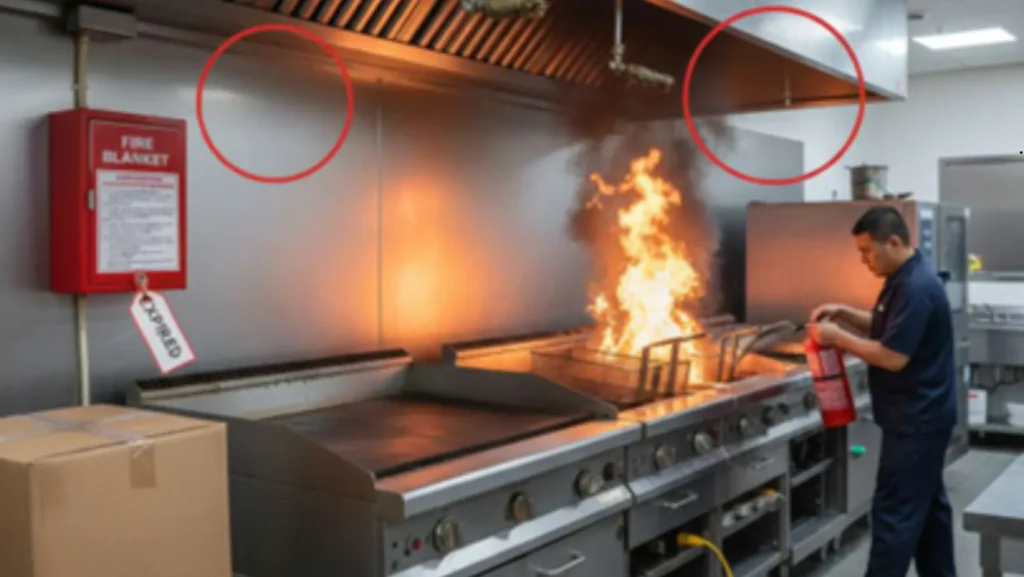
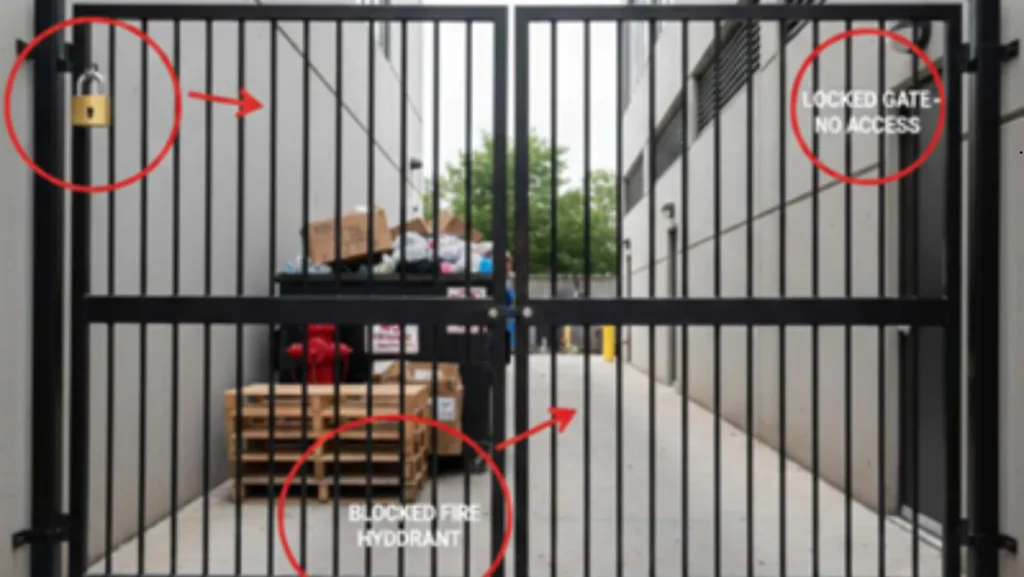
Photo 5: External access points for fire service vehicles, including a locked gate and
blocked hydrant.
Task Instructions
Using the provided images and diagrams:
1. Observation
o Carefully examine each photo and diagram for potential fire hazards,
defects, or non-compliance issues.
o Note any missing, obstructed, or improperly maintained fire protection
equipment.
2. Interpretation
o Relate your observations to the relevant fire safety standards and
guidance, e.g., BS 9999, Regulatory Reform (Fire Safety) Order 2005.
o Determine the potential risks associated with each hazard.
o Identify any gaps in active fire protection systems such as fire detection,
suppression, or alarm systems.
3. Recommended Corrective Actions
o For each identified hazard or non-compliance, propose specific,
actionable measures to mitigate risks.
o Include priority levels for corrective actions (high, medium, low).
o Suggest additional measures to improve fire safety where necessary, e.g.,
staff training, improved signage, or enhanced maintenance schedules.
Example Observation and Interpretation Table
| Photo / Diagram | Observation | Interpretation | Recommended Corrective Action | Priority |
| Photo 1 – Corridor | Fire extinguisher partially blocked by a cabinet | Could delay access in an emergency; non-compliant with BS 5306 | Relocate cabinet to clear path; ensure extinguisher visibility | High |
| Photo 2 – Office smoke detectors | Dust accumulation on detectors | May reduce sensitivity; risk of delayed fire detection | Schedule regular cleaning and maintenance; test weekly | Medium |
| Photo 3 – Sprinkler layout | Coverage gap in storage room | Potential fire spread; inadequate suppression | Extend sprinkler coverage to cover gap; confirm system hydraulics | High |
| Photo 4 – Kitchen area | Fire suppression system appears outdated | May fail during kitchen fire; non compliant | Service or replace suppression system; provide staff training | High |
| Photo 5 – External access | Fire hydrant blocked by delivery vehicle | Delays fire service response | Clear access immediately; install signage to prevent obstruction | High |
Submission Requirements
- Completed Observation and Interpretation Table for all provided
photos/diagrams. - Brief written report summarising:
o Key hazards identified
o Overall adequacy of active fire protection provisions
o Recommendations for improvement - Reference to applicable standards and regulations used in your assessment.
Purpose of the Task
- To enhance visual and analytical skills in fire safety inspections.
- To strengthen decision-making for corrective actions in real workplace
- scenarios.
- To ensure learners can link theoretical knowledge with practical site
conditions, including equipment maintenance, access considerations, and
system coverage. - To reinforce awareness of regulatory compliance and professional
responsibilities in fire safety management.