
Photo and Diagram Interpretation: Practical Fire Safety Skills
Photo and Diagram Interpretation in Fire Safety: ProQual Level 5 Knowledge Task
Table of Contents
Task Overview
This task develops the learner’s ability to visually identify deficiencies in fire-spread
controls by examining images or diagrams that represent real-world fire-safety
conditions. The emphasis is on recognising hazards, interpreting passive fire protection
(PFP) failures, identifying pathways for internal or external fire spread, and
recommending corrective measures.
The task strengthens observational accuracy, technical judgment, and compliance
awareness by linking visual evidence to UK legislation such as the Regulatory Reform
(Fire Safety) Order 2005, Building Regulations 2010 – Approved Document B, and
relevant British Standards (e.g., BS 9999, BS 476, BS EN 13501).
Learners will enhance competence in:
- Assessing principles of prevention in visual contexts
- Inspecting passive fire protection through photographs
- Determining risks of external fire spread based on elevations and cladding
systems - Reviewing management shortcomings reflected in the images
Knowledge Providing Task: PHOTO / DIAGRAM INTERPRETATION
Below are four assessor-provided images/descriptions (text-based due to platform
constraints). Learners must analyse each and respond to the guided tasks.
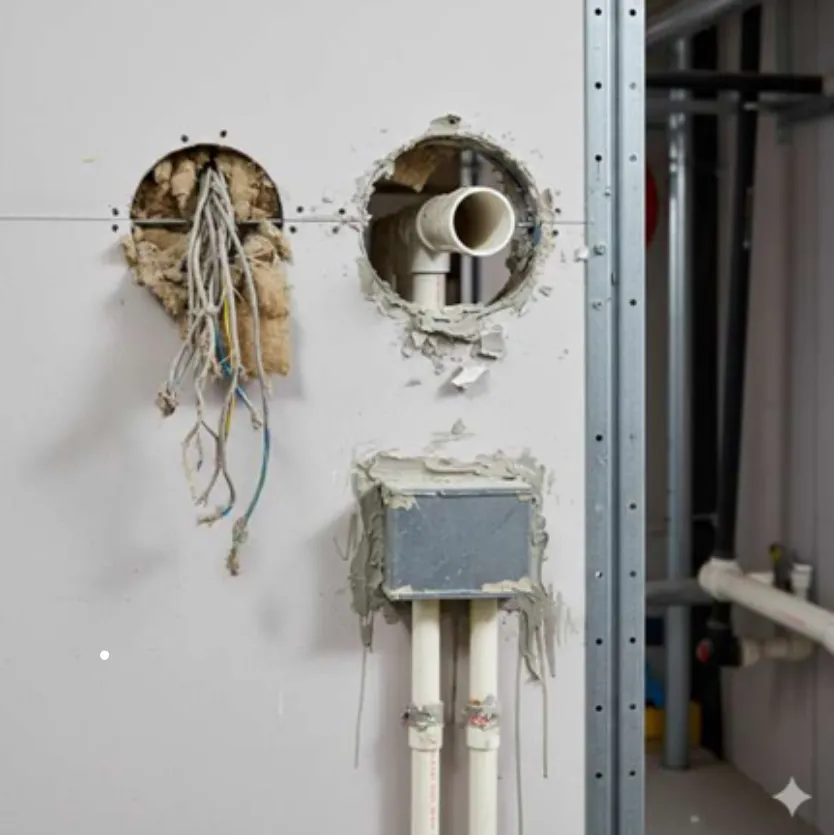
IMAGE 1 – BREACHED FIRE-STOPPING AROUND SERVICES
Image Description:
A fire-resisting wall with several service penetrations (cables, PVC pipes, and
ductwork). The fire-stopping material has gaps, missing sealant, loose mineral wool,
and no identification labels. One pipe runs through a hole that is significantly oversized.
Guided Questions
1. Identify the Non-Compliances:
o List at least six defects you can see that compromise internal fire spread
resistance.
2. Explain the Fire Spread Mechanism:
o Describe how fire and smoke could travel through the breaches.
3. Approved Document B Compliance:
o Which sections on compartmentation and fire-stopping apply?
o Explain the required performance standard (e.g., EI30, EI60).
4. Corrective Actions:
o Describe exactly how this penetration should be reinstated to compliance.
o What documentation should be completed afterwards?
5. Management-Level Root Cause:
o Identify what organisational failure led to this condition: procurement? supervision? PFP register? change-management?
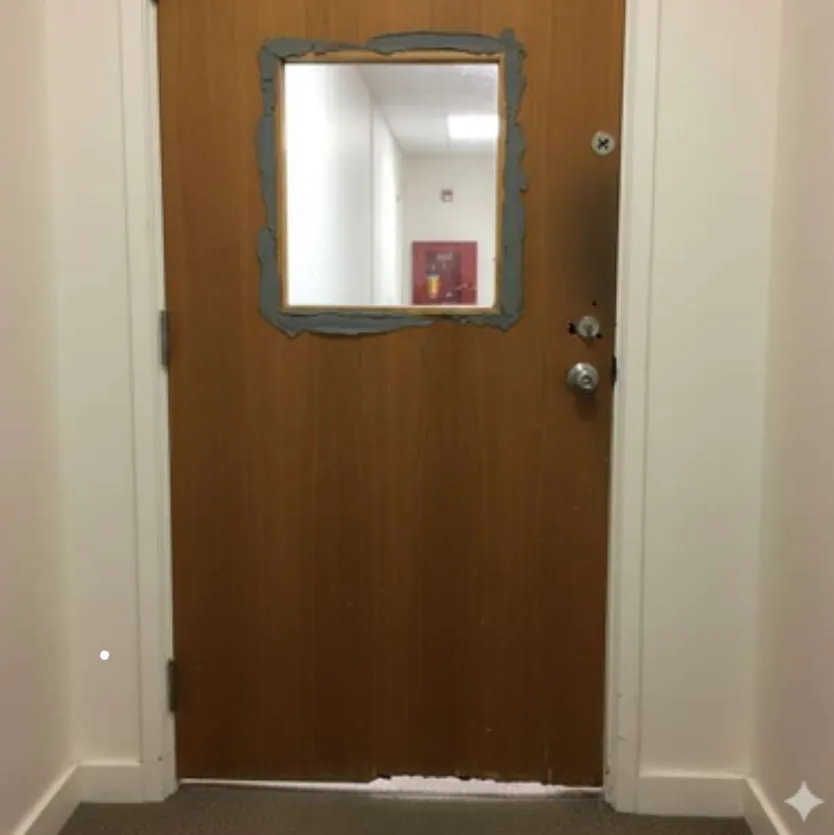
IMAGE 2 – DAMAGED FIRE DOOR WITH GAPING THRESHOLD
Image Description:
A fire door in a corridor shows:
- Missing intumescent strips
- A visible 12–15 mm gap at the bottom
- Hinges loose
- A non-certified vision panel retrofitted aftermarket
- No fire door signage displayed
Guided Questions
1. Fire Door Performance Analysis:
o Explain why threshold gaps >3–4 mm cause loss of compartmentation.
o How does missing intumescent strip affect thermal expansion sealing?
2. UK Regulations:
o Identify applicable standards (e.g., BS 8214, BS 476, BM Trada Q-Mark).
o What does Approved Document B require for fire door integrity?
3. Inspection Competence:
o What should a competent inspector check during a fire door survey?
o Why is retrofitting vision panels dangerous?
4. Corrective Actions:
o Recommend a compliant repair or replacement pathway.
o Describe the documentation needed (e.g., fire door register update,
installation certificate).
5. Fire Spread Implication:
o Describe how smoke layering and convection movement would exploit
these defects.
IMAGE 3 – EXTERNAL CLADDING WITH VISIBLE GAPS & COMBUSTIBLE INSULATION
Image Description:
A building elevation showing:
- Aluminium composite material (ACM) panels
- Exposed polyethylene insulation in two areas
- Gaps between cladding sheets
- No horizontal or vertical fire barriers visible
- Evidence of weather damage and delamination

Guided Questions
1. Risk of External Fire Spread:
o Explain how wind, chimney effects, and panel gaps allow external fire
spread.
o Identify the role of cavity barriers.
2. UK Regulations:
o Identify relevant guidance in Approved Document B (Volume 2).
o Summarise the combustibility requirements of insulation materials (post
Grenfell standards).
3. Identify Non-Compliances:
o Provide five visible failures affecting external fire behaviour.
4. Testing & Classification Knowledge:
o Explain the Euroclass system (A1, A2, B, etc.) under BS EN 13501-1.
o What classification is required for high-rise residential buildings?
5. Corrective Measures:
o Describe the remediation steps for unsafe cladding systems.
o What documentation and surveys must be completed (e.g., FRAEW under
PAS 9980)?
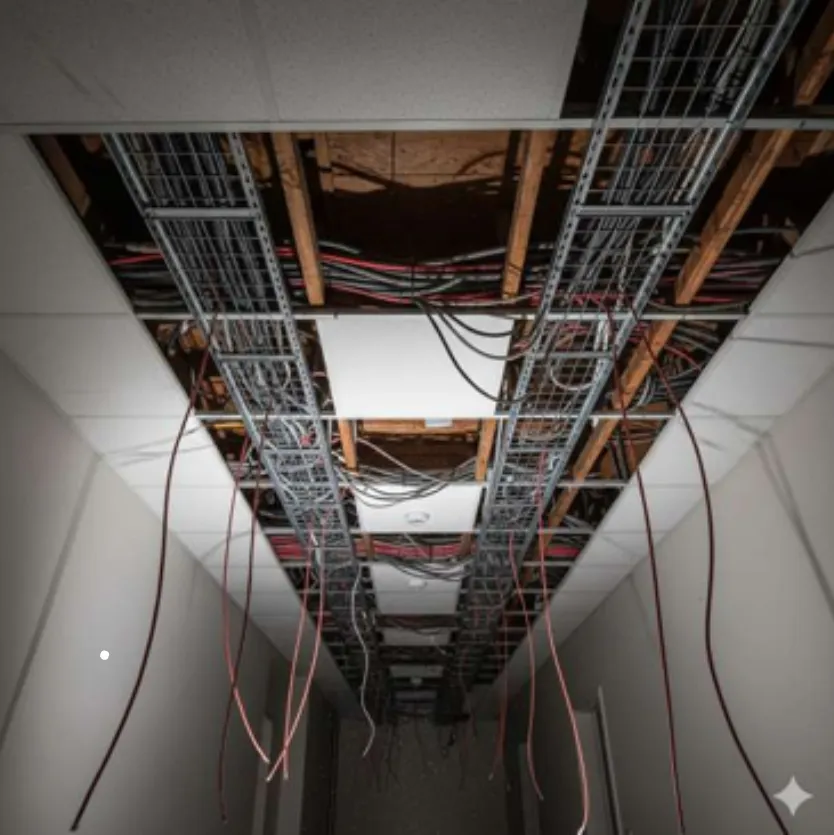
IMAGE 4 – COMPARTMENT CEILING VOID WITH UNSEALED CABLE TRAYS
Image Description:
A ceiling void above an office corridor shows:
- Suspended ceiling tiles displaced
- Cable trays with multiple unsealed gaps
- Timber joists exposed
- No cavity barriers in sight
- Fire alarm cables hanging loosely
Guided Questions
1. Compartmentation Impact:
o Describe how missing cavity barriers affect horizontal fire spread.
o Explain why suspended ceilings do not form part of the fire compartment.
2. Inspection Knowledge:
o What must be checked in ceiling voids during passive fire inspections?
3. Principles of Prevention:
o Link this scenario to the hierarchy of control and principles outlined in the Fire Safety Order.
4. Corrective Actions:
o Specify the correct installation of cavity barriers, including materials and fire ratings.
o Identify who is competent to carry out this work.
5. Fire Spread Interpretation:
o Explain how smoke would travel through this void and reach remote areas of the building.
Expected Learning Outcomes Demonstrated
By completing this Photo / Diagram Interpretation Task, learners will show evidence of:
✔ Understanding and applying principles of prevention
(through analysing visual failures in fire separation)
✔ Competence to inspect passive fire protection (PFP)
(through identifying penetrations, damaged fire doors, cavity issues)
✔ Understanding risks of external fire spread
(by interpreting cladding failures and external elevations)
✔ Reviewing management of fire safety in relation to fire spread
(by linking defects to procedural, oversight, and policy gaps)