
UK Enviromental Laws and Regulations: Key things to know
Environmental protection is no longer just a government responsibility, it is a legal and strategic priority for every organisation operating in the United Kingdom. As climate change, biodiversity loss, pollution and resource management continue to shape national policy, businesses of all sizes must understand the UK’s environmental laws and regulations to remain compliant and operate responsibly. Whether you run a manufacturing facility, construction company, retail business or public organisation, staying informed about environmental legislation is essential for reducing legal risks, protecting natural resources and supporting long-term sustainability.
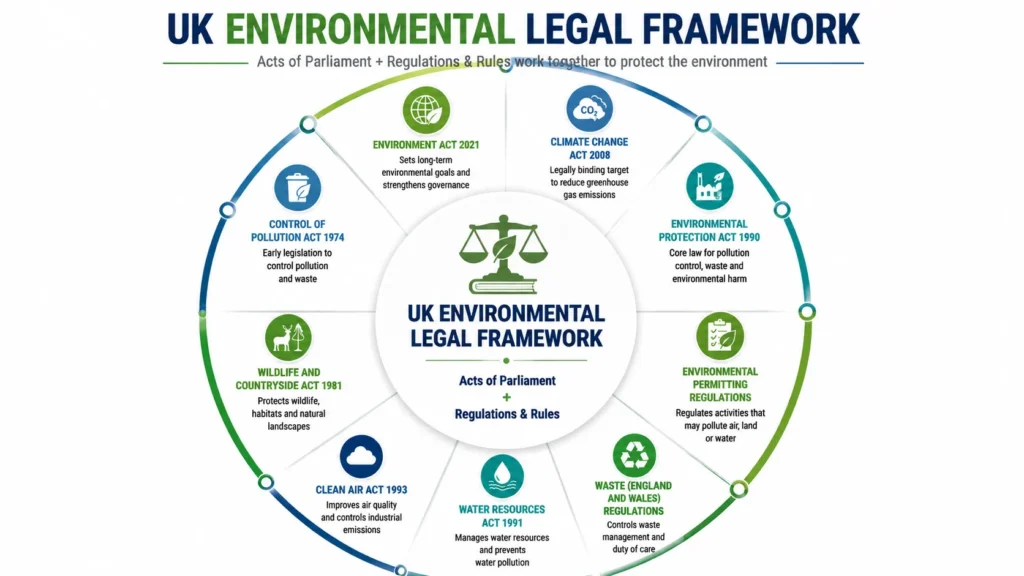
The UK’s environmental legal framework has evolved significantly over the past few decades through landmark legislation such as the Environmental Protection Act 1990, the Climate Change Act 2008, and the Environment Act 2021. These laws establish clear responsibilities for organisations, covering areas including waste management, pollution prevention, air and water quality, biodiversity conservation and environmental permitting. Regulatory bodies such as the Environment Agency, DEFRA, and the Office for Environmental Protection (OEP) play a vital role in monitoring compliance and enforcing environmental standards across England.
This comprehensive guide explains the key UK environmental laws and regulations every business, professional and environmental practitioner should know. You’ll learn how the legislation applies in practice, the responsibilities organisations must meet, the consequences of non-compliance, and the latest developments shaping environmental governance in the UK. Whether you’re looking to strengthen legal compliance, improve environmental performance or simply understand the UK’s regulatory landscape, this guide provides practical, up-to-date insights to help you navigate environmental legislation with confidence.
What Are UK Environmental Laws and Regulations?
UK environmental laws and regulations are the legal framework that protects the environment and ensures organisations operate responsibly. They establish requirements for pollution prevention, waste management, air and water quality, biodiversity conservation, and sustainable resource use. Major legislation, including the Environmental Protection Act 1990, Climate Change Act 2008, and Environment Act 2021, sets the UK’s environmental responsibilities, while supporting regulations outline how these duties must be met. Compliance helps businesses reduce environmental risks, meet legal obligations, avoid penalties, and demonstrate a commitment to sustainable and responsible operations across all sectors.
Environmental Laws vs Environmental Regulations
While both aim to protect the environment, environmental laws and environmental regulations serve different purposes within the UK’s legal framework.
| Environmental Laws | Environmental Regulations |
|---|
| Passed by the UK Parliament as Acts of Parliament. | Introduced under Acts to implement legal requirements. |
| Establish broad legal principles and environmental responsibilities. | Provide detailed rules, procedures and technical standards. |
| Define what organisations must achieve. | Explain how organisations must comply in practice. |
| Cover national environmental policies and legal obligations. | Govern day-to-day activities such as permits, waste handling and emissions. |
| Examples: Environmental Protection Act 1990, Climate Change Act 2008, Environment Act 2021. | Examples: Environmental Permitting (England and Wales) Regulations, Waste Regulations, and other supporting legislation. |
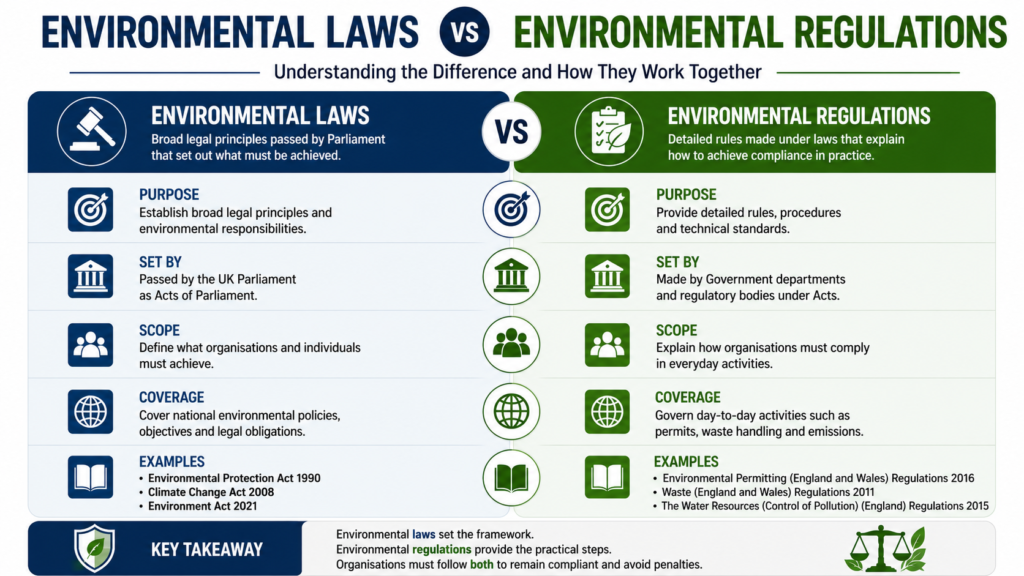
Key Takeaway
- Environmental laws create the legal framework for protecting the environment.
- Environmental regulations provide the practical requirements needed to comply with those laws.
- Organisations must follow both to meet their environmental responsibilities and avoid legal penalties.
Why Environmental Laws Matter
UK environmental laws play a vital role in protecting the environment while supporting responsible economic growth. They help organisations operate sustainably, reduce environmental harm and comply with national legal requirements. Key reasons why these laws matter include:
- Protect Natural Resources: Safeguard air, water, land, forests and biodiversity for future generations.
- Prevent Pollution: Reduce harmful emissions, waste and contamination that can affect ecosystems and public health.
- Ensure Legal Compliance: Help businesses meet statutory obligations and avoid fines, enforcement action and prosecution.
- Support Climate Goals: Contribute to the UK’s net zero commitments by encouraging lower carbon emissions and sustainable practices.
- Promote Sustainable Business: Improve resource efficiency, reduce waste and enhance long-term operational resilience.
- Protect Public Health: Minimise environmental hazards that could impact communities and workplaces.
- Build Trust and Reputation: Demonstrate environmental responsibility, strengthening confidence among customers, investors and regulators.
- Encourage Continuous Improvement: Drive organisations to adopt better environmental management systems and sustainable practices.
Timeline of UK Environmental Legislation
The UK’s environmental legal framework has evolved over several decades to address emerging challenges such as pollution, climate change, biodiversity loss and sustainable resource management. The timeline below highlights some of the most significant environmental laws shaping environmental protection and business compliance today.
| Year | Legislation | Key Purpose |
|---|---|---|
| 1974 | Control of Pollution Act | Introduced controls on waste disposal, water pollution and environmental pollution. |
| 1981 | Wildlife and Countryside Act | Protected wildlife, natural habitats and Sites of Special Scientific Interest (SSSIs). |
| 1990 | Environmental Protection Act | Established comprehensive rules for waste management, pollution control and environmental responsibility. |
| 1991 | Water Resources Act | Regulated water resources and prevented pollution of rivers, lakes and groundwater. |
| 2008 | Climate Change Act | Introduced legally binding carbon reduction targets and laid the foundation for the UK’s Net Zero strategy. |
| 2021 | Environment Act | Strengthened environmental governance, biodiversity protection, air quality, waste management and long-term environmental targets. |
Regulatory Authorities Responsible for Environmental Protection in the UK
Several government bodies are responsible for developing, regulating and enforcing UK environmental laws and regulations. Understanding their roles helps organisations comply with legal requirements and maintain effective environmental management.
| Regulatory Authority | Primary Responsibility |
|---|---|
| Department for Environment, Food & Rural Affairs (DEFRA) | Develops environmental policies and legislation relating to biodiversity, waste, water quality, air pollution, climate resilience and sustainable resource management in England. |
| Environment Agency (EA) | Regulates environmental permits, monitors pollution, enforces environmental legislation, manages flood risks and protects land, water and air quality in England. |
| Office for Environmental Protection (OEP) | An independent watchdog established under the Environment Act 2021 to monitor environmental performance, assess government progress and ensure compliance with environmental law. |
| Natural England | Protects England’s natural environment by conserving habitats, wildlife, landscapes and Sites of Special Scientific Interest (SSSIs), while promoting biodiversity recovery. |
| Local Authorities | Enforce local environmental regulations, investigate statutory nuisances, monitor air quality, oversee waste management and support environmental health initiatives within their areas. |
Why These Authorities Matter
These organisations work together to implement and enforce the UK’s environmental legal framework. They help businesses understand their legal obligations, issue permits, monitor environmental performance and take enforcement action where environmental laws are breached. Engaging with the appropriate regulatory authority is essential for maintaining compliance and supporting sustainable business operations.
Environmental Permits
An environmental permit is a legal authorisation that allows businesses to carry out activities that could affect the environment while ensuring they meet UK environmental standards. Permits are commonly required for operations involving waste management, industrial emissions, water discharges, mining, and certain agricultural or energy activities. They set conditions for controlling pollution, monitoring environmental impacts and maintaining compliance with environmental legislation. Operating without a required permit, or breaching its conditions, can lead to enforcement action, substantial fines and prosecution. Obtaining the appropriate permit helps organisations manage environmental risks, protect natural resources and demonstrate responsible environmental stewardship.
Industry-Specific Compliance
Environmental compliance requirements differ across industries based on their activities and environmental impact. The table below highlights the key obligations for major sectors.
| Industry | Key Compliance Requirements |
|---|---|
| Construction | Manage waste, control dust and noise, protect habitats. |
| Manufacturing | Control emissions, handle hazardous waste and improve resource efficiency. |
| Agriculture | Prevent water pollution, protect soil and manage chemicals responsibly. |
| Energy | Comply with environmental permits, monitor emissions and reduce carbon impacts. |
| Healthcare | Safely dispose of clinical waste and control environmental risks. |
Business Compliance Checklist
To remain compliant with UK environmental legislation, businesses should:
- Obtain required environmental permits.
- Manage waste responsibly and prevent pollution.
- Monitor emissions and environmental impacts.
- Maintain accurate compliance records.
- Train employees on environmental responsibilities.
- Conduct regular environmental audits and reviews.
Common Compliance Mistakes
Many organisations face enforcement action due to avoidable compliance errors. Some of the most common mistakes include:
- Failing to obtain the required environmental permits or licences.
- Poor waste management and incorrect disposal of hazardous materials.
- Inadequate record-keeping for waste transfers, emissions and environmental monitoring.
- Ignoring pollution risks, leading to air, water or land contamination.
- Lack of employee training on environmental responsibilities and legal requirements.
- Failing to review and update environmental policies in line with changing legislation.
Avoiding these mistakes helps organisations maintain legal compliance, reduce environmental risks and protect their reputation.
Penalties for Non-Compliance
Failure to comply with UK environmental laws and regulations can lead to serious consequences, including:
- Enforcement notices and corrective actions.
- Financial penalties and fines.
- Criminal prosecution for serious offences.
- Suspension of environmental permits.
- Reputational damage and loss of stakeholder trust.
Proactive environmental compliance helps organisations minimise legal risks and maintain responsible business practices.
Future of UK Environmental Law
UK environmental law will continue to evolve to address climate change, biodiversity loss and sustainable development. Future regulations are expected to strengthen Net Zero targets, improve resource efficiency, enhance environmental reporting and encourage more sustainable business practices. Staying informed about regulatory changes will help organisations remain compliant and prepared for future environmental requirements.