
Best Fire Safety Qualifications in the UK
Fire safety has become one of the fastest-growing professional fields in the UK as organisations place greater emphasis on protecting people, property, and business operations. From commercial offices and construction sites to hospitals, schools, hotels, and industrial facilities, employers are actively seeking qualified fire safety professionals who understand current legislation, risk assessment procedures, emergency planning, and fire prevention strategies.
Whether the goal is to become a Fire Marshal, Fire Risk Assessor, Fire Safety Advisor, Building Safety Manager, or Fire Safety Consultant, choosing the right qualification is the first step towards building a successful career. The UK offers a wide range of recognised fire safety qualifications, including introductory awareness courses, regulated Level 3 and Level 4 qualifications, specialist fire risk assessment programmes, passive fire protection training, and internationally recognised certifications.
With so many options available, selecting the most suitable qualification can be challenging. Some courses focus on workplace fire awareness, while others prepare professionals to conduct detailed fire risk assessments, inspect fire doors, manage fire safety systems, or oversee fire safety compliance across complex buildings.
This comprehensive guide explains the best fire safety qualifications available in the UK, compares their career benefits, highlights employer demand, and provides a clear learning pathway to help every learner choose the qualification that best matches their experience and career ambitions.
Why Fire Safety Qualifications Are More Important Than Ever
Fire safety responsibilities have expanded significantly in recent years. Organisations are expected to identify hazards, reduce fire risks, protect occupants, and maintain compliance with UK fire safety legislation. Employers increasingly value professionals who can demonstrate recognised knowledge through accredited qualifications rather than relying solely on workplace experience.
Qualified fire safety professionals contribute to:
- Protecting lives through effective fire prevention
- Reducing property damage and financial losses
- Supporting legal compliance with UK fire safety legislation
- Improving emergency preparedness
- Conducting effective fire risk assessments
- Managing evacuation planning
- Ensuring fire protection systems remain effective
- Supporting business continuity following emergencies
The demand for qualified professionals continues to grow across both public and private sectors, making fire safety qualifications an excellent long-term investment for career development.
Understanding the UK Fire Safety Qualification Framework
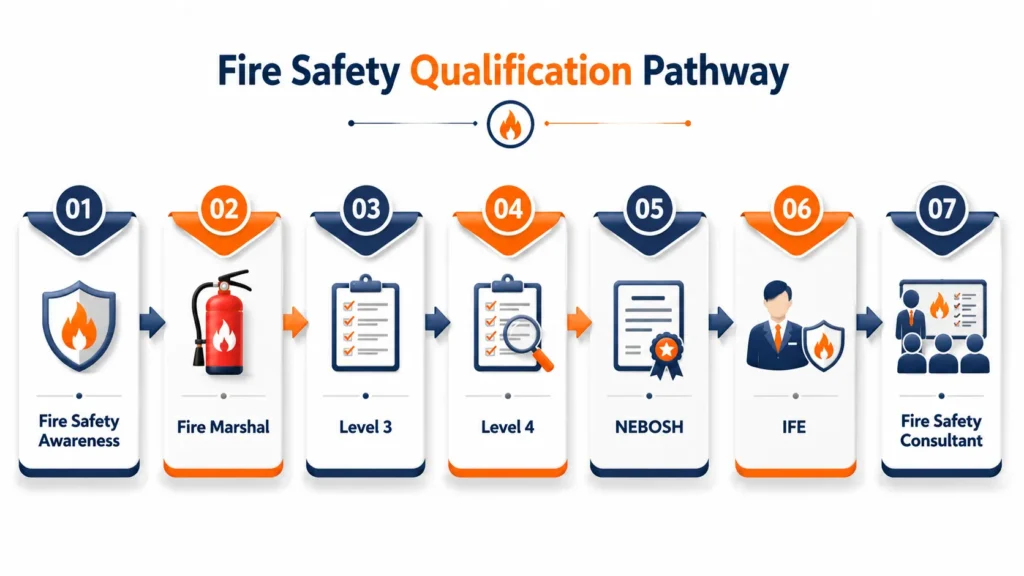
Fire safety qualifications are available at different levels, allowing learners to progress from basic workplace awareness to advanced fire safety management and consultancy roles.
Rather than choosing the most advanced qualification immediately, employers generally prefer professionals who develop knowledge progressively through recognised learning pathways.
Typical Fire Safety Qualification Levels
| Qualification Level | Typical Knowledge | Suitable For | Career Outcome |
|---|---|---|---|
| Fire Safety Awareness | Basic workplace fire safety | Employees | Workplace compliance |
| Fire Marshal / Fire Warden | Emergency procedures and evacuation | Fire Wardens | Workplace Fire Marshal |
| Level 3 Fire Safety | Operational fire safety knowledge | Supervisors and technicians | Fire Safety Officer |
| Level 4 Fire Safety | Fire risk assessment and management | Experienced professionals | Fire Risk Assessor |
| Level 5–6 Fire Safety | Strategic fire safety leadership | Managers and consultants | Fire Safety Manager |
| Specialist Professional Qualifications | Fire engineering, passive fire protection, inspection | Experienced practitioners | Consultant or Specialist |
This structured progression allows professionals to build confidence while gaining practical experience at every stage.
How to Choose the Right Fire Safety Qualification
Choosing the best qualification depends on current experience, career goals, and the industry in which the learner intends to work. Someone responsible for workplace fire awareness may only require a Fire Marshal qualification, whereas professionals responsible for conducting formal fire risk assessments will require more advanced training.
The following decision process provides a simple starting point.
Fire Safety Qualification Selection Flowchart
Want to improve workplace fire safety?
│
▼
Fire Safety Awareness
│
▼
Responsible for evacuation?
│
Yes ───────── No
│ │
▼ ▼
Fire Marshal Continue Learning
│
▼
Interested in inspections?
│
▼
Level 3 Fire Safety
│
▼
Conduct Fire Risk Assessments?
│
▼
Level 4 Fire Risk Assessment
│
▼
Fire Safety Management
│
▼
Senior Fire Safety Consultant
This pathway reflects the natural progression followed by many professionals working within commercial buildings, local authorities, housing associations, healthcare organisations, education providers, and construction companies.
What Employers Look for in Fire Safety Professionals
Modern employers seek more than technical knowledge. They value professionals who understand how fire safety contributes to organisational resilience, legal compliance, and operational continuity.
The most desirable candidates typically demonstrate:
- Recognised fire safety qualifications
- Practical understanding of fire risk assessments
- Knowledge of UK fire safety legislation
- Strong communication and reporting skills
- Emergency planning experience
- Hazard identification skills
- Fire prevention knowledge
- Ability to work with multiple stakeholders
- Continuous professional development
- Competence in maintaining compliance documentation
Employers also appreciate candidates who understand wider health and safety management systems, making multidisciplinary knowledge increasingly valuable.
Benefits of Completing a Recognised Fire Safety Qualification
A recognised qualification offers advantages that extend far beyond obtaining a certificate. It demonstrates competence, supports career progression, and increases professional credibility across multiple industries.
Key benefits include:
- Improved employment opportunities
- Higher earning potential
- Greater confidence in managing fire safety responsibilities
- Better understanding of fire legislation and compliance
- Enhanced risk assessment skills
- Stronger career progression opportunities
- Professional recognition within the industry
- Increased ability to support organisational safety objectives
- Transferable skills across multiple sectors
- Access to specialist fire safety career pathways
For employers, qualified professionals help reduce organisational risk while strengthening safety culture throughout the workplace.
Comparison of the Best Fire Safety Qualifications in the UK
The UK offers a variety of qualifications designed for different experience levels and career objectives. Understanding their purpose helps learners invest in training that aligns with long-term goals.
| Qualification | Best For | Difficulty | Industry Recognition | Career Progression |
|---|---|---|---|---|
| Fire Safety Awareness | New employees | Beginner | High | Workplace safety responsibilities |
| Fire Marshal | Designated fire wardens | Beginner | High | Fire Marshal or Team Leader |
| Level 3 Fire Safety Qualification | Supervisors and safety coordinators | Intermediate | High | Fire Safety Officer |
| Level 4 Fire Risk Assessment Qualification | Risk assessment professionals | Advanced | Very High | Fire Risk Assessor |
| NEBOSH Fire Safety Qualification | Health and safety professionals | Advanced | Excellent | Safety Advisor or Fire Safety Manager |
| IOSH Fire Safety for Managers | Managers and supervisors | Intermediate | High | Management responsibilities |
| Passive Fire Protection Qualifications | Building safety specialists | Specialist | High | Passive Fire Inspector |
| Building Safety Qualifications | Higher-risk building professionals | Advanced | Growing | Building Safety Manager |
This comparison highlights that there is no single “best” qualification for everyone. The ideal choice depends on career aspirations, existing experience, and the responsibilities associated with the intended role.
Which Fire Safety Qualification Is Right for Different Careers?
Different fire safety roles require different levels of expertise. Understanding this relationship helps learners avoid investing in qualifications that may not support their intended career path.
Career Path Flowchart
Fire Safety Awareness
│
▼
Fire Marshal / Fire Warden
│
▼
Fire Safety Officer
│
▼
Fire Risk Assessor
│
▼
Senior Fire Safety Advisor
│
▼
Fire Safety Manager
│
▼
Fire Safety Consultant
Each step builds on the previous one by developing stronger technical knowledge, greater responsibility, and broader leadership capabilities. Employers often prefer candidates who have progressed through recognised stages rather than skipping directly to advanced qualifications without practical experience.
Fire Safety Is Becoming a Long-Term Career Choice
The UK’s focus on safer buildings, stronger regulatory compliance, and effective risk management has transformed fire safety into a highly respected profession. Qualified specialists are now employed across construction, facilities management, healthcare, education, manufacturing, hospitality, retail, logistics, local government, housing, and consultancy.
As technology, legislation, and building standards continue to evolve, professionals with recognised fire safety qualifications will remain in strong demand. Choosing the right qualification today can open the door to a rewarding career with excellent opportunities for progression, specialisation, and leadership.
The Best Fire Safety Qualifications in the UK
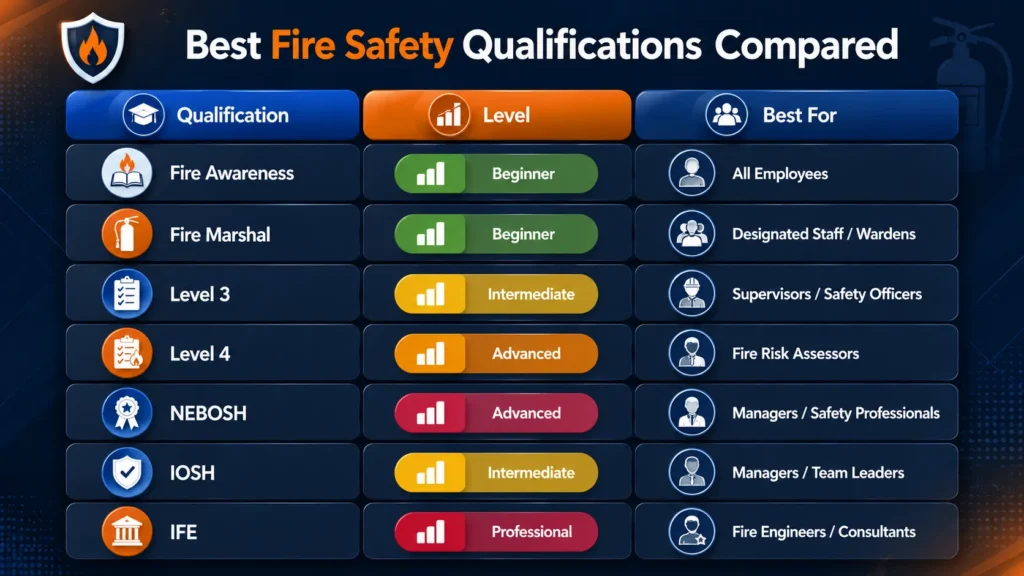
The UK offers a wide range of fire safety qualifications designed for different career stages and professional responsibilities. Some courses provide a foundation in workplace fire safety, while others develop advanced competencies in fire risk assessment, fire engineering, passive fire protection, and strategic fire safety management.
Choosing the right qualification depends on career goals, industry requirements, and existing experience. Below are the most recognised fire safety qualifications that employers across the UK actively value.
1. Fire Safety Awareness Training
Fire Safety Awareness is the ideal starting point for anyone entering the workplace or taking on basic fire safety responsibilities. It introduces the fundamental principles of fire prevention, emergency procedures, and safe evacuation practices.
Best For
- New employees
- Office staff
- Retail workers
- Hospitality teams
- Warehouse operatives
- Manufacturing employees
Skills Developed
- Understanding common fire hazards
- Fire prevention techniques
- Emergency evacuation procedures
- Fire extinguisher awareness
- Reporting fire hazards
- Understanding workplace responsibilities
Although this qualification is entry-level, it forms the foundation for all future fire safety learning.
2. Fire Marshal Qualification
A Fire Marshal qualification prepares designated personnel to manage workplace fire safety before and during emergencies. Most UK organisations appoint trained Fire Marshals to support evacuation procedures and monitor fire safety compliance.
Best For
- Supervisors
- Team leaders
- Facilities staff
- School staff
- Hotel managers
- Healthcare workers
Typical Responsibilities
- Conducting workplace fire checks
- Supporting evacuation procedures
- Monitoring escape routes
- Reporting fire hazards
- Assisting during fire drills
- Promoting fire safety awareness
This qualification is highly recommended for organisations seeking to comply with workplace fire safety obligations while improving emergency preparedness.
3. Level 3 Fire Safety Qualification
A Level 3 Fire Safety qualification builds upon basic fire awareness by introducing fire legislation, hazard identification, fire prevention strategies, and operational fire safety management.
It is one of the most popular qualifications for professionals moving into dedicated fire safety roles.
Suitable For
- Fire Safety Officers
- Health and Safety Coordinators
- Site Supervisors
- Facilities Managers
- Property Managers
- Construction Supervisors
Typical Learning Areas
- Fire behaviour
- Fire prevention systems
- Means of escape
- Fire detection systems
- Emergency planning
- Fire legislation
- Workplace inspections
Employers often consider Level 3 qualifications an excellent starting point for operational fire safety careers.
4. Level 4 Fire Risk Assessment Qualification
A Level 4 qualification focuses specifically on carrying out structured fire risk assessments and producing professional reports that support organisational compliance.
This qualification develops analytical thinking alongside practical inspection skills.
Best For
- Fire Risk Assessors
- Fire Consultants
- Building Managers
- Housing Officers
- Compliance Managers
- Fire Safety Advisors
Key Competencies
- Identifying fire hazards
- Evaluating fire risks
- Assessing vulnerable occupants
- Reviewing existing control measures
- Developing action plans
- Producing professional fire risk assessment reports
This qualification is widely recognised by employers recruiting competent Fire Risk Assessors.
Fire Safety Career Progression Flowchart
Fire Safety Awareness
│
▼
Fire Marshal Qualification
│
▼
Level 3 Fire Safety
│
▼
Level 4 Fire Risk Assessment
│
▼
Fire Safety Advisor
│
▼
Fire Safety Manager
│
▼
Fire Safety Consultant
Following a structured progression helps professionals build practical experience alongside recognised qualifications.
5. NEBOSH Fire Safety Qualification
The NEBOSH Fire Safety qualification is one of the UK’s most respected fire safety certifications. It is designed for professionals responsible for managing fire risks within organisations and integrates fire safety into wider health and safety management.
Many employers actively seek candidates with NEBOSH qualifications because they demonstrate strong analytical, legislative, and risk management skills.
Best For
- Health and Safety Advisors
- Fire Safety Managers
- Facilities Managers
- Compliance Officers
- Safety Consultants
What Learners Study
- Fire science
- Fire prevention
- Fire protection systems
- Human behaviour during fires
- Fire risk assessment methodology
- Fire legislation
- Workplace fire management
The qualification is particularly valuable for professionals wishing to combine fire safety expertise with broader occupational health and safety responsibilities.
6. IOSH Fire Safety for Managers
The IOSH Fire Safety for Managers course is designed for individuals who supervise teams and have responsibility for workplace fire safety without becoming specialist fire professionals.
It helps managers understand their legal duties while improving organisational fire safety performance.
Best For
- Department Managers
- Office Managers
- Operations Managers
- Facilities Supervisors
- Small Business Owners
Benefits
- Better understanding of employer responsibilities
- Improved emergency planning
- Stronger fire prevention culture
- Reduced workplace risks
- Enhanced legal compliance
The course complements broader management responsibilities and is particularly useful for organisations seeking to strengthen fire safety leadership.
7. Institution of Fire Engineers (IFE) Qualifications
The Institution of Fire Engineers (IFE) offers internationally respected qualifications that are recognised throughout the fire engineering and fire safety profession.
IFE qualifications are ideal for professionals seeking technical expertise and long-term career progression within specialist fire disciplines.
Suitable For
- Fire Engineers
- Fire Inspectors
- Fire Safety Consultants
- Fire Service Personnel
- Building Safety Professionals
Learning Areas
- Fire engineering principles
- Fire protection systems
- Building fire safety
- Passive fire protection
- Fire investigation
- Fire legislation
- Technical fire inspections
These qualifications are often pursued by experienced professionals seeking specialist recognition.
8. Fire Door Inspection Qualifications
Fire doors are among the most critical passive fire protection measures in modern buildings. Proper inspection helps ensure that fire doors perform effectively during emergencies.
Fire Door Inspection qualifications teach professionals how to inspect, assess, and report on fire door compliance.
Best For
- Surveyors
- Building Inspectors
- Facilities Managers
- Fire Risk Assessors
- Property Managers
Skills Covered
- Fire door components
- Inspection techniques
- Compliance standards
- Common defects
- Reporting procedures
- Maintenance recommendations
Growing regulatory attention on building safety has significantly increased demand for competent fire door inspectors.
9. Passive Fire Protection Qualifications
Passive fire protection is becoming one of the fastest-growing specialist sectors within the UK fire industry. These qualifications focus on protecting buildings through fire-resistant construction materials and compartmentation systems.
Suitable For
- Construction Professionals
- Building Inspectors
- Contractors
- Fire Consultants
- Compliance Managers
Learning Topics
- Fire stopping systems
- Fire-resistant materials
- Structural fire protection
- Compartmentation
- Inspection techniques
- Installation quality assurance
As modern buildings become increasingly complex, passive fire protection specialists continue to experience strong employment opportunities.
10. Building Safety and Fire Compliance Qualifications
Following significant changes in UK building safety regulations, demand has grown for professionals who understand both fire safety and wider building compliance responsibilities.
These qualifications combine fire safety with governance, compliance management, and risk-based decision-making.
Best For
- Building Safety Managers
- Compliance Officers
- Housing Associations
- Property Management Companies
- Local Authorities
Key Learning Areas
- Building safety legislation
- Fire risk governance
- Resident safety
- Safety case management
- Compliance monitoring
- Risk management
Professionals holding these qualifications are increasingly sought after in the residential, commercial, and public sectors.
Which Qualification Matches Your Career Goals?
Choosing the right qualification depends on where you want your career to go. The table below provides a practical comparison.
| Career Goal | Recommended Qualification | Experience Level |
|---|---|---|
| Workplace Fire Awareness | Fire Safety Awareness | Beginner |
| Fire Marshal | Fire Marshal Qualification | Beginner |
| Fire Safety Officer | Level 3 Fire Safety | Intermediate |
| Fire Risk Assessor | Level 4 Fire Risk Assessment | Intermediate to Advanced |
| Health and Safety Professional | NEBOSH Fire Safety | Advanced |
| Department Manager | IOSH Fire Safety for Managers | Intermediate |
| Fire Engineer | IFE Qualifications | Advanced |
| Fire Door Inspector | Fire Door Inspection Qualification | Specialist |
| Passive Fire Protection Specialist | Passive Fire Protection Qualification | Specialist |
| Building Safety Manager | Building Safety Qualification | Advanced |
Fire Safety Qualification Selection Flowchart
What is your career objective?
│
▼
General Workplace Safety
│
▼
Fire Safety Awareness
│
▼
Emergency Responsibilities
│
▼
Fire Marshal Qualification
│
▼
Dedicated Fire Safety Career
│
▼
Level 3 Fire Safety
│
▼
Risk Assessment Career
│
▼
Level 4 Fire Risk Assessment
│
▼
Leadership & Consultancy
│
▼
NEBOSH / IFE / Building Safety Qualifications
Industries That Value Fire Safety Qualifications
Fire safety qualifications are no longer limited to the fire and rescue sector. Qualified professionals are required across almost every major industry where protecting people, property, and business continuity is essential.
Some of the sectors with the strongest demand include:
| Industry | Recommended Qualifications |
|---|---|
| Construction | Level 3 Fire Safety, Level 4 Fire Risk Assessment, Passive Fire Protection |
| Healthcare | Fire Marshal, Level 3 Fire Safety, NEBOSH Fire Safety |
| Education | Fire Marshal, IOSH Fire Safety for Managers |
| Hospitality | Fire Marshal, Level 3 Fire Safety |
| Manufacturing | Level 3 Fire Safety, NEBOSH Fire Safety |
| Warehousing & Logistics | Fire Marshal, Level 3 Fire Safety |
| Housing Associations | Level 4 Fire Risk Assessment, Building Safety Qualifications |
| Commercial Property Management | Fire Risk Assessment, Fire Door Inspection, IFE Qualifications |
Selecting an industry-aligned qualification improves employability and ensures learners develop skills that match the specific fire safety challenges within their chosen sector.
Career Opportunities After Completing a Fire Safety Qualification
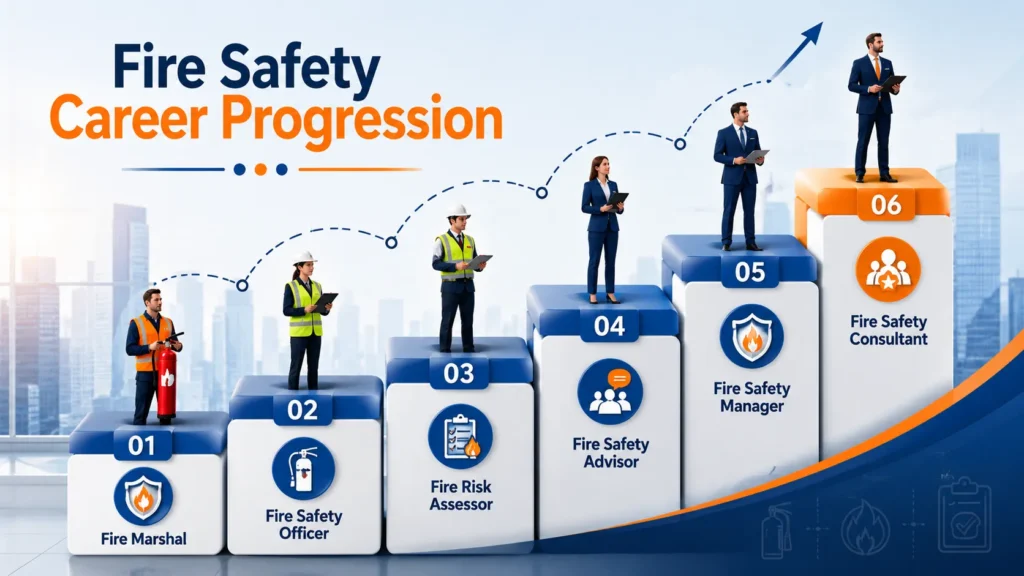
Fire safety qualifications open the door to a wide range of careers across the public and private sectors. As organisations continue to strengthen their fire safety management systems and comply with UK legislation, the demand for competent professionals continues to increase.
Many employers now prefer candidates with recognised qualifications because they demonstrate technical competence, practical knowledge, and a commitment to professional development. Whether working independently or as part of a larger health and safety team, qualified fire safety professionals play a vital role in protecting lives, property, and business operations.
Common employers include:
- Construction companies
- Local authorities
- Housing associations
- NHS trusts
- Schools and universities
- Hotels and hospitality businesses
- Manufacturing plants
- Warehousing and logistics companies
- Facilities management organisations
- Fire safety consultancies
- Commercial property management companies
- Retail chains
- Airports and transport providers
- Industrial plants
- Government organisations
As experience grows, professionals often specialise in fire risk assessment, passive fire protection, fire engineering, compliance auditing, or strategic fire safety management.
Top Career Opportunities in Fire Safety
Different qualifications support different career pathways. Entry-level qualifications provide access to operational roles, while advanced certifications prepare professionals for leadership and consultancy positions.
| Job Role | Typical Responsibilities | Recommended Qualification |
|---|---|---|
| Fire Marshal | Coordinate evacuations and monitor workplace fire safety | Fire Marshal Qualification |
| Fire Safety Officer | Conduct inspections and promote fire safety compliance | Level 3 Fire Safety |
| Fire Risk Assessor | Carry out formal fire risk assessments and prepare reports | Level 4 Fire Risk Assessment |
| Fire Safety Advisor | Advise organisations on legislation and risk reduction | NEBOSH Fire Safety, Level 4 |
| Building Safety Manager | Oversee fire safety compliance in higher-risk buildings | Building Safety Qualification |
| Passive Fire Protection Inspector | Inspect fire stopping systems and compartmentation | Passive Fire Protection Qualification |
| Fire Door Inspector | Assess fire door compliance and maintenance | Fire Door Inspection Qualification |
| Health and Safety Manager | Integrate fire safety into organisational safety systems | NEBOSH Fire Safety |
| Fire Safety Consultant | Deliver specialist consultancy and compliance advice | IFE Qualifications, Advanced Fire Safety |
| Fire Engineer | Design and evaluate fire protection strategies | IFE Qualifications and Engineering Background |
Each role offers opportunities to specialise further while contributing to safer workplaces and communities.
Fire Safety Career Progression Roadmap
Career progression in fire safety is typically achieved through a combination of qualifications, practical experience, and continuous professional development.
Fire Safety Career Roadmap
Start Your Career
│
▼
Fire Safety Awareness
│
▼
Fire Marshal
│
▼
Level 3 Fire Safety Qualification
│
▼
Fire Safety Officer
│
▼
Level 4 Fire Risk Assessment
│
▼
Fire Risk Assessor
│
▼
NEBOSH Fire Safety / IFE Qualification
│
▼
Fire Safety Advisor
│
▼
Fire Safety Manager
│
▼
Senior Fire Safety Consultant
This progression enables professionals to gradually develop technical expertise, leadership skills, and specialist knowledge while expanding career opportunities.
Skills Employers Look for in Fire Safety Professionals
Employers seek professionals who can combine technical competence with strong communication and problem-solving abilities. Fire safety is no longer limited to inspections; it requires professionals who can identify risks, recommend practical improvements, and support organisational compliance.
The most valued skills include:
Technical Skills
- Fire risk assessment
- Fire hazard identification
- Fire legislation knowledge
- Emergency planning
- Fire protection systems
- Passive fire protection
- Fire door inspection
- Incident investigation
- Compliance auditing
- Fire safety documentation
Professional Skills
- Analytical thinking
- Decision-making
- Leadership
- Communication
- Report writing
- Team collaboration
- Time management
- Attention to detail
- Problem solving
- Professional ethics
Professionals who combine technical expertise with effective communication often progress more quickly into advisory and management positions.
Fire Safety Qualification Comparison by Career Stage
Not every qualification is designed for the same purpose. Understanding how each qualification supports career progression makes it easier to invest in the right learning pathway.
| Career Stage | Recommended Qualification | Primary Focus |
|---|---|---|
| Beginner | Fire Safety Awareness | Workplace fire safety fundamentals |
| Entry-Level | Fire Marshal Qualification | Emergency response and evacuation |
| Intermediate | Level 3 Fire Safety | Operational fire safety management |
| Advanced | Level 4 Fire Risk Assessment | Professional fire risk assessment |
| Management | IOSH Fire Safety for Managers | Fire safety leadership |
| Professional | NEBOSH Fire Safety | Strategic fire safety management |
| Specialist | IFE Qualifications | Technical fire engineering and consultancy |
Rather than choosing the most advanced qualification immediately, building knowledge progressively helps develop both competence and confidence.
Fire Safety Qualifications for Different Industries
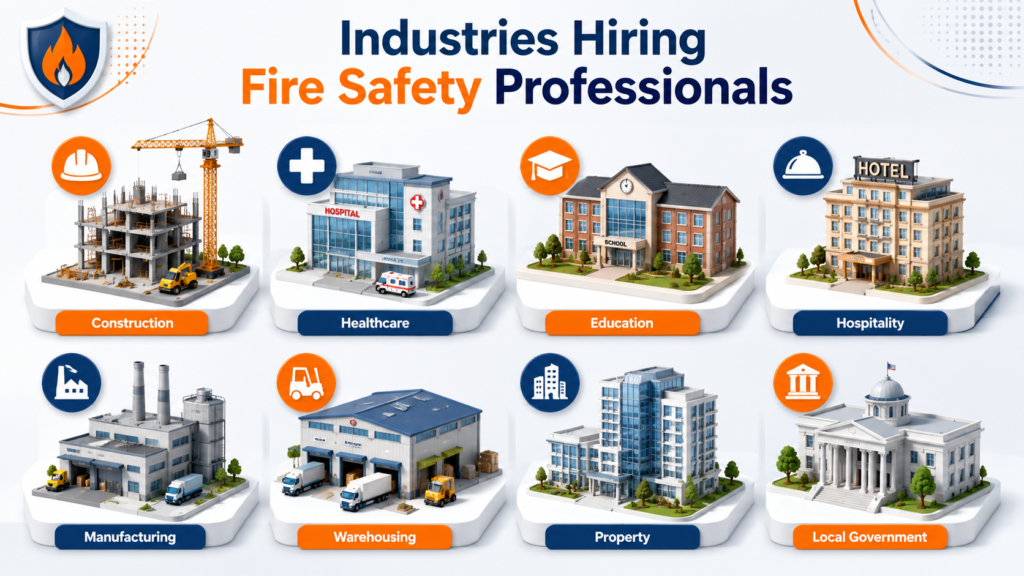
Each industry faces unique fire risks. Selecting a qualification that reflects sector-specific challenges can improve employability and career progression.
| Industry | Most Suitable Qualifications | Common Roles |
|---|---|---|
| Construction | Level 3 Fire Safety, Passive Fire Protection | Site Fire Safety Officer |
| Manufacturing | Level 3 Fire Safety, NEBOSH Fire Safety | Safety Advisor |
| Healthcare | Fire Marshal, Level 3 Fire Safety | Fire Safety Coordinator |
| Hospitality | Fire Marshal, IOSH Fire Safety | Hotel Fire Safety Manager |
| Education | Fire Marshal, Level 3 Fire Safety | School Fire Safety Officer |
| Warehousing | Fire Marshal, Level 3 Fire Safety | Warehouse Safety Supervisor |
| Housing Associations | Level 4 Fire Risk Assessment | Fire Risk Assessor |
| Commercial Property | Fire Door Inspection, Building Safety Qualification | Building Safety Manager |
Understanding sector-specific requirements enables learners to choose qualifications that align with employer expectations.
Online vs Classroom Fire Safety Qualifications
One of the most common questions learners ask is whether online learning is as valuable as classroom training. The answer depends on the qualification, learning style, and practical requirements.
Online Learning Advantages
- Flexible study schedule
- Learn from any location
- Reduced travel costs
- Self-paced progression
- Suitable for working professionals
- Access to digital learning resources
Classroom Learning Advantages
- Direct interaction with tutors
- Practical demonstrations
- Group discussions
- Hands-on activities
- Networking opportunities
- Immediate feedback
Many modern providers now offer blended learning, combining online theory with practical workshops to deliver a balanced learning experience.
How to Choose the Best Fire Safety Qualification
With so many options available, selecting the right qualification can seem overwhelming. Focusing on career goals and current experience simplifies the decision-making process.
Qualification Selection Flowchart
Do you need basic workplace knowledge?
│
Yes ───┴─── No
│ │
▼ ▼
Fire Safety Interested in
Awareness Fire Safety Career?
│
Yes ──┴── No
│
▼
Fire Marshal Qualification
│
▼
Level 3 Fire Safety
│
▼
Want to Conduct Fire Risk Assessments?
│
Yes ──┴── No
│
▼
Level 4 Fire Risk Assessment
│
▼
Want Leadership or Consultancy?
│
▼
NEBOSH Fire Safety
IFE Qualifications
Building Safety Qualifications
Following a structured pathway ensures learners gain the right knowledge at the right stage of their professional development.
Factors to Consider Before Choosing a Fire Safety Qualification
Before enrolling on any course, learners should evaluate several important factors to ensure the qualification supports their long-term career ambitions.
Consider:
- Career objectives
- Existing experience
- Industry requirements
- Qualification recognition
- Progression opportunities
- Practical assessment methods
- Study flexibility
- Tutor support
- Accreditation
- Employer demand
- CPD opportunities
- Professional membership pathways
Choosing a recognised qualification from a reputable training provider can significantly improve future employment prospects.
The Future of Fire Safety Careers in the UK
The fire safety profession is evolving rapidly. Advances in technology, changes in legislation, and increasing expectations around building safety are creating new opportunities for qualified professionals.
Some of the fastest-growing areas include:
- Digital fire risk assessments
- Building Information Modelling (BIM)
- Smart building fire safety systems
- Passive fire protection inspections
- Fire door compliance
- Higher-risk building management
- Building Safety Act compliance
- Fire safety auditing
- Sustainability and fire safety integration
- Data-driven compliance management
Professionals who continuously update their knowledge through recognised qualifications and ongoing professional development will be well positioned to take advantage of these emerging opportunities.
Why Investing in Fire Safety Qualifications Is a Smart Career Move
Fire safety qualifications are more than academic achievements—they are an investment in long-term career success. They equip professionals with the knowledge and confidence to protect lives, support legal compliance, and contribute to safer workplaces across the UK.
Whether the goal is to become a Fire Marshal, Fire Risk Assessor, Fire Safety Advisor, Building Safety Manager, or Fire Safety Consultant, choosing a recognised qualification provides a strong foundation for professional growth.
As employers continue to prioritise competent fire safety professionals, learners who invest in high-quality training today will be well prepared for the evolving demands of tomorrow’s fire safety industry.
Fire Safety Courses Available at Inspire College
Choosing the right training provider is just as important as selecting the right qualification. Inspire College offers industry-focused fire safety and health and safety qualifications designed to help learners develop practical skills, meet employer expectations, and progress confidently within the UK fire safety sector.
Whether a learner is beginning a career in fire safety or looking to move into specialist roles such as Fire Risk Assessor or Fire Safety Manager, Inspire College provides flexible learning opportunities that support professional development.
Why Choose Inspire College for Fire Safety Qualifications?
Selecting a trusted training provider can make a significant difference in a learner’s professional journey. Inspire College is committed to delivering high-quality education that reflects current industry standards and employer expectations.
Benefits of Learning with Inspire College
- Industry-relevant curriculum
- Flexible online learning options
- Experienced tutors
- Practical and career-focused training
- Nationally recognised qualifications
- Learner support throughout the course
- Affordable learning pathways
- Suitable for individuals and organisations
- Career progression opportunities
- Continuous professional development
By choosing Inspire College, learners gain access to qualifications that support both personal growth and long-term career success.
The Future of Fire Safety Qualifications
Fire safety is evolving alongside advances in technology, construction methods, and regulatory expectations. Modern fire safety professionals are expected to understand not only traditional fire prevention principles but also digital compliance tools, smart building systems, and integrated risk management.
Emerging trends shaping the profession include:
- Digital fire risk assessment software
- Artificial intelligence for fire risk analysis
- Smart fire detection and monitoring systems
- Building Information Modelling (BIM)
- Passive fire protection inspections
- Fire door compliance management
- Higher-risk building regulations
- Sustainable building fire safety
- Data-driven compliance reporting
- Remote inspection technologies
Professionals who continue developing their knowledge through recognised qualifications and ongoing CPD will remain highly competitive as the industry continues to evolve.
Final Thoughts
Fire safety qualifications play a crucial role in developing competent professionals who can protect lives, safeguard property, and ensure organisations meet their legal responsibilities. Whether starting with Fire Safety Awareness, progressing to a Fire Marshal qualification, or advancing towards Level 4 Fire Risk Assessment, NEBOSH Fire Safety, or Institution of Fire Engineers qualifications, every step contributes to building a rewarding and future-proof career.
The best fire safety qualification is the one that aligns with your current experience, career ambitions, and the industry you wish to work in. By selecting recognised training and continuously updating your skills, you can unlock opportunities across construction, healthcare, education, manufacturing, hospitality, facilities management, housing, and many other sectors.
As fire safety regulations continue to evolve across the UK, qualified professionals will remain essential in helping organisations create safer workplaces, protect occupants, and strengthen business resilience.
If you’re ready to begin or advance your fire safety career, Inspire College offers flexible, industry-focused qualifications designed to help you gain the knowledge, confidence, and recognised credentials needed to succeed in this growing profession.