
Fire Safety Equipment: Complete Guide for Homes and Workplaces (2026)
Fire safety equipment forms a critical part of an effective safety and risk management framework, helping to protect lives, safeguard property, and maintain the continuity of daily operations. Fire incidents can occur without warning due to various factors such as electrical faults, human error, or the presence of flammable materials. In such situations, having reliable and properly maintained fire protection systems is essential for minimizing the impact of emergencies. These systems enable early detection of hazards, support immediate response, and ensure safe and organized evacuation, significantly reducing potential damage and loss.
Across both residential and workplace environments, implementing comprehensive fire safety measures greatly enhances overall protection and preparedness. From essential tools such as smoke detectors and fire extinguishers to advanced systems like automatic sprinklers and fire suppression technologies, each component plays a vital role in creating a well-integrated fire safety strategy. Understanding common fire risks and hazards further strengthens the importance of adopting the right equipment and preventive measures, as discussed in Fire Hazards blog .
Selecting and using the appropriate fire safety equipment requires careful consideration of the specific environment, potential fire risks, and the nature of activities being carried out. Regular inspection, proper installation, and ongoing maintenance are equally important to ensure that all systems remain fully operational when needed. By prioritizing these practices, individuals and organizations can not only improve their level of protection but also foster a culture of safety awareness and responsibility.
Fire Safety Equipment Overview
Fire safety equipment encompasses a comprehensive range of tools, devices, and integrated systems specifically designed to prevent, detect, control, and extinguish fires while ensuring the safe evacuation of occupants. These systems form the backbone of an effective fire protection strategy, working collectively to reduce the risk of fire-related incidents and limit their potential impact. From early warning mechanisms to advanced suppression technologies, each element plays a vital role in protecting both human life and physical assets.
In modern safety frameworks, fire protection is not reliant on a single device but rather on a coordinated system of equipment that operates at different stages of a fire emergency. Detection systems provide early alerts, firefighting tools enable immediate response, suppression systems control or extinguish the fire, and evacuation equipment ensures that occupants can exit safely. When properly installed, maintained, and used, these systems significantly enhance preparedness and response efficiency.
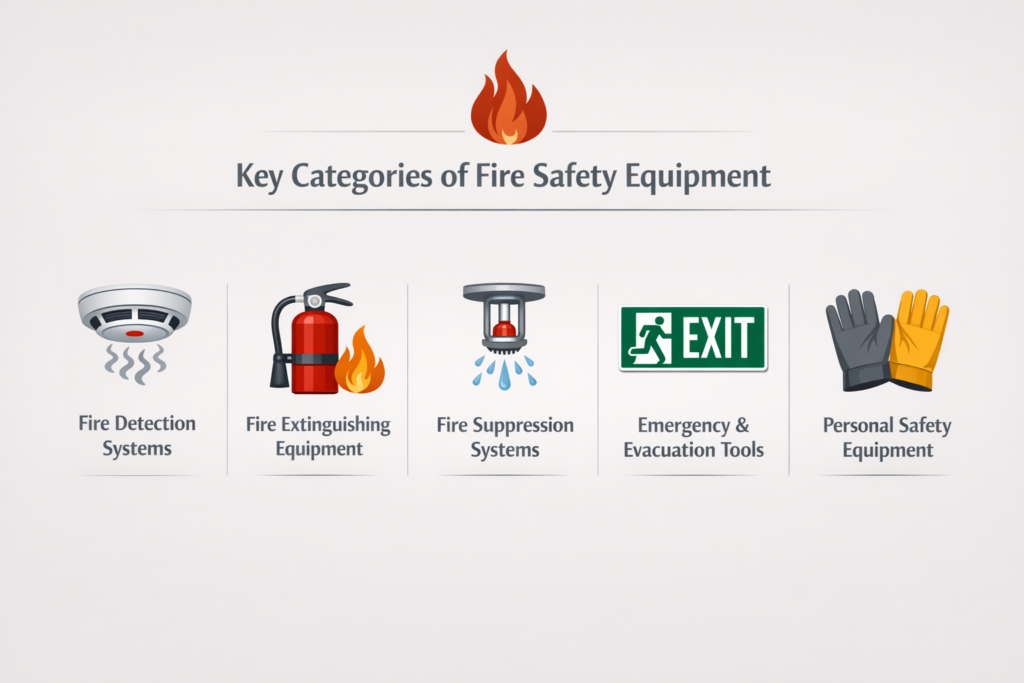
Key Categories of Fire Safety Equipment
- Fire Detection Systems:
These systems are designed to identify the presence of fire or its early signs, such as smoke, heat, or gas emissions. They provide timely alerts, allowing occupants to take immediate action before the situation escalates. - Fire Extinguishing Equipment:
This category includes portable and manual firefighting tools such as fire extinguishers and fire blankets. They are essential for controlling small fires in their initial stages and preventing further spread. - Fire Suppression Systems:
Automated systems such as sprinklers, foam systems, and gas-based suppression technologies are designed to activate when a fire is detected. They help control or extinguish fires quickly, especially in high-risk or large-scale environments. - Evacuation and Emergency Tools:
These include emergency lighting, exit signs, alarm systems, and evacuation plans that guide occupants to safety during an emergency. Their primary function is to ensure a smooth, organized, and panic-free evacuation process. - Personal Safety Equipment:
This includes protective gear and safety tools that help individuals protect themselves during fire incidents, such as fire-resistant clothing, gloves, and respiratory protection devices.
Each of these categories plays a critical and interconnected role in a comprehensive fire safety strategy. Together, they create a multi-layered defense system that not only helps prevent fire incidents but also ensures effective response, minimizes damage, and ultimately saves lives.
Types of Fire Safety Equipment
1. Fire Detection Systems
Fire detection systems are a fundamental component of any effective fire safety strategy, designed to identify the early signs of fire and provide timely warnings to occupants. Their primary function is to detect indicators such as smoke, heat, or harmful gases at the earliest possible stage, allowing individuals to respond quickly before the situation escalates. Early detection is critical in minimizing damage, preventing injuries, and ensuring safe evacuation.
Modern fire detection systems are often integrated with alarm and monitoring technologies, enabling automatic alerts, centralized control, and rapid emergency response. These systems are widely used in residential, commercial, and industrial environments, forming the first line of defense against fire hazards.
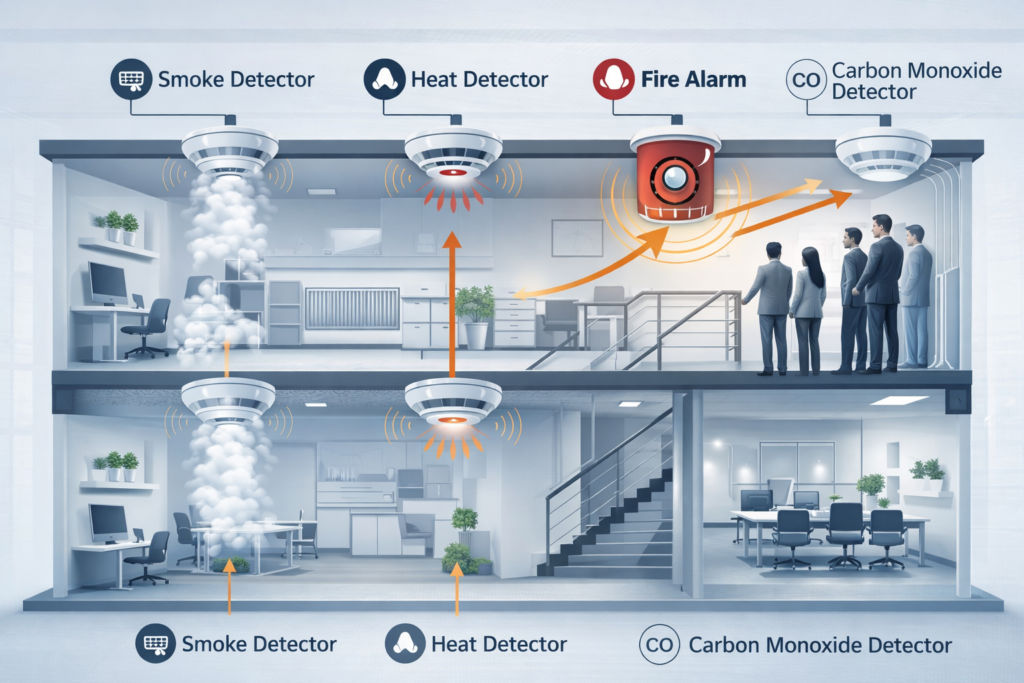
Common Types
- Smoke Detectors:
Smoke detectors are among the most widely used fire detection devices. They identify the presence of smoke particles in the air, often before flames become visible. These devices are essential for early warning in homes, offices, and public buildings. - Heat Detectors:
Heat detectors respond to changes in temperature or when a specific temperature threshold is reached. They are particularly useful in environments where smoke detectors may produce false alarms, such as kitchens or industrial settings. - Fire Alarm Systems:
Fire alarm systems are comprehensive detection and notification systems that combine multiple devices, including detectors, manual call points, and alarm sounders. They provide immediate alerts to occupants and can be integrated with emergency response systems. - Carbon Monoxide Detectors:
These devices detect the presence of carbon monoxide, a colorless and odorless gas that can be highly dangerous. While not a fire detection tool in the traditional sense, they are crucial for identifying hazardous conditions often associated with fire risks.
Benefits
- Early Fire Detection:
Enables identification of fire hazards at an initial stage, reducing the likelihood of escalation. - Immediate Alerts:
Provides instant notification through alarms, allowing occupants to take prompt action. - Reduced Response Time:
Facilitates quicker evacuation and emergency response, minimizing potential damage and risk to life.
Overall, fire detection systems play a vital role in enhancing safety by ensuring that fire incidents are identified and addressed as early as possible.
2. Fire Extinguishers
Fire extinguishers are essential portable firefighting devices designed to control or extinguish small fires in their early stages before they develop into larger, uncontrollable incidents. They are a critical component of both residential and workplace fire safety systems, providing individuals with the ability to respond immediately to fire hazards. When used correctly, fire extinguishers can significantly reduce damage, prevent the spread of fire, and protect lives.
Fire extinguishers are classified based on the types of fires they are designed to combat. Using the correct extinguisher for a specific type of fire is crucial, as improper use can worsen the situation or create additional hazards.
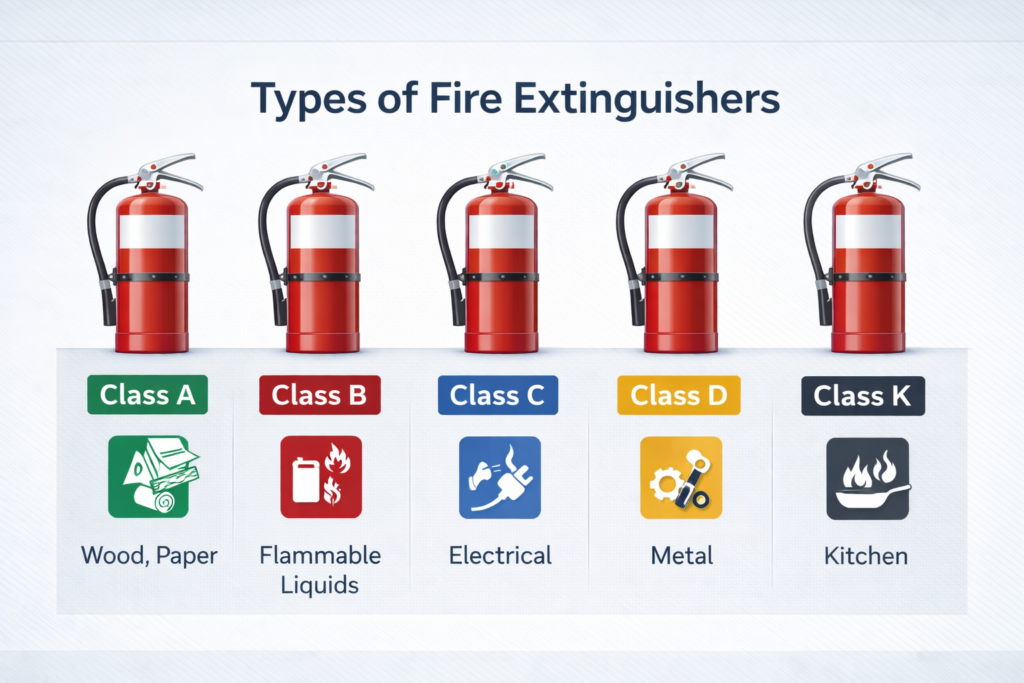
Types of Fire Extinguishers
- Class A – Ordinary Combustibles:
Designed for fires involving common materials such as wood, paper, cloth, and plastics. These are the most common types of fires in homes and offices. - Class B – Flammable Liquids:
Suitable for fires caused by flammable liquids such as petrol, oil, paint, and solvents. These extinguishers work by smothering the fire and preventing oxygen from fueling it. - Class C – Electrical Fires:
Specifically designed for fires involving electrical equipment. These extinguishers use non-conductive agents to safely suppress fires without the risk of electric shock. - Class D – Metal Fires:
Used for fires involving combustible metals such as magnesium, sodium, or aluminum. These require specialized extinguishing agents due to the intense heat and unique chemical reactions involved. - Class K – Kitchen Fires:
Intended for fires caused by cooking oils and fats, typically found in kitchens. These extinguishers are designed to cool and smother high-temperature grease fires effectively.
How to Use a Fire Extinguisher (PASS Method)
To ensure safe and effective use, fire extinguishers should be operated using the widely recognized PASS technique:
- Pull the Pin:
Remove the safety pin to break the tamper seal and prepare the extinguisher for use. - Aim at the Base of the Fire:
Direct the nozzle or hose toward the base of the fire, where the fuel source is located, rather than the flames. - Squeeze the Handle:
Press the handle to release the extinguishing agent in a controlled manner. - Sweep Side to Side:
Move the nozzle from side to side across the base of the fire until it is completely extinguished.
Proper training and familiarity with fire extinguisher operation are essential to ensure they are used effectively during emergencies. Regular inspection and maintenance further ensure that extinguishers remain fully functional and ready for immediate use.
3. Fire Suppression Systems
Fire suppression systems are advanced fire protection solutions designed to automatically detect, control, and extinguish fires with minimal human intervention. Unlike portable firefighting equipment, these systems are typically integrated into buildings and facilities, providing continuous protection in environments where rapid response is critical. They are particularly essential in workplaces, industrial settings, data centers, and other high-risk environments where fires can escalate quickly and cause significant damage.
These systems operate by detecting fire indicators such as heat, smoke, or flames and activating a suppression mechanism that targets the fire at its source. By responding automatically, fire suppression systems help contain fires in their early stages, preventing them from spreading and reducing the risk to occupants and assets.
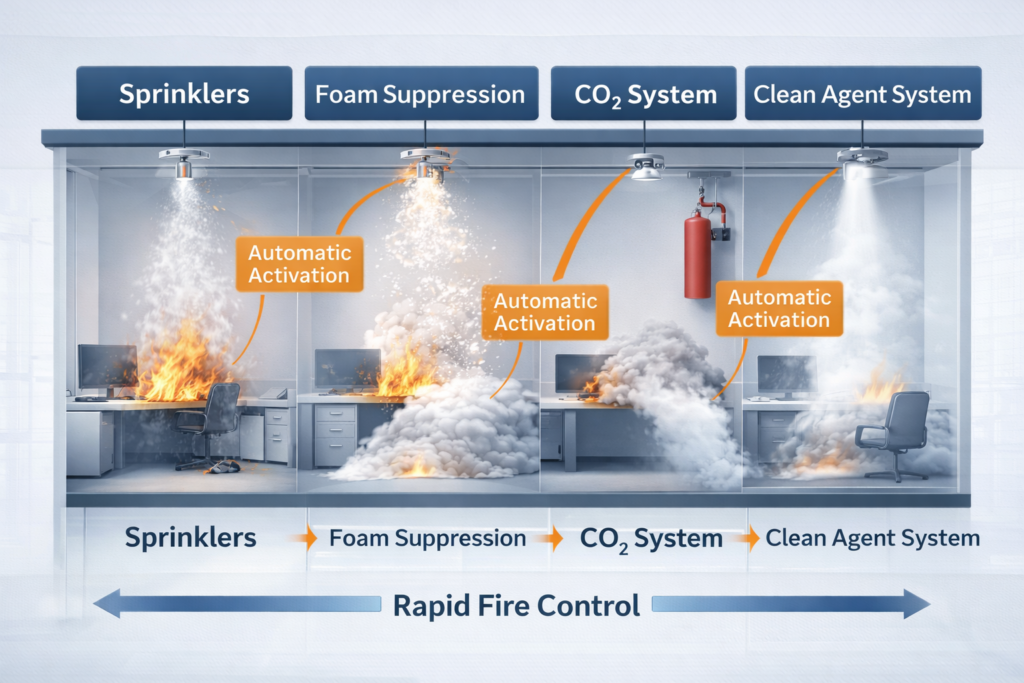
Types of Fire Suppression Systems
- Sprinkler Systems:
One of the most widely used fire suppression methods, sprinkler systems automatically release water when a certain temperature threshold is reached. They are highly effective in controlling and suppressing fires in commercial buildings, offices, and residential complexes. - Foam Suppression Systems:
Foam systems are designed for fires involving flammable liquids. They work by creating a thick foam layer that blankets the fire, cutting off the oxygen supply and preventing re-ignition. These systems are commonly used in fuel storage areas, chemical facilities, and industrial environments. - CO₂ (Carbon Dioxide) Systems:
CO₂ suppression systems extinguish fires by displacing oxygen in the affected area. They are particularly suitable for electrical and server environments, as they do not leave residue and minimize damage to sensitive equipment. - Clean Agent Systems:
Clean agent systems use specialized gases that suppress fire without leaving residue or causing harm to equipment. These systems are ideal for protecting critical infrastructure such as data centers, control rooms, and archives where water-based systems may not be appropriate.
Advantages
- Automatic Activation:
These systems detect fire conditions and activate without the need for manual intervention, ensuring immediate response even in unattended environments. - Rapid Fire Control:
By acting at the earliest stage of a fire, suppression systems quickly control or extinguish flames, reducing the likelihood of escalation. - Reduced Damage:
Early suppression minimizes structural damage, protects valuable assets, and lowers recovery costs following a fire incident.
Fire suppression systems are a vital component of a comprehensive fire safety strategy, offering reliable and efficient protection in environments where every second counts.
4. Fire Hose Reels and Hydrants
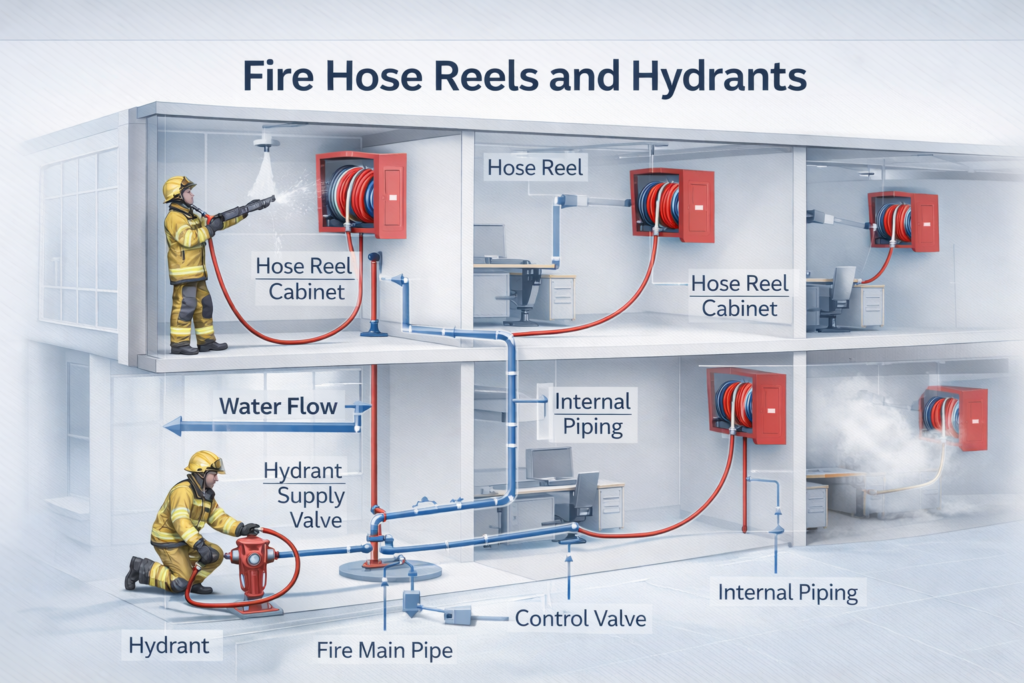
Fire hose reels and hydrant systems are essential components of fixed firefighting infrastructure, specifically designed to combat larger or more advanced fires where portable extinguishers may be insufficient. These systems provide a reliable and continuous supply of water, enabling trained personnel or emergency responders to effectively control and suppress fires over an extended period. They are commonly installed in commercial buildings, industrial facilities, warehouses, and public spaces where the risk and potential scale of fire incidents are significantly higher.
Fire hose reels typically consist of a hose wound on a reel, connected to a pressurized water supply, allowing for quick deployment and ease of use during emergencies. Fire hydrants, on the other hand, are external or internal water access points that provide high-capacity water flow, often used by firefighting teams to tackle large-scale fires. Together, these systems form a critical part of a building’s fire protection strategy, ensuring that sufficient water is available when needed.
Features
- Continuous Water Supply:
Both fire hose reels and hydrants deliver a steady and uninterrupted flow of water, allowing firefighting efforts to be sustained for longer durations without the limitations associated with portable equipment. - Effective for Large-Scale Fires:
These systems are specifically designed to handle more extensive fire incidents, making them suitable for environments where fires can spread rapidly or involve large areas. - Strategic Installation in Buildings:
Commonly installed in commercial, industrial, and high-occupancy buildings, they are positioned for easy accessibility to ensure quick response during emergencies. - Ease of Operation for Trained Users:
Fire hose reels are relatively simple to operate and can be used by trained occupants, while hydrants are typically utilized by professional firefighting personnel for more intensive fire suppression.
Fire hose reels and hydrant systems play a vital role in strengthening a building’s fire response capability, providing the necessary resources to control fires effectively and prevent further escalation.
5. Emergency and Evacuation Equipment
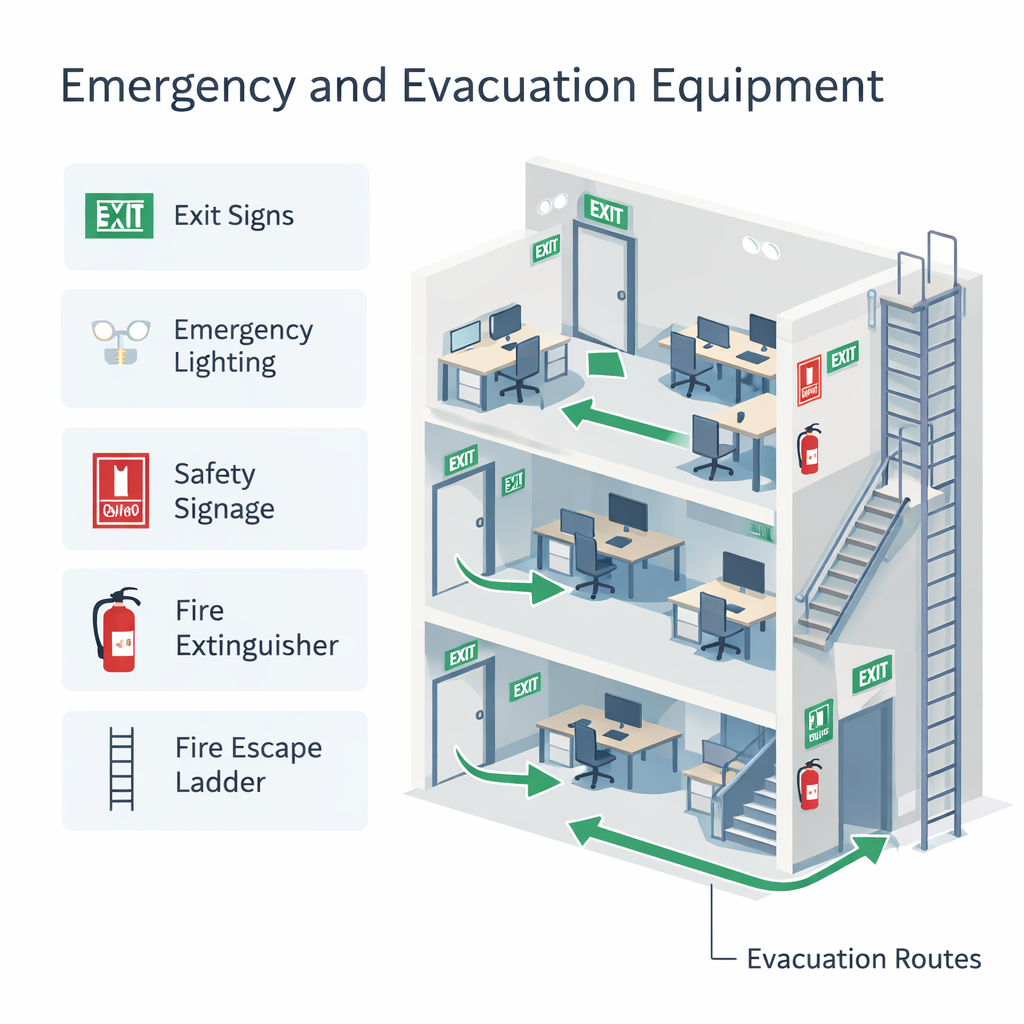
Emergency and evacuation equipment is a critical element of any comprehensive fire safety system, designed to facilitate the safe, efficient, and orderly movement of occupants during a fire or other emergency situation. While detection and suppression systems focus on controlling the fire itself, evacuation equipment ensures that individuals can quickly locate exit routes, navigate safely through potentially hazardous conditions, and evacuate the premises without panic or confusion.
In high-risk situations where visibility may be reduced due to smoke, power failures, or structural damage, properly installed and maintained evacuation tools play a vital role in guiding occupants to safety. These systems are especially important in workplaces, commercial buildings, and multi-storey residential properties where large numbers of people may need to evacuate simultaneously.
Includes
- Emergency Exit Signs:
Clearly illuminated exit signs are strategically placed throughout buildings to indicate the nearest safe exit routes. These signs remain visible even during power outages, ensuring occupants can quickly identify escape paths. - Fire Escape Ladders:
Fire escape ladders provide an alternative means of evacuation, particularly in multi-storey buildings where traditional exit routes may be inaccessible. They are commonly used in residential settings and serve as a crucial backup during emergencies. - Emergency Lighting:
Emergency lighting systems automatically activate when the main power supply fails, illuminating corridors, staircases, and exit routes. This ensures that occupants can move safely even in low-visibility conditions. - Safety Signage:
Fire safety signage includes directional signs, hazard warnings, and instructional notices that guide occupants during an emergency. These signs help reduce confusion, support evacuation procedures, and enhance overall safety awareness.
Emergency and evacuation equipment plays a vital role in minimizing risks during fire incidents by ensuring that occupants can exit the building quickly and safely. When combined with proper planning, regular drills, and clear evacuation procedures, these tools significantly improve emergency response outcomes and help prevent injuries or loss of life.
6. Fire Blankets and Personal Safety Equipment
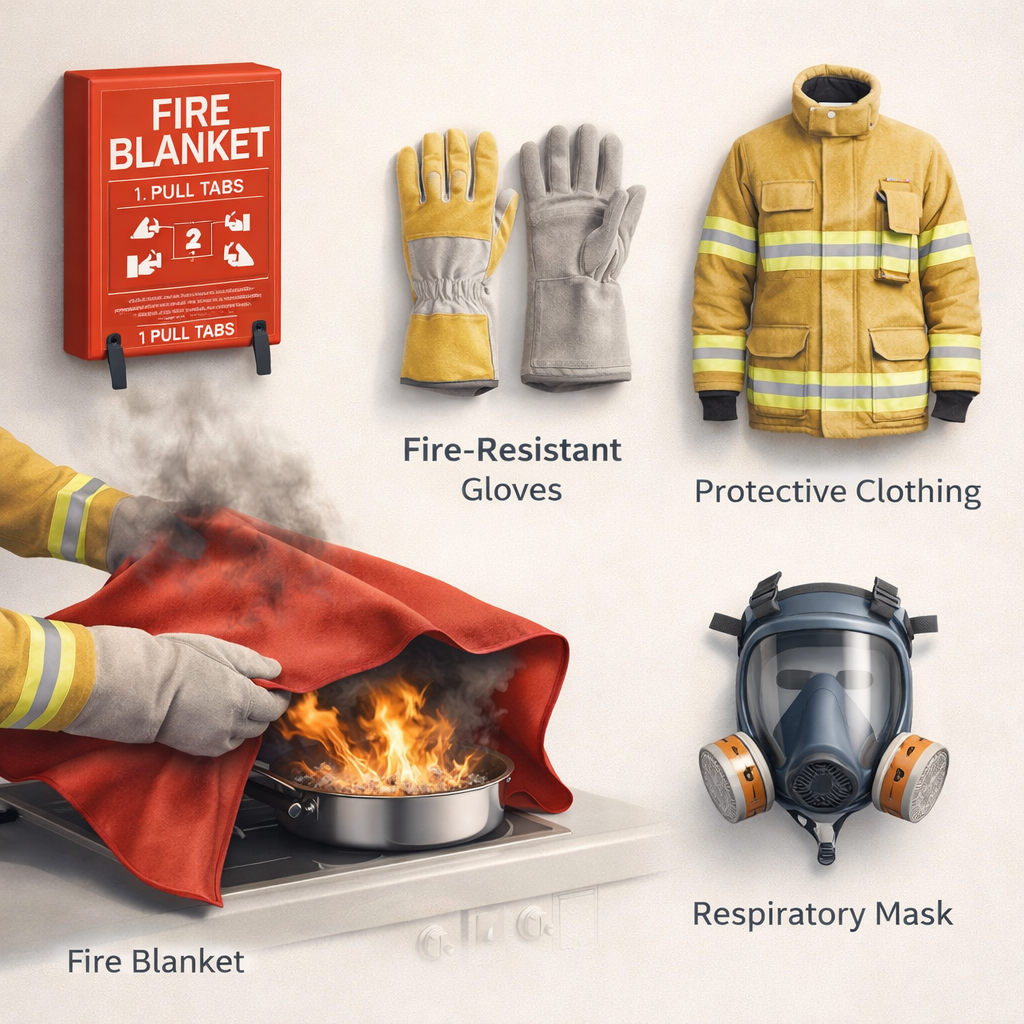
Fire blankets and personal safety equipment are essential components of fire protection, particularly for managing small-scale fires and providing immediate personal protection during emergencies. These tools are designed to offer a quick and effective response in situations where fires are localized and can be controlled without the need for more complex firefighting systems. Their simplicity, ease of use, and reliability make them highly valuable in both residential and workplace environments.
Fire blankets are typically made from fire-resistant materials and are used to smother flames by cutting off the oxygen supply, which is a key element required for combustion. They are especially effective in situations where using water or extinguishers may not be appropriate or safe. In addition to fire blankets, personal safety equipment such as heat-resistant gloves, protective clothing, and respiratory protection devices helps individuals safeguard themselves while responding to fire incidents or evacuating hazardous areas.
Uses
- Kitchen Fires:
Fire blankets are highly effective for extinguishing small fires caused by cooking oils, grease, or unattended appliances. They can be placed over the flames to quickly suppress the fire without spreading it. - Clothing Fires:
In the event that a person’s clothing catches fire, a fire blanket can be wrapped around the individual to smother the flames and reduce the risk of severe burns. - Personal Protection:
Fire blankets and protective gear can be used as a shield against heat and flames during evacuation or emergency response, providing an added layer of safety in high-risk situations.
Fire blankets and personal safety equipment play a crucial role in enhancing immediate response capabilities, offering a simple yet highly effective solution for controlling minor fire incidents and protecting individuals from harm.
Fire Safety Equipment Placement Guidelines
The strategic placement of fire safety equipment is a critical factor in ensuring its effectiveness during emergency situations. Proper positioning not only enhances accessibility but also enables a rapid and efficient response when every second counts. Even the most advanced fire protection systems may fail to deliver adequate protection if they are not installed in appropriate and easily accessible locations. Therefore, careful planning and adherence to recommended placement standards are essential components of a comprehensive fire safety strategy.
Best Practices
- Install Smoke Detectors Strategically:
Smoke detectors should be installed on ceilings and in key areas such as hallways and near sleeping zones to ensure early detection of smoke and fire hazards. - Position Fire Extinguishers in Accessible Locations:
Fire extinguishers should be placed near exits and in high-risk areas, including kitchens, electrical rooms, and machinery zones, allowing users to access them quickly while maintaining a safe exit path. - Ensure Alarm Audibility:
Fire alarm systems must be clearly audible throughout the entire building, ensuring that all occupants are promptly alerted in the event of an emergency. - Maintain Visibility and Accessibility:
All fire safety equipment should be clearly visible, properly labeled, and free from obstructions at all times to prevent delays during critical situations. - Install Emergency Lighting Along Escape Routes:
Emergency lighting systems should be positioned along corridors, staircases, and designated escape routes to guide occupants safely during power outages or low-visibility conditions.
Proper placement of fire safety equipment significantly enhances response efficiency, supports safe evacuation, and strengthens overall fire protection measures within any environment.
Fire Safety Equipment Maintenance Schedule
Regular inspection and maintenance of fire safety equipment are essential to ensure reliability and optimal performance during emergencies. A well-defined maintenance schedule helps identify potential faults, ensures compliance with safety standards, and guarantees that all equipment remains fully operational when needed. Routine checks and timely servicing significantly reduce the risk of equipment failure and enhance overall fire preparedness.
| Equipment | Inspection Frequency | Maintenance Action |
|---|---|---|
| Fire Extinguishers | Monthly | Check pressure, seals, expiry |
| Smoke Detectors | Monthly | Test alarms, replace batteries |
| Fire Alarm Systems | Quarterly | Full system testing |
| Sprinkler Systems | Annually | Professional inspection |
| Emergency Lighting | Monthly | Functional testing |
Fire Safety Equipment Checklist (Homes & Workplaces)
A well-structured fire safety checklist is essential for ensuring that both residential and workplace environments are adequately prepared to prevent and respond to fire emergencies. Regularly reviewing and updating this checklist helps maintain compliance with safety standards, improves readiness, and minimizes potential risks. The following checklists outline the key fire safety equipment and measures that should be in place.
Home Fire Safety Checklist
- Smoke Detectors Installed in Key Areas:
Ensure smoke detectors are installed in critical locations such as bedrooms, hallways, and living areas to provide early warning. - Fire Extinguishers in Accessible Locations:
Keep at least one fire extinguisher in high-risk areas such as the kitchen and garage for immediate response. - Fire Blanket Available:
Maintain a fire blanket in the kitchen or other high-risk areas for quickly smothering small fires. - Carbon Monoxide Detectors Installed:
Install carbon monoxide detectors to monitor and alert occupants of dangerous gas levels associated with fire hazards. - Emergency Escape Plan in Place:
Develop and communicate a clear evacuation plan, ensuring all household members are familiar with exit routes and procedures.
Workplace Fire Safety Checklist
- Fire Alarm System Installed and Tested:
Ensure a fully functional fire alarm system is installed and tested regularly to provide timely alerts. - Fire Extinguishers Accessible and Maintained:
Position fire extinguishers in visible and accessible locations, and ensure they are regularly inspected and maintained. - Sprinkler System Operational:
Verify that automatic sprinkler systems are properly installed and functioning to control fires effectively. - Emergency Exits Clearly Marked:
Ensure all exit routes are clearly marked with visible signage and remain unobstructed at all times. - Regular Fire Drills Conducted:
Conduct periodic fire drills to train occupants and employees, ensuring they are prepared to respond efficiently during emergencies.
Implementing and maintaining these checklists significantly enhances fire safety preparedness, supports effective emergency response, and helps create a secure and well-protected environment.
Fire Safety Equipment Comparison
Understanding the primary functions and appropriate applications of different fire safety equipment is essential for selecting the most effective solutions for specific environments. The following comparison table provides a clear overview of commonly used fire safety equipment, their main purpose, and the environments in which they are most effective.
| Equipment | Primary Use | Best For |
|---|---|---|
| Fire Extinguisher | Control small fires | Homes, offices |
| Fire Alarm System | Early detection | All buildings |
| Sprinkler System | Automatic suppression | Workplaces |
| Fire Hose Reel | Continuous water supply | Large buildings |
| Fire Blanket | Smother small fires | Kitchens |
How to Choose the Right Fire Safety Equipment
Selecting the appropriate fire safety equipment is a critical decision that directly impacts the effectiveness of fire prevention and emergency response measures. The right combination of equipment not only enhances safety but also ensures compliance with established standards and reduces potential risks. Because fire hazards can vary significantly across different environments, it is essential to carefully assess specific requirements before making a selection. To gain a comprehensive understanding of how to properly install, maintain, and use fire safety equipment, consider enrolling in our Fire Safety and Risk Management Courses, which provide professional guidance and practical training for learners.
Key Considerations
- Type of Environment:
The nature of the setting—whether residential, commercial, or industrial—plays a significant role in determining the type and complexity of fire safety equipment required. Workplaces and high-risk environments often demand more advanced systems compared to standard residential setups. - Fire Risk Level:
Identifying potential fire hazards is essential. Environments with higher fire risks, such as those involving flammable materials or electrical equipment, require specialized fire protection systems and more robust safety measures. - Size and Layout of the Building:
Larger buildings or multi-storey structures require comprehensive coverage, including multiple detection systems, extinguishers, and clearly defined evacuation routes to ensure full protection. - Type of Materials Present:
The presence of specific materials, such as flammable liquids, gases, or metals, determines the type of fire extinguishers and suppression systems needed. Using incorrect equipment can be ineffective or even dangerous. - Compliance and Safety Standards:
Fire safety equipment must meet recognized safety regulations and standards applicable to the environment. Compliance ensures that the equipment is reliable, properly tested, and suitable for use during emergencies.
Expert Tip
Always select fire safety equipment that is certified and compliant with recognized industry standards. In addition, ensure that all equipment is properly installed, regularly maintained, and supported by adequate training to maximize its effectiveness during an emergency.
Maintenance and Inspection Guide
Regular maintenance and systematic inspection of fire safety equipment are essential to ensure reliability and optimal performance during emergency situations. Even the most advanced fire protection systems can fail if they are not properly maintained, potentially leading to serious consequences. A well-planned maintenance program helps identify faults at an early stage, ensures compliance with safety standards, and guarantees that all equipment remains fully operational when required.
Routine inspections not only enhance the effectiveness of fire safety systems but also contribute to a proactive safety culture by reducing risks and improving emergency preparedness.
Maintenance Checklist
- Inspect Fire Extinguishers Monthly:
Check pressure levels, safety seals, and physical condition to ensure extinguishers are ready for immediate use and have not expired or been tampered with. - Test Fire Alarm Systems Regularly:
Conduct routine testing of fire alarms and detection systems to verify that all components, including sensors and sounders, are functioning correctly and providing timely alerts. - Check Sprinkler Systems Periodically:
Inspect sprinkler heads, valves, and water supply connections to ensure the system can activate effectively in the event of a fire. - Replace Expired or Damaged Equipment:
Ensure that any outdated, expired, or malfunctioning equipment is promptly replaced to maintain full operational readiness. - Conduct Fire Drills:
Organize regular fire drills to train occupants or employees, ensuring they are familiar with evacuation procedures and the proper use of fire safety equipment.
Implementing a consistent maintenance and inspection routine is vital for ensuring that fire safety equipment performs effectively during emergencies, ultimately enhancing safety and minimizing potential risks.
Benefits of Fire Safety Equipment
Fire safety equipment plays a vital role in reducing the impact of fire-related incidents and ensuring a secure environment for both individuals and organizations. When properly installed, maintained, and utilized, these systems provide multiple layers of protection that contribute to overall safety, operational continuity, and risk management.
Key Benefits
- Protection of Lives and Property:
Fire safety equipment helps safeguard occupants by enabling early detection and rapid response, significantly reducing the risk of injuries and fatalities while protecting valuable assets. - Minimization of Fire Damage:
Timely intervention through detection and suppression systems limits the spread of fire, thereby reducing structural damage and associated financial losses. - Compliance with Safety Standards:
The use of certified fire safety equipment ensures adherence to established regulations and safety requirements, helping organizations avoid legal liabilities and maintain operational credibility. - Enhanced Emergency Preparedness:
Properly implemented fire safety systems improve readiness by enabling quicker response times, supporting evacuation procedures, and ensuring that individuals are better equipped to handle emergencies. - Creation of a Safer Environment:
A well-equipped fire safety infrastructure fosters a culture of safety awareness and responsibility, contributing to a secure and resilient environment for occupants, employees, and visitors.
Overall, fire safety equipment is an essential investment that not only protects against potential hazards but also strengthens long-term safety and risk management strategies.
Common Fire Safety Mistakes to Avoid
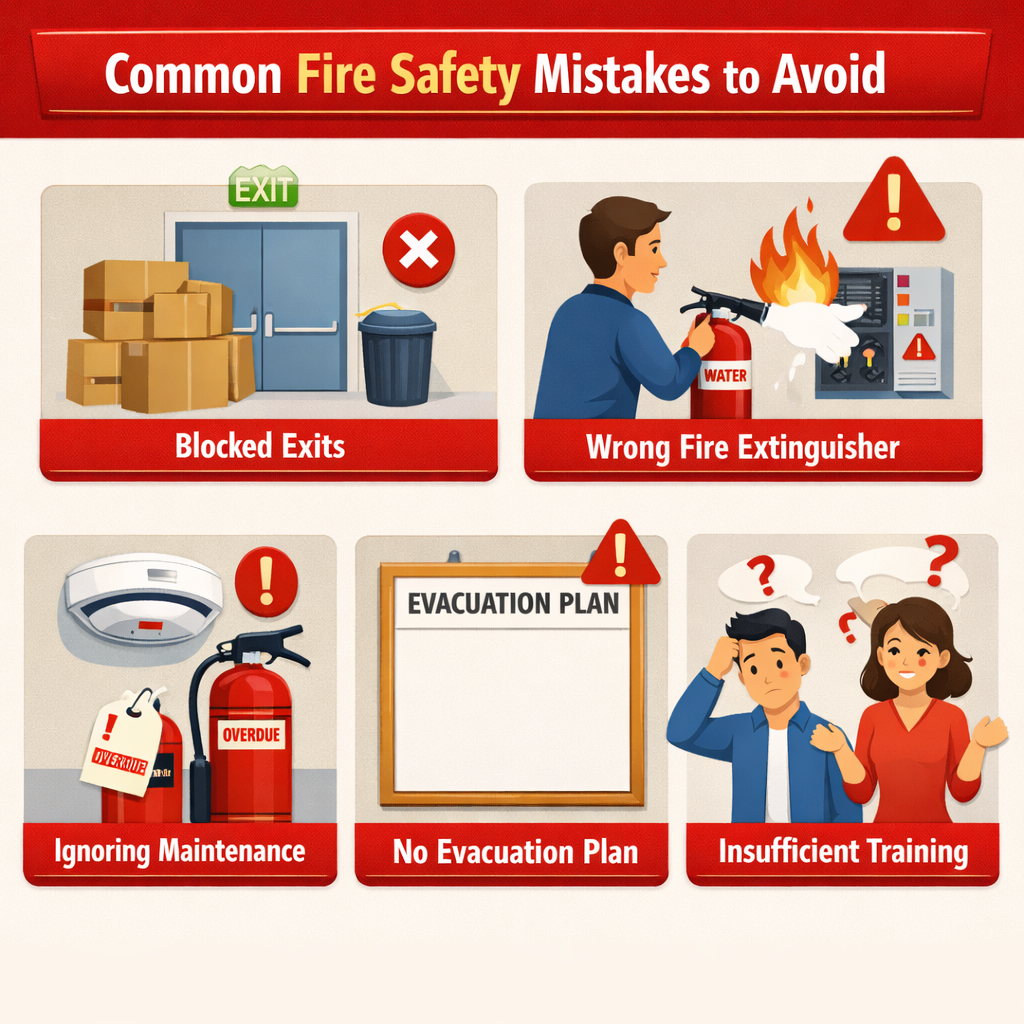
Avoiding common fire safety mistakes is essential for maintaining an effective and reliable fire protection system. Even when appropriate equipment is installed, improper practices or negligence can significantly reduce its effectiveness and increase the risk of severe consequences during an emergency. Identifying and addressing these common errors helps ensure a safer environment and improves overall emergency response.
Key Mistakes to Avoid
- Neglecting Regular Maintenance:
Failing to inspect and service fire safety equipment can result in malfunction or failure during critical situations. Routine maintenance is essential to ensure all systems remain fully operational. - Using the Incorrect Type of Fire Extinguisher:
Applying the wrong type of extinguisher to a fire can be ineffective or even dangerous, potentially worsening the situation. It is crucial to match the extinguisher type with the specific class of fire. - Obstructing Emergency Exits:
Blocking or restricting access to emergency exits can delay evacuation and increase the risk of injury. All exit routes should remain clear, visible, and easily accessible at all times. - Lack of a Clear Evacuation Plan:
Not having a well-defined and communicated evacuation plan can lead to confusion and panic during emergencies. Occupants should be aware of exit routes and procedures in advance. - Insufficient Training and Awareness:
Without proper training, individuals may not know how to use fire safety equipment or respond effectively in an emergency. Regular training and awareness programs are essential for improving preparedness.
By addressing these common mistakes, individuals and organizations can strengthen their fire safety measures, reduce risks, and ensure a more effective response in emergency situations.
Conclusion
Fire safety equipment is a critical component of any comprehensive strategy designed to protect homes and workplaces from fire-related risks. From early detection systems and portable firefighting tools to advanced suppression technologies and evacuation equipment, each element plays a distinct and essential role in preventing, controlling, and mitigating fire incidents.
A well-integrated approach—combining the right selection of equipment, proper installation, regular maintenance, and continuous awareness—ensures maximum effectiveness of fire protection measures. By focusing on these practices, individuals and organizations can significantly reduce potential risks, enhance emergency preparedness, and safeguard both lives and property.
For those looking to explore fire safety in greater detail, gain practical tips, and understand effective strategies, visit our Fire Safety Blog for comprehensive insights and guidance on maintaining a safe and resilient environment.