
What Does a Construction Site Manager Do? Ultimate Roles, Responsibilities and Daily Tasks
Construction projects involve far more than materials, machinery and skilled trades. Every working day brings deliveries to coordinate, subcontractors to manage, safety requirements to maintain, drawings to check and deadlines to meet. At the centre of these activities is the construction site manager—the professional responsible for keeping day-to-day site operations organised and moving in the right direction.
A construction site manager turns construction plans into coordinated activity on site. From an early-morning inspection and workforce briefing to checking workmanship, monitoring progress and resolving unexpected problems, the role combines leadership, technical understanding, communication and decision-making. On a busy project, priorities can change quickly, so effective site management is essential for keeping different trades and resources aligned.
For anyone considering a career in construction management, understanding what happens behind the site-office door and across the project itself is important. This guide explains what a construction site manager does, their key roles and responsibilities, typical daily tasks, involvement at different project stages, essential skills and the qualifications that can support progression into site management in the UK.
What Is a Construction Site Manager?
A construction site manager is responsible for overseeing and coordinating the day-to-day activities of a construction site. The role involves organising labour and subcontractors, monitoring health and safety, checking the quality of work, coordinating materials and equipment, tracking progress and helping ensure construction activities follow project plans and specifications.
Depending on the size and structure of a project, a site manager may work closely with project managers, construction managers, quantity surveyors, architects, engineers, clients, suppliers and specialist subcontractors.
On smaller projects, the site manager may take responsibility for a broad range of operational activities. Larger and more complex projects may have several site managers or assistant site managers responsible for particular buildings, zones, packages or construction activities.
What Does a Construction Site Manager Do?
A construction site manager oversees the daily operation of a construction project and coordinates the people, resources and activities required to deliver the work. Typical duties include managing subcontractors, monitoring construction progress, maintaining health and safety standards, checking workmanship, coordinating materials and plant, maintaining site records and resolving operational problems.
The overall objective is to help ensure that construction work is completed:
- safely
- according to the construction programme
- to the required quality standards
- in accordance with drawings and specifications
- using available resources effectively
- in compliance with applicable requirements
- with effective communication between project stakeholders
The exact responsibilities vary according to the employer, type of construction project, contractual arrangements and level of seniority.
Construction Site Manager Roles and Responsibilities at a Glance
| Area of Responsibility | What the Site Manager Typically Does |
|---|---|
| Site planning | Organises daily and upcoming construction activities |
| Workforce management | Coordinates workers, supervisors and subcontractors |
| Health and safety | Monitors safe working practices and site controls |
| Progress monitoring | Checks whether work is progressing against the programme |
| Quality control | Inspects workmanship against drawings and specifications |
| Materials | Coordinates material requirements, storage and deliveries |
| Plant and equipment | Helps ensure required plant and equipment are available |
| Communication | Liaises with clients, contractors, engineers and other teams |
| Documentation | Maintains relevant site records, reports and progress information |
| Problem-solving | Responds to delays, conflicts and operational issues |
| Resources | Coordinates labour, materials and equipment efficiently |
| Compliance | Helps ensure work follows relevant project and regulatory requirements |
What Are the Main Responsibilities of a Construction Site Manager?
Although responsibilities differ between projects, construction site managers commonly oversee several interconnected areas.
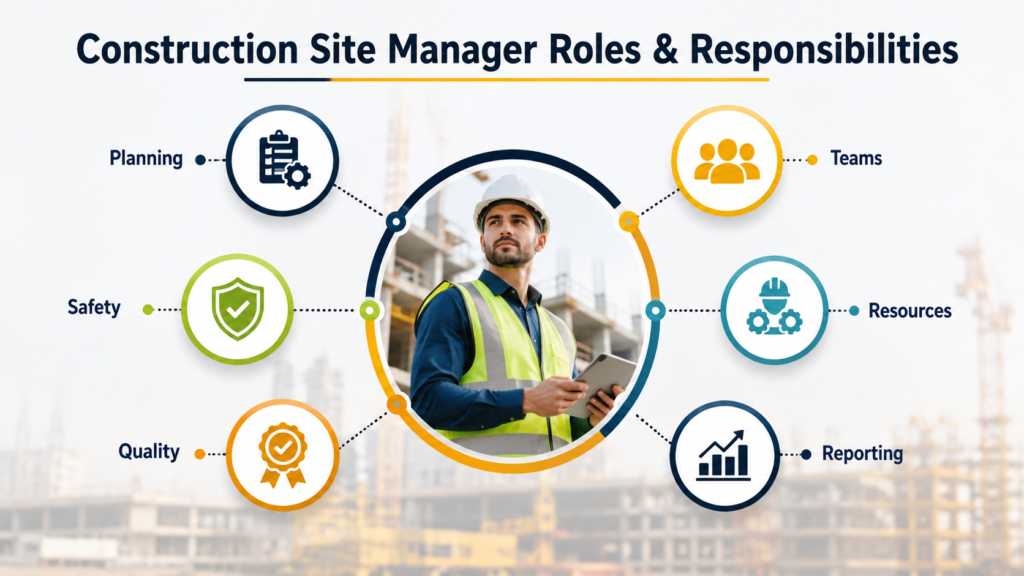
1. Planning and Organising Site Operations
Effective construction work requires activities to happen in the correct sequence. A site manager reviews upcoming work and coordinates labour, materials, equipment and subcontractors so that individual activities can proceed efficiently.
This can involve reviewing the construction programme, checking upcoming milestones, identifying dependencies between trades and making sure work areas are ready before teams arrive.
For example, a site manager may need to ensure that structural work has been completed and inspected before following trades can begin their installations.
2. Managing Contractors and Subcontractors
Modern construction projects often involve multiple specialist subcontractors working on the same site. These may include groundworkers, electricians, plumbers, steelworkers, carpenters, roofers, plasterers and mechanical or electrical contractors.
The site manager helps coordinate these teams to prevent clashes and unnecessary delays.
Typical activities can include:
- confirming labour availability
- allocating or coordinating work areas
- communicating programme requirements
- monitoring subcontractor progress
- identifying conflicts between trades
- checking that required information is available
- addressing performance or coordination issues
Good subcontractor management is particularly important because delays in one activity can affect several subsequent stages of the construction programme.
3. Maintaining Health and Safety on Site
Health and safety is a major part of construction site management.
A site manager may be involved in monitoring working conditions, checking site controls, coordinating briefings and making sure agreed safety procedures are followed.
Depending on the project and organisational arrangements, daily activities may include site inspections, safety briefings, toolbox talks, reviewing work areas and checking that relevant risk controls are being implemented.
In the UK, site management also operates within a wider legal and regulatory framework, including applicable health and safety legislation and the Construction (Design and Management) Regulations 2015.
Health and safety is not simply a morning checklist. Conditions can change throughout the day as workers, plant, deliveries and construction activities move around the site.
4. Monitoring Construction Progress
A construction programme sets out when different activities should take place and when key milestones should be achieved.
The site manager monitors actual progress against this programme.
This requires regularly checking:
- work completed
- work currently underway
- upcoming activities
- labour availability
- subcontractor performance
- material availability
- potential delays
- programme dependencies
If progress starts falling behind schedule, the site manager may work with the wider project team to identify the cause and determine appropriate corrective action.
5. Managing the Construction Programme
Monitoring progress and managing the programme are closely connected.
The site manager needs to understand how today’s work affects tomorrow’s activities. A delay to one trade may prevent another contractor from starting, which can create a chain of programme disruption.
Site managers therefore need to look ahead rather than focus exclusively on the work taking place at that moment.
Short-term planning may involve reviewing activities for the next day, week or several weeks and checking whether the necessary labour, materials, plant, drawings and access arrangements will be available.
6. Checking Quality and Workmanship
Completing work quickly has little value if it does not meet the required standard.
Quality control is therefore another important construction site manager responsibility.
Site managers who want to develop deeper expertise in inspections, construction standards, material testing and quality assurance can also build specialist knowledge through construction quality control training.
A site manager may inspect completed or ongoing work against relevant:
- drawings
- specifications
- approved details
- quality requirements
- manufacturer instructions
- inspection requirements
Where defects or non-conforming work are identified, corrective action may need to be coordinated before subsequent construction activities proceed.
Early identification of quality problems can reduce costly rework later in the project.
7. Coordinating Materials and Deliveries
A construction site needs the right materials at the right time—but simply ordering everything early is rarely practical.
Storage space may be limited, some products require special handling, and poorly scheduled deliveries can create congestion or interfere with other site activities.
Site managers therefore help coordinate material requirements and deliveries around the construction programme.
This may involve checking:
- upcoming material requirements
- delivery dates
- unloading arrangements
- storage areas
- access routes
- material condition
- coordination with suppliers and subcontractors
Effective delivery management keeps work moving while reducing unnecessary disruption.
8. Coordinating Plant and Equipment
Excavators, cranes, access equipment, lifting equipment and other plant may be required at specific stages of a construction project.
The site manager helps ensure that required resources are coordinated with planned activities.
Poor plant coordination can lead to idle workers, programme delays and additional costs.
Site managers may therefore need to consider what equipment is required, where it will operate, when it will be available and whether its use could conflict with other site activities.
9. Managing Costs and Resources
Site managers are not always responsible for the entire project budget, but their operational decisions can directly affect project costs.
Labour inefficiency, material waste, damaged products, repeated work, plant downtime and programme delays can all increase expenditure.
Site managers therefore need an awareness of how site activities influence commercial performance.
They may work closely with project managers, quantity surveyors and commercial teams when reviewing progress, resources, variations and cost-related issues.
10. Liaising With Clients, Architects and Engineers
Construction site management requires constant communication.
Site managers can act as an important operational link between what is happening physically on site and the wider project team.
They may communicate with:
- project managers
- clients
- architects
- structural engineers
- civil engineers
- quantity surveyors
- subcontractors
- suppliers
- health and safety personnel
- building control professionals
Clear communication helps technical questions, design issues, programme concerns and site problems reach the appropriate people before they develop into larger issues.
11. Managing Site Documentation and Reports
Construction projects generate significant amounts of information.
Depending on the project, site managers may maintain or contribute to records such as:
- daily site diaries
- progress reports
- inspection records
- delivery records
- photographs
- meeting notes
- safety documentation
- quality records
- labour information
- programme updates
- records of site issues
Accurate documentation creates a record of project activity and supports communication, quality management, progress monitoring and accountability.
12. Solving On-Site Problems
Construction projects rarely progress without unexpected challenges.
A delivery may arrive late. Drawings may contain conflicting information. Weather may affect planned work. A subcontractor may have insufficient labour. Existing site conditions may differ from expectations.
A capable construction site manager must assess the situation, understand its impact and coordinate an appropriate response.
This makes problem-solving and decision-making essential site management skills.
What Does a Construction Site Manager Do Each Day?
There is no completely standard working day for a construction site manager. Activities depend on the project stage, site size, workforce, weather, programme and problems that arise.
However, a typical day might look something like this:
| Approximate Time | Example Daily Task |
| 6:30–7:00 am | Arrive on site, review conditions and check planned activities |
| 7:00–7:30 am | Coordinate morning briefings and communicate priorities |
| 7:30–9:00 am | Check workforce, subcontractors and active work areas |
| 9:00–10:30 am | Conduct site inspections and monitor progress and quality |
| 10:30–12:00 pm | Coordinate deliveries, plant, technical information and subcontractors |
| 12:00–1:00 pm | Review programme issues and upcoming work |
| 1:00–2:30 pm | Attend meetings and discuss technical or operational matters |
| 2:30–4:00 pm | Reinspect work, resolve issues and check progress |
| 4:00–5:00 pm | Update reports/site records and plan upcoming activities |
This schedule is illustrative. Actual working hours and responsibilities vary considerably between projects and employers.
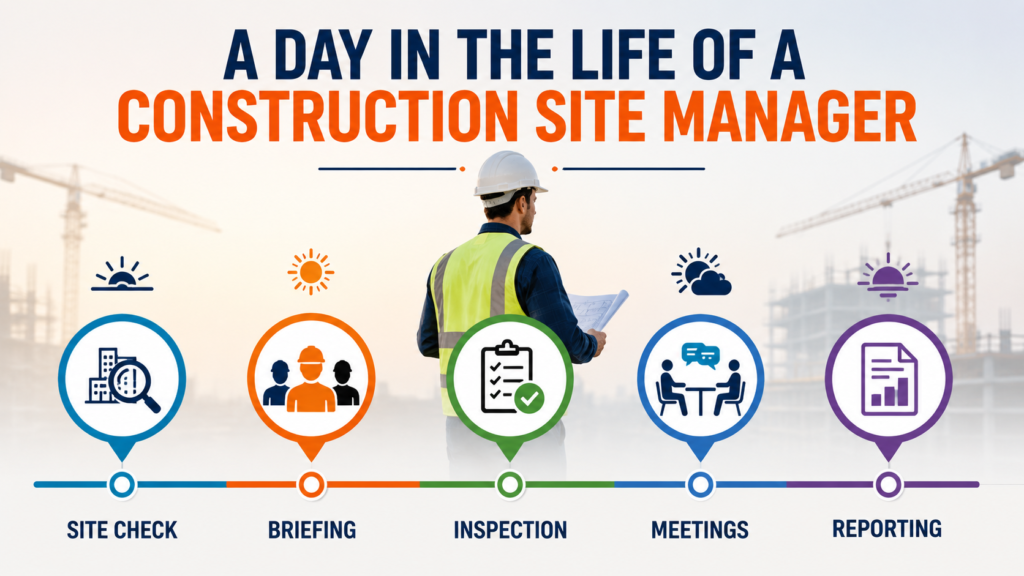
A Closer Look at a Site Manager’s Daily Tasks
Early-Morning Site Review
Before construction activity reaches full pace, the site manager may review site conditions and identify anything that could affect the day’s programme.
This can include checking access routes, work areas, planned deliveries, weather-related issues and activities carried over from the previous day.
Morning Briefings and Coordination
The beginning of the working day is an important opportunity to communicate priorities.
Managers and supervisors may discuss scheduled activities, safety considerations, site changes, deliveries and coordination issues.
This helps teams understand what is happening around them and how their work connects with other activities.
Site Inspections
A significant portion of the day may be spent walking the construction site.
These inspections allow the manager to observe:
- work progress
- workmanship
- safety conditions
- housekeeping
- subcontractor activity
- material usage
- access arrangements
- developing problems
Being physically present on site helps managers identify issues that may not be obvious from reports or meetings.
Meetings and Communication
Construction site managers may attend several types of meetings depending on the project.
These could include progress meetings, subcontractor coordination meetings, safety meetings, design discussions and client meetings.
The site manager may need to explain what is happening on site, identify constraints and communicate what is required from other members of the project team.
End-of-Day Review
Towards the end of the working day, attention often shifts towards progress reporting and upcoming activities.
The manager may check what has been completed, identify outstanding work, update relevant records and review what is planned next.
This creates continuity between one working day and the next.
What Does a Site Manager Do at Different Stages of a Construction Project?
One area that is sometimes overlooked is how the site manager’s responsibilities change throughout the project lifecycle.
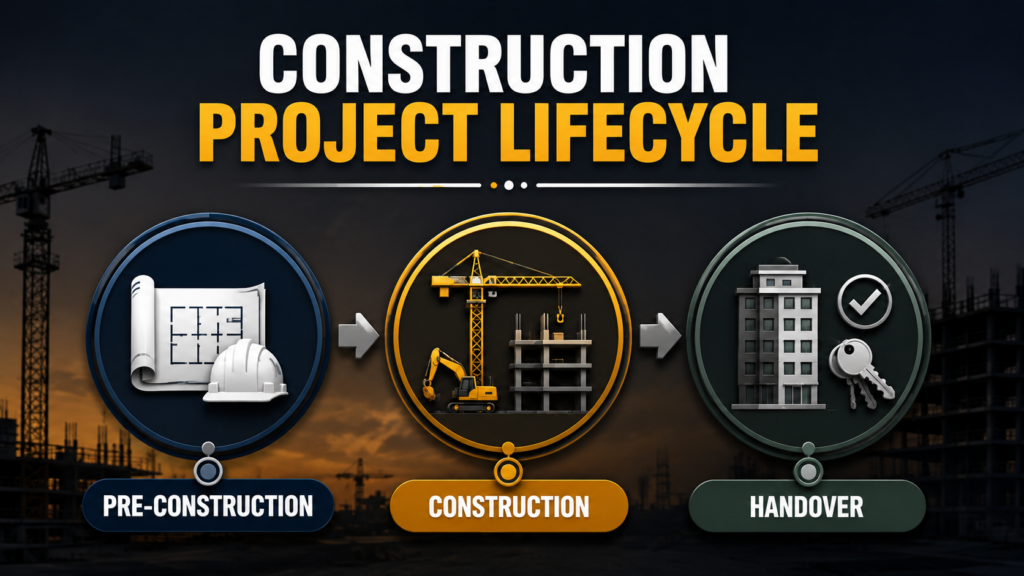
Before Construction Starts
Before major construction activity begins, site management may be involved in preparing the site for efficient operations.
Activities can include reviewing project information, understanding the programme, helping plan site logistics, considering access and storage requirements, coordinating initial resources and preparing for early construction activities.
Effective preparation can prevent avoidable problems once the site becomes busy.
During Construction
This is usually the most operationally intensive stage.
The site manager coordinates workers and subcontractors, monitors safety, checks progress, manages daily site activities, reviews quality, coordinates deliveries and responds to problems.
As the project develops, different trades enter and leave the site, meaning coordination requirements continuously change.
Project Completion and Handover
The site manager’s role does not end when most physical construction work is complete.
Towards completion, attention may shift towards:
- outstanding work
- snagging
- defect correction
- final inspections
- quality records
- site completion activities
- documentation
- handover coordination
Effective close-out helps ensure the completed project meets the required standards before final handover.
What Skills Does a Construction Site Manager Need?
Construction site management combines technical knowledge with strong interpersonal and organisational skills.
Leadership
A site manager needs to provide clear direction and coordinate people working across different trades and organisations.
Communication
Instructions and information need to be communicated accurately to workers, subcontractors, clients and technical professionals.
Organisation
Multiple activities happen simultaneously on construction sites. Strong organisation helps managers coordinate priorities, resources and deadlines.
Problem-Solving
Unexpected issues are common. Site managers need to evaluate problems quickly and determine practical solutions.
Construction Knowledge
Understanding construction methods, sequencing, drawings, specifications, materials and site processes helps managers make informed decisions.
Health and Safety Awareness
Site managers need a strong understanding of safe working practices and the controls relevant to the construction activities they oversee.
Time Management
Deadlines are central to construction projects. Managers must balance immediate problems with upcoming programme requirements.
Attention to Detail
Small quality, safety or coordination problems can become expensive if they are overlooked.
Commercial Awareness
Understanding how labour, materials, plant, delays and rework influence project costs helps managers make better operational decisions.
What Qualifications Does a Construction Site Manager Need in the UK?
There is no single route into construction site management.
Some professionals progress through construction trades and supervisory positions, developing practical experience before moving into management. Others enter through construction-related college qualifications, apprenticeships, higher education or vocational management qualifications.
Depending on the role and employer, relevant areas of study can include:
- construction management
- site supervision
- civil engineering
- building studies
- construction project management
- occupational health and safety
- leadership and management
- construction site management
Vocational qualifications can be particularly useful for experienced construction professionals who want their workplace competence formally assessed.
Employers may also look for appropriate industry cards, safety training and evidence of relevant site experience depending on the position.
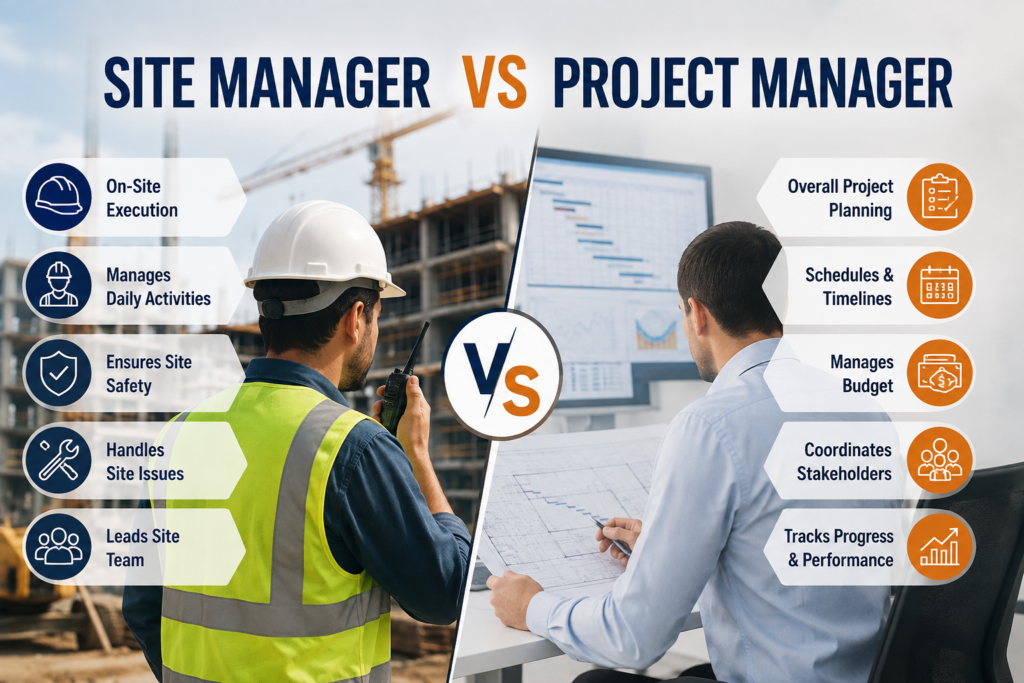
Construction Site Manager vs Project Manager: What’s the Difference?
The two roles work closely together but generally have different areas of emphasis.
| Construction Site Manager | Project Manager |
| Focuses heavily on daily site operations | Focuses on overall project delivery |
| Coordinates site workers and subcontractors | Coordinates broader project stakeholders |
| Monitors day-to-day construction activities | Oversees wider programme and project objectives |
| Checks site safety and workmanship | Manages broader project risks and performance |
| Handles immediate operational issues | Deals with higher-level project issues |
| Maintains a strong physical site presence | May divide time between site, office and stakeholder meetings |
The exact division of responsibilities depends on the employer, project size and organisational structure.
On smaller projects, there may be significant overlap between the two positions.
Site Manager vs Construction Manager
The titles “site manager” and “construction manager” are sometimes used interchangeably, but organisations may define them differently.
A site manager is generally closely involved in the daily operation of a particular construction site.
A construction manager may have broader responsibility for construction delivery and could oversee multiple work packages, sections or site management teams on a large project.
Because job titles vary between employers, the actual job description and level of responsibility are more important than the title alone.
What Are the Biggest Challenges Construction Site Managers Face?
Site management can be demanding because managers must balance several priorities simultaneously.
Common challenges include:
- programme delays
- labour shortages
- late material deliveries
- subcontractor coordination
- changing weather
- design changes
- quality defects
- safety concerns
- restricted site access
- plant availability
- unexpected ground or site conditions
- communication problems
- budget pressures
A strong construction site manager does not simply react to problems. Effective planning involves identifying potential constraints early and taking action before they significantly affect the project.
Is Construction Site Management a Good Career?
Construction site management can offer a strong progression route for people who enjoy leadership, practical problem-solving and working in a project-based environment.
The role provides opportunities to work on different types of construction projects, from residential developments and commercial buildings to infrastructure and major civil engineering schemes.
Experience in site management can also support progression towards positions such as senior site manager, construction manager, project manager or other senior construction-management roles.
However, it is a demanding career. Site managers may work long hours, operate in changing site conditions and make decisions under significant time and programme pressure.
The role is therefore particularly suited to professionals who are organised, confident communicators and comfortable taking responsibility.

Why Is the Construction Site Manager Important?
A construction project may have an excellent design and an experienced workforce, but successful delivery still depends on effective coordination.
The construction site manager connects planning with execution.
By coordinating labour, subcontractors, materials, equipment, safety, quality and programme requirements, site managers help transform project plans into completed construction work.
Their decisions can influence:
- site safety
- productivity
- workmanship
- project delays
- construction costs
- communication
- resource efficiency
- client satisfaction
- successful project completion
This is why competent site management remains an important part of construction project delivery.
Conclusion
A construction site manager plays a vital role in keeping construction projects safe, organised and progressing according to plan. From coordinating contractors and subcontractors to monitoring health and safety, quality, materials, resources and daily site activities, the role requires strong leadership, technical knowledge and practical problem-solving skills. Understanding the roles, responsibilities and daily tasks of a construction site manager can help aspiring professionals determine whether this demanding but rewarding career aligns with their skills and long-term ambitions in the construction industry.
Frequently Asked Questions
Final Thoughts
A construction site manager plays a central role in turning construction plans into coordinated activity on site. From organising subcontractors and monitoring safety to checking workmanship, managing resources, resolving problems and tracking progress, the role touches almost every aspect of day-to-day construction delivery.
What makes site management particularly demanding is the need to balance immediate site priorities with the wider construction programme. A decision involving one delivery, subcontractor or work area can affect several activities later in the project. Strong planning, communication and technical understanding are therefore just as important as leadership.
For construction professionals aiming to progress into site management or more senior construction leadership positions, developing recognised management competence alongside practical site experience can provide a strong foundation for career progression.