
Industrial Fire Safety: Risk Assessment and Prevention Strategies
Industrial fire safety is a critical component of workplace health, operational continuity, and risk management across industries worldwide. Industrial facilities—from manufacturing plants and warehouses to chemical processing sites, oil and gas installations, and large-scale construction projects—contain combustible materials, complex machinery, and high-energy processes that significantly increase the risk of fire incidents. Failure to address fire safety can result in devastating consequences, including loss of life, environmental damage, operational shutdowns, and substantial financial and reputational losses.
Effective industrial fire safety requires a structured and proactive approach. Organisations must implement comprehensive prevention and control measures, identify potential hazards, and maintain systems that ensure early detection and rapid response. Internationally recognised standards, such as ISO 45001 for occupational health and safety and NFPA fire protection guidelines, provide frameworks for assessing risks, establishing safety protocols, and supporting continuous improvement in fire prevention and management.
By adopting systematic risk assessment methodologies and robust prevention strategies, organisations can significantly reduce fire hazards, safeguard employees and assets, and ensure the resilience and sustainability of their operations across diverse industrial environments.
Understanding Industrial Fire Safety
Industrial fire safety is a comprehensive discipline that integrates policies, engineering solutions, operational procedures, and workforce training to prevent fire incidents and ensure an effective response if they occur. It is not a single action but a continuous, system-based approach aimed at minimizing risk, protecting infrastructure, and safeguarding human life in complex industrial environments.
At its core, industrial fire safety focuses on four critical objectives:
- Hazard identification: Recognising potential fire risks such as ignition sources, combustible materials, and unsafe processes.
- Risk control: Implementing measures to eliminate or reduce fire hazards through engineering and administrative controls.
- Protection systems: Installing fire detection, alarm, and suppression systems to limit damage and enable quick response.
- Emergency preparedness: Ensuring employees are trained and equipped to respond effectively during fire incidents.
Unlike residential or standard commercial settings, industrial environments introduce significantly higher levels of risk and complexity. These environments often involve large-scale operations, where even a minor fire can escalate rapidly due to the size and layout of the facility. The presence of high volumes of flammable liquids, gases, and combustible materials further increases the likelihood and severity of fire incidents.
In addition, industrial sites rely heavily on complex machinery, electrical systems, and high-energy processes, all of which can act as potential ignition sources if not properly managed. Continuous production cycles also mean that operations often run 24/7, leaving limited downtime for maintenance and increasing exposure to risk.
Another key challenge is the interconnected nature of industrial processes, where a failure in one system—such as overheating equipment or a chemical reaction—can quickly trigger a chain reaction leading to fire or explosion. This makes it essential to adopt a holistic fire safety strategy that considers the entire operational ecosystem rather than isolated hazards.
Therefore, industrial fire safety requires a proactive and risk-based approach, combining advanced engineering controls, strict safety protocols, and ongoing monitoring. Organizations must not only comply with regulatory requirements but also foster a strong safety culture where fire prevention becomes an integral part of daily operations. By doing so, industries can significantly reduce the likelihood of fire incidents, protect valuable assets, and ensure the safety and well-being of their workforce.
The Importance of Fire Risk Assessment
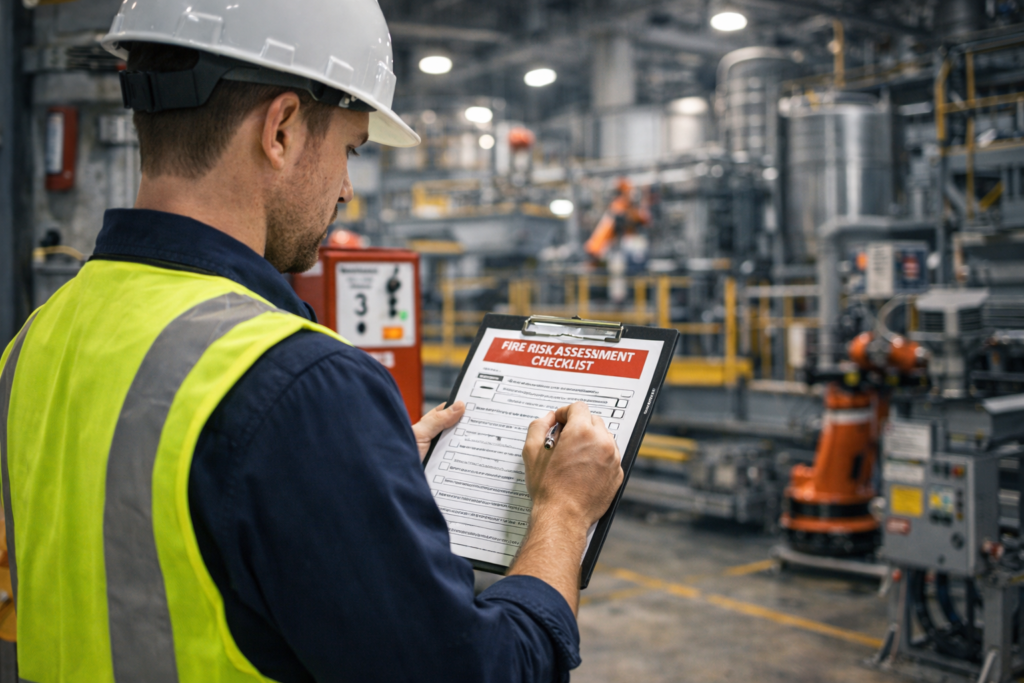
Fire risk assessment is the cornerstone of any effective industrial fire safety strategy. It is a systematic and structured process that enables organisations to identify potential fire hazards, evaluate the level of risk associated with those hazards, and implement appropriate control measures to eliminate or minimise them. Rather than reacting to incidents after they occur, fire risk assessment promotes a proactive approach, allowing businesses to anticipate risks and take preventive action before damage or injury happens.
In industrial environments, where operations are complex and the consequences of fire can be severe, fire risk assessment plays a critical role in ensuring safety, compliance, and operational continuity. It provides a clear understanding of how fires could start, how they might spread, and what impact they could have on people, property, and processes.
A well-conducted fire risk assessment also forms the basis for developing emergency plans, selecting appropriate fire protection systems, and designing effective training programs. It ensures that all safety measures are aligned with the specific risks present in the workplace.
Organisations should invest in regular fire safety training to ensure employees are well-prepared to handle emergencies. Professional courses can further enhance knowledge and practical skills.
Why Fire Risk Assessment Matters
Identifies Potential Ignition Sources and Fuel Loads
One of the primary objectives of fire risk assessment is to identify elements that could start or sustain a fire. This includes ignition sources such as electrical faults, hot surfaces, sparks, and mechanical failures, as well as fuel sources like flammable liquids, gases, chemicals, and combustible materials. By understanding these factors, organisations can implement targeted controls to prevent fires from starting or spreading.
Protects Employees, Visitors, and Assets
Fire risk assessment helps create a safer working environment by identifying risks that could endanger people. It ensures that appropriate safety measures—such as fire detection systems, alarms, emergency exits, and evacuation procedures—are in place. In addition to protecting human life, it also safeguards valuable assets, including machinery, infrastructure, and inventory, from fire-related damage.
Ensures Compliance with Legal and Regulatory Requirements
In many countries, including the United Kingdom, fire risk assessment is a legal obligation under the Regulatory Reform (Fire Safety) Order 2005. Employers and designated responsible persons must assess fire risks and implement adequate safety measures. Failure to comply with these regulations can result in legal penalties, enforcement actions, or even business closure. Conducting regular and documented risk assessments demonstrates a strong commitment to compliance and workplace safety.
Reduces Operational Downtime and Financial Losses
Fire incidents can cause significant disruption to industrial operations, leading to production delays, equipment damage, and costly repairs. In severe cases, businesses may face long-term shutdowns or reputational damage. Fire risk assessments help prevent such incidents by identifying vulnerabilities early and addressing them before they escalate, thereby ensuring continuity of operations and reducing financial losses.
Enhances Emergency Preparedness
A comprehensive fire risk assessment supports the development of effective emergency response strategies. It enables organisations to design clear evacuation plans, assign roles and responsibilities, and ensure that employees are trained to respond appropriately during fire incidents. This level of preparedness reduces confusion, improves response times, and ultimately saves lives.
Supports Continuous Improvement in Safety Management
Fire risk assessment is not a one-time activity but an ongoing process that evolves with changes in the workplace. As operations expand, equipment is upgraded, or layouts are modified, new risks may emerge. Regular reviews and updates ensure that fire safety measures remain relevant and effective, supporting continuous improvement in overall safety management systems.
Step-by-Step Fire Risk Assessment Process
A globally accepted fire risk assessment process follows a structured and methodical approach designed to identify hazards, evaluate risks, and implement effective control measures. This process ensures that fire safety is not left to chance but is managed systematically and continuously.
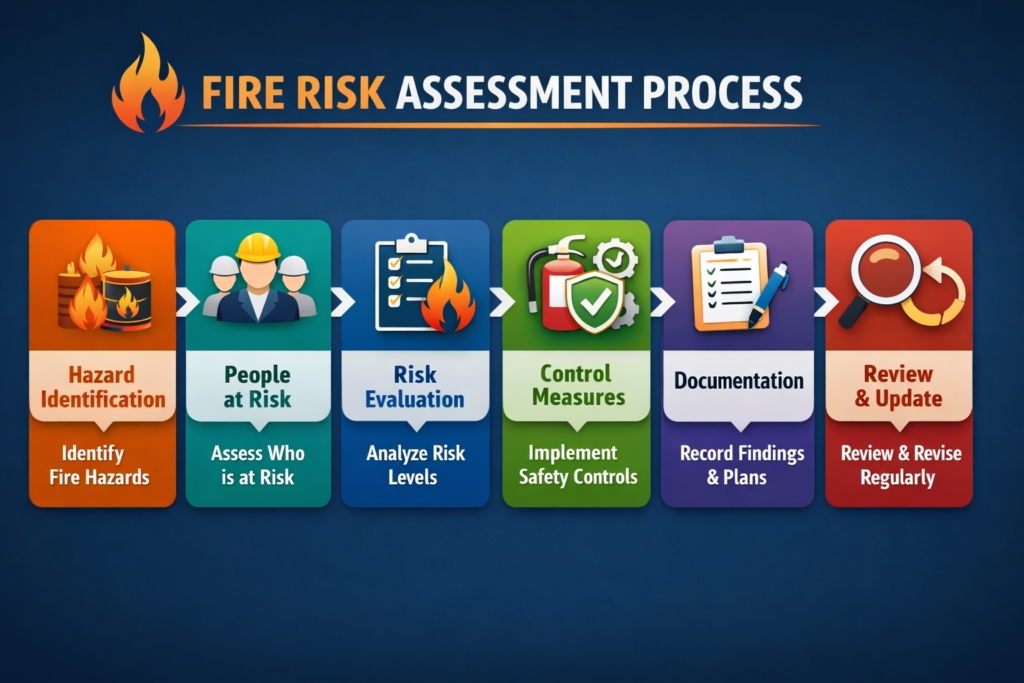
1. Identify Fire Hazards
The first and most critical step is to identify all potential fire hazards within the workplace. Fire hazards are any sources that could ignite a fire or contribute to its spread. In industrial environments, these hazards are often diverse and interconnected, requiring careful inspection and analysis.
Common fire hazards include:
- Electrical systems, faulty wiring, overloaded circuits, and poorly maintained equipment
- Flammable liquids, gases, chemicals, and combustible materials stored or used in operations
- Hot work activities such as welding, cutting, grinding, and soldering
- Accumulation of dust or fine particles that may lead to explosions in confined spaces
- Overheating machinery, friction, or mechanical failures
This stage involves conducting thorough site inspections, reviewing operational processes, and consulting with employees to identify hidden or less obvious risks.
2. Identify People at Risk
Once hazards are identified, the next step is to determine who may be at risk in the event of a fire. This includes not only those directly involved in operations but also anyone present on the premises.
Groups to consider include:
- Employees and contractors working in high-risk areas
- Visitors, customers, and temporary staff unfamiliar with the environment
- Vulnerable individuals such as people with disabilities, elderly workers, or those with limited mobility
Special attention should be given to individuals who may require assistance during evacuation. This step ensures that fire safety measures are inclusive and account for all occupants within the facility.
3. Evaluate and Prioritise Risks
After identifying hazards and people at risk, the next step is to evaluate the level of risk associated with each hazard. This involves assessing:
- The likelihood of a fire occurring
- The potential severity and consequences of the fire
A common method used is a risk matrix, which categorises risks into levels such as low, medium, or high. High-risk hazards require immediate attention and stronger control measures, while lower risks may be managed through routine monitoring.
This stage helps organisations prioritise resources and focus on the most critical risks first, ensuring efficient and effective risk management.
4. Implement Control Measures
Based on the risk evaluation, appropriate control measures must be introduced to eliminate or reduce fire risks to an acceptable level. These measures typically fall into three main categories:
Engineering Controls
- Installation of fire-resistant materials and barriers
- Proper ventilation systems to reduce heat and gas buildup
- Automatic fire detection and suppression systems
Administrative Controls
- Development of fire safety policies and procedures
- Permit-to-work systems for hot work activities
- Regular inspections and maintenance schedules
Safety Equipment and Systems
- Fire alarms, extinguishers, and sprinkler systems
- Emergency lighting and clearly marked escape routes
The goal is to create multiple layers of protection that work together to prevent fire incidents and limit their impact if they occur.
5. Record Findings and Take Action
All findings from the fire risk assessment must be properly documented. This includes:
- Identified hazards and associated risks
- People at risk
- Control measures implemented
- Actions required and timelines
Documentation is essential for demonstrating compliance with legal requirements and for ensuring accountability. It also serves as a reference for future assessments and audits.
Once recorded, organisations must ensure that recommended actions are implemented promptly and effectively.
6. Review and Update Regularly
Fire risk assessment is not a one-time activity; it is an ongoing process that must be reviewed and updated regularly. Reviews should be conducted:
- Periodically (e.g., annually)
- After significant changes in operations, equipment, or layout
- Following a fire incident or near-miss
Regular updates ensure that new risks are identified and managed, and that existing control measures remain effective. Continuous monitoring and improvement are essential for maintaining a high level of fire safety.
Common Fire Hazards in Industrial Environments
Industrial environments are inherently complex and often involve processes, materials, and equipment that significantly increase the likelihood of fire incidents. Understanding these hazards is essential for implementing effective fire prevention and control strategies. Each hazard presents unique risks, and in many cases, multiple hazards can interact to escalate a minor issue into a major fire or explosion.
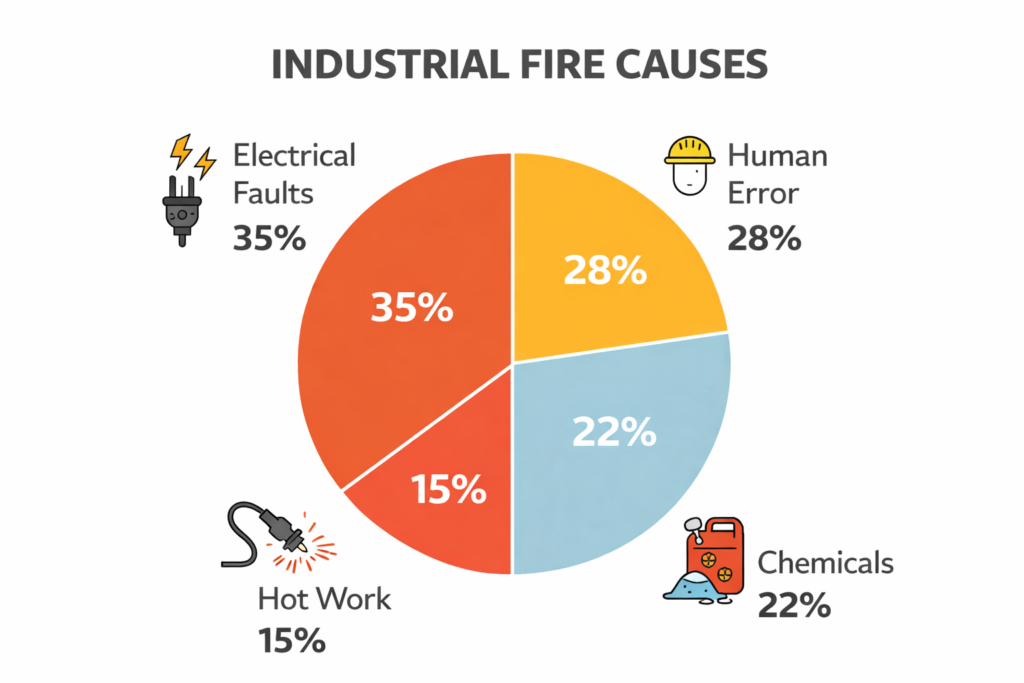
Below are the most common fire hazards found in industrial settings, explained in detail:
Electrical Hazards
Electrical systems are one of the leading causes of industrial fires. In facilities where machinery operates continuously and power demand is high, even minor electrical faults can quickly develop into serious fire incidents.
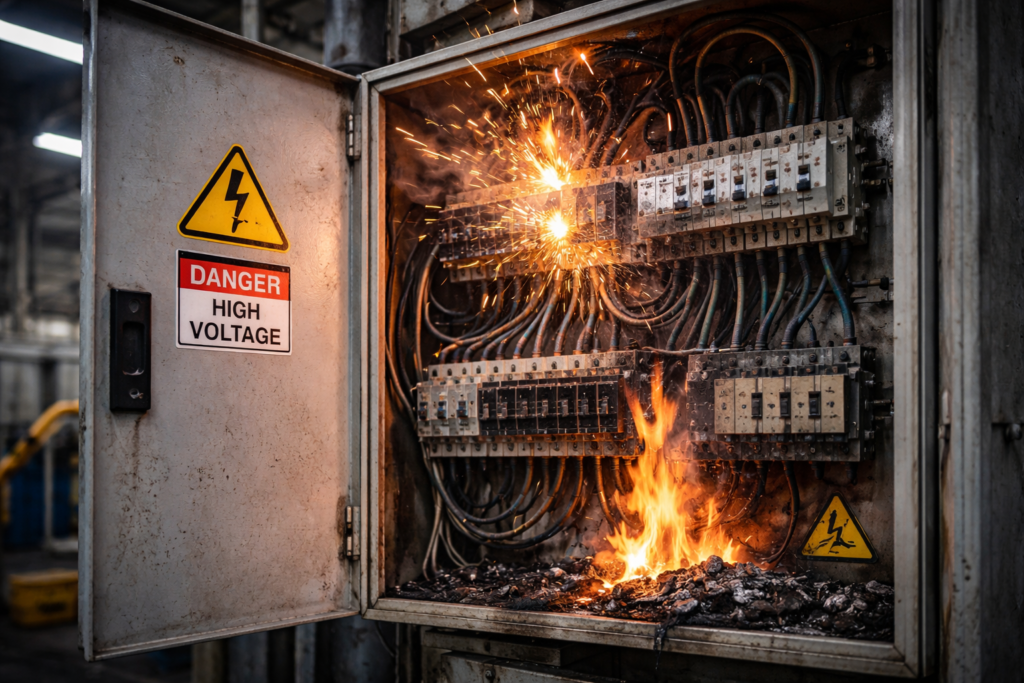
Common causes include:
- Faulty or ageing wiring systems
- Overloaded circuits and improper use of extension leads
- Loose electrical connections that generate heat
- Poorly maintained or damaged equipment
- Lack of regular inspection and testing
When electrical components overheat or short-circuit, they can produce sparks or excessive heat, which may ignite nearby combustible materials. In high-risk environments, such as manufacturing plants or warehouses, this can lead to rapid fire spread if not controlled promptly.
Flammable Materials
Industrial facilities often store and use a wide range of flammable substances, including liquids, gases, and combustible solids. These materials can ignite easily when exposed to heat, sparks, or open flames.
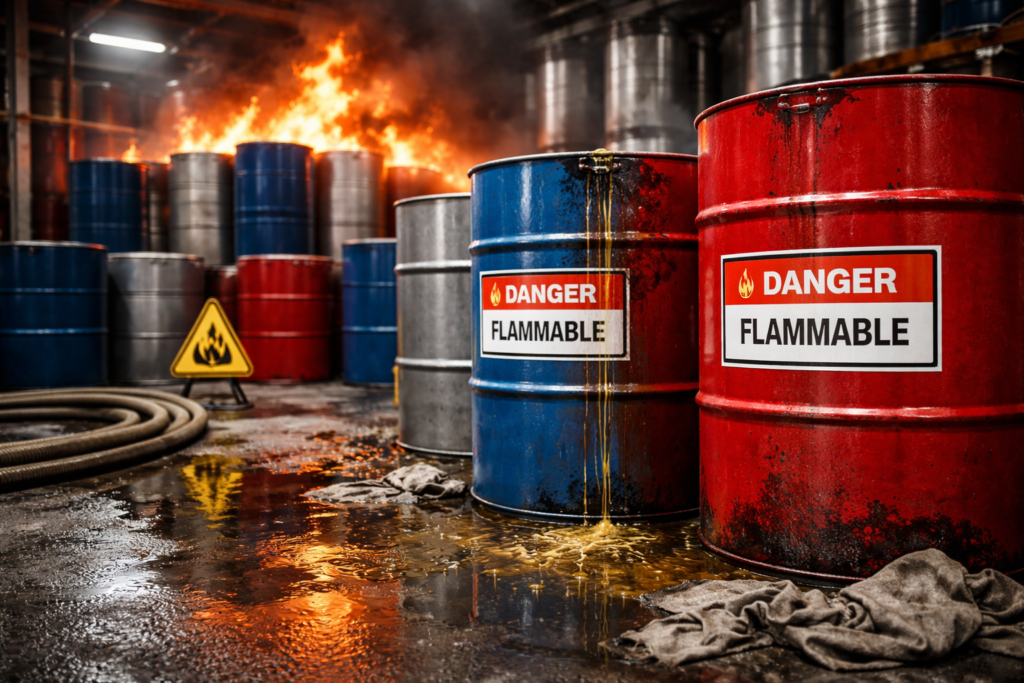
Examples include:
- Flammable liquids such as solvents, fuels, and oils
- Gases like propane, butane, and acetylene
- Combustible solids such as paper, wood, textiles, and packaging materials
Improper storage, inadequate ventilation, or failure to follow safety guidelines can significantly increase fire risk. For instance, storing flammable liquids near heat sources or in unapproved containers can create highly hazardous conditions.
Hot Work Activities
Hot work refers to operations that generate heat, sparks, or open flames, such as welding, cutting, grinding, and soldering. These activities are common in industrial settings but pose a significant fire risk if not properly controlled.
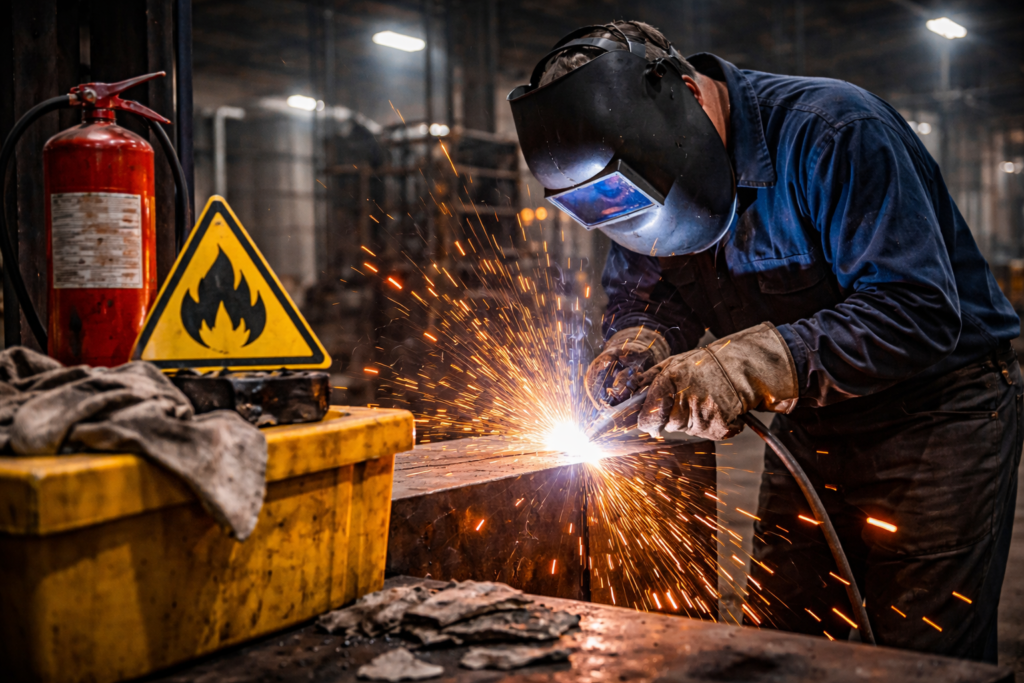
Key risks include:
- Sparks igniting nearby combustible materials
- Heat transfer to surrounding surfaces
- Lack of fire-resistant barriers or protective equipment
- Inadequate supervision or permit-to-work systems
Without proper precautions, hot work can easily trigger fires, especially in areas where flammable substances or dust are present. Implementing strict controls, such as hot work permits and fire watch procedures, is essential to reduce these risks.
Dust Explosions
Dust explosions are a serious hazard in industries such as manufacturing, agriculture, and food processing. Fine combustible dust particles—such as those from wood, grain, metal, or chemicals—can accumulate in the air or on surfaces.
When these particles become airborne and come into contact with an ignition source, they can ignite rapidly, causing an explosion. Key contributing factors include:
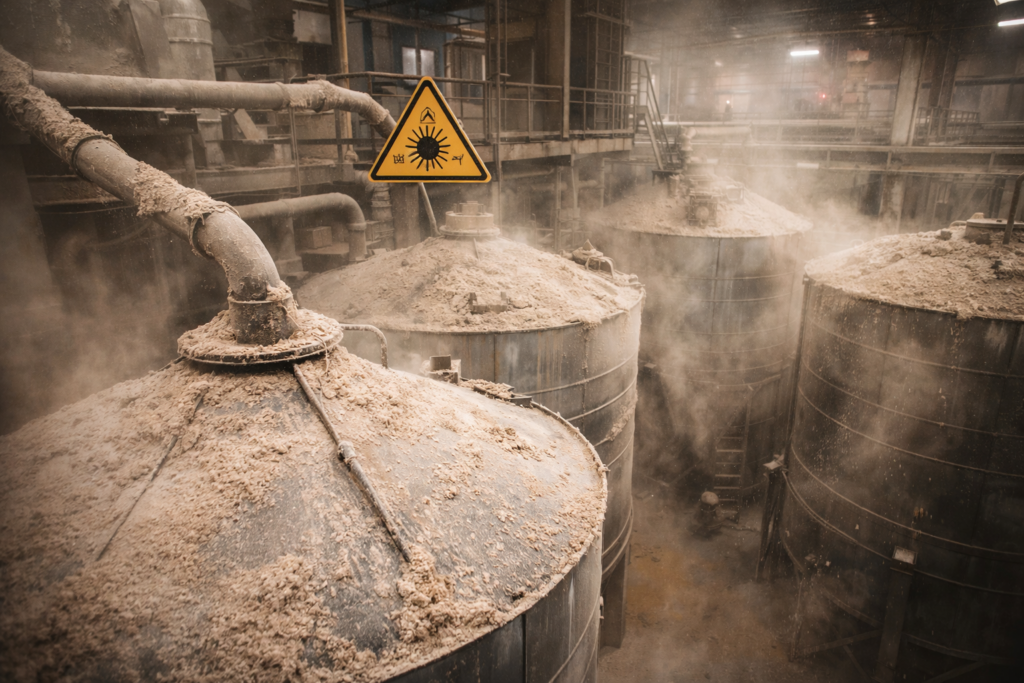
- Poor housekeeping and dust accumulation
- Inadequate ventilation systems
- Confined or enclosed spaces
- Lack of proper dust control measures
Dust explosions can be particularly dangerous because they often occur suddenly and can cause widespread damage within seconds.
Human Error
Human factors play a significant role in many industrial fire incidents. Even with advanced safety systems in place, unsafe behaviours and lack of awareness can lead to serious consequences.
Common issues include:
- Negligence or failure to follow safety procedures
- Inadequate training or lack of awareness
- Improper handling of hazardous materials
- Ignoring warning signs or safety protocols
- Fatigue or lack of supervision
Human error can act as a trigger that allows other hazards—such as electrical faults or flammable materials—to result in a fire. Therefore, continuous training, supervision, and a strong safety culture are essential in reducing these risks.
Fire Prevention Strategies in Industrial Facilities
Effective fire prevention in industrial facilities requires a comprehensive and integrated approach that combines engineering controls, administrative systems, and workforce behaviour. Given the complexity and scale of industrial operations, prevention strategies must be proactive, systematic, and aligned with both international best practices and UK regulatory expectations, including the Regulatory Reform (Fire Safety) Order 2005.
A robust fire prevention framework not only reduces the likelihood of fire incidents but also ensures rapid detection, controlled response, and minimal disruption to operations.
1. Fire Detection and Alarm Systems
Early detection is a critical factor in preventing small incidents from escalating into major fires. Industrial facilities should be equipped with advanced fire detection and alarm systems capable of identifying fire at its earliest stage.
Key components include:
- Smoke detectors for identifying combustion particles
- Heat sensors for detecting abnormal temperature rises
- Flame detectors for high-risk environments
- Centralised alarm systems integrated with monitoring panels
These systems provide immediate alerts, allowing for rapid response, timely evacuation, and activation of suppression systems. Integration with automated controls can further enhance response efficiency.
2. Fire Suppression Systems
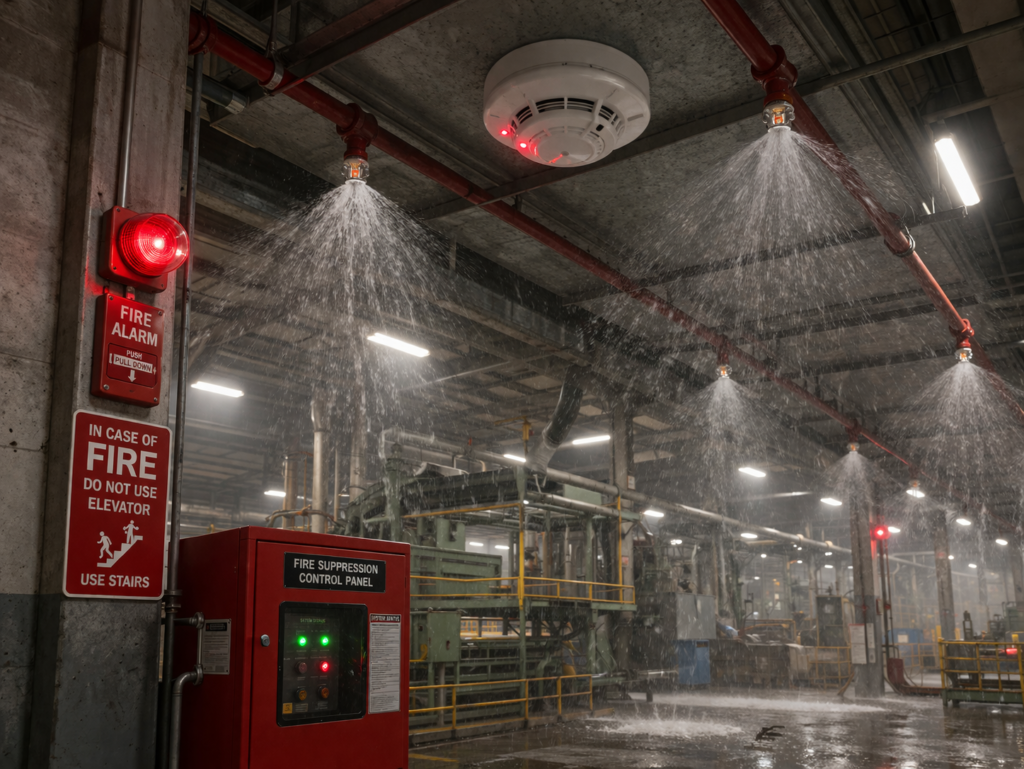
Fire suppression systems are designed to control or extinguish fires before they spread. The selection of an appropriate system depends on the nature of the industrial environment and the types of hazards present.
Common systems include:
- Water sprinkler systems for general fire protection in warehouses and manufacturing units
- Foam suppression systems for handling flammable liquid fires
- Gas-based suppression systems (e.g., inert gases) for protecting sensitive equipment such as control rooms and data centres
These systems should be regularly tested and maintained to ensure reliability during emergencies.
3. Safe Storage and Handling of Materials
Proper storage and handling of hazardous materials are essential in reducing fire risk. Industrial facilities often deal with flammable and combustible substances that require strict control measures.
Best practices include:
- Storing hazardous materials in designated, well-ventilated areas
- Using certified and approved containers for storage and transport
- Ensuring proper labelling in accordance with safety standards
- Segregating incompatible substances to prevent chemical reactions
Effective material management significantly reduces the chances of accidental ignition and fire spread.
4. Electrical Safety Management
Electrical systems are a common source of ignition in industrial environments. Implementing strong electrical safety practices is essential to minimise fire risks.
Key measures include:
- Conducting routine inspections and preventive maintenance of electrical installations
- Avoiding circuit overloads and improper use of electrical equipment
- Ensuring all installations comply with recognised standards
- Replacing damaged wiring, faulty components, and outdated systems promptly
A well-maintained electrical system reduces the likelihood of overheating, sparking, and short circuits.
5. Employee Training and Awareness
Human factors play a critical role in fire prevention. Employees must be equipped with the knowledge and skills required to identify hazards and respond effectively.
Training programs should cover:
- Recognition of fire hazards in the workplace
- Safe handling of materials and equipment
- Proper use of fire extinguishers and safety equipment
- Emergency response and evacuation procedures
Regular training sessions and refresher courses help reinforce safe practices and build a strong safety culture within the organisation.
6. Emergency Planning and Evacuation
A well-defined emergency plan is essential for ensuring the safety of all occupants during a fire incident. Industrial facilities must establish clear procedures for evacuation and emergency response.
Key elements include:
- Clearly marked and unobstructed evacuation routes
- Installation of emergency lighting and signage
- Designation of assembly points
- Assignment of roles and responsibilities (e.g., fire wardens)
- Regular fire drills to test and improve preparedness
Effective planning ensures that evacuation is carried out quickly, safely, and without confusion.
7. Maintenance and Housekeeping
Good housekeeping practices are fundamental to fire prevention. Poor maintenance and cluttered workspaces can significantly increase fire risk by providing fuel for ignition and obstructing access to safety equipment.
Essential practices include:
- Keeping work areas clean and free from unnecessary materials
- Regular removal of waste, especially combustible waste
- Ensuring fire exits, extinguishers, and alarm systems remain accessible at all times
- Conducting routine inspections to identify and address potential hazards
Maintaining a clean and organised environment reduces the likelihood of fire incidents and supports efficient emergency response.
| Strategy | Description | Equipment Required | Responsible Personnel |
|---|---|---|---|
| Regular Equipment Maintenance | Perform routine inspections and servicing of machines, electrical systems, and wiring. | Inspection tools | Maintenance Staff |
| Fire Detection & Alarms | Install and maintain smoke detectors, heat sensors, and alarm systems. | Smoke detectors, heat sensors, alarm systems | Safety Officer, Maintenance Staff |
| Fire Extinguishers | Place proper types of fire extinguishers in accessible locations and inspect them regularly. | ABC fire extinguishers, CO2 extinguishers, signs | Safety Officer, All Employees |
| Safe Hot Work Practices | Implement procedures for welding, cutting, and other hot work, including permits and fire watch. | Welding curtains, fire blankets, fire-resistant PPE | Supervisors, Hot Work Operators |
| Chemical Safety Procedures | Store, handle, and label hazardous chemicals properly and ensure proper ventilation. | Chemical storage cabinets, spill kits | EHS Manager, Warehouse Staff |
UK and Global Fire Safety Regulations
Industrial fire safety must comply with both local legislation and international standards to ensure a safe, legally compliant, and well-managed working environment. Aligning with these frameworks helps organisations reduce risk, protect assets, and maintain operational continuity.
United Kingdom Regulations
In the UK, fire safety in industrial premises is primarily governed by the Regulatory Reform (Fire Safety) Order 2005. This law places responsibility on employers or designated “responsible persons” to manage fire risks effectively.
Key requirements include:
- Conducting regular fire risk assessments
- Identifying hazards and implementing control measures
- Maintaining fire detection and alarm systems
- Ensuring safe evacuation routes and emergency procedures
- Providing employee training and fire safety information
Guidance and enforcement are supported by the Health and Safety Executive, while the National Fire Chiefs Council provides best practice recommendations and industry support.
International Standards
Many organisations also adopt global standards to strengthen their fire safety systems:
- ISO 45001 – focuses on occupational health and safety management
- ISO 14001 – addresses environmental risks, including fire impact
- NFPA standards – provide technical guidance on fire protection systems
These frameworks help organisations implement consistent and effective fire safety practices across different locations.
Importance of Compliance
Compliance with both UK and international standards:
- Enhances workplace safety
- Reduces legal and financial risks
- Improves organisational credibility
- Supports business continuity
Fire Safety Management Systems
A Fire Safety Management System (FSMS) is a structured and systematic framework that integrates fire safety policies, procedures, and control measures into the day-to-day operations of an organisation. It ensures that fire risks are effectively identified, managed, and continuously monitored, forming a critical part of overall workplace safety and compliance.
Key Elements of a Fire Safety Management System
Risk Assessment Procedures
A robust FSMS begins with comprehensive fire risk assessments that identify potential hazards, evaluate associated risks, and define appropriate control measures. These assessments must be regularly reviewed and updated to reflect changes in operations or the working environment.
Training and Competency Programs
Employees must be adequately trained to understand fire risks, follow safety procedures, and respond effectively in emergency situations. Ongoing training and refresher programs ensure that awareness and competency are maintained throughout the organisation.
Emergency Response Planning
Clear and well-documented emergency plans are essential. These include evacuation procedures, defined roles and responsibilities, communication protocols, and coordination with emergency services to ensure a swift and organised response.
Audits, Inspections, and Monitoring
Regular audits and inspections are conducted to verify compliance with fire safety policies and to ensure that systems, equipment, and procedures remain effective. Monitoring helps identify gaps and areas requiring improvement.
Continuous Improvement Strategies
An FSMS is not static; it evolves through continuous evaluation and enhancement. Feedback from audits, incident reports, and performance reviews is used to strengthen fire safety measures and improve overall system effectiveness.
| Component | Purpose | Frequency / Review | Key Benefit |
|---|---|---|---|
| Risk Assessment Procedures | Identify potential fire hazards and evaluate associated risks | Annual or whenever operational changes occur | Proactively reduces fire risks and improves safety |
| Training Programs | Equip employees with knowledge and skills to handle fire hazards | Regular sessions and refresher courses | Ensures staff competence and readiness |
| Emergency Response Plans | Establish procedures for evacuation and incident response | Reviewed annually or after incidents | Minimizes confusion and improves response times |
| Audits and Inspections | Verify compliance with fire safety policies and check system effectiveness | Quarterly or semi-annual audits | Maintains compliance and identifies improvement areas |
| Continuous Improvement | Use feedback from audits, incidents, and performance reviews to enhance FSMS | Ongoing | Strengthens fire safety culture and operational resilience |
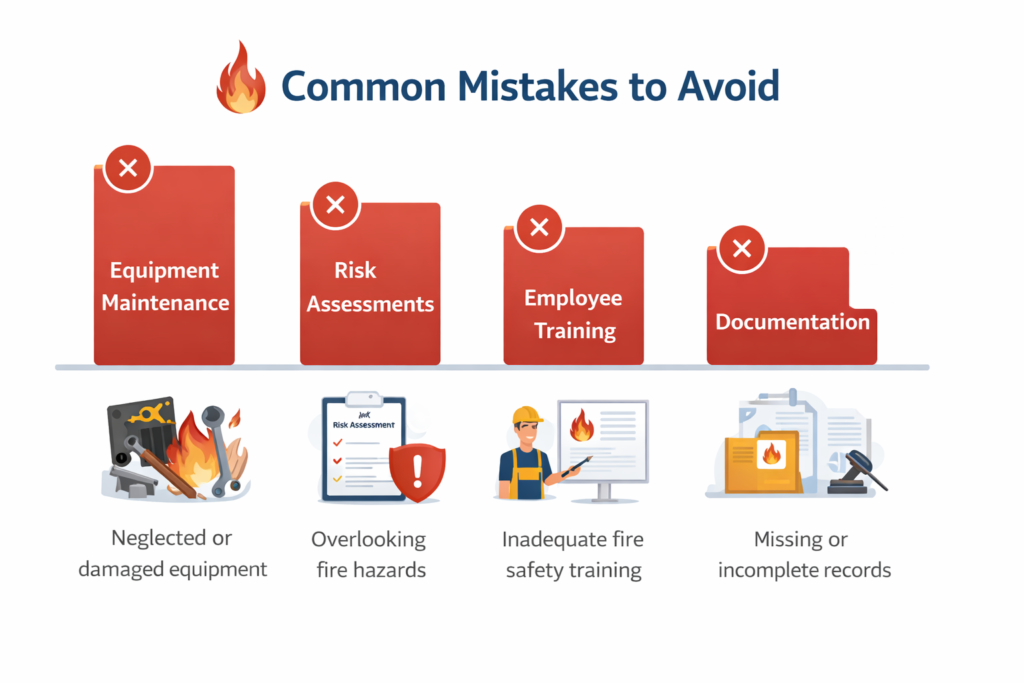
Common Mistakes to Avoid
Avoiding common shortcomings in fire safety management is essential for maintaining a safe and compliant industrial environment. Even well-designed systems can fail if fundamental practices are neglected. The following are key mistakes that organisations should actively address:
Neglecting Maintenance of Fire Safety Equipment
Failure to regularly inspect, test, and maintain fire detection and suppression systems—such as alarms, extinguishers, and sprinklers—can result in equipment malfunction during critical situations. Routine maintenance is essential to ensure reliability and effectiveness.
Failure to Update Fire Risk Assessments
Fire risk assessments must reflect current workplace conditions. Changes in processes, equipment, or layout can introduce new hazards, and outdated assessments may leave significant risks unaddressed.
Inadequate Employee Training and Awareness
A lack of proper training can lead to unsafe practices and ineffective emergency response. Employees must be regularly trained to identify hazards, follow procedures, and respond appropriately in the event of a fire.
Poor Documentation and Record-Keeping
Incomplete or poorly maintained records can hinder compliance and reduce accountability. Accurate documentation of risk assessments, maintenance activities, and training programs is essential for both legal and operational purposes.
Non-Compliance with Regulatory Requirements
Failure to adhere to relevant fire safety legislation, such as the Regulatory Reform (Fire Safety) Order 2005, can result in legal penalties, reputational damage, and increased risk exposure.
Benefits of Effective Fire Safety Strategies
Implementing effective fire safety strategies delivers significant organisational and operational advantages. Beyond meeting regulatory requirements, a well-managed fire safety framework contributes to long-term sustainability, risk reduction, and overall business resilience.
Protection of Human Life
The primary objective of any fire safety strategy is to safeguard employees, contractors, and visitors. By identifying hazards and implementing appropriate control measures, organisations can significantly reduce the risk of injury or loss of life during fire incidents.
Reduction in Financial Losses
Fire incidents can lead to substantial financial consequences, including property damage, equipment loss, operational disruption, and increased insurance costs. Effective fire prevention and control measures help minimise these risks and protect business assets.
Improved Operational Efficiency
A safe working environment supports uninterrupted operations and reduces the likelihood of downtime caused by fire-related incidents. Well-structured safety systems also improve workflow organisation and overall productivity.
Enhanced Organisational Reputation
Demonstrating a strong commitment to fire safety enhances credibility and trust among stakeholders, including employees, clients, and regulatory authorities. A positive safety record strengthens the organisation’s reputation and competitive position in the market.
Case Example: Industrial Fire Due to Poor Chemical Storage
A manufacturing facility experienced a major fire incident when flammable chemicals were stored in close proximity to a heat-generating machine. Over time, elevated temperatures caused vapour buildup, which eventually ignited, leading to a rapid fire outbreak.
The situation was further exacerbated by inadequate fire risk assessment and a lack of employee awareness regarding safe storage practices. As a result, the fire spread quickly, causing significant damage to equipment, temporary shutdown of operations, and substantial financial losses.
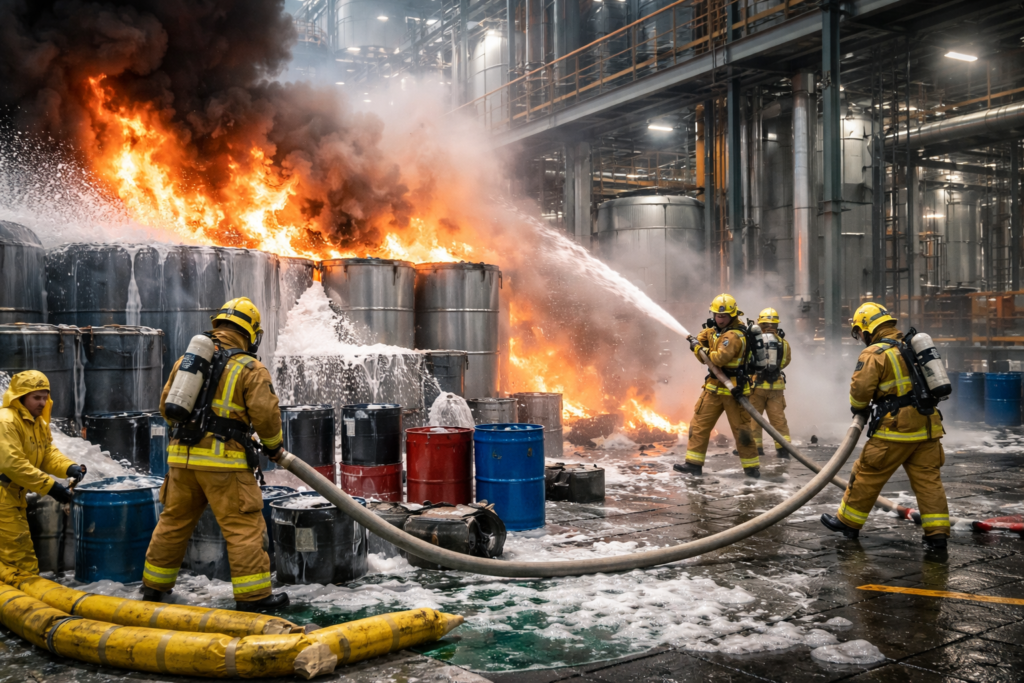
This incident highlights several critical lessons for industrial fire safety management:
- The importance of storing flammable substances in controlled, designated areas
- The need for regular inspections and monitoring of high-risk zones
- The role of employee training in preventing unsafe practices
- The necessity of conducting and updating fire risk assessments
Future Trends in Industrial Fire Safety
Industrial fire safety is continuously evolving as new technologies, materials, and regulatory approaches reshape how organisations manage fire risks. Emerging trends are increasingly focused on proactive risk management, automation, and data-driven decision-making, enabling faster detection, improved prevention, and more efficient emergency response.
Integration of Artificial Intelligence in Risk Assessment
Artificial Intelligence (AI) is transforming the way fire risks are identified and managed in industrial environments. AI-powered systems can analyse large volumes of data from sensors, equipment, and historical incident records to detect patterns and predict potential fire hazards before they occur.
These systems can:
- Monitor temperature fluctuations, gas levels, and equipment performance in real time
- Identify abnormal conditions that may indicate fire risk
- Support predictive maintenance by detecting early signs of equipment failure
- Enhance decision-making through data-driven insights
By integrating AI into fire risk assessment processes, organisations can move from reactive to predictive fire safety management, significantly reducing the likelihood of incidents.
Advanced Fire-Resistant Materials
The development of innovative fire-resistant and fire-retardant materials is playing a crucial role in improving industrial safety. Modern materials are designed to withstand higher temperatures, slow down fire spread, and maintain structural integrity during fire incidents.
Examples include:
- Fire-resistant coatings and paints for structural steel
- Advanced insulation materials with enhanced thermal resistance
- Composite materials designed to limit flame propagation
These materials are increasingly being incorporated into building design and industrial infrastructure, providing an additional layer of passive fire protection.
Smart Building and Integrated Safety Systems
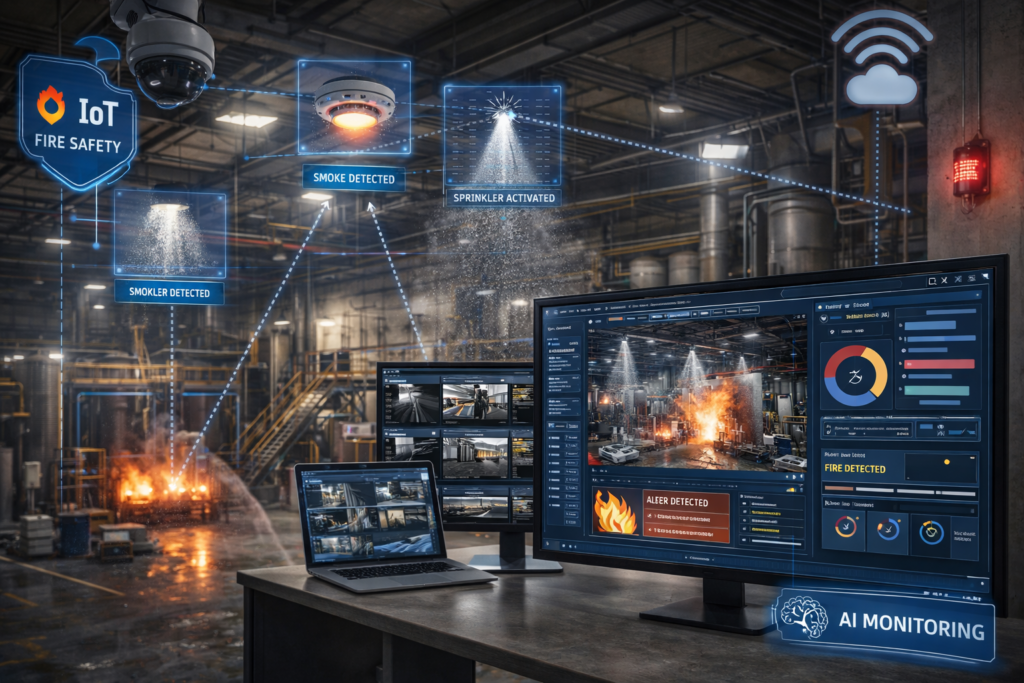
Smart building technologies are revolutionising fire safety by integrating multiple systems into a unified platform. Industrial facilities are adopting interconnected systems that combine fire detection, suppression, ventilation, and emergency communication.
Key features include:
- Internet of Things (IoT)-enabled sensors for real-time monitoring
- Automated alarm and suppression system activation
- Remote monitoring and control through centralised dashboards
- Integration with building management systems (BMS)
These systems enable faster response times, improved coordination, and greater visibility into safety conditions across the facility.
Enhanced Regulatory Frameworks and Compliance Monitoring
Fire safety regulations are becoming more stringent and dynamic, reflecting the increasing complexity of industrial operations. Governments and regulatory bodies are continuously updating standards to address emerging risks and technological advancements.
Future regulatory trends include:
- Greater emphasis on risk-based and performance-based safety approaches
- Increased requirements for documentation, audits, and reporting
- Adoption of digital compliance tools for real-time monitoring and record-keeping
- Stronger enforcement and accountability measures
Organisations are expected to adopt more structured and transparent fire safety management systems to meet these evolving requirements.
Conclusion
Industrial fire safety demands a proactive and structured approach focused on identifying and controlling risks. By carrying out thorough risk assessments and applying effective prevention measures, organisations can significantly reduce hazards and ensure a safe workplace.
Aligning with legal requirements and industry best practices strengthens safety performance and reliability. Ultimately, fire safety is not just a compliance obligation—it is a vital investment in protecting lives, preserving assets, and sustaining long-term business continuity.