
What is Fire Safety Training and Why Is It Important?
Fire safety training is a crucial element of modern health and safety practices, designed to protect lives, property, and the environment from the devastating consequences of fire. Fires can ignite suddenly and spread rapidly, leaving very little time to react. Whether in homes, offices, construction sites, or industrial facilities, even a minor oversight or an unnoticed hazard can lead to serious injury, property damage, or worse if individuals are unprepared. Fire safety training equips people with the knowledge and practical skills they need to recognize potential risks, prevent fire incidents, and respond quickly and confidently in emergency situations.
In today’s safety-conscious and highly regulated environment, the value of fire safety training has never been greater. Organizations are required to comply with strict health and safety standards, and failure to do so can result in legal penalties, financial loss, and damage to reputation. For individuals, understanding fire safety principles can make the difference between panic and calm, enabling them to act effectively during an emergency.
Beyond compliance, effective fire safety training fosters a proactive culture of safety, where prevention and preparedness are embedded in everyday practices. Employees gain confidence, organizations reduce risk, and everyone benefits from a safer environment.
For those looking to deepen their knowledge and stay up to date with best practices, our detailed blog What is Fire Safety? provides a comprehensive guide to fire hazards, prevention strategies, and emergency response techniques.
What is Fire Safety Training?
Fire safety training is a comprehensive and structured learning program designed to equip individuals with the knowledge, awareness, and practical skills required to prevent, control, and respond to fire-related emergencies. It goes beyond basic awareness by teaching participants how fires start, how they spread, and how to identify potential fire hazards in different environments. The training emphasizes both prevention and response, ensuring that individuals are capable of taking the right actions before, during, and after a fire incident.
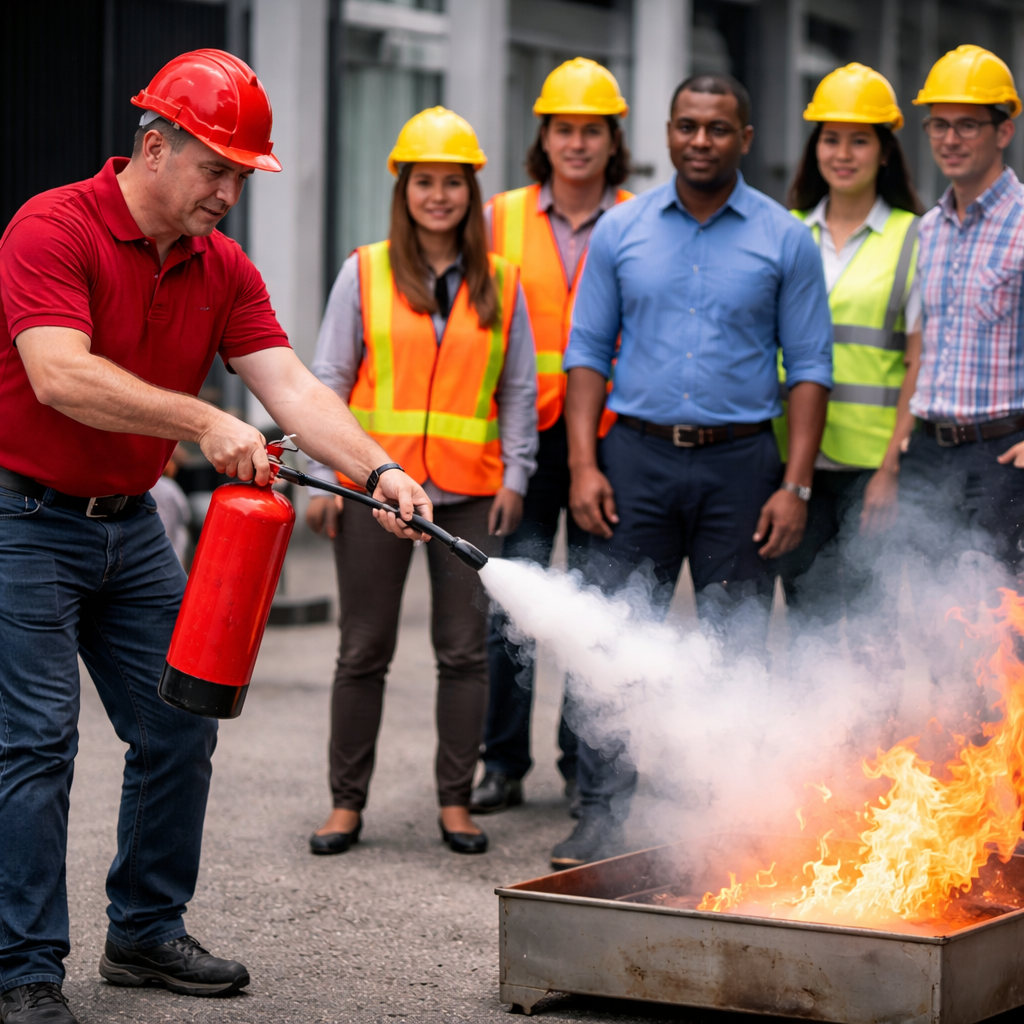
A key aspect of fire safety training is its combination of theoretical understanding and hands-on practice. Participants learn about fire classifications, types of fire extinguishers, safe evacuation procedures, and emergency response techniques. Practical sessions often include demonstrations and simulations, allowing individuals to confidently use firefighting equipment and follow evacuation protocols in real-life scenarios. This balanced approach ensures that learners are not only informed but also prepared to act effectively under pressure.
Fire safety training is widely implemented across various settings, including workplaces, construction sites, industrial facilities, commercial buildings, educational institutions, and residential communities. Each environment presents unique risks, and training programs are often tailored to address specific hazards associated with those settings.
Overall, the primary focus of fire safety training is to build awareness, enhance preparedness, and enable a fast and effective response to emergencies. By doing so, it significantly reduces the likelihood of fire incidents and minimizes their impact on people, property, and operations.
Key Components of Fire Safety Training
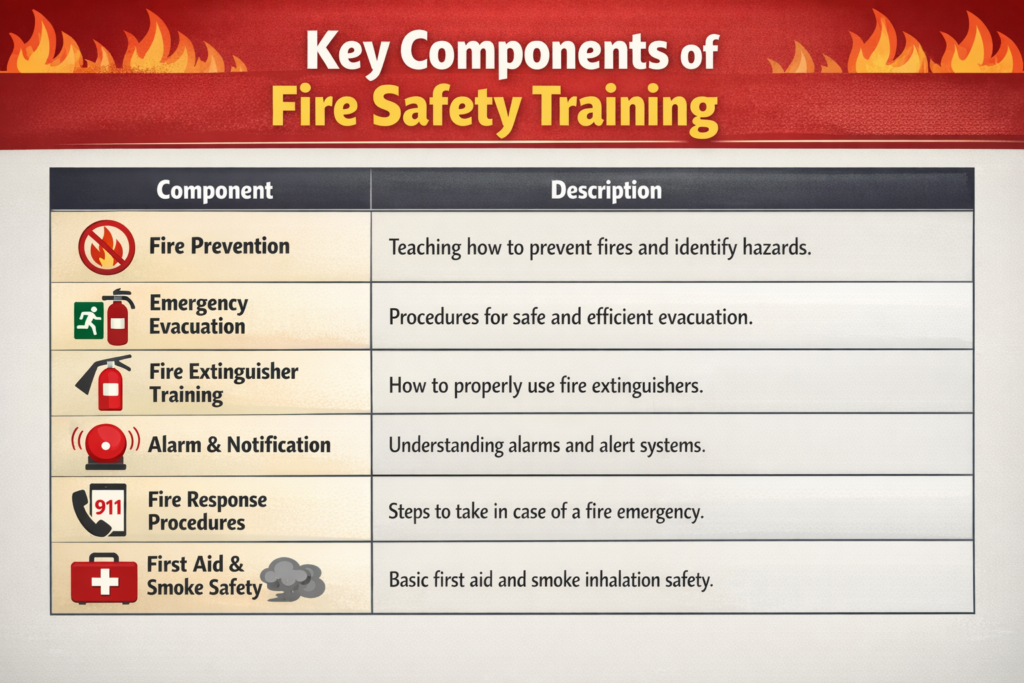
Fire safety training is built around several essential components that work together to ensure individuals are fully prepared to prevent and respond to fire emergencies. A well-structured training program does not focus on just one aspect of safety; instead, it develops a complete understanding of fire risks, response techniques, and emergency procedures.
- Fire Prevention Techniques:
One of the most important elements of fire safety training is learning how to prevent fires before they occur. Participants are taught to recognize common causes of fire such as electrical faults, improper storage of flammable materials, human error, and poor housekeeping practices. The training emphasizes proactive measures, including safe equipment handling, regular maintenance, and adherence to safety protocols, to minimize fire risks in any environment. - Use of Fire Extinguishers:
Understanding how to use fire extinguishers correctly is a critical life-saving skill. Training covers different types of fire extinguishers, such as those used for electrical, chemical, or combustible fires, and explains when and how to use each type effectively. Participants also learn practical techniques, ensuring they can confidently operate extinguishers during an emergency without causing further danger. - Emergency Evacuation Procedures:
Effective evacuation planning is essential to ensure the safe and orderly exit of people during a fire incident. Fire safety training teaches individuals how to follow evacuation routes, respond to alarms, assist others, and avoid panic. It also highlights the importance of assembly points, communication systems, and clear exit signage to ensure everyone can evacuate quickly and safely. - Fire Risk Assessment:
Another key component is the ability to identify potential hazards and evaluate the level of risk in a specific environment. Participants learn how to conduct basic fire risk assessments, spot unsafe conditions, and implement appropriate control measures. This helps organizations reduce the likelihood of fire incidents and maintain a safer workplace. - Fire Drills and Simulations:
Practical experience is a vital part of fire safety training. Fire drills and simulated emergency scenarios allow individuals to apply their knowledge in a controlled setting. These exercises help build confidence, improve response times, and ensure that everyone understands their role during an actual emergency. Regular drills also help identify gaps in emergency planning and improve overall preparedness.
Why is Fire Safety Training Important?
Fire safety training is far more than a basic safety requirement—it is a crucial investment in protecting human life, safeguarding assets, and ensuring the smooth operation of any environment. Fires can escalate within seconds, leaving little room for error or hesitation. Without proper knowledge and preparation, even a minor incident can turn into a major disaster. Fire safety training empowers individuals with the confidence, awareness, and practical skills needed to act decisively, reducing risks and preventing avoidable losses.
Saves Lives
At its core, fire safety training is about preserving human life. In emergency situations, untrained individuals often panic, which can lead to dangerous decisions and delayed responses. Training provides clear guidance on how to react quickly, use escape routes, and assist others in a safe and controlled manner. By understanding evacuation procedures and emergency protocols, individuals are better equipped to protect themselves and those around them, significantly reducing the chances of injury or loss of life.
Reduces Property Damage
Fires can cause extensive destruction to buildings, machinery, and valuable resources within a very short time. However, many fire incidents can be contained or controlled if the initial response is quick and appropriate. Fire safety training teaches individuals how to identify early warning signs, use fire extinguishers correctly, and take immediate action before the situation worsens. This proactive approach helps limit damage, reduces downtime, and protects critical assets.
Ensures Legal Compliance
In today’s regulatory landscape, fire safety is not optional—it is a legal responsibility. Governments and regulatory authorities require organizations to implement fire safety measures, provide employee training, and conduct regular safety drills. Non-compliance can result in serious consequences, including fines, legal action, and business disruptions. Fire safety training ensures that organizations meet these legal requirements while demonstrating their commitment to maintaining a safe and compliant workplace.
Improves Emergency Response
A well-trained individual can make a significant difference during a fire emergency. Fire safety training prepares people to respond with clarity and confidence rather than fear and confusion. Participants learn how to assess situations quickly, communicate effectively, and take appropriate action using fire safety equipment. This coordinated and informed response not only helps control the fire more efficiently but also ensures a safer evacuation process for everyone involved.
Builds a Strong Safety Culture
One of the long-term benefits of fire safety training is the development of a strong safety culture within an organization or community. Regular training sessions reinforce the importance of vigilance, responsibility, and proactive risk management. Employees and individuals become more aware of potential hazards and are encouraged to follow safety practices in their daily routines. Over time, this shared commitment to safety creates an environment where risks are minimized, and prevention becomes a collective priority.
Who Needs Fire Safety Training?
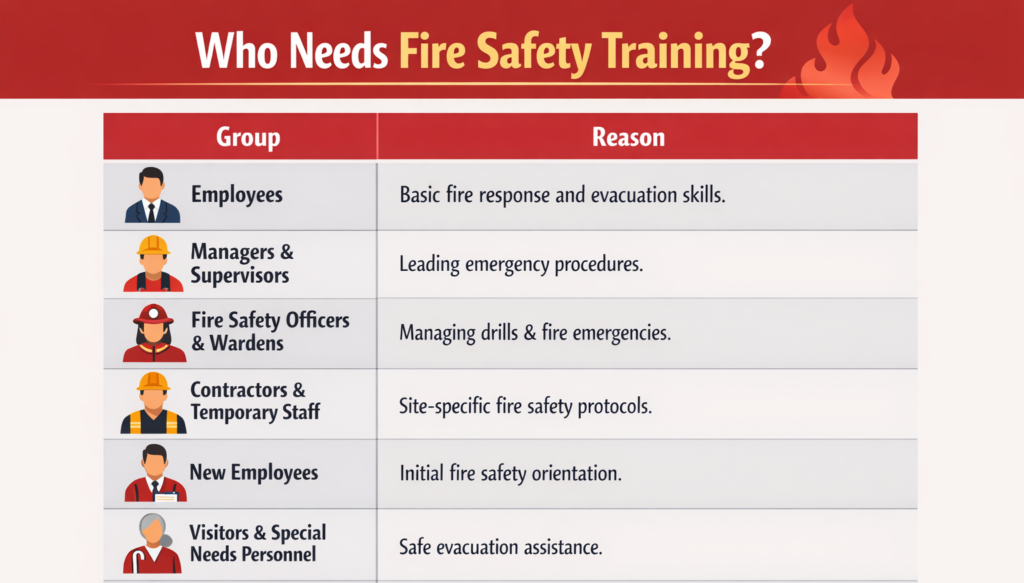
Fire safety training is essential for anyone who lives, works, or manages environments where fire risks may exist. Fires do not discriminate—they can occur in homes, offices, construction sites, or industrial facilities. Therefore, having the right knowledge and preparedness is important for a wide range of individuals. Whether for professional responsibility or personal safety, fire safety training ensures that people can prevent incidents and respond effectively in emergencies.
- Employees in Offices and Industries:
Employees working in offices, factories, and commercial environments are often exposed to potential fire hazards such as electrical equipment, machinery, and flammable materials. Fire safety training helps them understand workplace risks, follow safety procedures, and respond appropriately in case of an emergency, ensuring both personal and team safety. - Construction and Site Workers:
Construction sites are high-risk environments where fire hazards such as welding, electrical installations, and combustible materials are common. Workers on-site must be trained to identify these risks, use fire safety equipment, and follow strict safety protocols to prevent accidents and ensure a safe working environment. - Safety Officers and Supervisors:
Safety officers and supervisors play a critical role in maintaining workplace safety. They are responsible for implementing fire safety measures, conducting risk assessments, and ensuring compliance with regulations. Advanced fire safety training equips them with the expertise needed to manage emergencies and enforce safety standards effectively. - Facility and Building Managers:
Individuals responsible for managing buildings, whether residential, commercial, or industrial, must ensure that fire safety systems are in place and functioning properly. Fire safety training enables them to oversee evacuation plans, maintain equipment, and coordinate emergency responses to protect occupants and property. - Homeowners and the General Public:
Fire safety is not limited to workplaces. Homeowners and the general public also face risks from everyday activities such as cooking, heating, and electrical usage. Basic fire safety training helps individuals recognize hazards, create emergency plans, and respond quickly to protect themselves and their families in case of a fire.
Overall, fire safety training is a shared responsibility that benefits everyone. By ensuring that individuals across different roles and environments are properly trained, the risk of fire incidents can be significantly reduced, and lives can be better protected.
Types of Fire Safety Training Programs
Fire safety training is not a one-size-fits-all approach. Different environments, roles, and risk levels require specialized training programs to ensure maximum effectiveness. As a result, a variety of fire safety training programs have been developed to meet the specific needs of individuals, workplaces, and industries. Each type of training focuses on particular skills, responsibilities, and levels of expertise.
- Basic Fire Safety Awareness Training:
This is the foundational level of fire safety training designed for all individuals, regardless of their role or industry. It provides a clear introduction to common fire hazards, causes of fire incidents, and essential prevention techniques. Participants learn how to recognize risks, respond to fire alarms, and follow basic evacuation procedures. This type of training is ideal for employees, homeowners, and anyone seeking general awareness of fire safety practices. - Fire Marshal Training:
Fire marshal training is an advanced program intended for individuals who are assigned specific responsibilities during fire emergencies. Fire marshals or wardens play a key role in managing evacuations, guiding occupants to safety, and ensuring that fire safety procedures are followed. This training covers leadership during emergencies, coordination with emergency services, use of firefighting equipment, and conducting fire drills. It is essential for organizations that require designated personnel to oversee safety measures. - Industry-Specific Fire Safety Training:
Different industries face unique fire risks, which require tailored training programs. For example, construction sites deal with hazards such as hot work and flammable materials, while healthcare facilities must focus on patient evacuation and specialized equipment. Manufacturing units may require training on handling chemicals and machinery safely. Industry-specific training addresses these unique challenges, ensuring that workers are equipped with relevant knowledge and practical skills suited to their work environment. - Online and Practical Training:
Modern fire safety training often combines flexible online learning with hands-on practical sessions. Online training allows participants to learn theoretical concepts at their own pace, making it convenient and accessible. Practical training, on the other hand, provides real-life experience through demonstrations, simulations, and equipment handling. This blended approach ensures that individuals not only understand fire safety principles but can also apply them confidently in real-world situations.
By offering a range of training programs, fire safety education becomes more effective, targeted, and accessible. Organizations and individuals can choose the most appropriate type of training based on their needs, ensuring better preparedness and a higher level of safety.
| Training Program | Focus / Content | Ideal Audience |
|---|---|---|
| Fire Extinguisher Training | How to use extinguishers, types of extinguishers, extinguishing techniques | All employees, safety personnel |
| Evacuation & Emergency Drills | Evacuation procedures, escape routes, assembly points | Employees, facility managers, supervisors |
| Fire Prevention & Safety | Hazard identification, fire prevention tips, safety policies | All employees, industry-specific staff |
| Fire Warden & First Aid Training | Fire warden duties, medical response, CPR & first aid | Designated wardens, HSE officers |
Real-Life Example of Fire Safety Importance
Untrained Workplace Scenario:
A minor electrical fault occurs due to overloaded wiring or faulty equipment. Early warning signs such as smoke or a burning smell are ignored because employees are not trained to recognize fire hazards. As the situation worsens, panic spreads among staff, and no one takes control of the situation. Employees are unsure how to use fire extinguishers and begin evacuating in a disorganized manner, increasing the risk of injury. The delayed and uncoordinated response allows the fire to spread rapidly, resulting in serious injuries, extensive property damage, and disruption to business operations.
Trained Workplace Scenario:
In contrast, in a workplace where employees are properly trained, the same situation is handled very differently. A trained individual quickly identifies the hazard and immediately raises the alarm. Employees follow well-practiced evacuation procedures and move calmly toward designated exits and assembly points. Designated personnel use the appropriate fire extinguisher to control the fire at an early stage, if it is safe to do so. Fire wardens ensure all areas are cleared, and emergency services are contacted without delay. As a result, the situation is controlled efficiently, minimizing damage and ensuring the safety of everyone involved.
Key Takeaway:
This comparison clearly highlights the importance of fire safety training. It enables individuals to act quickly, reduces panic, and ensures a coordinated response during emergencies. When combined with proper fire risk assessment, emergency planning, and regular fire drills, training helps prevent small incidents from escalating into major disasters while protecting lives, property, and overall business continuity.
Fire Safety Training Requirements
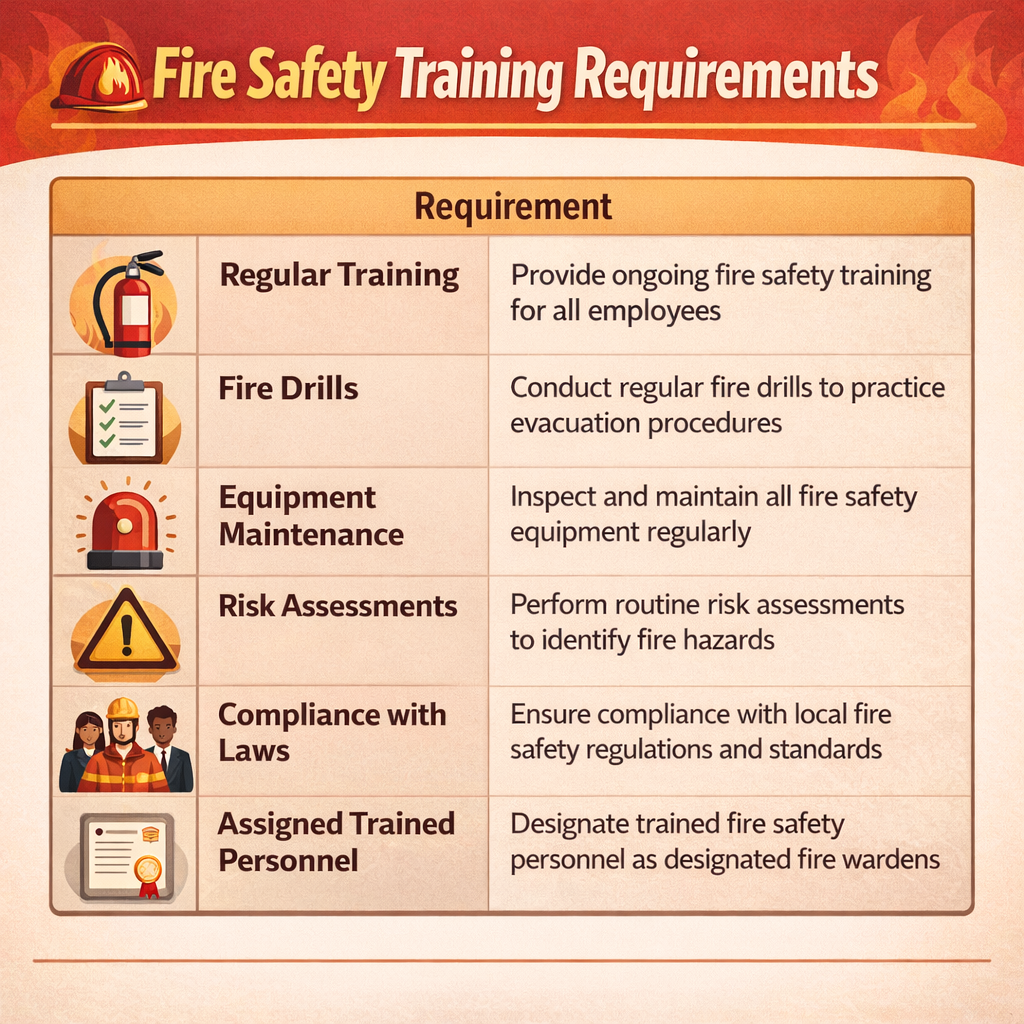
Fire safety training requirements may vary depending on the country, industry, and workplace environment, but most regulations share common principles aimed at ensuring safety, preparedness, and compliance. Organizations are expected to follow these essential requirements to reduce fire risks and protect lives and property.
- Regular fire safety training for employees to ensure they understand fire hazards, prevention methods, and emergency procedures
- Providing induction training for new employees and refresher training for existing staff to keep knowledge up to date
- Conducting fire drills and emergency evacuation exercises to test preparedness and improve response time
- Establishing clear evacuation plans, emergency exits, and designated assembly points
- Maintaining fire safety equipment such as fire extinguishers, smoke detectors, alarms, and sprinkler systems in proper working condition
- Carrying out routine inspections and servicing of all fire protection systems
- Performing regular fire risk assessments to identify hazards and implement control measures
- Updating risk assessments whenever there are changes in the workplace, such as new equipment or processes
- Assigning trained personnel such as fire wardens or safety officers to manage emergencies
- Ensuring compliance with local fire safety laws, regulations, and relevant international safety standards
Organizations must continuously monitor and update their fire safety practices to remain compliant and create a safe, well-prepared environment for everyone.
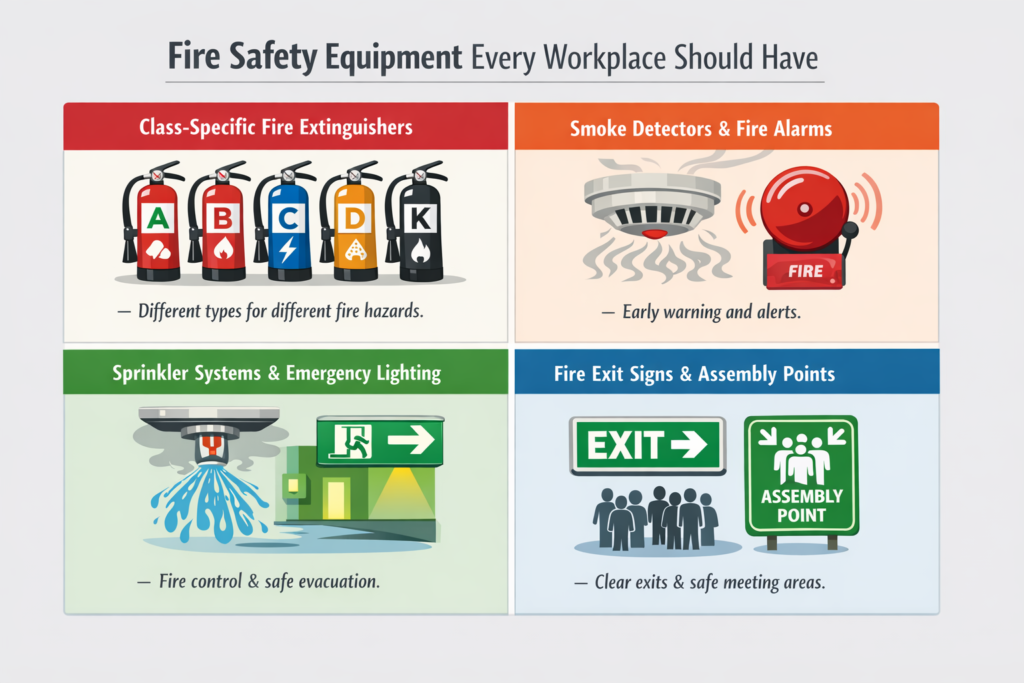
Fire Safety Equipment Every Workplace Should Have
Fire safety in the workplace depends not only on trained personnel but also on having the right equipment readily available. Proper fire safety equipment can significantly reduce the severity of incidents, protect lives, and minimize property damage. Every organization, regardless of size or industry, should ensure that its premises are equipped with essential fire protection systems and that employees know how to use them effectively.
Fire Extinguishers
Fire extinguishers are the first line of defense against small fires. It is crucial to provide the correct type for different fire hazards:
- Class A: For ordinary combustibles such as wood, paper, and textiles
- Class B: For flammable liquids like gasoline or paints
- Class C: For electrical fires
- Class D: For combustible metals
- Class K: For kitchen fires involving oils and fats
Employees should be trained in their correct usage and placement to ensure quick and safe response during emergencies. Regular maintenance and inspection are also required to ensure extinguishers are fully operational.
Smoke Detectors and Fire Alarms
Smoke detectors and fire alarms serve as early warning systems, providing critical time for evacuation before a fire spreads. These systems should be installed in key areas, tested regularly, and maintained to ensure reliability. Alarms should be loud and clearly audible in all parts of the workplace, and staff should be trained to respond immediately when alarms are triggered.
Sprinkler Systems and Emergency Lighting
Automatic sprinkler systems can contain or suppress fires before they escalate, significantly reducing damage and risk to occupants. Emergency lighting is equally important, as it ensures safe navigation during power outages or when smoke obscures visibility. Both systems should be tested regularly, and their coverage should be appropriate for the building layout and occupancy.
Fire Exit Signage and Assembly Points
Clear, visible fire exit signs are essential to guide occupants to safety quickly. Exit routes should be unobstructed and easy to follow, even in low visibility conditions. Designated assembly points outside the building provide a safe location for all personnel to gather after evacuation, enabling a headcount and ensuring that everyone has exited safely.
Career Opportunities in Fire Safety
Fire safety training not only enhances personal and workplace safety but also opens the door to a wide range of rewarding and in-demand career opportunities. As organizations place increasing importance on health, safety, and regulatory compliance, professionals with fire safety knowledge and certifications are highly valued across multiple industries. These roles offer strong career growth, job stability, and opportunities to work in diverse sectors.
- Fire Safety Officer:
A Fire Safety Officer is responsible for developing, implementing, and monitoring fire safety policies within an organization. Their role includes conducting inspections, ensuring compliance with fire safety regulations, maintaining firefighting equipment, and training staff on emergency procedures. They play a key role in preventing fire incidents and ensuring a safe working environment. - Health and Safety (HSE) Officer:
An HSE Officer oversees overall workplace safety, including fire prevention and emergency preparedness. They conduct risk assessments, enforce safety regulations, investigate incidents, and promote a culture of safety within the organization. Fire safety is a major component of their responsibilities, especially in high-risk industries. - Fire Risk Assessor:
A Fire Risk Assessor specializes in identifying fire hazards, evaluating risks, and recommending control measures to minimize potential dangers. They conduct detailed assessments of buildings, workplaces, and facilities, ensuring that fire safety systems and procedures are adequate and compliant with regulations. This role is critical for maintaining long-term safety and preventing incidents. - Safety Trainer or Instructor:
Safety trainers are responsible for delivering fire safety training programs to employees and organizations. They educate participants on fire prevention, use of firefighting equipment, and emergency response procedures. This role requires strong communication skills and in-depth knowledge of safety standards, making it ideal for experienced professionals who want to share their expertise. - Emergency Response Coordinator:
An Emergency Response Coordinator plans and manages emergency response strategies, including fire incidents. They develop evacuation plans, coordinate with emergency services, and ensure that all staff are prepared to respond effectively during crises. Their role is crucial in minimizing risks and ensuring a fast, organized response to emergencies.
These career opportunities are in high demand across industries such as construction, oil and gas, manufacturing, healthcare, logistics, and commercial sectors. With the growing focus on workplace safety and regulatory compliance, professionals trained in fire safety can build successful and long-term careers while contributing to safer environments.
Conclusion
Fire safety training is more than a regulatory requirement—it is a life-saving necessity. By equipping individuals with essential knowledge and practical skills, it helps prevent fire incidents, ensures quick and effective responses during emergencies, and minimizes risks to life and property.
Whether you are an individual looking to improve safety awareness or an organization aiming to protect your workforce, investing in professional training is crucial. Explore our Fire Safety Professional Qualifications and take the next step toward a safer and more secure environment today.
Enroll in Fire Safety Courses Now