
Fire Safety: Essential Tips for Homes and Workplaces
Introduction
Fire safety is a fundamental responsibility that plays a critical role in protecting human lives, safeguarding property, and ensuring the smooth continuity of businesses and daily activities. Fires can ignite within seconds due to common and often overlooked hazards such as faulty electrical wiring, overloaded circuits, unattended cooking, heating equipment placed too close to combustible materials, or improper storage of flammable substances. What may begin as a small spark can quickly escalate into a life-threatening situation, especially in environments where preventive measures are lacking.
Once a fire starts, it can spread rapidly, fueled by oxygen, heat, and available materials. Within minutes, flames can engulf entire rooms, while thick, toxic smoke can reduce visibility and make breathing difficult. In many cases, smoke inhalation—not the flames themselves—is the leading cause of fire-related injuries and fatalities. This makes early detection, quick response, and proper safety planning absolutely essential. The financial impact of fires can also be severe, leading to costly repairs, business interruptions, loss of important assets, and long-term operational setbacks.
Whether in residential homes or workplace environments, understanding potential fire hazards is the first step toward effective prevention. Every setting presents unique risks—homes may face dangers from cooking or electrical misuse, while workplaces often involve machinery, chemicals, and larger occupancy levels that increase complexity during emergencies. Implementing effective fire safety strategies, such as regular inspections, proper equipment maintenance, safe storage practices, and staff or family training, significantly reduces these risks.
What is Fire Safety?
Fire safety refers to a comprehensive set of precautions, policies, and practical measures designed to prevent the occurrence of fires, minimize associated risks, and ensure an effective and timely response in the event of a fire emergency. It encompasses a proactive approach that focuses not only on controlling potential hazards but also on preparing individuals and organizations to handle fire incidents efficiently and safely.
At its core, fire safety involves identifying potential fire hazards through systematic risk assessments, evaluating the likelihood and impact of those hazards, and implementing appropriate control measures to eliminate or reduce risks. It also includes the development of structured emergency plans, such as evacuation procedures, communication protocols, and designated responsibilities, to ensure a coordinated response during critical situations.
In addition, fire safety incorporates the installation, maintenance, and proper use of fire protection systems, including fire alarms, smoke detectors, sprinkler systems, fire extinguishers, and emergency lighting. These systems play a crucial role in early detection, fire suppression, and safe evacuation. Overall, fire safety is an ongoing process that combines prevention, preparedness, and protection to safeguard lives, property, and operational continuity.
Fire Safety Statistics You Should Know
Understanding the scale and impact of fire-related incidents is essential for recognizing the importance of effective fire safety measures. Fire statistics not only highlight the frequency of such incidents but also emphasize how preventable many of them are with proper awareness, planning, and implementation of safety practices.
- Residential Fire Incidents: Thousands of fires occur in homes each year, with the majority caused by common hazards such as faulty electrical wiring, overloaded circuits, and unattended cooking. These everyday risks make residential environments particularly vulnerable, especially where safety precautions are not consistently followed.
- Workplace Fire Impact: Fires in workplaces and industrial settings can lead to severe financial consequences, including property damage, equipment loss, and costly business interruptions. In many cases, organizations also face legal liabilities and reputational damage, further amplifying the overall impact.
- Primary Cause of Fatalities: A significant number of fire-related deaths are not caused by burns, but by smoke inhalation. Toxic gases and reduced oxygen levels can incapacitate individuals within minutes, underscoring the importance of early detection and rapid evacuation.
- Effectiveness of Early Detection Systems: The installation of fire alarms, smoke detectors, and automated suppression systems has been proven to significantly reduce fire-related fatalities—by over 50% in many cases. These systems provide critical early warnings, allowing occupants to respond quickly and safely.
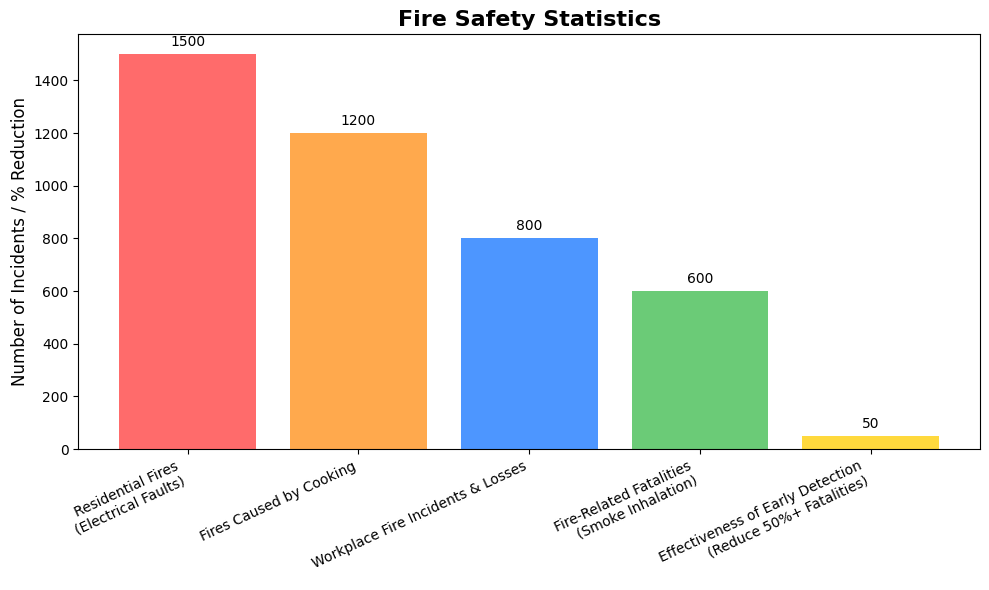
Key Insight: The majority of fire incidents are preventable. With increased awareness, regular risk assessments, and the implementation of proper fire safety measures, individuals and organizations can dramatically reduce the likelihood and impact of fires.
Common Causes of Fires in Homes and Workplaces
Identifying potential fire hazards is the first and most important step toward effective fire prevention. Many fire incidents are the result of everyday activities, unsafe practices, or a lack of awareness. By understanding the most common causes, individuals and organizations can take proactive measures to reduce risks and create safer environments.
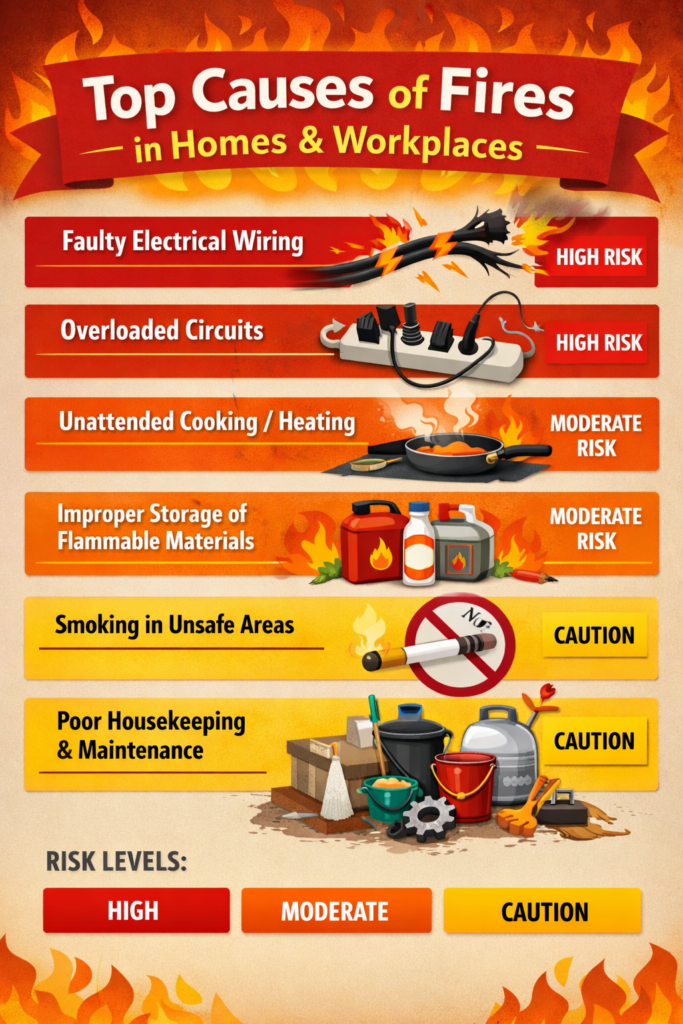
- Faulty Wiring and Overloaded Electrical Circuits: Electrical faults are one of the leading causes of fires in both homes and workplaces. Damaged wiring, outdated electrical systems, loose connections, and the overuse of extension cords can generate excessive heat and sparks. Overloading circuits with multiple high-power devices increases the risk of short circuits and electrical fires.
- Unattended Cooking or Heating Equipment: Cooking appliances and heating devices are major sources of fire hazards, particularly when left unattended. Grease fires, overheating equipment, or flammable materials placed too close to heat sources can quickly ignite and spread. This risk is especially common in residential kitchens and workplace break areas.
- Improper Storage of Flammable Substances: Storing flammable liquids, gases, or chemicals without proper precautions significantly increases the risk of fire. Materials such as gasoline, cleaning agents, and industrial chemicals must be stored in approved containers, away from heat sources, and in well-ventilated areas to prevent accidental ignition.
- Smoking in Restricted or Unsafe Areas: Careless disposal of cigarettes, matches, or lighters can easily ignite combustible materials such as paper, fabric, or chemicals. Smoking in prohibited areas, especially near flammable substances, is a common and preventable cause of fire incidents.
- Poor Housekeeping and Clutter: Accumulated waste, dust, and clutter create additional fuel for fires and can obstruct escape routes during emergencies. In workplaces, especially industrial environments, poor housekeeping can significantly increase both the likelihood and severity of fire incidents.
- Lack of Equipment Maintenance: Failure to regularly inspect and maintain electrical systems, machinery, and safety equipment can lead to malfunctions and overheating. Worn-out components, blocked ventilation, and neglected repairs increase the chances of fire outbreaks.
By addressing these common causes through regular inspections, proper training, and adherence to safety protocols, both households and organizations can significantly reduce the risk of fire incidents and enhance overall safety.
Essential Fire Safety Tips for Homes
Ensuring fire safety at home requires a proactive approach that combines awareness, proper equipment, and consistent safety practices. By implementing the following essential tips, households can significantly reduce the risk of fire incidents and improve their ability to respond effectively in an emergency.
1. Install and Maintain Smoke Alarms
Smoke alarms are one of the most critical components of home fire safety, as they provide early warning signals that can save lives. These devices detect smoke at the earliest stage of a fire, allowing occupants to evacuate before conditions become dangerous.
- Install smoke alarms in key areas such as bedrooms, hallways, living rooms, and near kitchens
- Ensure alarms are placed on every level of the home
- Test alarms at least once a month to confirm they are functioning properly
- Replace batteries regularly and ensure units are serviced or replaced as recommended
2. Avoid Electrical Overloads
Electrical systems are a common source of household fires, particularly when circuits are overloaded or equipment is improperly used.
- Avoid plugging multiple high-power appliances into a single outlet or extension cord
- Use certified and high-quality electrical devices and accessories
- Inspect wiring, plugs, and sockets regularly for signs of damage or overheating
- Replace faulty wiring or malfunctioning equipment immediately to prevent sparks or short circuits
3. Practice Safe Cooking Habits
Cooking is one of the leading causes of residential fires, making it essential to follow safe practices in the kitchen.
- Never leave cooking unattended, especially when using high heat or open flames
- Keep flammable materials such as kitchen towels, paper, and oil containers away from heat sources
- Use appropriate cooking equipment and ensure appliances are in good working condition
- Turn off stoves, ovens, and other appliances immediately after use
4. Keep Fire Extinguishers Accessible
Fire extinguishers are vital for controlling small fires before they escalate into larger incidents.
- Place fire extinguishers in easily accessible areas, particularly in the kitchen and near potential fire hazards
- Ensure all household members are familiar with how to operate an extinguisher safely
- Regularly check that extinguishers are fully charged and within their service dates
- Use the correct type of extinguisher for different types of fires
5. Create a Home Fire Escape Plan
A well-prepared escape plan ensures that all occupants know how to exit the home quickly and safely during a fire emergency.
Key Steps to Follow:
- Identify at least two safe exit routes from each room
- Establish a designated meeting point outside the home where everyone can gather
- Ensure escape routes are always clear and accessible
- Conduct regular fire drills with all family members to improve readiness and response time
6. Store Flammable Materials Safely
Improper storage of flammable substances can significantly increase the risk of fire.
- Keep gasoline, cleaning agents, and other flammable liquids in approved, tightly sealed containers
- Store these materials in well-ventilated areas away from heat sources, open flames, or electrical equipment
- Avoid keeping excessive quantities of flammable substances inside the home
- Ensure such materials are kept out of reach of children and handled with care
By consistently applying these fire safety measures, homeowners can create a safer living environment, reduce potential hazards, and enhance their preparedness in the event of a fire.
| Tip | Details |
|---|---|
| Smoke Alarms | Install and test monthly |
| Electrical Safety | Avoid overloads and faulty wiring |
| Safe Cooking | Never leave cooking unattended |
| Fire Extinguishers | Keep accessible and check regularly |
| Escape Plan | Identify exits and practice drills |
| Flammable Storage | Keep fuels and chemicals away from heat |
Essential Fire Safety Tips for Workplaces
Maintaining fire safety in the workplace is a critical responsibility for employers and employees alike. Work environments often involve complex operations, electrical systems, machinery, and, in some cases, hazardous materials—all of which can increase the risk of fire if not properly managed. Implementing structured fire safety measures not only protects lives but also ensures business continuity, legal compliance, and operational stability.
1. Conduct Fire Risk Assessments
A fire risk assessment is the foundation of workplace fire safety. It involves systematically identifying potential fire hazards, evaluating the level of risk, and implementing appropriate control measures to minimize or eliminate those risks.
- Identify sources of ignition such as electrical equipment, machinery, and open flames
- Assess the presence of flammable materials and their storage conditions
- Evaluate the level of risk to employees, visitors, and vulnerable individuals
- Implement preventive measures such as improved storage, ventilation, and equipment upgrades
- Regularly review and update the assessment to reflect changes in the workplace
2. Provide Fire Safety Training
Proper training ensures that employees are aware of fire risks and know how to respond effectively in an emergency. A well-trained workforce can significantly reduce the impact of a fire incident.
Employees should be trained in:
- Fire prevention techniques: Understanding how to identify and minimize potential hazards
- Emergency evacuation procedures: Knowing evacuation routes, assembly points, and safe exit practices
- Use of fire safety equipment: Proper handling of fire extinguishers, fire blankets, and alarm systems
- Emergency response roles: Understanding responsibilities during a fire incident
Regular refresher training sessions should be conducted to maintain awareness and preparedness.
3. Maintain Equipment and Systems
Faulty or poorly maintained equipment is a major cause of workplace fires. Regular inspection and maintenance are essential to ensure all systems function safely and efficiently.
- Inspect electrical systems, wiring, and machinery for faults or overheating
- Schedule routine maintenance for all equipment
- Ensure fire safety systems such as alarms and sprinklers are tested periodically
- Address any defects or malfunctions immediately to prevent potential hazards
4. Install Fire Protection Systems
Effective fire protection systems are crucial for early detection, fire control, and safe evacuation. Every workplace should be equipped with appropriate systems based on its size and risk level.
Workplaces should have:
- Fire alarms: To provide immediate alerts in case of smoke or fire detection
- Sprinkler systems: To automatically suppress fires and limit their spread
- Fire extinguishers: Strategically placed and suitable for different types of fires
- Emergency lighting: To ensure visibility during evacuations, especially in low-light or smoke-filled conditions
All systems must be regularly tested and maintained to ensure reliability.
5. Keep Emergency Exits Clear
Clear and accessible emergency exits are essential for safe evacuation during a fire. Obstructed or poorly marked exits can lead to confusion, delays, and potentially fatal outcomes.
- Ensure all escape routes are free from obstacles, equipment, or storage items
- Clearly mark exits with visible signage and emergency lighting
- Regularly inspect pathways to confirm they remain unobstructed
- Ensure doors open easily and in the direction of escape
6. Implement Emergency Evacuation Plans
A well-structured evacuation plan ensures a coordinated and efficient response during a fire emergency. Every employee should be familiar with the plan and their role within it.
Key Components of an Effective Plan:
- Assign roles and responsibilities: Designate fire wardens or safety officers to guide evacuations
- Conduct regular fire drills: Practice evacuation procedures to improve response time and identify gaps
- Display evacuation maps: Place clear and accessible maps throughout the workplace showing exit routes and assembly points
- Establish assembly points: Ensure all occupants gather at a safe, designated location for headcounts
By consistently implementing these essential fire safety measures, workplaces can greatly minimize fire risks, protect employees, and maintain an organized and effective emergency response. In industrial and commercial environments, adhering to established Industrial Fire Safety best practices further ensures the safety of personnel and the protection of property.
| Tip | Details |
|---|---|
| Fire Risk Assessment | Identify hazards and reduce risks |
| Fire Safety Training | Train staff on prevention and evacuation |
| Maintain Equipment | Inspect alarms, extinguishers, and systems |
| Fire Protection Systems | Ensure alarms, sprinklers, and signage work |
| Emergency Exits | Keep exits clear and marked |
| Evacuation Plans | Assign wardens and conduct drills |
Fire Safety Checklist (Home & Workplace)
A well-structured fire safety checklist is essential for ensuring that all preventive measures are in place and functioning effectively. Regularly reviewing and implementing these checks can significantly reduce fire risks and enhance preparedness in both residential and workplace environments.
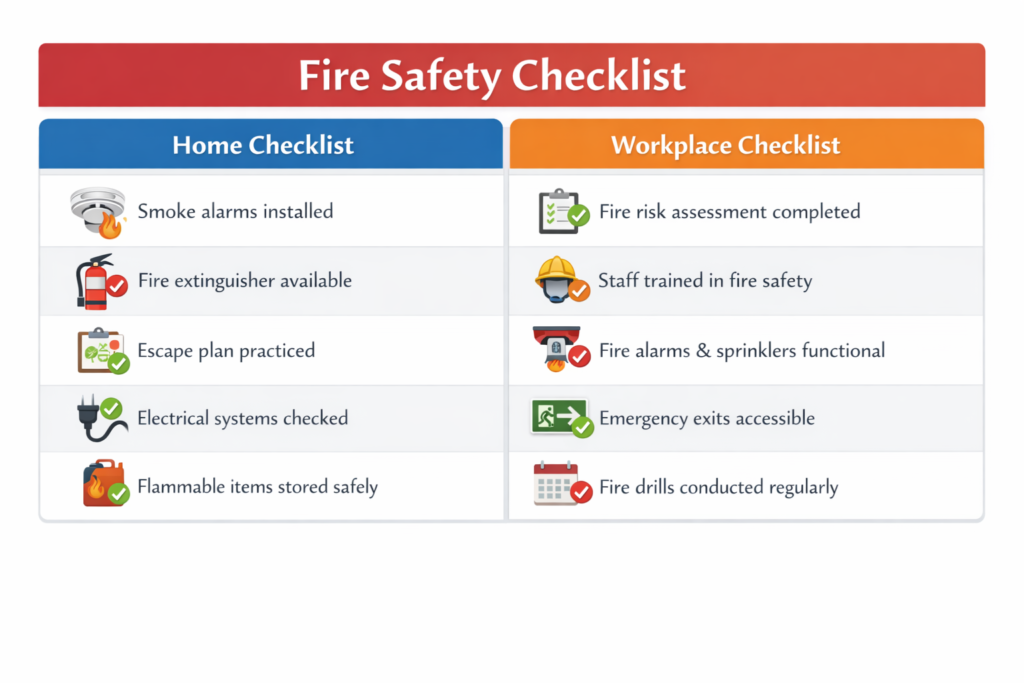
Home Fire Safety Checklist
- Ensure smoke alarms are properly installed in key areas and tested regularly to confirm they are fully operational
- Keep a suitable fire extinguisher readily available and ensure household members understand how to use it safely
- Develop and regularly practice a home fire escape plan to ensure all occupants can evacuate quickly in an emergency
- Inspect electrical systems, wiring, and appliances periodically to identify and address any faults or potential hazards
- Store flammable materials such as cleaning agents, fuels, and chemicals securely in appropriate containers and away from heat sources
Workplace Fire Safety Checklist
- Conduct a comprehensive fire risk assessment and review it regularly to identify and mitigate potential hazards
- Ensure all employees receive appropriate fire safety training, including prevention measures and emergency response procedures
- Verify that fire detection and suppression systems, including alarms and sprinklers, are fully functional and routinely maintained
- Keep all emergency exits clearly marked, unobstructed, and easily accessible at all times
- Organize and carry out regular fire drills to test evacuation procedures and improve overall preparedness
By consistently following this checklist, both homeowners and organizations can maintain a high standard of fire safety, reduce potential risks, and ensure a swift and effective response in the event of a fire emergency.
Common Fire Safety Mistakes to Avoid
Even the most prepared homes and workplaces can face increased risks if common fire safety mistakes are made. Understanding and avoiding these errors is crucial, as even minor oversights can escalate into serious incidents. By proactively addressing these issues, individuals and organizations can significantly reduce the likelihood of fire emergencies and protect lives and property.
1. Ignoring Fire Alarms
One of the most dangerous mistakes is dismissing or ignoring fire alarms. Smoke detectors and fire alarms are designed to provide early warnings that allow occupants to evacuate safely. Ignoring these alerts can result in delayed responses, increasing the risk of injury or fatality. It is essential to take every alarm seriously and evacuate immediately when it sounds.
2. Blocking Emergency Exits
Obstructed or inaccessible emergency exits can prevent people from escaping safely during a fire. Common causes include storage of equipment, clutter, or locked doors. Keeping exit routes clear, well-marked, and easily accessible at all times is critical to ensuring safe evacuation. Regular inspections should be conducted to verify that exits remain unobstructed.
3. Overloading Electrical Outlets
Overloading sockets and extension cords is a frequent cause of electrical fires. Plugging in multiple high-powered devices into a single outlet can cause overheating, sparks, or short circuits. Always use certified electrical equipment, distribute electrical loads evenly, and replace damaged cords or outlets promptly to prevent fire hazards.
4. Neglecting Maintenance of Fire Safety Equipment
Fire safety equipment such as smoke alarms, fire extinguishers, sprinklers, and emergency lighting must be regularly maintained. Equipment that is outdated, malfunctioning, or improperly serviced can fail during an emergency, putting lives and property at risk. Schedule routine checks and service all fire protection systems to ensure they are fully operational.
5. Lack of Fire Safety Training or Awareness
A lack of knowledge and training among occupants or staff increases the risk of fire-related injuries and fatalities. Individuals must understand fire hazards, emergency procedures, and how to use fire safety equipment effectively. Regular training sessions, workshops, and drills are essential for building awareness and ensuring quick, confident responses during a fire.
6. Improper Storage of Flammable Materials
Storing flammable liquids, chemicals, or other combustible materials improperly is a major contributor to fire incidents. Such substances must be kept in approved containers, away from heat sources, sparks, and open flames. Proper labeling, ventilation, and secure storage locations reduce the likelihood of accidental ignition.
By avoiding these common mistakes, both homeowners and organizations can create safer environments, minimize fire risks, and improve overall readiness to handle emergencies effectively. Regular review of safety practices, combined with education and proper maintenance, is key to preventing fire-related accidents.
Fire Safety Equipment You Must Have
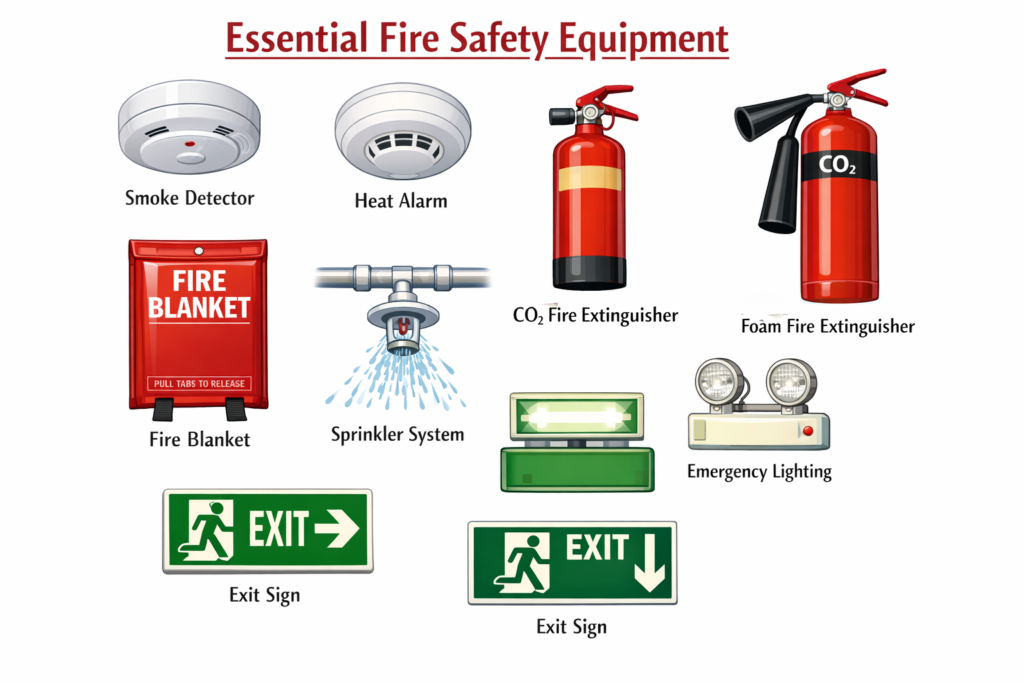
Ensuring that the right fire safety equipment is in place is a fundamental aspect of protecting lives, property, and operations in both homes and workplaces. Proper equipment not only helps detect and control fires at an early stage but also facilitates safe evacuation, significantly reducing the risk of injuries and property damage. It is essential to select, install, and maintain equipment suited to the specific environment and potential hazards present.
1. Smoke Detectors and Heat Alarms
Smoke detectors and heat alarms provide early warning of a potential fire, allowing occupants to respond before the situation escalates.
- Placement: Install in bedrooms, hallways, living areas, and kitchens (heat alarms are preferable in kitchens to avoid false alarms)
- Function: Detect smoke particles or rapid temperature increases, triggering an audible alert
- Maintenance: Test monthly, replace batteries annually, and replace units every 8–10 years
2. Fire Extinguishers
Fire extinguishers are essential for controlling small fires before they spread. Different types of extinguishers are designed for different fire sources:
- CO₂ extinguishers: Ideal for electrical fires
- Foam extinguishers: Effective on flammable liquids
- Dry powder extinguishers: Versatile for multiple fire types, including gas and liquid fires
Best Practices:
- Place extinguishers in accessible locations, such as kitchens, workshops, or near high-risk areas
- Train all occupants or employees in their correct use
- Conduct regular inspections to ensure they are charged and in working order
3. Fire Blankets
Fire blankets are compact, easy-to-use devices designed to smother small fires or wrap around a person whose clothing has caught fire.
- Use Cases: Ideal for kitchen fires, especially grease fires, or clothing fires
- Placement: Keep in the kitchen, laboratory, or workshop areas
- Training: Ensure all household members or staff know how to deploy the blanket safely
4. Sprinkler Systems
Sprinkler systems are highly effective in controlling the spread of fire in commercial, industrial, and larger residential buildings.
- Function: Automatically activate when high heat is detected, releasing water to suppress flames
- Advantages: Can significantly reduce property damage and provide additional time for evacuation
- Maintenance: Systems must be inspected regularly by certified professionals to ensure functionality
5. Emergency Lighting and Signage
In the event of a fire, smoke and power outages can create low-visibility conditions. Emergency lighting and signage are crucial for guiding occupants safely out of the building.
- Components: Illuminated exit signs, pathway lighting, and backup power systems
- Placement: Clearly mark all escape routes, exits, stairwells, and high-risk areas
- Inspection: Conduct regular testing to ensure lighting and signage are operational
Pro Tip
Having fire safety equipment is only half the solution. Regular maintenance, inspection, and training on proper use are equally important. Equipment that is outdated, damaged, or poorly maintained may fail during a fire, rendering it ineffective and putting lives at risk.
By investing in the right fire safety tools and ensuring they are properly maintained, both homes and workplaces can significantly improve preparedness, reduce risk, and enhance overall fire safety.
What to Do in Case of Fire (Step-by-Step Guide)
Responding quickly and effectively during a fire emergency can save lives and minimize property damage. Following a structured approach ensures that everyone remains as safe as possible.
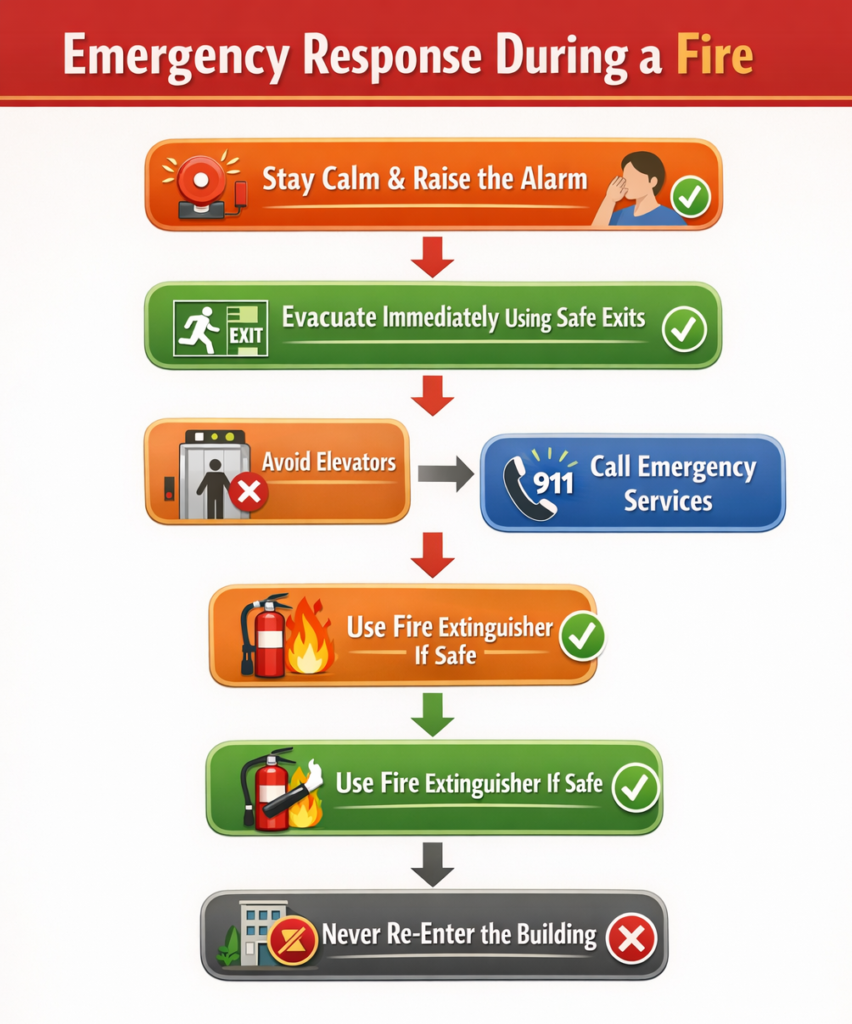
1. Stay Calm and Raise the Alarm
Maintaining composure is critical in a fire emergency. Immediately activate the nearest fire alarm system to alert all occupants of the danger. Quick action ensures everyone in the vicinity is aware and can begin evacuation promptly.
2. Evacuate Immediately Using Designated Exits
Do not delay evacuation to collect personal belongings. Follow clearly marked escape routes to exit the building safely. Move quickly but carefully, helping those who may require assistance.
3. Avoid Using Elevators
Elevators can become inoperative or unsafe during a fire due to smoke infiltration, heat, or power failure. Always use stairwells and designated fire escapes to exit the building.
4. Call Emergency Services
Once in a safe location, immediately contact emergency services to report the fire. Provide accurate information about the location, size, and any potential hazards to facilitate a prompt response.
5. Use a Fire Extinguisher Only if Safe
Attempt to extinguish a fire only if it is small, contained, and you are trained to use a fire extinguisher. Ensure you have a clear exit behind you before attempting suppression, and never put yourself at risk.
6. Never Re-enter the Building
Once evacuated, do not return to retrieve belongings or re-enter the building until it has been declared safe by fire authorities. Re-entry can be extremely dangerous due to smoke, heat, and structural hazards.
Following these steps systematically ensures the safety of all occupants and allows emergency responders to manage the situation effectively. Proper training and familiarity with these procedures can significantly enhance preparedness and response during a fire emergency.
How to Conduct a Fire Risk Assessment: A Detailed Guide
Conducting a thorough fire risk assessment is a crucial part of maintaining safety in both homes and workplaces. It helps identify potential fire hazards, evaluates risks to occupants, and establishes measures to prevent or mitigate fire incidents. A structured and methodical approach ensures that all hazards are addressed, safety protocols are implemented, and the environment remains compliant with fire safety regulations.
Step 1: Identify Fire Hazards
The first step in a fire risk assessment is to identify potential sources of ignition and combustible materials that could contribute to a fire. Common hazards include:
- Faulty or outdated electrical wiring and equipment
- Heating devices placed too close to flammable materials
- Open flames, such as candles or gas appliances
- Flammable liquids, chemicals, and gases stored improperly
- Clutter or accumulated waste that could act as fuel
It is important to perform a comprehensive inspection of all areas, including offices, storage rooms, kitchens, industrial zones, and common areas, to ensure no potential hazards are overlooked.
Step 2: Identify People at Risk
Once hazards are identified, determine which individuals may be at risk if a fire occurs. This includes:
- Employees, staff, and contractors
- Visitors, clients, and customers
- Vulnerable individuals, such as children, elderly, or people with mobility challenges
Understanding who is at risk helps tailor safety measures, evacuation plans, and training to protect everyone effectively.
Step 3: Evaluate the Risks
After identifying hazards and potential victims, assess the likelihood of a fire occurring and the severity of its impact. Consider factors such as:
- The probability of ignition from identified hazards
- The potential speed and intensity of fire spread
- Occupancy levels and the capacity for safe evacuation
- The presence of fire safety equipment and preparedness of occupants
This evaluation allows prioritization of risks and determines which areas require immediate attention.
Step 4: Implement Control Measures
Once risks are evaluated, take proactive steps to minimize or eliminate them. Control measures may include:
- Installing and maintaining smoke detectors, fire alarms, and sprinkler systems
- Ensuring fire extinguishers and fire blankets are accessible and functional
- Providing comprehensive fire safety training for all occupants
- Establishing clear emergency evacuation procedures and marked escape routes
- Reducing clutter and storing flammable materials safely
Implementing these measures helps create a safer environment and reduces the likelihood of fire incidents.
Step 5: Review and Update Regularly
Fire risk assessments are not a one-time task; they must be reviewed and updated periodically to remain effective. Regular reviews should consider:
- Changes in occupancy, equipment, or layout
- Introduction of new hazards or materials
- Feedback from fire drills or previous incidents
- Updates in local fire safety regulations or best practices
Continuous review ensures that fire safety measures remain relevant, up-to-date, and capable of protecting all occupants effectively.
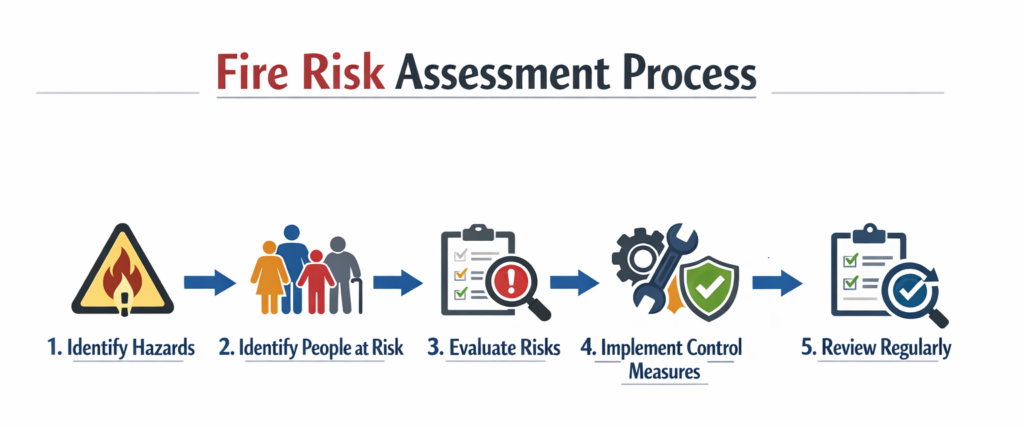
By following this structured approach, organizations and households can systematically identify risks, implement effective safety measures, and maintain a high standard of fire preparedness. Regular assessments not only reduce the likelihood of fire incidents but also improve response efficiency and ensure compliance with safety regulations.
Benefits of Fire Safety Awareness
Developing a strong awareness of fire safety offers significant advantages for both individuals and organizations. By understanding fire risks, implementing preventive measures, and promoting safe practices, the following key benefits can be realized:
- Protects Lives and Reduces Injuries: Fire safety awareness ensures that occupants know how to respond quickly and effectively during emergencies, significantly reducing the risk of fatalities and serious injuries.
- Minimizes Property Damage: Proper fire prevention strategies, early detection systems, and prompt emergency responses help contain fires before they cause extensive damage to buildings, equipment, and personal belongings.
- Ensures Legal Compliance: Awareness of fire safety regulations and adherence to local and national codes protects organizations from legal penalties, fines, and potential liabilities.
- Enhances Workplace Safety Culture: Promoting fire safety awareness fosters a culture of vigilance, responsibility, and proactive risk management among employees, contributing to overall organizational safety.
- Reduces Financial Losses: Preventing fires and mitigating their impact helps avoid costly repairs, operational disruptions, insurance claims, and long-term financial consequences.
By prioritizing fire safety awareness, homes and workplaces can create safer environments, protect valuable assets, and ensure the well-being of all occupants.
Conclusion
Fire safety is a fundamental responsibility and an essential component of protecting lives, property, and business operations. Implementing comprehensive fire safety measures in both homes and workplaces significantly reduces the likelihood of fire incidents and ensures a timely, effective response in the event of an emergency.
By adopting proactive strategies—such as maintaining fire detection and suppression systems, providing thorough training, conducting regular risk assessments, and promoting a culture of safety—individuals and organizations can safeguard lives, minimize damage, and protect valuable assets. Prioritizing fire safety is not merely a precaution; it is a critical investment in security, preparedness, and long-term resilience.
Take proactive measures to protect lives and property. Enroll in certified fire safety courses today and ensure your home or workplace is fully prepared for emergencies.